




If you have ever searched for a "timeshare for private jets," you are not alone. The idea of sharing access to a private aircraft without buying one outright appeals to thousands of travelers every year. This guide breaks down exactly how fractional jet ownership works, what it costs in 2026, and how to decide whether it fits your life.
Quick Answer: What Is a Timeshare for Private Jets and Who Is It For?
The phrase "timeshare for private jets" usually refers to private jet fractional ownership. It is not a vacation timeshare in the traditional sense. Instead, it is a structured aviation program where multiple owners each purchase a share of an aircraft or fleet and receive a set number of flight hours per year in return.
Fractional ownership lets several individuals or companies co-own a private jet. Each owner holds an ownership stake, typically between 1/16 and 1/2 of a specific aircraft. A professional management company handles scheduling, crew, maintenance, and logistics so you can simply show up and fly.
This model is best suited to travelers flying roughly 50 to 200 flight hours per year, for whom schedule control, privacy, and consistent aircraft quality are significant advantages. If you fly less, you may be overpaying for fixed costs. If you fly more, whole aircraft ownership may make better financial sense.
Here is a quick comparison of the main private jet access models:
-
On-demand charter: Pay per trip, no commitment, best under 25–40 hours per year
-
Jet cards: Prepaid hour blocks with fixed rates, good for 25–75 hours per year
-
Fractional ownership (timeshare): Own a share, guaranteed access, predictable costs, ideal for 50–200 hours per year
-
Full ownership: Lowest per-hour cost above 250+ hours, but highest responsibility
Private jets operate under FAA Part 135 and Part 91 standards, and private aviation safety protocols exceed those of commercial airlines. Understanding how these systems work can itself reduce travel anxiety.
For anxious flyers, tools like the SkyGuru app can explain each stage of a flight and predict turbulence in real time, making private jet travel feel calmer and more predictable.
What Is Private Jet Travel, Really, and How Does a Timeshare Fit In?
Private jet travel is mainly about time control, privacy, and using smaller airports closer to your home or office. Private jets can access over 5,000 airports in the U.S., compared to roughly 500 served by commercial aviation. That means shorter drives, less waiting, and more direct routes.
Private aviation eliminates long security lines and rigid schedules. Travelers typically arrive at private terminals called FBOs just 15 to 30 minutes before departure, board directly, and depart on their own timeline. You can book private flights with just 15–30 minutes' notice in some programs.
A private jet timeshare is one of several access models that lets you experience this kind of private flight on a predictable, recurring basis without buying an entire aircraft. The emotional difference matters too: less crowding, quieter cabins, and customized timing can help travelers who feel overwhelmed in big commercial terminals.
Private aircraft can still involve familiar sensations like takeoff acceleration, climb, and turbulence. If you are flying private for the first time, educating yourself on what those sensations mean through expert resources like SkyGuru can make the transition from commercial flights far more comfortable.
Private Jet Access Models: Where Timeshare / Fractional Ownership Sits
There are four main ways to fly private: on-demand charter, jet card programs, memberships, and fractional ownership. Each differs in cost structure, long-term commitment, hourly rate, and how much responsibility you assume as the traveler.
Here is who each model fits best:
-
On-demand charter: Occasional vacationers or travelers under 25–40 hours per year. On-demand charter allows occasional private travel without long-term commitments.
-
Jet cards: A jet card program functions like a prepaid debit card for aviation. Suited for frequent flyers who want predictable pricing but fly under 75 hours annually. Access to different aircraft types is a common benefit.
-
Memberships: Membership programs provide access to a private aircraft without ownership obligations. Best for travelers who value flexibility and simplicity.
-
Fractional ownership: Ideal for business travelers or families flying 50–200 hours per year who want guaranteed availability and equity in an asset.
You do not need to be a billionaire to use these services. A small business owner flying 60 hours yearly on predictable domestic routes, or a family doing regular holiday trips, can realistically evaluate fractional ownership. For a detailed side-by-side look, see our best private jet programs comparison.
Individuals may prefer memberships or on-demand charters for lower traveling frequency. For any model, nervous flyers benefit from planning flights in advance and knowing what to expect in the cabin, from sounds to turbulence patterns, and resources from apps that help reduce fear of flying can support that preparation.
Fractional Ownership Basics: How a Jet Timeshare Actually Works
Fractional ownership is the technical name behind the private jet timeshare concept, and private jet fractional ownership means buying a share of a specific aircraft model within a managed fleet. Fractional ownership allows shares between 1/16 and 1/2, with the most common entry point being a 1/16 share.
Here are typical annual allocations by share size:
-
1/16 share: approximately 50 flight hours per year
-
1/8 share: approximately 100 flight hours per year
-
1/4 share: approximately 200 flight hours per year
A 1/16 share provides approximately 50 flight hours annually, which suits many business travelers and families with predictable schedules.
Most large fractional programs like NetJets and Flexjet offer access to a diverse fleet of light jets, midsize jets, and long-range aircraft rather than tying you to a single tail number, and one of the significant advantages is a more consistent aircraft type and service experience across trips. This improves scheduling and guaranteed availability across service areas.
Fractional ownership offers guaranteed access with as little as 4–6 hours' notice, depending on your contract tier and aircraft type. Fractional ownership allows exchanging flight hours for different aircraft types through interchange agreements, so you are not locked into one cabin size.
Fractional ownership typically requires a commitment of three to five years, sometimes aligning with airframe lifecycle milestones. Contracts include defined exit and resale terms, which we cover below.
If you are an anxious or first-time private flyer, schedule your earliest flights at less busy times of day. Using apps like SkyGuru to follow each phase of the flight makes the new experience feel more structured and predictable.
Cost Structure: Acquisition, Monthly Management Fee, and Hourly Rate
The cost of fractional jet ownership breaks into three components: the initial investment, a monthly management fee, and an occupied hourly rate.
Acquisition cost: Initial investment ranges from $275,000 to over $1.2 million depending on aircraft type and share size. A 1/16 share in a light jet might start around $300,000 in 2026, while a 1/8 share in a super-midsize or long-range jet can easily exceed $1 million. This is a capital cost, not a refundable deposit. Fractional ownership requires a high upfront purchase of a share.
Monthly management fee: Monthly management fees range from $8,000 to $15,000 or more, depending on aircraft type. The monthly management fee covers fixed ongoing expenses such as hangar fees, insurance, crew salaries, pilot training, navigation data, and scheduling support. These are fixed costs you pay regardless of how much you fly.
Occupied hourly rate: Hourly flight fees range from $1,800 to $8,000 or more depending on aircraft. Light jets typically fall in the $2,000–$3,500 range, while long-range jets can exceed $8,000 per hour. Most programs charge only for occupied time (wheels up to wheels down), meaning fractional owners generally do not pay for repositioning or empty leg flights.
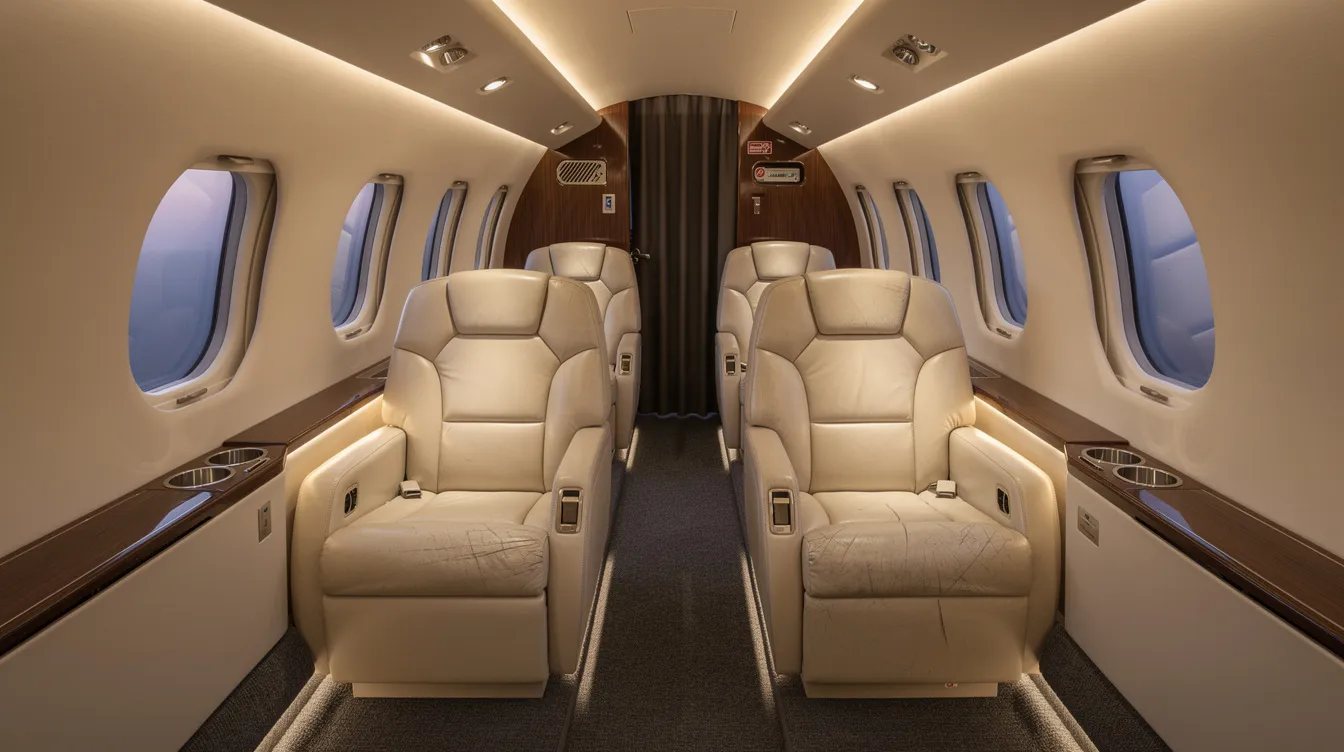
In most modern fractional ownership programs, owners pay only for occupied time, which is a core advantage versus ad-hoc charter where repositioning costs often appear on the invoice.
Ask providers for a sample 12-month cost projection based on your actual routes and number of flight hours. Having predictable costs can reduce financial stress versus dealing with fluctuating charter quotes every trip.
Ongoing Expenses and Hidden Costs to Watch
Common Extra Costs
Even in fractional ownership, there are ongoing expenses beyond the headline hourly rate and monthly management line. Understanding them upfront prevents surprises.
Common extra costs include:
-
Deicing during winter operations
-
International Fees and airport fees at foreign destinations
-
Overnight crew expenses when flights require layovers
-
Catering upgrades beyond standard provisions
-
Wi-Fi surcharges on certain aircraft types
-
Peak-day or short-leg surcharges during holidays or minimum-duration billing
-
Landing fees at certain airports and fuel surcharges tied to market fuel prices
Additional fees may include landing fees and fuel surcharges that vary by season and location, while International Fees on overseas trips can also cover permits or destination-specific airport charges.
Fuel Pricing and Minimum Flight Times
Some fractional programs index their occupied hourly rate to jet fuel price, adjusting monthly or quarterly. Others offer all-in fixed hourly pricing. If fuel prices spike, an indexed program creates less predictable ongoing costs.
Many contracts include minimum flight times per leg, such as a one-hour minimum. For short regional hops, this can raise your effective cost efficiency significantly.
Maintenance and Transparency
Ask about maintenance event pass-throughs, engine program coverage, and how midlife inspections or refurbishments are handled. These affect both operational costs and resale value. Request transparent, scenario-based invoices from providers so there are no financial surprises adding to travel anxiety.
Aircraft Types in Timeshare Programs: Light Jets vs Larger Aircraft
Aircraft Categories
Most fractional ownership and private jet timeshare programs offer several aircraft types. Your choice affects range, cabin comfort, and hourly rate.
Here’s a comparison of the main categories:
-
Light Jets (e.g., Embraer Phenom 300, Cessna Citation CJ3+):
-
Seats: 4–7 passengers
-
Range: Ideal for trips up to 2–3 hours
-
Hourly Rate (2026): $2,000–$3,500
-
Lowest acquisition costs
-
-
Midsize and Super-Midsize Jets (e.g., Citation XLS+, Challenger 350):
-
Seats: 7–9 passengers
-
Range: U.S. coast-to-coast (3–5 hours)
-
Higher hourly rates, more cabin space, more stable ride
-
-
Long-Range and Ultra Long Range Aircraft (e.g., Gulfstream G650, Bombardier Global 7500):
-
Seats: 8–14+ passengers
-
Range: Transatlantic and intercontinental
-
Hourly Rate (2026): $9,000–$12,000+
-

For nervous flyers, larger cabins can feel more stable in turbulence, and quieter cabins reduce sensory overload. Aircraft quality matters for both comfort and safety.
Many fractional programs allow interchange between aircraft types at published ratios. An owner of a midsize share can occasionally trade hours to use a light jet for short hops or a large cabin jet for a long-haul mission.
Newer aircraft models are more fuel-efficient, reducing emissions. Private aviation providers are adopting carbon neutrality as a core principle, with carbon offsets included for every flight in some programs. Partnerships with verified sustainability organizations are common in the private aviation industry, and private aviation is actively working to reduce its environmental footprint.
Commitment Level, Contract Length, and Resale Value
Fractional ownership is a serious financial and time commitment, more like owning real estate than booking a simple private jet charter.
Typical contract durations span three to five years, sometimes longer. Most contracts include minimum usage requirements and early-exit penalties. Fractional jet owners should understand these terms before signing.
The resale value of a fractional share works like other depreciating assets. The share represents an undivided interest in a private plane that loses value over time based on age, total hours, and market demand for that specific aircraft model. Depreciation of fractional shares can affect resale value just like with other assets.
An exit strategy for fractional ownership typically involves selling the share back to the management company. Providers often offer remarketing services or guaranteed buy-back programs, but resale value seldom equals the original purchase price. Historical data suggests buybacks typically return 50–80% of current market value depending on aircraft condition and demand.
In 2026, resale value is influenced by demand for newer, fuel-efficient light jets versus older, less efficient models, plus macro factors like business travel volumes and fuel prices.
Take time to understand contract terms, exit options, and resale dynamics. This reduces long-term financial burden and prevents feeling locked in beyond your comfort level.
Timeshare vs Charter, Jet Cards, Memberships, and Full Ownership
Understanding where a private jet timeshare fits among other models helps you match your private aviation needs to the right solution.
-
On-demand charter: Pay per trip. No long-term commitment. Best under 25–40 flight hours per year. Variable pricing and no guaranteed access. Chartering involves renting an aircraft without ownership responsibilities, and chartering provides flexibility in aircraft selection for each trip. Emotionally, lower commitment but more uncertainty.
-
Jet cards: Prepaid blocks of hours with fixed or capped hourly rates, often starting at 25 hours. More predictability than a charter flight, but no equity or resale value. Good for up to roughly 75 hours per year. For a deeper look, read our jet card pros and cons guide.
-
Memberships: Monthly or annual fees grant access to a fleet, sometimes with dynamic pricing per flight. Work well for travelers valuing flexibility and simplicity over an ownership stake.
-
Fractional ownership: Provides equity, guaranteed access to a specific aircraft type, defined hourly rates, and professional management. Requires higher upfront costs, ongoing monthly management, and a multi-year commitment. Offers all the benefits of consistent service and predictable scheduling.
-
Full aircraft ownership: Makes sense above roughly 250–300 hours per year. Lowest per-hour cost but highest responsibility. Aircraft owners handle crew, maintenance, and compliance, which can be stressful without a dedicated management company.
Some travelers feel calmer with a long-term, predictable structure like a fractional ownership program. Others prefer the flexibility and lower commitment of a charter provider or jet card. Neither is wrong. It depends on your travel pattern and emotional comfort level.
Safety, Comfort, and the Passenger Experience in Private Jet Timeshares
Leading fractional programs operate under strict regulations. Private jets operate under FAA Part 135 and Part 91 standards, and many hold third-party safety ratings like ARGUS Platinum and Wyvern Wingman certifications, which ensure safety compliance across the fleet.
Pilots undergo extensive, continuous training for safety. Professional management companies handle recurrent checks, maintenance schedules, and safety audits that can exceed the standards of smaller, ad-hoc charter operators.

The typical in-cabin experience on a fractional jet includes quieter boarding at an FBO, personalized crew interaction, flexible seating arrangements, and the ability to keep your electronics on for most of the private flight. For travelers prone to panic or sensory overload, private jet cabins are less crowded and more controllable than commercial airline cabins.
Sensations like engine spool-up at takeoff, seatbelt signs during turbulence, and altitude changes still happen in private jets. These are normal. Encourage yourself to prepare breathing exercises, bring familiar comfort items, and use apps like SkyGuru to receive real-time explanations of noises, bumps, and flight phases. This greatly reduces uncertainty.
Who Should Consider a Private Jet Timeshare (And Who Should Not)?
Ideal Candidates for Private Jet Timeshare
A private jet timeshare is not right for everyone. An honest self-assessment of travel patterns and finances is essential.
Ideal candidates:
-
Executives or entrepreneurs flying roughly 75–200 flight hours per year
-
Families with regular multi-city trips or preferred travel dates to recurring destinations
-
Medical or technical teams visiting multiple remote sites
-
Travelers who value consistent service, aircraft familiarity, and guaranteed availability
Key indicators it may fit: Predictable routes, willingness to commit for 3–5 years, desire for known hourly rates, and preference for one main service provider managing your private travel.
Who Might Be Better Served Elsewhere
-
Travelers under 25–30 hours per year
-
Those with highly irregular schedules or destinations
-
Individuals uncertain about major long term commitment
-
Anyone uncomfortable with asset depreciation and resale complexity
If you already feel high financial or travel anxiety, starting with a charter flight or jet card can be a lower-pressure way to test private jet travel before moving into fractional ownership. For those who fly frequently but want to compare options first, our best private jet membership programs guide offers a useful starting point.
Practical Evaluation Checklist Before Signing a Jet Timeshare Contract
Use this checklist when comparing fractional providers or deciding whether to buy a share:
Travel Profile
-
How many hours did you actually fly in 2024 and 2025?
-
On which routes, and with how many passengers on average?
-
What aircraft type would have been sufficient: light jets, midsize, or long-range?
Financial Readiness
-
Can you comfortably afford the initial investment without compromising other priorities?
-
How will the monthly management fee and occupied hourly rate affect cash flow during slower business periods?
-
What is the total capital cost over a 5-year term including all ongoing expenses?
Contract and Flexibility
-
What is the minimum notice for booking and canceling without penalty?
-
How does peak-day policy work for your preferred travel dates?
-
Can you interchange to different aircraft types, and at what ratios?
Long-term Risk
-
What are projected resale value and exit options at year 5 or year 10?
-
Are there restrictions or lockups on selling your fractional share?
Safety and Emotional Considerations
-
Do you feel confident in the provider's safety record, pilot training, and maintenance standards?
-
Have you visited their facilities or flown a demonstration trip?
-
Have you tested tools like SkyGuru during a flight to experience real-time explanations before committing?
Schedule an orientation or demonstration flight before signing. The experience of flying private with real-time guidance makes the decision feel grounded rather than abstract.
How Understanding Your Flight Reduces Anxiety in Any Private Jet Model
Regardless of whether you choose fractional ownership, charter, or a jet card, understanding what happens during a flight is one of the most effective ways to reduce fear of flying.
Many sensations and sounds that feel alarming are actually routine. Gear retraction after takeoff, engine power changes during climb, and turbulence bumps at cruising altitude are standard procedures, not signs of danger.
Technology now allows passengers to see turbulence forecasts, weather systems, and flight paths in advance, replacing uncertainty with clear expectations. Apps like SkyGuru use aviation weather, flight data, and smartphone sensors to predict turbulence, explain noises, and walk you through each stage of the flight in real time. For more tools that help nervous flyers, check out our flight apps for anxious travelers guide.
If you are considering investing in a jet timeshare, also invest in your own peace of mind. Download SkyGuru before your next trip, enter your flight details, and use the guidance to stay calm and informed, whether you are on a charter, a fractional flight, or even a commercial airline; dedicated apps to overcome fear of flying can make travel feel more manageable across all these models.
Combining a thoughtfully chosen access model with better in-flight understanding can turn private jet travel from a source of stress into a reliable, predictable part of life. When you know what to expect, every flight feels a little easier.
FLEET SELECTION
JET CARDS
COST ANALYSIS


How to Auditing Your Operator's Maintenance Logs
Oct 05, 2025

How to Auditing Your Operator's Maintenance Logs
Oct 05, 2025

How to Auditing Your Operator's Maintenance Logs
Oct 05, 2025
Sky Guru Weekly
The smartest private aviation intelligence in your inbox.
.svg)

