



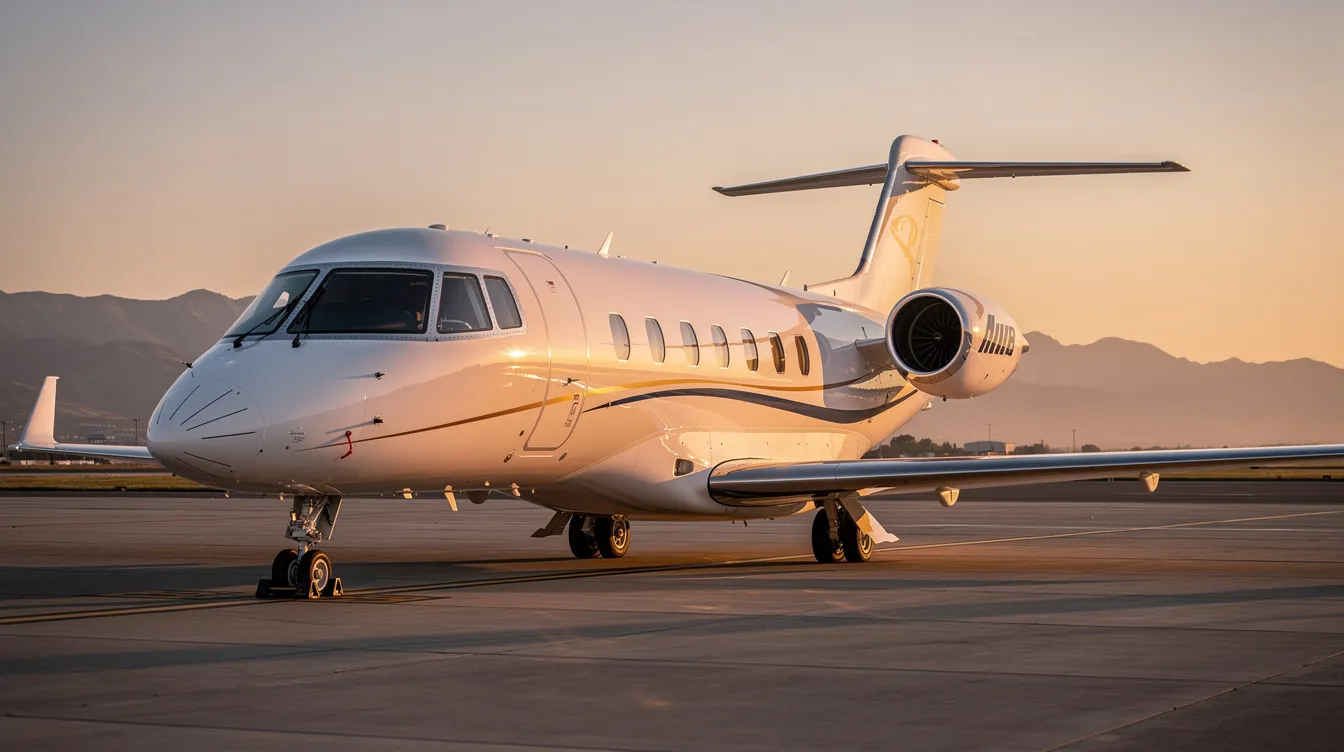
Introduction: What "Private Jet Tickets" Really Mean
When people search for private jet tickets, they're usually picturing something like booking a seat on an airline. But private aviation works differently. In most cases, you're paying for the entire aircraft, not just one seat. Think of it more like renting a private plane than buying a ticket.
Whether you call it a private charter, a private jet rental, or an on-demand flight, the concept is the same: you choose the aircraft, the route, the schedule, and the passengers. Private jets give you control that commercial airlines simply cannot match.
If you're a nervous flyer, here's something worth knowing right away: private aviation operates under strict safety regulations. Understanding how the process works, what sounds you'll hear, and what sensations to expect can dramatically reduce anxiety. That's exactly what SkyGuru is designed to do, explaining what you feel and hear during every phase of flight so you can focus on arriving calmly.
Here's what this guide covers at a glance:
-
What private jet tickets actually cost in 2026, broken down by aircraft type
-
How pricing works compared to airline tickets
-
Government taxes, operational fees, and how to avoid surprise charges
-
What flying private feels like for nervous or first-time flyers
-
How to choose a safe provider and save money without cutting corners
How Private Jet "Tickets" Work vs Airline Tickets
Private jet travel is priced per aircraft per hour, not per seat. When you charter a flight, you're renting the entire aircraft for your trip. This is fundamentally different from buying one airline ticket.
Chartering a private jet offers flexibility in scheduling and destinations that commercial airlines can't match. You pick the airports, the departure time, and who comes along.
Here's how the main options compare:
-
On-demand charter: You book a specific aircraft for a specific trip. Pay-as-you-go with no long-term commitment.
-
Jet card: Pre-paid blocks of flight hours at fixed or capped rates, sometimes with guaranteed availability.
-
Membership: Annual fee that unlocks lower hourly rates or priority booking access.
-
Fractional ownership: You own a share of an aircraft and pay proportionally for hours and maintenance.
Some newer platforms do sell individual seats on semi-private flights, but most private flights still involve renting the whole aircraft. Private jet charters can access over 3,000 airports in the U.S., compared to about 500 served by major airlines.
|
Feature |
Airline Ticket |
Private Charter |
|---|---|---|
|
Pricing unit |
Per seat |
Per aircraft per hour |
|
Schedule |
Fixed by airline |
You choose |
|
Airport access |
~500 U.S. airports |
3,000+ U.S. airports |
|
Security process |
TSA screening |
Faster FBO screening |
|
Passenger control |
None |
You decide who flies |
Quick Answer: Typical Private Jets Ticket Costs in 2026
Private jet rental costs range from $2,300 to $17,000 per hour, depending on the aircraft. Here are the 2026 ballpark ranges for the whole aircraft:
-
Turboprops: ~$2,300–$3,500/hour
-
Very light jets: ~$2,750–$3,500/hour
-
Light jets: ~$3,750–$4,600/hour (some operators up to $6,500)
-
Midsize jets: ~$4,700–$7,500/hour
-
Super-midsize jets: ~$6,200–$12,000/hour
-
Large jets: ~$8,500–$17,000/hour
-
Ultra long range jets: ~$10,000–$25,000+/hour
Turboprop rentals start at approximately $2,300 per hour. Light jets typically cost around $3,750 to $4,600 per hour. Midsize jets range from $4,700 to $7,500 per hour.
Sample Trip Totals (One-Way, Approximate)
|
Route |
Flight Time |
Aircraft |
Estimated Cost |
|---|---|---|---|
|
LA → San Francisco |
~1 hour |
Light jet |
$8,500–$12,000 |
|
New York → Miami |
~2.5 hours |
Midsize jet |
$17,000–$22,500 |
|
LA → Las Vegas |
~1 hour |
Light jet |
$7,500–$11,000 |
|
New York → London |
~6–7 hours |
Heavy/ultra long range |
$68,000–$110,000+ |
Booking a private jet typically includes crew, fuel, and insurance. However, government taxes like the federal excise tax (7.5% on domestic flights) and segment fees are usually extra.
When sharing the aircraft cost among 4–10 travelers, the per-person private flight cost can approach business class fares on some routes. But with fewer people splitting, the per-person price climbs quickly.
Key Aircraft Types: From Very Light Jets to Ultra Long Range
Aircraft type significantly influences private jet pricing. Choosing the right category for your trip is one of the most important decisions you'll make. Charter options include turboprops, light jets, and large cabin jets, along with everything in between.
-
Turboprop aircraft (e.g., Pilatus PC-12, King Air 350): Seats 6–9 passengers. ~$2,300–$3,500/hour. Best for short hops under 2 hours. Can land on shorter runways at smaller airports.
-
Very light jets (e.g., Embraer Phenom 100, Citation Mustang): Seats 4–5. ~$2,750–$3,500/hour. Ideal for quick 1–2 hour flights with a small group.
-
Light jets (e.g., Phenom 300, Citation CJ4): Seat 5–7. ~$3,750–$6,500/hour. The workhorse of regional private aviation. Great for East Coast or West Coast corridors.
-
Midsize jets (e.g., Citation XLS+, Hawker 800XP): Seats 7–9. ~$4,700–$7,500/hour. Handle cross-country domestic flights comfortably with stand-up cabins.
-
Super-midsize jets (e.g., Challenger 350, Citation Longitude): Seats 8–10. ~$6,200–$12,000/hour. Transcontinental range, premium aircraft with advanced avionics and full amenities.
-
Large jets (e.g., Gulfstream G550, Falcon 900)Seatsat 10–16. ~$8,500–$17,000/hour. A large cabin jet like this is designed for international flights, large group leisure travel, or long business missions.
-
Ultra-long-range (e.g., G650ER, Global 7500). Seats 13–19. ~$10,000–$25,000+/hour. Nonstop intercontinental capability. These efficient aircraft represent the pinnacle of private jet service.
-
VIP airliners (e.g., Embraer ERJ 145, Boeing BBJ): The Embraer ERJ 145 seats up to 50 passengers in a 2-1 configuration. VIP airliners cost between $18,000 and $23,000 per hour. Used for corporate events or large groups.
Private jets can accommodate groups from 2 to 50 passengers depending on aircraft size.
What Drives the Cost of Private Jet Tickets?
Several factors significantly affect private jet charter cost beyond the base hourly rate. Understanding them helps you budget accurately.
Billable Flight Time
Billable flight time and minimums. Operators typically bill for block time, which includes taxi, takeoff, cruise, and landing. Most have a daily minimum of 2–3 billable hours, even if your flight is shorter. This means a 45-minute hop can still be billed as a 2-hour trip.
Aircraft Category and Age
Aircraft category and age. Aircraft type significantly influences private jet pricing. Newer jets with more efficient engines cost more per hour but may burn less fuel. Older aircraft might have lower hourly rates but could come with less comfort or higher maintenance-related fees.
Flight Distance
Flight distance. Flight distance affects fuel consumption and pricing. A short leg from New York to Boston burns far less fuel than a transatlantic crossing, but minimum-hour rules can make very short flights disproportionately expensive.
Operational Logistics
Operational logistics. Positioning fees apply when aircraft must be moved for a flight. If the jet isn't based at your departure airport, someone has to pay for the empty flight to get it there. Crew overnight costs, crew rest requirements, and crew salaries also factor into the total.
Fuel Prices
Fuel prices. Volatile fuel prices remain one of the largest variable cost drivers in 2026. Some operators include fuel in the base rate; others add surcharges separately.
Aircraft Availability and Demand
Aircraft availability and demand. Peak demand can increase private jet charter costs. Holiday periods, major sporting events, and conference weeks reduce supply and push prices up. More availability generally means more competition and better pricing for you.
Government Taxes and Mandatory Fees: Beyond the Sticker Price
Government taxes on private charter flights are legally required and non-negotiable. They're not hidden fees, but they are often listed separately from the base rate, which can surprise first-time buyers.
-
Federal excise tax: Domestic U.S. private flights carry a 7.5% federal excise tax on amounts paid for taxable air transportation. Additional fees may include this 7.5% federal excise tax on domestic flights. On a $20,000 charter, that's an extra $1,500.
-
Domestic segment fees: Currently $5.30 per passenger per segment in 2026. For a family of four on a two-leg round trip, that adds roughly $5.30 × 4 × 4 = $84.80. Small per person, but worth knowing.
-
International fees and head taxes: Flights departing or arriving in the U.S. may incur additional international arrival or departure taxes, customs fees, and immigration charges. Alaska and Hawaii routes may have different domestic rates.
-
Airport authority charges: Many airports charge passenger facility fees, ramp fees, and customs processing fees that vary significantly by location.
These items will almost always appear as line items on your quote. Ask your provider to break them out clearly so there are no surprises.
Operational and "Hidden" Fees: What to Ask Before You Book
Beyond taxes, several operational charges can inflate your final bill if you're not aware of them in advance. Here's what to watch for:
-
Positioning fees: When the aircraft isn't at your departure airport, you pay for the empty flight to get it there. This can add thousands of dollars depending on flight distance.
-
Overnight crew costs: If your schedule requires the crew to stay overnight, expect charges of several hundred to a few thousand dollars per night for hotel and meals.
-
Landing fees and ramp fees: Airport landing fees vary widely. Busy international hubs and major metro airports charge significantly more than regional airports.
-
Short leg fees: Very short flights involve frequent takeoffs, landings, and high fuel burn per mile. Many operators charge short leg fees or enforce minimum billing hours to cover this.
-
Fuel surcharges and deicing fees: Winter operations may require deicing, adding cost. Fuel surcharges fluctuate with market fuel prices.
-
Pet cleaning fee: Traveling with animals? Some operators charge a pet cleaning fee for cabin cleaning after your flight.
-
In-flight catering upgrades: Basic snacks and drinks are typically included. Custom menus, specialty meals, or premium beverages add to the bill.
-
Wi-Fi charges: Satellite-based high-speed internet on board is often an optional extra, especially on smaller aircraft.
Ask your provider upfront: "What is included in the quoted rate? What are your minimum billed hours? How far is the repositioning leg? What's your cancellation policy?" Getting these answers in writing prevents hidden fees from becoming unwelcome surprises.
How Aircraft Availability Affects Private Jets Ticket Prices
Aircraft availability is one of the most underappreciated factors in private jet pricing. It refers to how many suitable jets are positioned near your departure airport on your requested dates.
Over 20,000 unique aircraft are available for charter worldwide. Private jets access over 10,000 airports worldwide. But that doesn't mean the right aircraft is always nearby.
-
High-supply corridors like Los Angeles–Las Vegas or New York–Washington tend to have more jets already positioned, which keeps rates competitive on popular routes.
-
Remote or island destinations often have limited aircraft nearby, meaning higher repositioning costs and fewer charter options.
-
Holiday periods and events sharply reduce availability. Christmas through New Year, Super Bowl week, and major golf trip destinations during tournament season can see rates spike 20–50% above normal.
-
Flexibility is your best lever. Being open to secondary airports, off-peak departure times, or shifting your travel by a day or two can unlock dramatically better pricing. A diverse fleet of options becomes available when you're not locked into one airport and one time slot.
Empty leg flights, where an aircraft is flying empty to reposition, represent real opportunities. Discounts of 30–75% are common if your route, date, and time align with an existing repositioning leg.
Comparing Aircraft Sizes: Very Light, Light, Midsize, and Large Jets
Aircraft category and size should match the trip's mission and distance needs. Here's a simple decision framework:
-
1–4 passengers, flights under 2 hours: Very light jets are cost-efficient and quick. Think Boston to New York or Dallas to Houston. Smaller aircraft like these keep hourly costs low.
-
4–7 passengers, flights of 2–4 hours: Light jets handle this sweet spot well. A 4-passenger Boston–Toronto trip on a light jet gives you a comfortable cabin and enough range without a fuel stop.
-
6–10 passengers, cross-country or 4+ hour flights: Midsize jets are the right call. An 8-passenger Dallas–Aspen golf trip or ski trip fits perfectly in a midsize, with luggage space for gear. Passenger count matters here because you need both cabin room and baggage capacity.
-
8–16 passengers, transcontinental or international flights: Large jets and ultra-long-range aircraft make sense for routes like New York–London, Dubai–São Paulo, or connecting travelers between major hubs on the East Coast and West Coast. A large cabin jet eliminates fuel stops and offers lie-flat sleeping arrangements on long hauls.
The trade-off is straightforward: smaller aircraft are cheaper per hour but may require fuel stops on longer routes, adding time and cost. Larger aircraft cost more per hour but fly farther nonstop.
Route Examples: What You Might Pay on Popular Private Charter Trips
Here are 2026 market estimates for popular routes, based on typical hourly rates and published broker data. Final quotes depend on season, exact timing, and aircraft availability.
|
Route |
Flight Time |
Recommended Aircraft |
Estimated One-Way Cost |
|---|---|---|---|
|
Los Angeles → Las Vegas |
~45–60 min |
Light jet |
$7,500–$11,000 |
|
Los Angeles → San Francisco |
~1 hour |
Light jet / Turboprop |
$5,200–$12,000 |
|
New York → Miami |
~2.5 hours |
Midsize jet |
$17,000–$22,500 |
|
New York → London |
~6–7 hours |
Heavy / ultra-long-range |
$68,000–$110,000+ |
|
Orange County → Maui |
~5–6 hours |
Heavy jet |
$35,000–$60,000 |
For a round trip, roughly double these numbers, though some operators offer package pricing. Empty leg flights can be booked at a discount compared to regular charters, sometimes cutting costs by 50% or more on these same routes if your schedule is flexible.
Private jet charter costs vary by tens of thousands of dollars depending on aircraft size alone. A turboprop on the LA–San Francisco run might cost $5,200, while a midsize jet on the same route could exceed $15,000.
On-Demand Private Charter vs Jet Cards vs Memberships
Not every private flyer needs to book the same way. Pricing structures for private jet booking can include fixed or variable hourly rates and additional fees, depending on which model you choose.
-
On-demand private charter: Book one flight at a time with no commitment. Best for travelers flying fewer than 25 flight hours per year. Rates may be higher per trip, but there's no upfront capital required. For a deeper look, see our guide on how to choose a private jet company.
-
Jet card: Pre-pay a block of hours (typically 25–50) at a fixed hourly rate. Many cards come with guaranteed availability and capped repositioning fees. Good for frequent flyers who want rate stability. Explore the pros and cons of jet cards to see if this fits your travel pattern.
-
Membership models: Annual fee unlocks lower hourly rates and priority access. Less financial commitment than fractional ownership but more than on-demand charter. Our 2026 guide to private jet membership programs covers the top options.
-
Fractional ownership: You buy a share of an aircraft and receive proportional hours. High upfront cost. Makes sense only for heavy users logging 50–100+ hours per year. Aircraft owners in fractional programs share maintenance, insurance, and crew salaries.
Over 20,000 unique aircraft are available for charter, so the market offers plenty of options regardless of which booking structure you choose.
Flying Private for the First Time: What the Experience Actually Feels Like
If you've only flown commercial, your first private flight will feel different from the moment you arrive. For a complete walkthrough, read our guide on how to fly private jet for the first time.
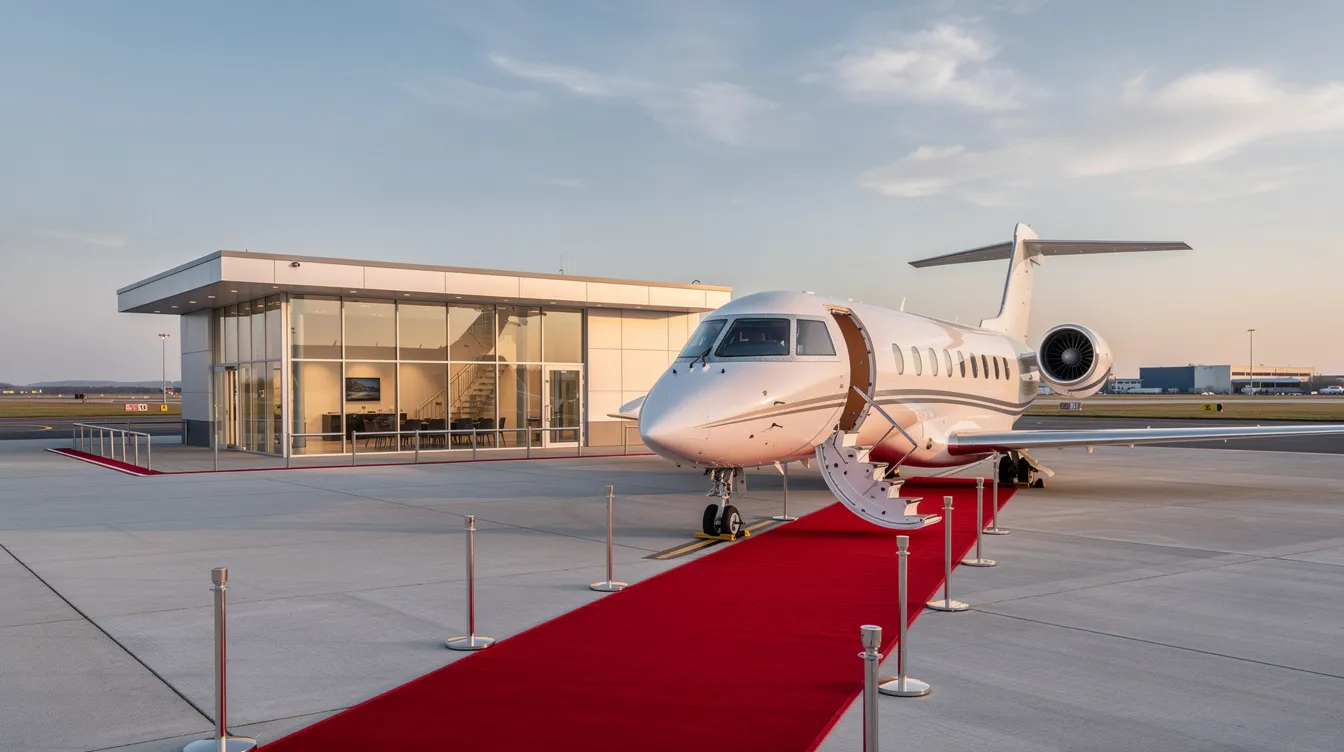
You won't enter a crowded terminal. Instead, you'll drive to a private terminal called an FBO (Fixed Base Operator). Security screening is usually faster and quieter. In many cases, you can pull your car right up to the aircraft, and ground transportation logistics are simpler at smaller airports.
The boarding process takes minutes, not hours. A crew member greets you, helps with luggage, and walks you to the plane. There's no jetway, no overhead bin wrestling, no middle seat. Private flights provide a more personalized travel experience than commercial airlines, starting before you even board.
Once airborne, the sensations during takeoff and climb in light jets may feel more pronounced than on large airliners. The aircraft is lighter, so you'll notice acceleration, turns, and altitude changes more distinctly. This is completely normal, and it doesn't mean anything is wrong.
Cabin sounds and vibrations differ too. Engines are closer to you. You may hear landing gear retraction more clearly. These are all expected parts of flight. SkyGuru can explain each of these sounds and sensations in real time, which is especially helpful for anxious first-time private flyers.
Turbulence in Private Jets: Does It Feel Worse Than on Airliners?
Short answer: turbulence can feel stronger on smaller aircraft like very light jets and light jets, but safety margins remain very high.
Here's why it feels different. A smaller aircraft has less mass, so the same gust of wind produces more noticeable movement. On a 400,000-pound airliner, light turbulence might feel like a gentle wobble. On a 15,000-pound light jet, that same air can produce a sharper bump.
But "feeling more" doesn't mean "being less safe." Modern business jets are certified to withstand turbulence loads far beyond what passengers will ever encounter. The wings are engineered for forces that would be physically uncomfortable long before they'd be structurally concerning.
Pilots flying private often have more flexibility to change altitude or adjust the route to find smoother air. On ultra-long-range travel at higher altitudes, turbulence tends to be less frequent because these aircraft cruise above much of the weather.
Here's a simple turbulence scale:
-
Light turbulence: Slight, rhythmic bumps. Drinks may ripple. Completely routine.
-
Moderate turbulence: Noticeable jolts. Walking is difficult. Still well within aircraft design limits.
-
Severe turbulence: Rare. Strong forces. Pilots actively avoid it using weather radar and forecasts.
SkyGuru's turbulence forecasts and real-time explanations help you anticipate bumps before they happen. Knowing that turbulence is coming, and that it's normal, makes it far less frightening. Explore more flight apps for turbulence and anxiety to see how technology supports nervous travelers.
Psychology of Flying Private: Why It Feels Different for Anxious Travelers
The intimate cabin of a private jet creates a unique psychological environment. For some, it's deeply reassuring. You can see the cockpit door, hear the pilots, and feel more connected to who is flying the plane. For others, that closeness and the lack of a cabin crew doing announcements can feel unsettling.
Anxiety often comes from uncertainty. When you don't know what a sound means, or why the aircraft is turning, your brain fills the gap with worst-case scenarios. This is a well-documented response called uncertainty intolerance, and it's the core of most flight anxiety.
The antidote is predictability. Understanding the stages of flight, including taxi, takeoff, climb, cruise, descent, and landing, helps your nervous system recognize patterns and stop treating normal events as threats.
The lack of PA announcements on private flights means you lose the "everything is fine" signal that airline cabin crew provide. SkyGuru fills that gap, acting like a pilot-therapist in your pocket. It explains each phase and tells you what's normal so your brain doesn't have to guess.
Coping With Flight Anxiety When Flying Private
If you experience flight anxiety, flying privately actually gives you more tools to manage it. Here are practical steps and additional resources for people who fear flying:
Breathing Techniques
-
Breathe slowly and deliberately. Inhale for 4 counts, hold for 4, exhale for 6. This directly counteracts the fight-or-flight response.
Grounding Exercises
-
Use grounding exercises. Press your feet into the floor. Notice the texture of your seat. Name five things you can see. These simple techniques pull your attention out of anxious thoughts.
Choosing Your Seat
-
Choose your seat intentionally. On smaller aircraft, mid-cabin seats near the wing tend to feel the least motion. Avoid the very rear where movements are amplified.
Avoiding Stimulants
-
Skip caffeine and alcohol before the flight. Both can heighten anxiety symptoms. Water and light snacks keep your body calm.
Crew Briefing
-
Ask the crew for a briefing. One of the best advantages of flying privately is access. Ask the pilots about expected turbulence, flight time, weather, and route. Crews are accustomed to these questions and happy to help.
Arriving Early
-
Arrive early. Rushing to the airport adds stress before you even board. The booking process at an FBO is fast, so use the extra time to settle in.
Using SkyGuru
-
Use SkyGuru. Enter your flight details before departure to receive anticipatory guidance throughout your journey. Having explanations ready before bumps or sounds occur turns unknowns into knowns. Check out the best apps for flying and other tools to overcome fear of flying for more support for anxious travelers.
Comfort and Amenities: What You Get for the Price
What's included on board varies dramatically by aircraft size and operator. Here's what to generally expect:
Turboprops and Very Light Jets
-
Basic snacks, water, soft drinks. Limited baggage space. No enclosed lavatory on most very light jets. Functional but no-frills.
Light Jets and Midsize Jets
-
Enclosed lavatory, stand-up cabin (midsize), more luggage room. Basic in-flight catering with sandwiches, snacks, and beverages. Wi-Fi available on some aircraft for an additional fee.
Large Jets and Ultra Long Range Aircraft
-
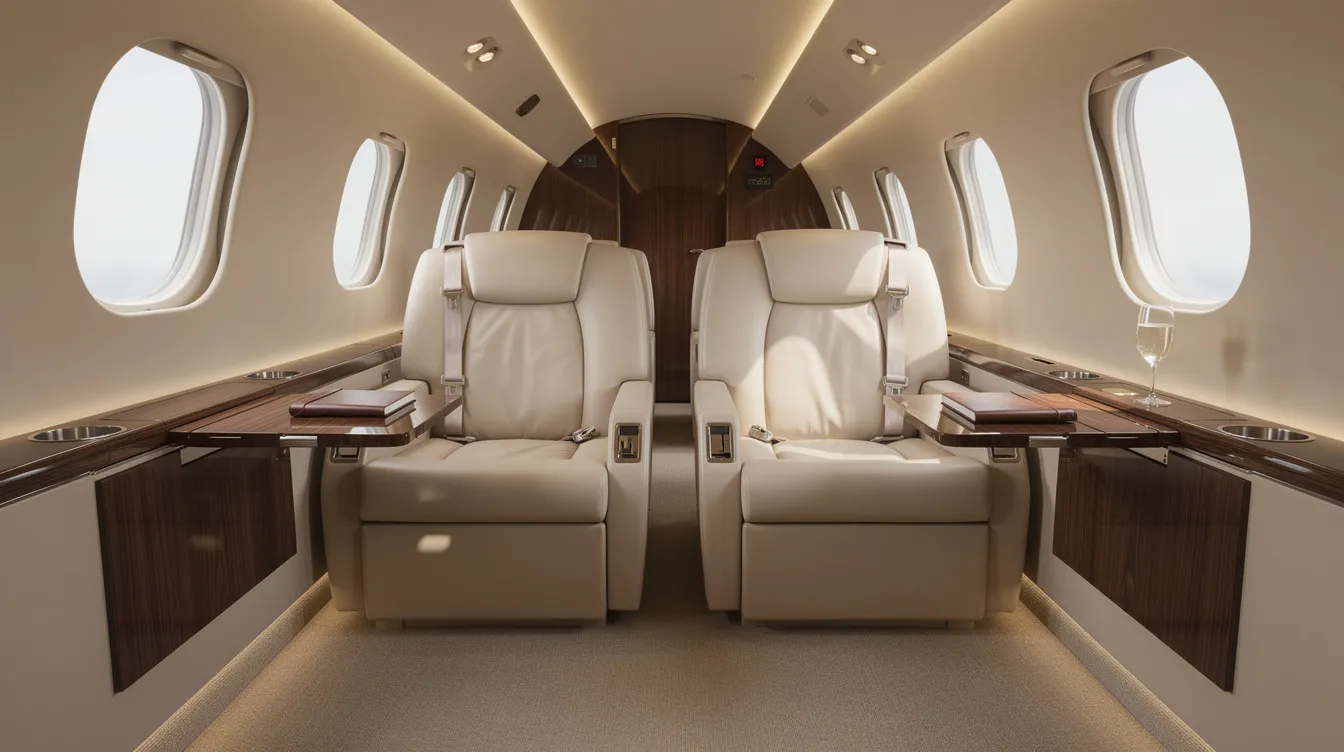
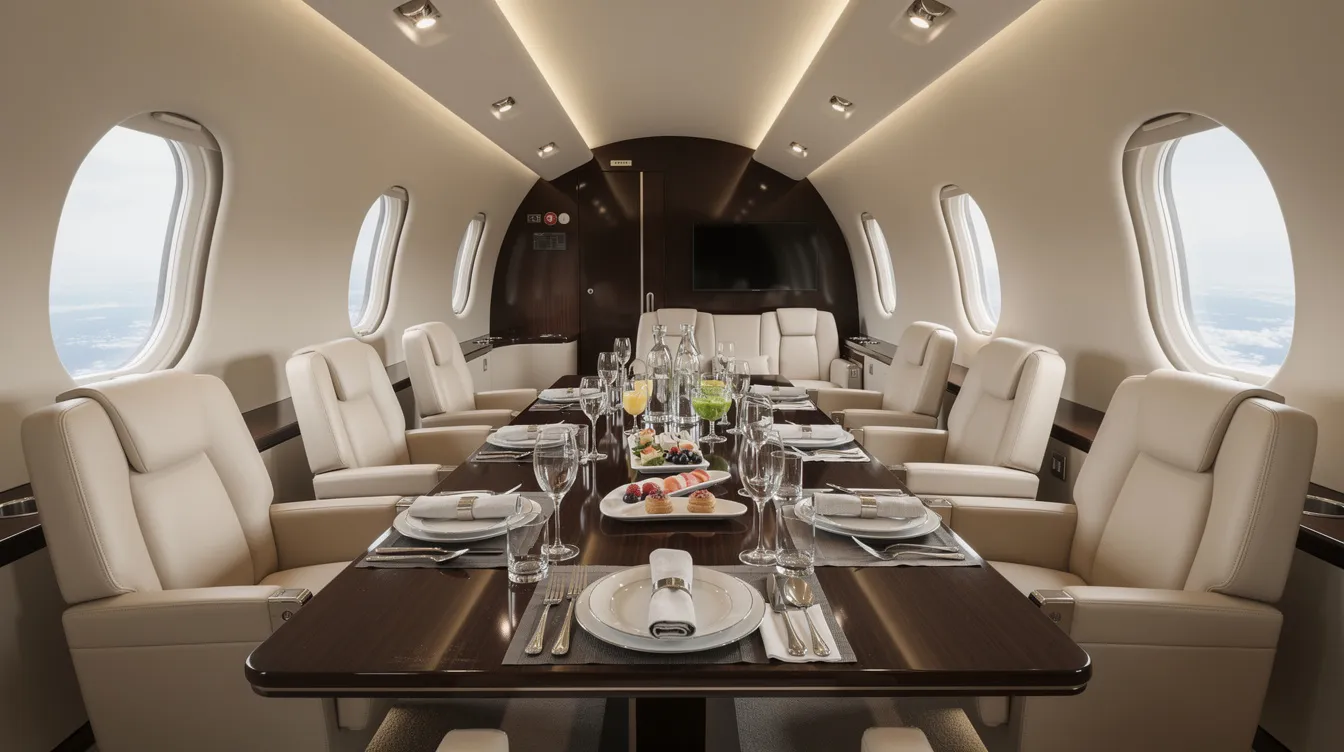
Full catering menus, lie-flat seats or beds, spacious lavatories, dedicated luggage compartments, high-speed Wi-Fi. Some feature conference tables, entertainment systems, and separate living areas.
Special requests are part of what makes private jet travel unique. Private flights provide a more personalized travel experience than commercial airlines. You can request specific meals, bring pets (with advance notice), accommodate medical equipment, or arrange children's items. Private aviation enhances comfort and privacy for business travelers who need to work or hold meetings in transit.
Anxious travelers can ask the crew to adjust lighting, minimize cabin interruptions, or provide extra check-ins during the flight. Crews on private jet service flights are trained to accommodate individual needs.
Booking Step by Step: From Quote to Takeoff
The booking process for private jet travel is simpler than most people expect, and travelers can book private jets through a straightforward quote-and-confirm process. Most private charters can be arranged with 24 hours' notice, and private flights can be booked within three hours of signing a contract in urgent situations.
Submit Your Request
Provide your route, dates, passenger count, and any special needs (pets, luggage, medical equipment).
Receive Quotes
Your broker or operator will present charter options across different aircraft types. Compare them carefully, since this is how most travelers arrange on-demand flights without owning an aircraft.
Review Terms
Reviewing cancellation and flexibility policies is important when booking private jet travel. Check minimum daily hours, schedule change fees, and what happens if weather delays your flight.
Request an All-Inclusive Quote
Ask for a breakdown that clearly lists base rate, taxes, positioning fees, landing fees, in-flight catering, and any potential extras like deicing or short-leg fees.
Confirm and Pay
Once you accept, sign the charter agreement and provide payment. Deposits are common.
Pre-Flight Communication
If you're an anxious flyer, let your provider know. The crew can be briefed to offer extra reassurance, explain sounds, and provide updates during the flight.
Arrive at the FBO
Show up 15–30 minutes before departure. Board, settle in, and go.
For first-time flyers, talking to the provider about your concerns beforehand is one of the most effective things you can do. It costs nothing and changes the entire experience.
Choosing a Safe and Transparent Private Charter Provider
Private jet operators should be verified for authorization to ensure safety compliance. Safety certifications include Part 135 certification or regional equivalents verified by independent auditors.
Here's what to look for:
-
FAA Part 135 certificate. This is the regulatory standard for on-demand charter flights with paying passengers in the U.S. It mandates pilot training requirements, maintenance standards, safety audits, and insurance. The FAA's Safe Air Charter program helps passengers identify legitimate operators.
-
Third-party safety ratings. Look for ARGUS Platinum, Wyvern Wingman, or IS-BAO Stage II/III certification. These independent audits verify that an operator meets safety standards beyond FAA minimums. Strong safety ratings are especially important for large jets and ultra-long-range trips.
-
Broker vs. operator. Operators own or directly control the aircraft and crew. Brokers arrange flights through operators. Both can be excellent, but understand who is ultimately responsible for your flight's safety and pricing transparency.
-
Transparent pricing. Your quote should separate base rate, taxes, fuel surcharges, repositioning, and crew overnight fees. If a provider won't itemize costs, consider it a red flag.
-
Pilot credentials. Ask about pilot experience in the specific aircraft type, simulator training, and crew rest policies. An experienced crew member with thousands of hours in your aircraft type is a key hub of flight safety.
Aviation is one of the most structured and regulated industries in the world. Understanding that framework can itself reduce anxiety.
When Private Jets Tickets Make Financial Sense—and When They Don't
Private jet travel isn't always more expensive than you'd think—and it isn't always the right choice. Here's when the numbers work and when they don't.
When private makes sense:
-
Group travel. Split a $15,000 New York–Miami charter among 8 people, and the per-person cost is under $2,000, competitive with last-minute business class fares. Private jet charters can accommodate large groups for events like corporate retreats or family reunions.
-
Multi-stop trips. A business traveler hitting three cities in one day saves hours of connecting, layovers, and ground transportation. Private jets reduce travel time significantly compared to commercial flights, by up to 50% in many scenarios.
-
Remote destinations. Booking private jet travel through smaller airports can save ground travel time when your destination isn't near a major hub. Regional airports and smaller airports often put you closer to your final destination.
-
Special occasions. Private jets provide tailored services for special occasions like weddings, milestone birthdays, or anniversary trips. Sharing the cost makes it realistic for more people than you might expect.
-
Time-critical business. Private aviation enhances comfort and privacy for business travelers, and the time savings on air travel alone can justify the cost for high-value work.
When commercial makes more sense:
-
Solo travelers on well-served routes with advance booking will almost always pay less on airlines.
-
Flexible leisure travel with long lead times benefits from airline sale fares.
-
Routes where airline business class offers lie-flat service at a fraction of private charter cost.
Saving Money on Private Jet Tickets Without Compromising Safety
You can achieve significant savings without cutting corners on safety. Here are proven strategies:
-
Use secondary airports. Flying into Teterboro instead of JFK, or Van Nuys instead of LAX, often reduces landing fees, ramp fees, and positioning costs. Private jets offer access to over 3,000 airports, so you have options.
-
Fly off-peak. Mid-week departures and avoiding holiday weekends can lower rates by 15–30%. Flexibility in timing is your most powerful negotiating tool.
-
Book 30–60 days ahead. Last-minute bookings command premium pricing. Planning ahead gives operators time to optimize scheduling.
-
Right-size your aircraft. Don't book a large cabin jet when a light jet will do. Matching aircraft size to your passenger count and flight distance prevents overspending.
-
Empty legs. Empty leg flights can be booked at a discount compared to regular charters, often 50–75% off. The trade-off is limited flexibility on timing and route, but if it aligns with your plans, the savings are substantial.
-
Share costs. Whether it's colleagues, family, or friends, splitting the aircraft cost among more passengers makes the per-person private flight cost dramatically more affordable. Connecting travelers heading to the same destination through shared charter platforms is increasingly common.
-
Never sacrifice safety for savings. Cost savings should never come from choosing unverified operators, skipping safety audits, or accepting unqualified crew. Confirm Part 135 certification and safety ratings regardless of price.
Environmental Impact: Private Jets, SAF, and Carbon Offsets
Private jet travel carries a higher per-person carbon footprint compared to airline economy tickets. A cross-country flight on a light jet produces roughly 5–14 times more CO₂ per passenger than the same trip in economy class, depending on how full the commercial flight is.
The industry is moving toward cleaner operations:
-
Sustainable Aviation Fuel (SAF): More operators now offer SAF blends that can reduce lifecycle carbon emissions by up to 80%. Availability is growing but still limited at many airports in 2026.
-
Carbon offset programs: Many private jet charter service providers offer carbon offset purchases as part of the booking process, funding verified environmental projects.
-
Right-sizing and trip combining: Choosing efficient aircraft for your mission and combining multiple destinations into one trip reduces total emissions. Avoiding unnecessary repositioning legs helps too.
-
Newer, more efficient aircraft: The latest generation of business jets burns significantly less fuel per nautical mile. Opting for modern, efficient aircraft when available benefits both your wallet and the environment, showcasing the natural beauty of progress in aviation technology.
Sustainability in private aviation remains a work in progress, but transparency about environmental impact is increasing.
How SkyGuru Supports Private and Commercial Flyers in Real Time
SkyGuru is a mobile app that combines aviation weather data, turbulence forecasts, and sensor-based detection to explain what is happening during your flight in real time.
Whether you're on a commercial airline or a private charter flight, the experience works the same way:
-
Before your flight: Enter your route to see turbulence forecasts, weather conditions, and what to expect at each stage of the journey.
-
During your flight: Receive real-time alerts and explanations. SkyGuru tells you why the aircraft is turning, what that engine sound change means, and whether upcoming bumps are normal.
-
Turbulence prediction: Instead of being surprised by turbulence, you know it's coming. Anticipation replaces surprise, and understanding replaces fear.
For private flyers who've invested in their comfort and safety, SkyGuru adds the layer of knowledge that makes the experience truly calm. It's like having a pilot and therapist in your pocket, whether you're on a turboprop to a regional airport or on an ultra-long-range flight across the Atlantic.
Understanding what's happening during a flight can make air travel feel far less stressful. Download SkyGuru before your next flight—private or commercial—to make every stage of the journey feel predictable and safe.
Frequently Asked Questions About Private Jet Tickets
Can I buy a single seat on a private jet? Some platforms offer per-seat access on semi-private or shared charter flights, but it's uncommon. Most private jet travel involves booking the entire aircraft. Regulatory rules around selling individual seats on private flights are strict.
Are private jets safer than airlines? Private charter flights in the U.S. operate under FAA Part 135 regulations, which impose rigorous pilot training, maintenance, and safety requirements. When you book with a certified operator holding strong safety ratings, private flying is very safe. Always verify your operator's credentials.
How much notice do operators need? Most private charters can be arranged with 24 hours' notice. In urgent cases, private flights can be booked within three hours of signing a contract. However, booking further ahead gives you more aircraft choices and better pricing.
Can I bring my pet? Yes. Most private charter providers welcome pets, though some charge a pet cleaning fee after the flight. Let your provider know in advance so they can prepare the cabin.
What about turbulence on small jets? Turbulence may feel more noticeable on smaller aircraft because they have less mass. However, all certified business jets are designed to handle turbulence with wide safety margins. Pilots can often adjust altitude to find smoother air.
Are there hidden fees I should watch for? Common add-ons include positioning fees, landing fees, short leg fees, overnight crew costs, and deicing charges. Ask for an all-inclusive quote that itemizes every charge. The federal excise tax (7.5% on domestic U.S. flights) and segment fees are mandatory and should also be listed.
What if I panic during a private jet flight? Tell the crew before departure that you're anxious. They can provide extra reassurance, explain sounds, and give you updates. SkyGuru can also help by explaining each flight phase and predicting turbulence in real time, so you always know what to expect.
How many airports can private jets access? Private jet charters can access over 3,000 airports in the U.S. and over 10,000 airports worldwide, many of which are not served by commercial airlines. This is one of the biggest advantages of flying privately.
Is personal data processed when I book a charter? Yes. When booking, personal data processed by the operator typically includes passenger names, contact information, passport details for international flights, and payment information. Reputable providers follow data privacy regulations.
Does it make sense for a one-time event? Absolutely. Private jet charters can accommodate large groups for events like weddings, reunions, or milestone celebrations. When costs are shared among a group, a one-time charter becomes surprisingly accessible.
Conclusion: Understanding Private Jet Tickets to Travel With Confidence
Private jet pricing, taxes, and operational fees can feel overwhelming at first glance. But once you understand how aircraft types, flight distance, government taxes, and availability shape the cost, the process becomes far more manageable. The key is asking the right questions, choosing the right aircraft size for your trip, and working with transparent, safety-certified providers.
For nervous flyers, knowledge is the most powerful tool you have. Understanding why turbulence feels different on smaller aircraft, what those engine sounds mean, and what to expect at each stage of flight transforms anxiety into awareness. The sensations are normal. The aircraft are robust. The pilots are trained for exactly this.
Flying becomes less intimidating when you understand what's happening around you. Whether you're booking your first private charter or your fiftieth commercial flight, tools like SkyGuru help you turn unknowns into predictable, manageable experiences. Download SkyGuru before your next flight to get real-time explanations, turbulence forecasts, and the calm confidence that comes from truly understanding your journey. Learn more about turbulence explained, how to handle flight anxiety, and tips for nervous flyers. Explore our aviation education resources and discover flight sensations explained to deepen your comfort and knowledge.
FLEET SELECTION
JET CARDS
COST ANALYSIS


How to Auditing Your Operator's Maintenance Logs
Oct 05, 2025

How to Auditing Your Operator's Maintenance Logs
Oct 05, 2025

How to Auditing Your Operator's Maintenance Logs
Oct 05, 2025
Sky Guru Weekly
The smartest private aviation intelligence in your inbox.
.svg)

