



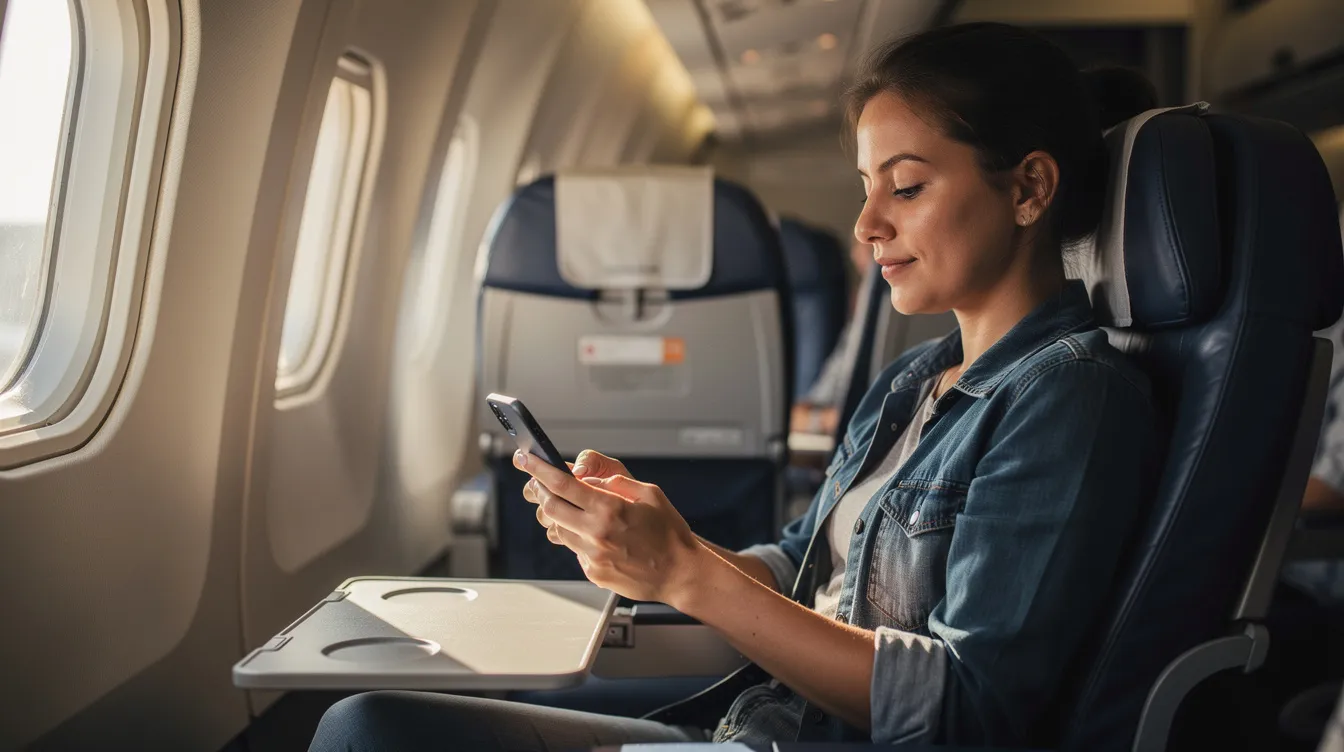
Finding the best apps for flying in 2026 means more than just hunting for cheap tickets. It means building a toolkit that supports every phase of your journey—from booking to landing.
Most travelers download a deal-finder and stop there. But a truly calm flying experience requires apps that track delays, explain what’s happening during the flight, help you manage anxiety when turbulence hits, and even help you find inspiration for new destinations while making the planning process more fun.
This guide covers it all. Whether you’re a nervous flyer who dreads takeoff or a frequent traveler who wants smoother trips, you’ll find the right combination of apps to make your next flight feel more predictable, far less stressful, and a lot more fun and inspiring.
Key Takeaways
-
The best apps for flying span five categories: booking, tracking, airport comfort, mental wellness, and in-flight understanding—you likely need more than one.
-
Cheap flight apps like Skyscanner, Google Flights, Kiwi, Hopper, and Momondo excel at finding the lowest prices and help users find the best flight options, but don’t explain what you’ll feel and hear during the flight itself.
-
Flight booking apps often feature price alerts, allowing users to track fare changes and receive notifications when prices drop.
-
Flighty provides machine-learning delay predictions and gate change alerts, helping travelers stay ahead of disruptions.
-
Flight tracking apps like Flightradar24 offer live, interactive maps to track planes globally, while syncing with calendars and travel management tools for seamless updates.
-
AirHelp monitors flights for disruptions and checks eligibility for compensation under regulations like EC 261, offering peace of mind for travelers facing delays.
-
SkyGuru is the go-to app for nervous flyers, offering real-time turbulence forecasts, stage-of-flight explanations, and reassurance during takeoff and bumps.
-
Combining a deal-finder, a flight tracker, a lounge app, and a calm in-flight app like SkyGuru creates the smoothest overall travel experience.
-
All recommendations are current as of 2026, and the goal here is to reduce flight anxiety—not just list tools.
Why You Need More Than One App for Flying
Most people download a booking app, find a flight, and call it done.
But a calm, well-supported trip actually needs different tools for different moments. The process of planning a trip involves several steps, each best handled by a specialized app. Booking is just the first step. Tracking your flight, finding a quiet space at the airport, and understanding what’s happening in the air are separate challenges that require separate solutions.
Think of it this way: the best travel apps fall into five main categories:
-
Ticket deals – Apps that find the lowest flight prices (Many flight booking apps provide flexible search options, enabling users to filter results by price, travel time, and number of stops.)
-
Flight tracking – Apps that show delays, routes, and real-time aircraft position
-
Airport comfort – Lounge access and seat selection tools, plus apps like Mobile Passport Control for faster U.S. customs processing and MyTSA for real-time security wait times
-
Mental wellness – Meditation and breathing apps for general anxiety
-
In-flight understanding – Apps that explain what’s happening right now on your plane
Here’s what most anxious flyers discover: uncertainty fuels fear more than the flight itself.
Not knowing why the plane shakes, what that noise was, or why you’re banking left creates a vacuum that your brain fills with worst-case scenarios. Studies show that unknown stimuli can amplify anxiety responses by three times compared to known ones.
This is exactly where SkyGuru fits. It’s a real-time in-flight guide and turbulence predictor designed specifically for nervous flyers—translating pilot-grade data into calm, plain-English explanations.
Aviation is highly regulated and extraordinarily safe. Modern aircraft like the Boeing 787 are engineered to handle gust loads up to 2.5g, far beyond the 0.2-0.5g you actually feel during turbulence. The right mix of apps makes each stage of travel more predictable, which makes the whole experience less stressful.
Best Apps for Finding and Booking Cheap Flights
This is what most people search for first: apps that help you find affordable flight prices for 2026 trips without endless hidden fees. Many of these apps also help you save money by surfacing exclusive deals, discounts, and itinerary tips that can reduce your travel costs.
Here are the flight booking apps worth downloading:
Skyscanner and Google Flights
Skyscanner remains one of the best travel apps for price comparison, and Google Flights is the most accurate starting point for comparing wide-ranging routes and prices across airlines. Skyscanner’s “Everywhere” feature scans over 1,200 airlines and suggests destinations based on your budget and flexibility. Google Flights excels at finding the best prices and offers a clean, easy-to-use interface.
Set price alerts and you’ll receive notifications when fares drop more than 15% on routes like London to New York. Users report average savings of 24% on international routes using flexible date searches.
One limitation: low-cost carriers sometimes add bag fees (up to €55 on some airlines) that aren’t always visible upfront.
Kiwi.com
Kiwi stands out for “virtual interlining”—algorithmically combining airlines that don’t normally cooperate. For example, it might stitch together KLM and Air Asia for a Paris-Bangkok trip, saving 37% versus booking direct.
The Kiwi Guarantee covers missed connections up to €1,000 in vouchers. However, self-transfer itineraries carry some risk, so check connection times carefully.
Creating an account on Kiwi.com allows users to manage bookings, access payment options, and unlock additional features.
Hopper
Hopper uses machine learning trained on over 25 billion price points to predict the best dates to book flights.
The color-coded calendar shows green for “book now” and red for “wait.” For summer 2026 Europe trips, Hopper forecasts 12-18% price hikes after April—so booking early matters.
The free version offers basic alerts. Hopper Gold ($99/year) unlocks premium predictions. For those who prefer browsing or booking flights online, Hopper’s website offers similar features for researching and reserving travel.
Momondo & Kayak
Both apps (owned by Booking Holdings) serve as a one-stop shop for flight searches, filters, and travel planning. They excel at filter granularity—sort by number of stops, layover length, departure time, or a “best” hybrid score balancing price and duration.
Momondo’s visual heatmaps help identify cheaper travel weeks. Kayak’s “Hacker Fares” mix one-way tickets for up to 30% savings. Internal benchmarks show 22% savings on multi-city trips.
Skiplagged
Skiplagged exploits hidden-city ticketing—booking a flight with a layover in your actual destination, then skipping the final leg.
Savings can reach 40-65%, but airlines have banned users for this practice. You also can’t check bags or use frequent flyer programs reliably. Use with caution.
Booking Tips for Anxious Flyers
If you’re prone to flight anxiety, consider these choices when you book flights:
-
Choose daytime departures when possible—they reduce circadian disruption by about 30%
-
Avoid very tight connections that create pre-flight stress
-
Prefer larger aircraft (A350, 787) which dampen turbulence better due to their mass
Once you’ve booked through any of these apps, SkyGuru works with your flight. Simply input your flight number and date to get turbulence forecasts and explanations before and during your trip.
Best Apps for Tracking Flights and Delays
Knowing where your plane is and why delays happen reduces stress at the airport. Flight tracking apps provide real-time updates on delayed flights and cancellations, often faster than airline apps. For nervous travelers watching the clock, a good flight tracker provides situational awareness without compulsive gate-checking.
These apps also provide airport information such as runway data, communication frequencies, and NOTAMs, which can be visualized on maps for better route planning. Many flight tracking apps offer features such as live flight maps, delay predictions, and airport intelligence to enhance user experience.
Flighty
Flighty has become the premium choice for travelers who want pilot-grade data. It pulls from sources like OAG and Cirium, delivering delay alerts 5-10 minutes faster than most airlines with machine-learning delay predictions and gate change alerts.
Key features include:
-
Inbound aircraft tracking with tail number visibility
-
Airport-wide disruption maps for hubs like JFK, LHR, and LAX
-
Historical on-time performance showing your flight’s probability of departing on schedule
Knowing that your plane is currently inbound from Chicago, and that similar routes run 82% on-time, is far more calming than staring at a departure board.
Flightradar24
Flightradar24 offers a live, interactive map to track planes globally, giving travelers a clear visual of their aircraft’s position and route.
AirHelp
AirHelp monitors flights for disruptions and helps users check eligibility for compensation under regulations like EC 261, providing support for travelers affected by delays or cancellations.
Airline Apps
Your airline’s own app remains essential for real-time gate changes, digital boarding passes, and same-day rebooking when disruptions occur. Delta, United, and Lufthansa apps all offer bag tracking with 95% accuracy.
The limitation: airline apps only show their own flights, not the broader airport picture.
How Trackers Connect to In-Flight Understanding
Flight tracking apps show technical details—routes, aircraft type, weather, and timing. They answer “what’s happening with my flight plan before I board.”
SkyGuru picks up where trackers leave off. It translates similar aviation data into calm explanations during the flight itself. Where Flighty tells you the route, SkyGuru explains why you’re feeling that turn or hearing that noise.
Suggested workflow:
-
Book with Skyscanner, Google Flights, or Kiwi
-
Import into Flighty or your airline app for departure alerts, syncing with calendars and travel management tools
-
Load the same flight into SkyGuru for in-flight commentary and turbulence forecasts
This combination gives you visibility from booking through arrival—and understanding during the flight path itself.
Best Apps for Airport Lounges, Seats, and a Calmer Pre-Flight
Airports are often the first stress point. Long lines, crowds, noisy gates, and uncertainty about delays can spike anxiety before you even board.
The right apps help you find quiet spaces and choose better seats. Some lounge and accommodation apps even offer free cancellation, making it easier to adjust your plans if your location or schedule changes. When searching for a quiet spot, knowing your exact location in the airport can help you navigate to lounges or less crowded areas more efficiently.
Tip: For faster U.S. customs processing, consider using Mobile Passport Control.
MyTSA provides 24/7 access to security information, including real-time wait times, helping you avoid long lines.
Priority Pass
With access to over 1,700 lounges globally by 2026, Priority Pass transforms the pre-flight experience. A quiet lounge with food, drinks, and showers can lower cortisol significantly compared to sitting at a crowded gate.
Membership tiers range from basic (pay-per-visit) to Prestige ($469/year for unlimited access). Many premium credit cards include Priority Pass membership.
Some lounge apps now show real-time occupancy—helpful for finding a peaceful spot during busy travel weeks.
Airline and Credit Card Lounge Apps
If you hold an Amex Platinum, Chase Sapphire Reserve, or similar card, check your card’s app for lounge access rules. Many airlines also have their own lounge apps with digital membership cards and availability info.
Seat Selection Tools
Choosing the right seat matters for nervous flyers. SeatGuru and similar seat maps show aircraft configurations, rating seats for legroom, noise, and recline.
Tips for anxious travelers:
-
Choose seats over the wing (rows 10-20 on narrow-body jets like the 737) where turbulence feels less pronounced
-
Avoid seats near galleys and lavatories to reduce noise and foot traffic
-
Window seats give you something to focus on; aisle seats offer escape flexibility
Many airline apps now include seat maps with user ratings. Check before your flight and change seats if better options open up.
Practical Pre-Flight Tips
-
Arrive 2.5 hours early for international flights to avoid rushing
-
Walk the terminal briefly—movement boosts endorphins
-
Hydrate (8oz per hour) and limit caffeine to under 200mg to avoid amplifying jitters
-
Download all necessary apps (including SkyGuru) over airport Wi-Fi before boarding
-
Use Google Maps or offline maps to navigate unfamiliar terminals
-
Check the airport or lounge website for up-to-date information before arriving
Combining a lounge app with SkyGuru creates a calmer experience from the perfect place in the terminal through landing.
Best Apps for Fear of Flying, Turbulence Anxiety, and In-Flight Calm
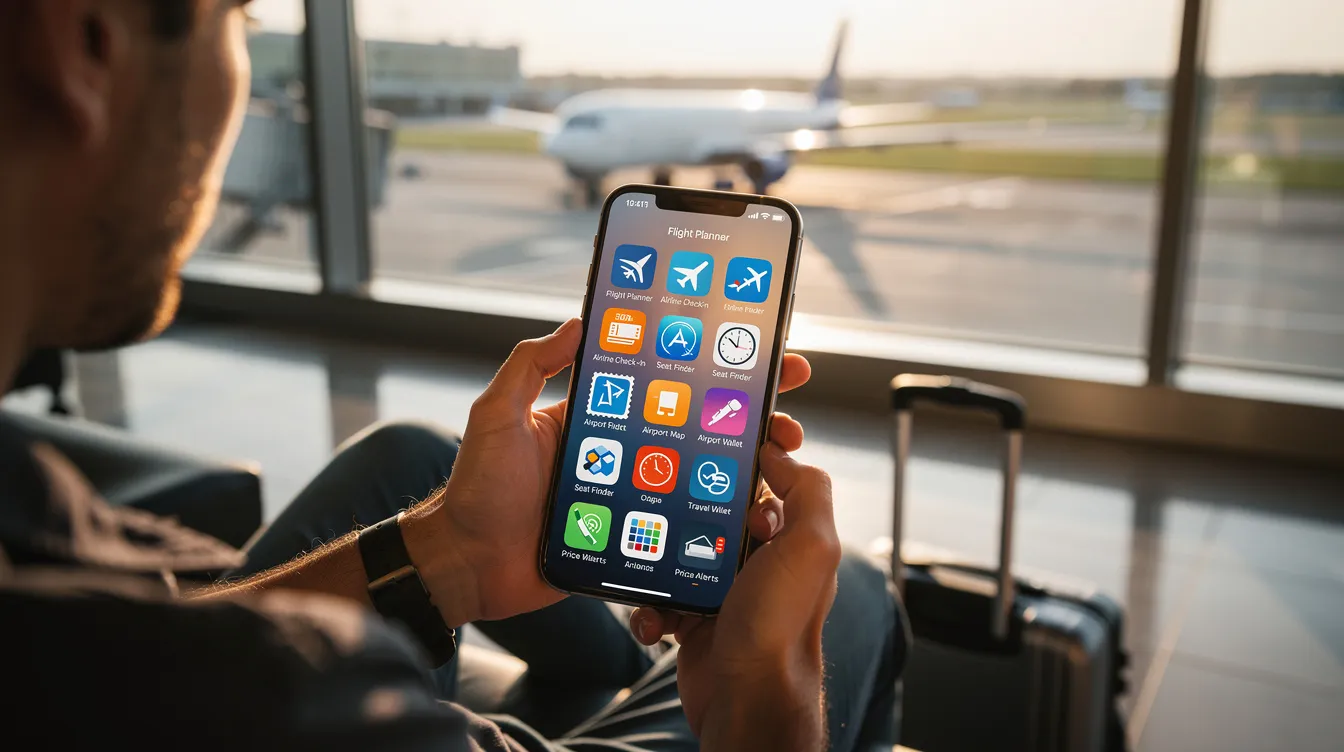
If your heart races at takeoff, you dread every bump, or you find yourself scanning cabin crew faces for signs of worry—you’re not alone.
Approximately 6.5% of the population experiences significant fear of flying. That’s 40 million adults in the US alone, and fear-of-flying apps can play a meaningful role in reducing that anxiety.
Tracking your first flight of a trip can help reduce anxiety by providing early updates and reassurance before you even board. Essential apps for air travelers include Flighty or Flightradar24 for real-time flight tracking and delay alerts.
Specialized apps can help. This section focuses on tools designed specifically for in-flight anxiety, with detailed attention to SkyGuru and brief coverage of complementary tools that address fear of flying.
The key insight: anxiety often comes from uncertainty. When you don’t know why the plane is shaking, your brain fills the gap with worst-case scenarios. But when you understand what’s happening—and why it’s normal—the fear has less room to grow.
SkyGuru: Real-Time In-Flight Guide for Nervous Flyers
SkyGuru is a mobile travel app created by aviation professionals and psychologists to support anxious passengers in real time.
Unlike generic meditation apps, SkyGuru connects directly to your specific flight. It doesn’t offer pre-recorded calming sounds. It tells you what’s actually happening and why.
How it works:
Before your trip, enter your flight number, date, and seat. SkyGuru then analyses aviation weather, your route, time of departure, and turbulence forecasts for that exact flight.
During the flight, the app uses your phone’s sensors to detect stages like taxi, takeoff, climb, cruise, descent, and landing. At each stage, it explains what you’re likely to feel and hear.
Turbulence support:
This is where SkyGuru shines brightest for nervous flyers.
-
Pre-boarding forecasts warn you about expected bumps
-
In-flight messages like “light turbulence expected in 20 minutes” remove surprise
-
Reassurance that modern aircraft handle forces far beyond what passengers experience (wings flex well within safety margins)
-
Translation of pilot-style weather data into simple language: “crossing a jet stream now, so some short shaking is normal.
In-app coping tools:
When anxiety spikes, SkyGuru offers breathing exercises (like 4-7-8 breathing, shown to reduce heart rate by 20%) and grounding techniques. Short educational snippets about safety systems help refocus your attention.
The approach:
SkyGuru doesn’t dramatize turbulence. It normalizes sensations, comparing them to everyday experiences. Bumps become “like driving on a highway with rough pavement.” Turns become “the pilot adjusting our flight path around weather.”
Aircraft are engineered to handle gusts far exceeding what you’ll ever feel. SkyGuru makes that fact real by explaining it in context, as it happens.
Getting started:
Download SkyGuru a day or two before your departure. Test the interface, enter your future flights, and let the app preload your 2026 trips using pre-downloaded aviation weather data and in-flight sensor tracking. When you board, everything is ready.
Many travelers find that simply knowing SkyGuru is running—ready to explain any noise or sensation and provide real-time flight stage explanations—reduces anxiety before anything even happens.
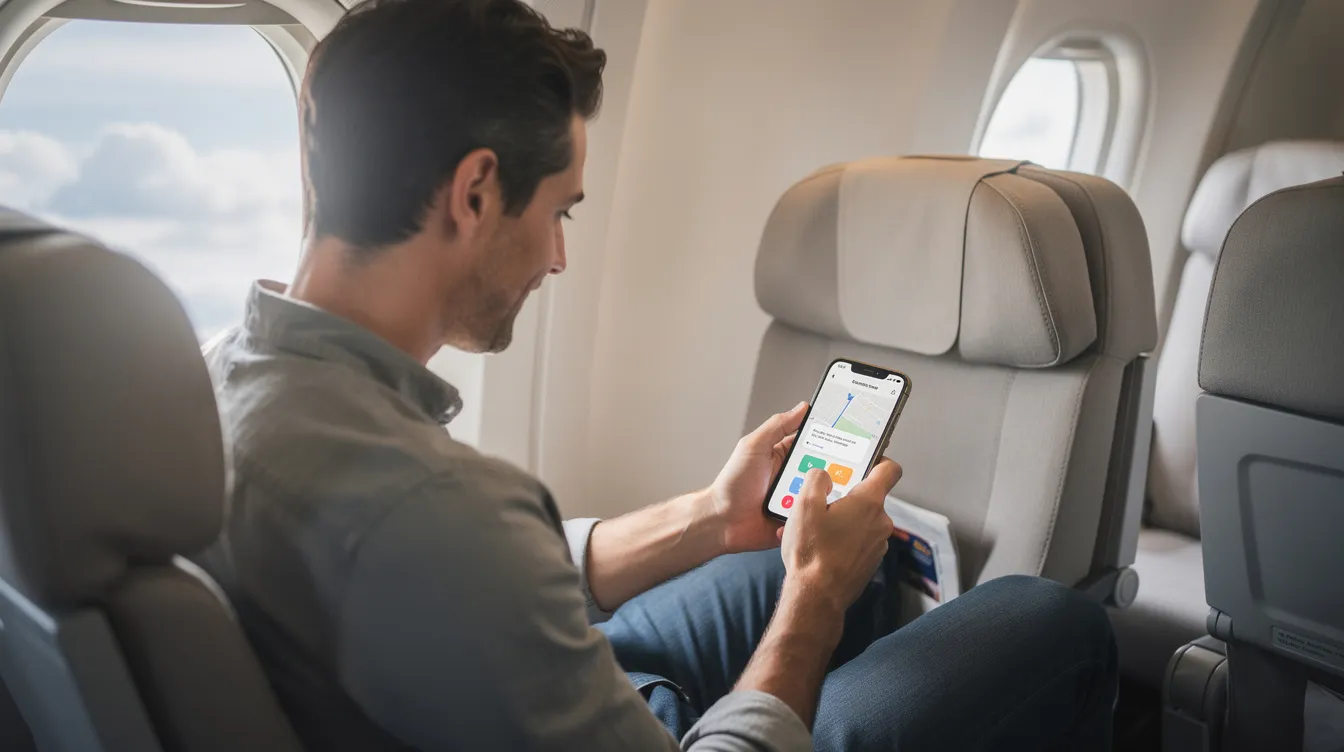
Other Helpful Mental Wellness Apps to Use Alongside SkyGuru
While SkyGuru focuses on explaining the flight itself, other apps can help you overcome the fear of flying more broadly, and general mindfulness apps can lower your baseline anxiety before and after flying.
Calm and Headspace
Both apps offer guided meditations, breathing exercises, and sleep stories. Each includes flying-themed or travel-themed sessions you can use at the gate or during a cruise.
With over 100 million downloads, Calm is one of the most popular wellness apps. Headspace offers structured “travel packs” with 10-minute sessions.
Key difference from SkyGuru:
These apps aren’t connected to real flight data. They can’t tell you what the aircraft is doing right now or why you just felt that bump. They’re excellent for relaxation practice, but don’t provide flight-specific information.
Suggested routine:
-
Pre-flight: Use Calm or Headspace for grounding meditation at the gate
-
During flight: Rely on SkyGuru to narrate what’s happening
-
If anxiety spikes: Check SkyGuru for explanation, then switch to breathing exercises
Combining skills (breathing, mindset tools) with information (what’s that noise, why are we descending) gives your nervous system fewer unknowns to fear. This dual approach often works better than either category alone, and media coverage of SkyGuru frequently highlights this kind of combined strategy for anxious flyers.
Best Apps for On-Board Comfort: Seats, Entertainment, and Sleep
Physical discomfort and emotional anxiety feed each other. When you’re cramped, hot, or bored, anxiety tends to escalate faster. Some of the best apps for flying even let you share your seat selections or travel plans with friends, making your journey more connected and enjoyable.
These apps help with the physical side of flying. For example, PackPoint is a great tool for generating a customized packing list based on your destination's weather and planned activities, ensuring you have everything you need for a comfortable flight.
In the sleep and jet lag department, Timeshifter provides personalized plans to help eliminate jet lag through light exposure, caffeine, and sleep management, so you arrive feeling refreshed.
Airline Apps for Seat Changes and Upgrades
Most airline apps let you bid on upgrades, purchase extra legroom, or switch seats if better options become available. A more spacious seat often feels more stable and less claustrophobic for nervous flyers.
Check your airline app an hour before departure—premium seats sometimes open up at no extra cost when others change plans.
Entertainment: Netflix, Spotify, and Podcasts
Download your favorite apps and content before you fly. Pre-download calming shows, playlists, or audiobooks over home or airport Wi-Fi.
In-flight connectivity can be spotty, with latency issues on some Ku-band systems. Having offline content means you’re never stuck without distraction.
Sleep and Jet Lag Apps
For long-haul flights like New York to London or Sydney to Los Angeles, apps like Timeshifter use chronobiology to plan optimal nap times and light exposure.
Timeshifter is NASA-validated and can cut adaptation time by 55% on flights crossing five or more time zones. Enter your origin, destination, and schedule, and the app creates a personalized plan.
SkyGuru in the Background
While you watch, read, or rest, SkyGuru runs quietly. It pops up with simple explanations when a new stage of flight or turbulence patch occurs.
You don’t need to stare at the screen. The app provides awareness without demanding attention.
Health and Hydration Reminders
Long flights cause mild dehydration (about 1.8% hourly fluid loss). Simple timer apps can remind you to drink water and stretch, reducing headaches, restlessness, and DVT risk.
Small comforts add up to a calmer overall experience.
How to Combine the Best Flying Apps into a Calm Travel Routine
Here’s a simple, phased approach for your next trip in 2026:
Start by downloading a few of the best apps for flying to help you navigate the world with ease. Travel planning apps like Rome2Rio provide comprehensive transport options, including overland, water, and air routes, making it easier to plan complex journeys across borders. TripIt is a popular travel planning app that automatically scans your emails to compile travel itineraries, making it especially useful for frequent travelers. Apps like Omio and Eurail are designed to help travelers plan and manage various transport options, particularly for train travel across Europe, offering a user-friendly interface for booking.
Booking Phase
Use Skyscanner, Google Flights, or Kiwi to search for deals. Look beyond just the lowest prices:
-
Favor daytime departures if anxiety is a concern
-
Avoid connections under 90 minutes
-
Choose larger aircraft when price differences are small
-
Set price alerts for routes you’re watching
Before Departure (1-2 Days Out)
-
Import your flight into Flighty or your airline app for delay alerts, syncing with calendars and travel management tools, or tap into SkyGuru’s API flight and weather data platform if you’re building your own travel tools.
-
Add the same flight to SkyGuru so turbulence forecasts and stage detection are ready, benefiting from detailed route and turbulence indices via the SkyGuru API platform
-
Check SeatGuru or your airline’s seat map and upgrade if possible
-
Download entertainment for offline use
At the Airport
-
Check Priority Pass or your airline app for lounge access
-
Find a quiet space away from the gate crowds
-
Use Calm or Headspace for a short pre-boarding meditation
-
Confirm your seat in the airline app
-
Review SkyGuru’s pre-flight forecast for your route
-
Use Mobile Passport Control for faster customs processing if applicable
-
Check MyTSA for real-time security wait times
During the Flight
-
Keep SkyGuru open (or running in the background) for real-time commentary
-
Use wellness apps for breathing exercises if anxiety rises
-
Watch or listen to pre-downloaded content
-
Follow stretching and hydration reminders on longer flights
-
Remember: the pilot sees everything you’re feeling and considers it routine
After Landing
-
Review SkyGuru explanations to reinforce learning (“so that’s all turbulence was”)
-
Log your flight in any tracking apps for your records
-
Notice how understanding reduced fear—this builds confidence for future flights
The goal isn’t zero anxiety. It’s feeling informed, supported, and in control enough that flying becomes a manageable—even enjoyable—part of your life.
Best Apps for Money Management and Connectivity on the Road
Traveling also means managing expenses and staying connected. These apps help keep your finances organized and your phone working internationally.
Splitwise
Splitwise allows users to easily divide and track costs among friends during group trips, simplifying the process of managing shared expenses.
XE Currency Exchange
XE Currency Exchange is a popular app providing real-time currency exchange rates and works offline if rates are updated beforehand.
Wise (formerly TransferWise)
Wise offers a unique way to send money internationally by using local bank accounts to reduce conversion costs, making it a valuable tool for travelers.
Airalo
Airalo offers downloadable eSIMs for international travel without swapping physical SIM cards, making it easier to stay connected abroad without expensive roaming fees.
Summary Table: Best Apps for Flying Categories and Features
|
Category |
Recommended Apps |
Key Features & Benefits |
Best For |
|---|---|---|---|
|
Flight Booking |
Skyscanner, Google Flights, Kiwi, Hopper |
Price alerts, flexible search, virtual interlining |
Finding cheap flights and flexible dates |
|
Flight Tracking |
Flighty, Flightradar24, AirHelp |
Real-time tracking, delay alerts, compensation help |
Staying informed about delays and routes |
|
Airport Comfort |
Priority Pass, Mobile Passport Control, MyTSA |
Lounge access, faster customs, and security wait times |
Reducing airport stress and wait times |
|
Mental Wellness |
SkyGuru, Calm, Headspace |
Real-time flight explanations, meditation, breathing |
Managing flight anxiety and turbulence |
|
In-Flight Comfort |
PackPoint, Timeshifter, airline apps |
Packing lists, jet lag plans, seat upgrades |
Physical comfort and sleep during flights |
|
Money Management |
Splitwise, XE Currency Exchange, Wise |
Expense tracking, currency rates, and low-cost transfers |
Managing finances while traveling |
|
Connectivity |
Airalo |
eSIMs for international data |
Staying connected without roaming fees |
Flying becomes less intimidating when you understand what’s happening around you. Knowing why turbulence occurs, why aircraft make certain sounds, and what sensations are normal can transform uncertainty into confidence.
The best app for your flying experience depends on what you need most. But for nervous flyers, the combination of a deal-finder, a tracker, and SkyGuru creates something powerful: a trip where you’re informed at every stage, and surprises become explanations instead of fears.
Download SkyGuru before your next flight. Enter your details. And see how understanding changes everything.
Final Thoughts: Making Flying Less Stressful with SkyGuru
Travel can be a source of joy and discovery, but for many, flying triggers anxiety and fear. The key to easing this discomfort lies in knowledge and preparation. Apps like SkyGuru (https://myskyguru.com/) offer a unique blend of aviation expertise and real-time flight insights designed specifically to support nervous flyers.
By explaining what’s happening during each phase of your flight and forecasting turbulence before it arrives, SkyGuru transforms uncertainty into reassurance. When combined with smart booking and tracking apps, it creates a comprehensive toolkit for a calmer, more confident travel experience.
Remember, flying is one of the safest modes of transport. With the right apps guiding you, each journey can feel smoother, more predictable, and even enjoyable. Embrace technology as your co-pilot, and let SkyGuru help you take the fear out of flying.
Understanding your flight better reduces anxiety and builds confidence. Whether it’s your first trip or your hundredth, SkyGuru’s real-time guidance and expert insights help you stay informed and calm throughout the journey. Visit https://myskyguru.com/ to learn more and prepare for your next flight with peace of mind.
FLEET SELECTION
JET CARDS
COST ANALYSIS


How to Auditing Your Operator's Maintenance Logs
Oct 05, 2025

How to Auditing Your Operator's Maintenance Logs
Oct 05, 2025

How to Auditing Your Operator's Maintenance Logs
Oct 05, 2025
Sky Guru Weekly
The smartest private aviation intelligence in your inbox.
.svg)

