



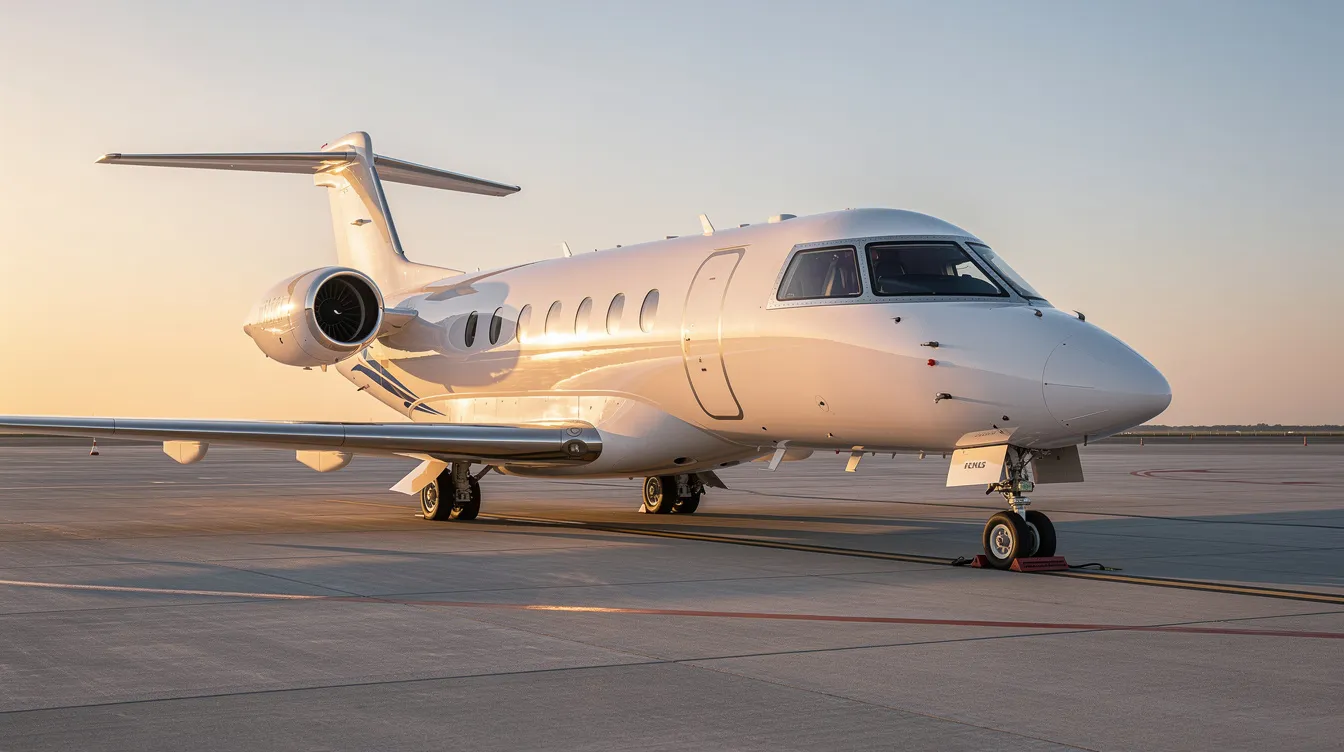
If you've searched for "NetJets cost," you probably want straightforward numbers - not vague marketing language. This guide delivers exactly that: real 2025–2026 pricing across every aircraft category, plus honest context about what those numbers mean for travelers who feel uneasy about flying.
Quick Answer: What Does NetJets Really Cost in 2026?
NetJets pricing depends on three things: which program you choose, which aircraft type you fly, and how many hours you use per year. Here are the current benchmarks.
For a 25-hour NetJets jet card on a light jet like the Embraer Phenom 300, expect to pay roughly $200,000–$220,000 upfront. That works out to about $8,600–$10,000 per occupied flight hour, including the 7.5 federal excise tax and typical fuel surcharges. Midsize jets run approximately $250,000–$300,000 for 25 hours, and large cabin jets start at $400,000 for the same block.
Here's a quick reference by aircraft categories:
|
Aircraft Category |
25-Hour Card Cost |
Approx. Hourly Rate |
|---|---|---|
|
Light jets |
$200,000–$220,000 |
$8,600–$10,000 |
|
Midsize jet |
$250,000–$300,000 |
$10,000–$13,000 |
|
Super-midsize |
$275,000–$325,000 |
$12,000–$15,000 |
|
Large cabin / ultra long range |
$400,000–$500,000+ |
$16,000–$20,000+ |
Keep in mind that actual invoices often add fuel surcharges, international handling fees, and seasonal peak charges on top of these base figures.
Now, a reassurance for anxious travelers: while the private jet cost is undeniably high, safety standards, pilot training, and maintenance across NetJets programs are equally high. But here's what matters most - you do not need to pay NetJets prices to fly safely and calmly. Understanding what happens during each phase of flight, through tools like SkyGuru, can matter more for peace of mind than the price tag or cabin category.
How NetJets Works: Card, Fractional Share, and Lease Explained
NetJets turns the private jet cost into three structured programs, each designed for different usage levels.
Jet card programs are the simplest entry point. You prepay for a block of 25 hours on a specific aircraft class. There's no fractional jet ownership involved, no monthly management fee, and no long-term commitment. Jet cards offer fixed hourly rates, making private jet travel costs predictable for people flying under 50 hours per year. Jet cards typically require no long-term commitment, which appeals to occasional travelers.
NetJets Share is fractional ownership. You buy a fraction - commonly 1/16th or 1/8th - of a specific aircraft. Fractional ownership usually requires a minimum of 50 flight hours annually. You pay the upfront acquisition cost, a recurring monthly management fee, and an occupied hourly rate each time you fly. This model suits travelers flying 50–200 hours per year.
NetJets Lease sits between the other two. You get long-term access (often 36+ months) to an aircraft category without asset ownership but still pay monthly management and hourly rates. It's designed for flyers around 50–75+ hours annually who want consistency without tying up capital.
All three models are programs the company operates through the same vast fleet and identical safety systems. The differences are financial - capital commitment, hourly rates, and flexibility - not safety-related.
From a nervous flyer's perspective, the sensations in a light jet versus a large cabin jet can feel different. Turbulence tends to feel softer in heavier aircraft. But safety levels remain extremely high across every aircraft category that NetJets operates.
NetJets Fleet and Aircraft Categories: From Light Jets to Ultra Long Range
NetJets operates over 750 aircraft worldwide as of 2026, forming a global fleet that spans five main categories.
-
Light jets: The Embraer Phenom 300 carries about six passengers with a range around 3,200 km - ideal for 1–3 hour hops across the U.S. or within Europe.
-
Midsize: The Citation Latitude and Citation Sovereign offer more cabin space and range for 4–6 hour flights.
-
Super-midsize: The Citation Longitude and Challenger 350 handle coast-to-coast nonstop flights like New York to Los Angeles.
-
Large cabin / long range: The Challenger 650 and Global 5500/6000 serve intercontinental routes.
-
Ultra long range: The Global 7500 and upcoming Global 8000 cover 12,000+ km missions - think New York to Hong Kong nonstop.
Next-generation jets in this class typically feature clean-sheet designs and advanced avionics, while relying on advanced materials and composites for fuel efficiency. These next-generation jets also utilize advanced propulsion systems that significantly reduce fuel consumption and emissions. Aircraft certification for any of these models involves structural testing, flight testing, and compliance with noise regulations before they ever carry passengers.
How does aircraft size affect the private jet cost? Lighter jets have lower hourly rates but can feel more "active" in turbulence. Larger aircraft cost significantly more per hour but often provide a smoother ride. Turbulence is safe across all NetJets aircraft - understanding why a smaller plane moves more can ease anxiety. SkyGuru's real-time turbulence explanations help with exactly this.
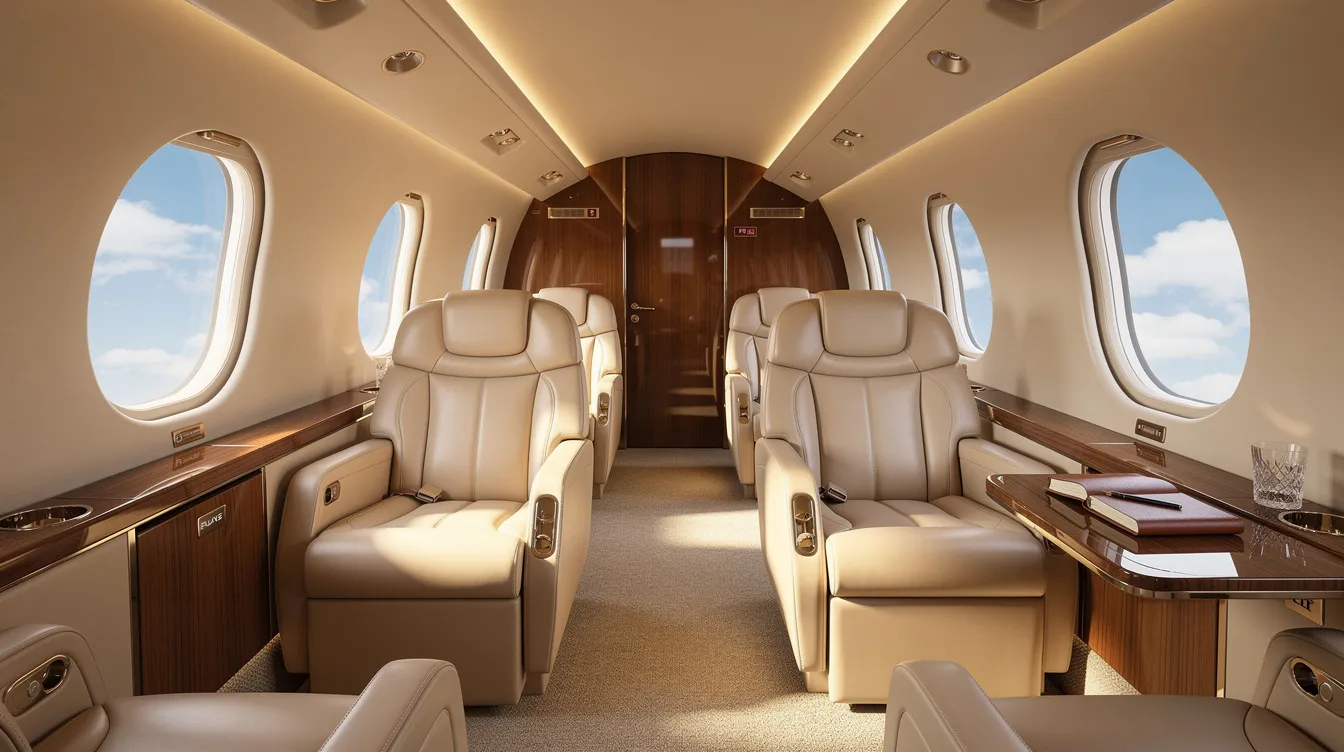
NetJets Cost Breakdown: The Three Main Components
Whether you're looking at a NetJets share, NetJets lease, or the broader landscape of private jet companies, costs generally split into three buckets:
-
Acquisition cost - the upfront buy-in for a share or lease deposit.
-
Monthly management fee - fixed costs paid every month regardless of flying.
-
Occupied hourly rates - variable charges per flight hour.
In everyday terms:
-
Share or lease buy-in: Your "ticket" into a specific aircraft class within the NetJets fleet.
-
Monthly management: Covers crew members' salaries, hangar space, insurance, aircraft management, and administration.
-
Hourly rates: Fuel, maintenance, landing fees, in flight catering, overnight expenses, ground transport coordination, and taxes like federal excise tax.
Jet card programs bundle most of this into a single per-hour figure - no separate monthly management and no acquisition cost. Fractional ownership shows more separate line items. For most travelers, this level of financial commitment is unnecessary, but understanding it helps when comparing to on demand charter or commercial first class.
Initial Share Purchase: Upfront Private Jet Cost
Buying a NetJets share means purchasing a 1/16th (or larger) fraction of a specific aircraft, typically on a five-year contract with guaranteed buyback. A 1/16th share in fractional ownership costs around $500,000–$850,000 for a light jet.
Here are 2026 ranges by aircraft category:
-
Light jets: Roughly $500,000–$850,000 for a 1/16th share (~50 hours/year)
-
Midsize: About $800,000–$1.2 million
-
Super-midsize: Around $900,000–$1.5 million
-
Large cabin / ultra long range: $1.5–$3+ million
The cost of purchasing a new private jet ranges from $2 million to over $100 million, so fractional ownership offers a fraction of that capital exposure - but depreciation is real. Expect a 30–50% loss in asset value over the five-year term, even with a guaranteed buyback formula. Commercial and business jet costs are influenced by developmental risks and manufacturing complexity, which feeds into those depreciation estimates.
This is capital at risk, not just money spent per flight. Before assuming fractional ownership will automatically lower your net private jet cost, talk with financial and tax advisors about whether you'll realistically use 50–200 hours per year.
Monthly Management Fee: The Hidden Fixed NetJets Cost
The monthly management fee is due whether or not you fly. It's the part of NetJets pricing that most first-time buyers underestimate. Fractional ownership includes monthly management fees regardless of usage.
NetJets monthly management fees range from $10,000 to $25,000 depending on aircraft size. Here are approximate 2026 figures:
-
Light jets: About $12,000–$15,000/month (~$720,000–$900,000 over five years)
-
Midsize: Around $15,000–$20,000/month
-
Super-midsize: About $18,000–$24,000/month
-
Large cabin / ultra long range: Roughly $24,000–$30,000+/month
What does this fee pay for? Pilot training, recurrent safety checks, maintenance planning, scheduling support, regulatory compliance, and keeping crew members current on certifications. These ongoing fixed costs help ensure aircraft and crews are inspected, trained, and ready - a big reason private aviation safety standards remain so high.
By contrast, on demand charter lets nervous flyers benefit from similar safety oversight without carrying monthly management obligations. You pay per trip, not per month.
Occupied Hourly Rates and Other Variable Charges
Occupied hourly rates are billed from wheels-up to wheels-down and form the most visible part of NetJets cost per trip. Light jets cost about $1,000 to $1,100 per direct flight hour in direct operating costs alone, but the all-in rate you pay as a customer is much higher because it includes crew, profit margin, and overhead.
Typical 2025–2026 occupied hourly ranges:
-
Light jets: Roughly $8,500–$10,000 per occupied hour
-
Midsize: About $10,000–$13,000
-
Super-midsize: Around $12,000–$15,000
-
Large cabin / ultra long range: $16,000–$20,000+
These figures sometimes exclude variable fuel surcharges and federal excise tax, so the all-in private jet cost per hour can run higher on real invoices. Short legs - say 30–45 minute flights - feel disproportionately expensive because takeoff and climb are the most fuel-intensive phases, and some programs have minimum flight charges or daily minimums.
From an anxiety perspective, shorter flights can also feel "busier" - more climb and descent, more engine noise changes, more sensations. SkyGuru can explain each phase in real time, making those moments feel predictable rather than alarming.
Taxes, Surcharges, and Fees: Federal Excise Tax and Beyond
Beyond hourly rates, several taxes and fees affect total NetJets cost. The 7.5% federal excise tax applies to all domestic flights in the U.S. - private jets included. This tax applies across jet card programs, NetJets lease, and fractional share flights on domestic routes.
Other common surcharges include:
-
Fuel surcharges: These follow market fuel prices and can add $300 to $500 per flight hour.
-
Winter de-icing: Variable by airport and season.
-
International fees: Including handling charges and overflight permits, apply on international flights.
-
Landing fees and parking charges: Vary by airport.
-
Peak-day surcharges: During holidays and high-demand periods.
-
Aircraft positioning fees: When a private plane needs to reposition empty to reach you.
A concrete example: a 2-hour Phenom 300 trip quoted at $8,600/hr might end up around $9,500–$10,500/hr after fuel surcharges and tax, and international fees can push the all-in total higher on cross-border itineraries. While the billing lines look complex, none of these add safety risk - they reflect regulatory requirements and operational realities of private aviation.
Total NetJets Cost Examples by Aircraft Category
Let's turn the individual pieces - share price, monthly management, hourly rates, federal excise tax - into realistic annual totals.
Fractional ownership (1/16th share, ~50 hours/year):
-
Light jet: Year 1 around $1.0–$1.2 million (including share purchase). Years 2–5 roughly $350,000–$450,000 annually. Light jets cost between $500,000 and $1 million annually to operate when you factor in all components.
-
Midsize: Year 1 approximately $1.3–$1.6 million. Years 2–5 about $450,000–$600,000.
-
Large cabin / ultra long range: Year 1 $2.0–$3.0 million. Years 2–5 $650,000–$900,000+. Ultra-long-range flagship jets can have operating costs of $3.5 million to $5 million per year when including capital costs, management, and flight hours.
Annual operating costs for private jets can exceed $2 million across most categories when accounting for all expenses.
Jet card programs (25-hour blocks):
-
Light jet: ~$200,000–$220,000
-
Midsize: ~$250,000–$300,000
-
Large cabin / ultra long range: ~$400,000–$500,000+
One important note: cost does not correlate with safety as much as people assume. A more expensive jet may be larger or longer range, but every NetJets aircraft meets strict regulations. NetJets guarantees the same maintenance and crew training standards across its entire fleet.
NetJets Jet Card Programs and 25-Hour Card Costs
Jet card programs are the simplest way to access NetJets without buying equity. You make one upfront payment, hours are debited per flight, and you fly at fixed hourly rates within your chosen aircraft class. Jet cards offer fixed hourly rates for budgeting accuracy, which many travelers appreciate.
In practice, your NetJets card gives you days of annual access (roughly 275 for the entry-level tier), with approximately 90 blackout days per year when guaranteed availability may be limited. Higher-tier cards - similar to what was known as Card320 - cost more per hour but offer more open calendar days and shorter booking windows.
Concrete 2025–2026 jet card pricing:
-
Light jet cards (Phenom 300): Low-to-mid $200,000s for 25 hours
-
Midsize and super-midsize: $250,000–$325,000+
-
Large cabin: $400,000–$500,000+
Unlike fractional ownership, jet cards carry no monthly management fee and no unused hours carry depreciation risk. But they do have higher per-hour rates compared to share programs. NetJets offers both card and share options because different travelers flying different amounts need different structures.
For travelers anxious about last-minute changes, guaranteed access windows and predictable pricing can reduce logistical stress - even though they don't directly change how a flight feels physically.
NetJets Lease and Fractional Ownership vs Jet Cards
Here's a practical comparison based on annual flight hours and private jet cost:
-
Jet card programs: Best under ~50 hours/year. No capital, no monthly fees.
-
NetJets lease: Around 50–75+ hours/year. No share purchase, but monthly management and hourly rates apply. Leasing costs for private jets can vary significantly based on the size category - monthly aircraft lease payments typically range from $400,000 to over $1 million for large jets on outright leases.
-
NetJets share: Typically 75–200+ hours/year. Lowest per-hour rates, highest upfront and fixed costs.
Lease programs avoid depreciation risk but still carry substantial monthly obligations. Jet cards avoid both depreciation and monthly costs but charge premium hourly rates. NetJets share programs offer the lowest cost effective hourly pricing but demand serious long-term commitment.
Real-world example: A family flying New York to Florida 10–12 times per year (~20–25 flight hours) would likely find a jet card most cost effective. A corporate executive doing weekly coast-to-coast flights (~150+ hours) would benefit more from fractional ownership.
Calculate your realistic annual flight time before committing to any model. And remember: from an emotional perspective, the choice of program doesn't change turbulence or engine sounds. Those are dictated by weather and aircraft type, which SkyGuru can help interpret in real time.
NetJets Cost vs On-Demand Charter and Other Private Jet Companies
NetJets pricing sits at the premium end of private jet cost compared with on demand charter, brokered jet card programs, and other private jet companies. The premium buys you guaranteed availability, a known fleet, and consistent crew standards.
On-demand charter often has no upfront or monthly management fee and charges only per trip. Light jet charters start around $4,000 per hour - Jettly's on-demand charter rates for light jets, for example, start at that level. Midsize jet charters typically cost $6,000 to $9,000 per hour. Heavy jet charters can exceed $10,000 per hour.
|
Option |
Light Jet/hr |
Midsize/hr |
Large Cabin/hr |
|---|---|---|---|
|
NetJets Card |
$8,600–$10,000 |
$10,000–$13,000 |
$16,000–$20,000+ |
|
On-demand charter |
$4,000–$7,000 |
$6,000–$9,000 |
$10,000–$18,000 |
Some competitors like BlackJet offer similar prepaid access with transparent pricing at different price points. Other private jet companies may have lower hourly rates but fewer guarantees, more blackout days, or extra repositioning fees. Economic factors like exchange rates and inflation can also impact aircraft pricing and program stability across all providers.
Regardless of provider, all reputable operators follow strict safety rules under FAA Part 135 or equivalent. This is critical reassurance for nervous flyers considering cheaper options. SkyGuru is independent of any operator and helps passengers understand each flight - whether they fly private with NetJets, charter, or commercial.
How NetJets Cost Interacts with Aircraft Feel: Light vs Large Cabin Experience
Many readers secretly wonder: does a more expensive jet "feel safer" or "less shaky"?
Here's the honest answer. Aircraft size and weight influence how turbulence feels to passengers. Light jets react more noticeably to bumps and crosswinds - you'll feel the air more. Large cabin and ultra long range jets ride turbulence more smoothly due to their mass, though they still move in rough air.
But safety margins are similar across categories. Pilots receive rigorous training and follow clear turbulence procedures regardless of private jet cost or NetJets program type.
What does takeoff feel like in a Phenom 300 versus a Global 7500? The Phenom accelerates quickly and climbs steeply - you feel pressed into your seat and may notice more engine sound changes. The Global 7500 accelerates more gradually, climbs with less pitch angle, and the cabin stays quieter. Both are completely normal. Both are completely safe.
SkyGuru predicts turbulence zones and explains noises in real time, making any cabin category - from a light jet to an entire jet like a Global 7500 - feel more predictable for anxious travelers flying in the collective service area or across oceans.
Psychology of Spending on Private Jets: Cost, Control, and Flight Anxiety
Here's a paradox worth understanding: some people believe paying NetJets costs buys them emotional safety. But anxiety usually comes from uncertainty, not from the price of the seat.
Control and predictability affect the nervous system more than luxury does:
-
Knowing when turbulence is likely
-
Understanding why engines change sound during different flight stages
-
Recognizing normal landing sensations versus something unusual
Private aviation does offer schedule control, quieter terminals, and fewer crowds. But fear of flying can appear just as strongly on a $20,000-per-hour ultra long range jet as on a commercial Airbus A320.
Consider this example: a nervous flyer upgraded from commercial to a business jets program expecting their fear to vanish. The private plane was quieter. The terminal was calm. But the moment turbulence hit over the Rockies, the same panic returned - because the underlying uncertainty hadn't been addressed. What finally helped was using explanations and coping techniques, including insights from an app that supports fearful flyers, that clarified what each bump, sound, and sensation actually meant.
Investing in education, exposure therapy, or specialized apps for flying or an app to overcome fear of flying often provides more relief from flight anxiety than investing in the most expensive aircraft class.

Practical Tips: Estimating Your Own NetJets Cost (and Whether It's Worth It)
Before committing to any NetJets programs, estimate whether the cost makes sense for your situation. Here's a simple process:
-
Track your trips. Log upcoming and past flights over 6–12 months: origin, destination, frequency, and approximate flight time.
-
Match aircraft categories. Short hops suit light and midsize jets. Coast-to-coast with 4–5 passengers needs midsize or super-midsize. Transatlantic requires large cabin or ultra long range.
-
Calculate annual hours. Multiply realistic annual hours by typical NetJets hourly rates for your category, then add approximate monthly management fee if considering a share or lease.
-
Get charter quotes. Compare your estimate against on demand charter quotes for the same routes and hours.
-
Weigh non-financial factors. Guaranteed access on peak days, days of annual access without blackout restrictions, and the mental relief of private terminals and direct routes.
Quick checklist:
-
Do you fly more or less than 50 hours per year?
-
Do you need last-minute guaranteed availability?
-
Are most of your domestic flights under 2 hours?
-
Do international flights make up a significant portion?
For nervous flyers, a well-planned commercial itinerary plus tools that explain turbulence and flight phases can be both safer-feeling and dramatically cheaper than any NetJets option.
How SkyGuru Helps Nervous Flyers - With or Without NetJets-Level Budgets
SkyGuru is a mobile app that uses aviation weather data, turbulence forecasts, and your phone's sensors to explain each stage of flight in real time. Think of it as a pilot-psychologist in your pocket.
What it does in relation to everything discussed above:
-
Turbulence prediction: Alerts you before bumps begin, so you're prepared rather than startled. Learn more in our turbulence explained section.
-
Real-time commentary: Explains what's happening during takeoff, climb, cruise, and landing in calm, simple language. Check out our flight sensations explained articles for deeper insights.
-
Calming techniques: Offers therapist-informed tips for panic or anticipatory anxiety. Visit our flight anxiety help page for coping strategies.
-
Sound and sensation clarification: Identifies unfamiliar noises (landing gear, flap changes, engine power adjustments) so you understand what's normal. Explore the airplane noises explained resource.
SkyGuru works on any airline or private operator. It's not tied to NetJets, so whether you're flying a private jet charter cost of $4,000 per hour or taking a commercial flight for $400, the app helps equally.
Understanding what's happening during a flight can make travel feel far less stressful. Whether you're researching NetJets cost or booking a standard airline ticket, knowledge and predictability reduce fear more reliably than high spending.
Download SkyGuru, enter your next flight details, and experience how real-time explanations make turbulence, engine noises, and every phase of flight feel calmer and more understandable - on any jet, at any cost.
FLEET SELECTION
JET CARDS
COST ANALYSIS


How to Auditing Your Operator's Maintenance Logs
Oct 05, 2025

How to Auditing Your Operator's Maintenance Logs
Oct 05, 2025

How to Auditing Your Operator's Maintenance Logs
Oct 05, 2025
Sky Guru Weekly
The smartest private aviation intelligence in your inbox.
.svg)

