



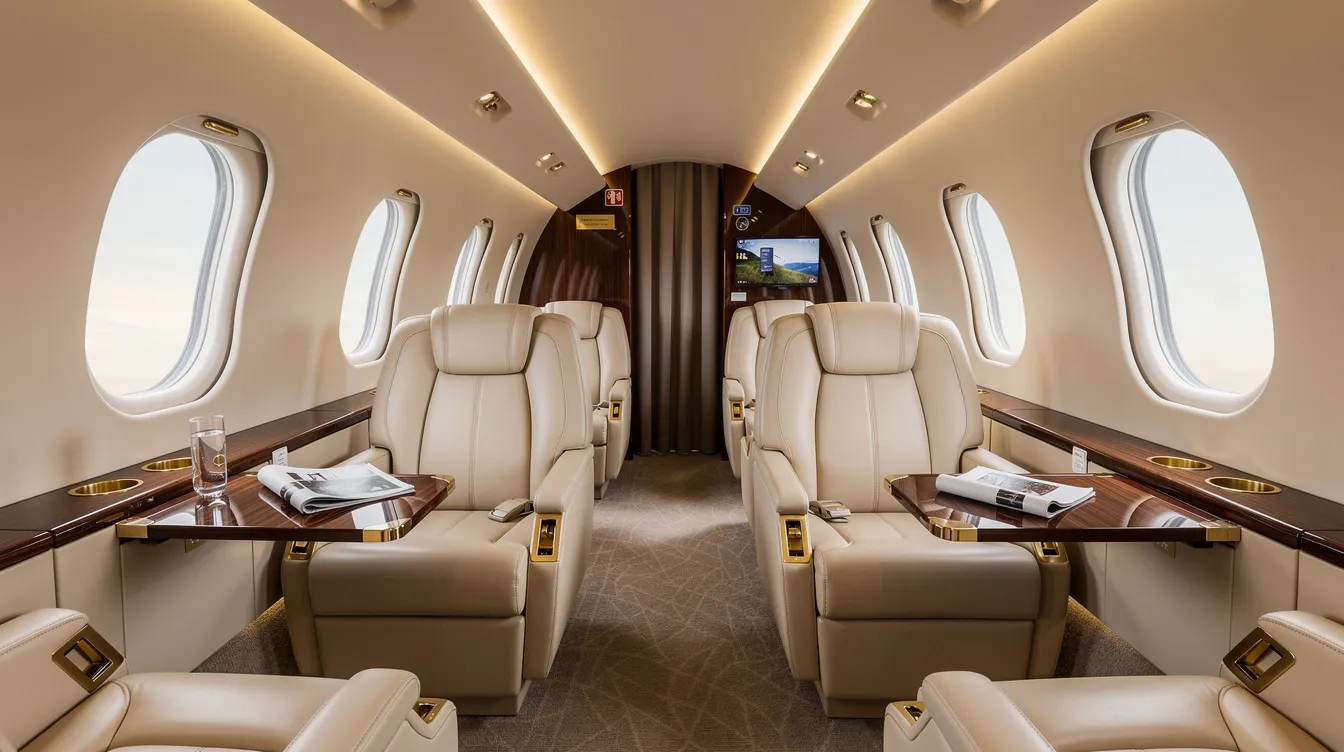
Private jet travel attracts travelers who want control over their schedule, comfort, and experience. But jet card pricing can feel opaque. This guide breaks down exactly what jet cards cost in 2026, what's included, what's not, and how to choose the right program for your flying profile.
Immediate Answer: What Does a Jet Card Cost in 2026?
Jet card hourly rates in 2026 range from $3,000 to $17,000+ depending on aircraft size and category. This comprehensive guide breaks down exactly what jet cards cost in 2026 based on whether you fly a turboprop, light jet, or large cabin aircraft. Here are the current bands:
-
Turboprops: $3,000–$4,000 per hour
-
Light jets: $5,000–$7,500 per hour (the most affordable jet category)
-
Midsize jets: $7,500–$9,500 per hour
-
Super midsize: $9,500–$12,000 per hour
-
Heavy jets: $11,000–$17,000+ per hour
A 25-hour jet card on a light jet runs roughly $175,000–$215,000 total. A 25-hour jet card on a heavy jet costs $280,000–$335,000+. Heavy jet hourly rates exceed $11,000 per hour in every major program.
Advertised jet card cost often excludes hidden fees such as fuel surcharges, de-icing, and peak day surcharges. These extras can add 10–30% to card pricing. Peak day surcharges alone can increase costs by 5% to 40%.
Fixed hourly rates still make budgeting more predictable than on demand charter, where dynamic pricing fluctuates based on market conditions and demand. Compared to fractional ownership, jet cards require less upfront capital and no ongoing management. Nervous flyers often choose jet cards because the fixed rates and scheduling structure reduce last-minute surprises.
How Jet Cards Work and Why Pricing Is "Fixed" (But Not Fully All‑In)
A jet card is a prepaid program where you purchase a block of flight hours, typically 25, 50, or 100 hours, at fixed hourly rates within a defined aircraft category. You fund the card upfront, then debit hours as you fly.
Fixed hourly rates are set per aircraft type. A light jet like a Phenom 300 carries one rate; a heavy jet like a Challenger 650 carries a much higher one. Flights are billed based on occupied flight time per leg, meaning you pay for the time between takeoff and landing (plus taxi time in some contracts).
The "fixed" part covers the flight itself, not fully transparent pricing. Advertised jet card cost often excludes hidden fees like fuel surcharges, de-icing, premium catering, and international handling fees, so total cost still varies flight to flight. For a deeper look at these trade-offs, see our jet card pros and cons breakdown.
Most programs are structured around an upfront deposit, then draw down hours from your 25 hour jet card as each trip is completed. Cards typically have a 12–24 month validity period. Jet cards provide guaranteed aircraft availability with advance notice, often requiring 24–72 hours of booking windows depending on the service level.
Anxious travelers often prefer this structure because fewer last-minute changes, clearer pricing, and more predictable schedules reduce the uncertainty that makes flying stressful, especially when paired with app-based support for fear of flying.
Jet Card Hourly Rates by Aircraft Category in 2026
Hourly rates scale with aircraft category and size. According to Private Jet Card Comparisons data from Q2 2026, average all-in rates (including federal excise tax and fuel surcharges) run even higher than base-rate quotes suggest.
Turboprops ($3,000–$4,000/hr): Aircraft like the Pilatus PC-12 or King Air 350 handle regional trips under 800 nautical miles. Best for short hops where a diverse fleet isn't necessary.
Light jets ($5,000–$7,500/hr): Fixed hourly rates for light jets sit at $5,000 to $7,500, with common aircraft types including the Citation CJ3, Phenom 300, and Lear 40/45. Light jets typically cost $5,000 to $7,000 per hour at the base level before taxes push total cost higher. These remain the most popular private jet card category for regional and 2–3 hour flights.
Midsize jets ($7,500–$9,500/hr): Aircraft like the Citation XLS or Hawker 800XP serve 3–4 hour legs with a fuller cabin and more luggage capacity.
Super mid jets ($9,500–$12,000/hr): The Challenger 350, Citation Latitude, and Gulfstream G280 cover coast-to-coast flights. Many frequent travelers choose this category for the balance of range and cabin size.
Heavy jets ($11,000–$17,000+/hr): Long-range, large cabin aircraft like the Challenger 650, Gulfstream G450/G500, or Global 6000 handle international flights and groups of 8–14 passengers. Newer aircraft with Wi-Fi and advanced cabins push rates toward the top of each band.
25‑Hour Jet Cards: Typical Pricing and Use Cases
The 25-hour jet card is the most common entry point into private aviation. A 25-hour jet card offers prepaid flight time on private jets without the long term commitment of fractional ownership.
Prices for 25-hour jet cards range from $150,000 to $250,000 for light and midsize classes. Turboprop jet cards cost $85,000 to $100,000 for 25 hours. A 25-hour light jet card costs $150,000 to $350,000 depending on guarantees and included fees. Super midsize blocks run $250,000–$300,000. Heavy jet cards typically cost $300,000 to $750,000 for 50 hours.
These programs include fixed hourly rates, a defined aircraft category, and a validity window of 12–24 months. Dividing total cost by hours reveals the effective rate: $175,000 ÷ 25 hours = $7,000 per hour before taxes and extras. Fixed hourly rates simplify budgeting for occasional flyers who take several trips per year. 25-hour jet cards provide guaranteed access to aircraft with minimal lead time.
Some jet card providers allow combining blocks across multiple aircraft categories at different hourly rates. Others lock you into a single aircraft type. For side-by-side program details, our best private jet programs comparison covers different providers and structures.
Deposits, Membership Fees, and Minimum Commitments
Jet card cost extends beyond hourly rates. Some jet cards require upfront deposits ranging from $100,000 to $500,000, depending on aircraft classes. Light and midsize minimum deposit amounts typically fall between $100,000 and $250,000; heavy jet blocks require $300,000–$500,000+.
The difference between a "pure" 25-hour jet card (flat block purchased at once) and account-based jet card pricing (pre-fund a balance, draw down at fixed rates) matters for flexibility and refund terms. Programs from providers like Sentient Jet and Magellan Jets structure these differently.
Jet card membership or initiation fees commonly run $10,000–$25,000, with some programs adding annual dues. Daily minimums can affect pricing for short flights; many cards impose 1.0–2.0 hour segment minimums even on 30-minute legs. For more on how these pricing structures compare, see our detailed breakdown.
Rollover hours policies also affect cost-effectiveness. Some programs let you extend unused hours for a fee. Others forfeit them at expiration. Unlike fractional ownership, where your asset holds residual value, expired jet card hours are gone. On demand charter avoids this risk entirely but sacrifices cost certainty and guaranteed availability.
What's Included in Jet Card Rates vs. Additional Costs
Card pricing headlines rarely tell the full story. Here is what fixed hourly rates usually cover versus what triggers additional fees.
Typically included:
-
Aircraft and standard crew (pilot and co-pilot)
-
Basic catering; meals may be included with standard jet card services
-
Standard domestic airport fees
-
Repositioning within a defined service zone
-
Personalized service and flight coordination
Common additional costs:
-
Fuel surcharges can add $300 to $1,000 per flight hour, shifting the real rate by 5–20%
-
De-icing costs can range from $1,500 to $8,000+ per flight, charged per event
-
Premium catering beyond snacks and water
-
International handling fees, overflight permits, and customs
-
Overnight crew charges typically range from $500 to $1,500 per crew member
-
Some jet cards charge for repositioning and deadhead time outside the service zone
-
Repositioning fees may apply for flights outside service zones
-
Ground transportation coordination (sometimes included, often extra)
All-in pricing includes a 7.5% federal excise tax baked into the rate. Plus-FET pricing adds the 7.5% tax on top of rates, so the same "base" number yields a different total. Peak day surcharges range from 5% to 40% during high-demand dates like Thanksgiving, Christmas, and major events. High-demand travel periods often feature stricter booking requirements and potential blackout dates.
Always request a written list of included versus additional costs from any provider. Simulate a few sample trips to reveal your true effective hourly rate with all extras applied.
Choosing the Right Aircraft Category and Card Structure for Your Flying Profile
Choosing the correct aircraft category is one of the biggest drivers of jet card pricing and comfort. Here's a quick mission-matching guide:
-
Sub-800 nm hops: Turboprops
-
2–3 hour flights, 4–6 passengers: Light jet
-
Coast-to-coast, 6–8 passengers: Super mid or midsize
-
Long-haul or international flights, 8–14 passengers: Heavy jets
Selecting a larger aircraft than needed raises your hourly rates without always improving the experience. Under-sizing can force fuel stops and increase total flight time billed.
Some jet card options let you book any aircraft in a category at one rate. Others lock pricing to specific models like the Phenom 300 or Citation Latitude. The first gives flexibility from a diverse fleet; the second gives consistency. If you're flying private for the first time, a category-based card often makes more sense.
Lifestyle factors matter too. Anxious travelers may value the quieter cabin and smoother ride of a heavy jet, even at higher hourly rates, and can benefit from apps that help overcome fear of flying. Map out a sample year of trips (routes, passengers, dates) and compare whether a 25 hour jet card, a larger block, or a hybrid solution gives the best balance of cost and peace of mind.

Comparing Jet Card Pricing to Other Private Flying Options (and Where SkyGuru Fits)
Jet cards sit between on demand charter and fractional ownership. They're more predictable than ad-hoc charter bookings and less capital-intensive than owning aircraft shares. For a detailed side-by-side, see our jet card vs charter vs fractional comparison.
Jet cards make financial sense for travelers logging roughly 15–50 private flight hours per year who want guaranteed pricing and consistent aircraft categories. Below 15 hours, occasional flyers may find charter more cost-effective. Above 50, fractional ownership or full ownership warrants a closer look.
Frequent travelers and families with regular seasonal trips often prefer the clarity of fixed hourly jet card pricing. But understanding the financial side is only half the equation. The other half is what you feel and hear once you're airborne.
SkyGuru is a real-time flight app for nervous flyers that explains turbulence, cabin noises, weather, and flight stages as they happen. The dedicated MySkyGuru app uses professional aeronautic data and smartphone sensors to forecast turbulence and interpret in-flight sensations even in airplane mode. For jet card holders investing $150,000+ into private air travel, knowing what each bump and sound means can turn a stressful flight into a calm one, especially on longer heavy jet or super mid routes with variable weather.
Understanding both your hourly rates and your in-flight experience gives you financial and emotional confidence. That combination makes private aviation feel safer, calmer, and fully in your control.
FAQs About Jet Card Pricing, Fees, and Flight Experience
How much does a jet card really cost per year? Total annual spend depends on hours flown, aircraft category, and additional costs. A traveler using 25 hours on a light jet at $7,000/hr spends roughly $175,000 in base cost, plus 10–30% in fuel surcharges, taxes, and peak surcharges. Several factors (short notice bookings, winter de-icing, holiday travel) can push the total higher.
Are fuel surcharges and de-icing included in my fixed hourly rate? Usually not. Fuel surcharges add $300–$1,000 per flight hour on top of fixed rates. De-icing runs $1,500–$8,000+ per event. On a 25-hour jet card, these extras can add $7,500–$25,000+ over the card's life.
Is a 25-hour jet card enough for my travel? Six regional roundtrips of about 2 hours each use roughly 24 hours. Three coast-to-coast roundtrips at 4+ hours per leg consume about 24–28 hours. Estimate your annual trips and flight time to see if 25 hours fits or if a larger block improves effective pricing.
Do heavy jet cards cost more but feel smoother? Yes. Heavier aircraft fly at higher altitudes, and their mass absorbs turbulence differently. Some fearful flyers choose heavy jets for the quieter, more stable cabin despite hourly rates above $11,000.
Can apps like SkyGuru reduce anxiety while I'm using my jet card? SkyGuru provides real-time explanations of turbulence, weather patterns, and flight stages. Knowing what each sensation means during your prepaid flight hours makes each trip feel calmer and more transparent, turning uncertainty into understanding.
Asking informed questions about jet card cost, aircraft categories, and additional fees puts you in control of the financial side. Pairing that knowledge with tools that explain the in-flight experience gives you both financial and emotional confidence every time you fly.
Conclusion
Jet card pricing in 2026 offers a structured, predictable way to enjoy private aviation with costs that vary based on aircraft size, category, and travel needs. Understanding the hourly rates—from turboprops to heavy jets—and the additional fees like fuel surcharges, de-icing, and peak day surcharges helps you avoid surprises and budget confidently. Learn more about jet card hourly rates and how they affect your travel budget.
Choosing the right jet card, whether a 25-hour block or a larger commitment, depends on your typical travel patterns, preferred aircraft, and flexibility requirements. High-demand periods and peak day travel can increase costs, so planning ahead and knowing what to expect can reduce anxiety and improve your experience. Explore our guide on peak periods and surcharges to understand how timing impacts pricing.
For nervous flyers and frequent travelers alike, combining financial clarity with in-flight insights—such as those provided by apps like SkyGuru—turns private jet travel into a calm, informed, and reassuring experience. Understanding what’s happening both on the ground and in the air transforms uncertainty into confidence, making every flight smoother and more enjoyable. Discover how flight anxiety help and turbulence explained can ease your journey.
To dive deeper into private aviation options, see our comparison of jet card vs charter vs fractional ownership for a comprehensive understanding of what suits your flying profile best.
FLEET SELECTION
JET CARDS
COST ANALYSIS


How to Auditing Your Operator's Maintenance Logs
Oct 05, 2025

How to Auditing Your Operator's Maintenance Logs
Oct 05, 2025

How to Auditing Your Operator's Maintenance Logs
Oct 05, 2025
Sky Guru Weekly
The smartest private aviation intelligence in your inbox.
.svg)

