



Introduction
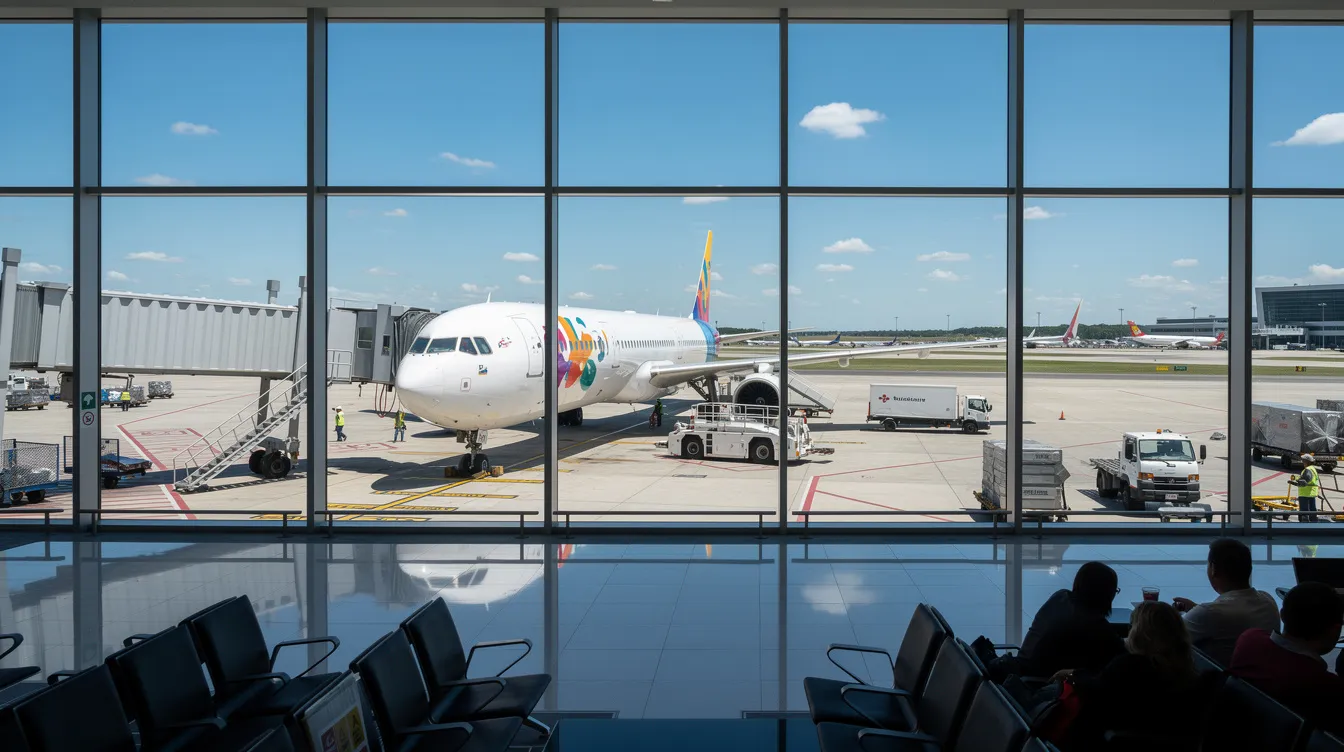
Most nervous flyers share the same wish: they want to know what's going to happen before it happens. One of the first steps toward that predictability is learning exactly what aircraft you'll be on. Whether you want to compare cabin width, check the age of a specific airframe, or simply feel prepared for the sounds and sensations of your flight, you can find a plane's details in minutes using free tools and your airline's own site.
Quick Answer: How to Find the Plane for Your Next Flight
You can find your aircraft type before booking. The information sits in plain sight on most booking platforms; you just need to know where to click. Here is a step-by-step guide to checking the aircraft for any upcoming flight.
Check Aircraft Type During Booking
Common aircraft like the Boeing 737 and Airbus A320 operate thousands of daily flights worldwide. When you search for flights on Google Flights, aircraft type appears in the details of each flight segment. Expand the flight card, and you'll see a line reading something like "Boeing 787-9" or "Airbus A321neo" beneath the departure and arrival time.
Flight aggregators let users compare routes and seat availability across airlines in one place. On Skyscanner, Kayak, and similar sites, the same information appears when you expand flight details. A 3-3 seating layout usually means a single-aisle narrow-body; a 2-4-2 or 3-3-3 layout signals a larger wide-body aircraft. These clues tell you how spacious the cabin will be.
You can also check aircraft details in flight booking systems by browsing the airline's own site directly. On American Airlines, Delta, or Lufthansa, the equipment field shows up alongside your selected flight's date, time, and route.
Check Aircraft Type After Booking
After you book, the confirmation email or airline app lists the aircraft type near your flight number. Airline mobile apps provide accurate and up-to-date flight statuses, so open the app's "Manage Booking" or "My Trips" section and look for the equipment line.
Checking the flight status shortly before traveling is important because airlines sometimes swap equipment due to maintenance or operational needs. Re-check 24 to 72 hours before departure to catch any changes
Use Online Resources and Live-Tracking Tools
Flight trackers help users view flight status, aircraft type, position, speed, and history. Two stand out:
-
Flightradar24 provides a real-time map of global air traffic and detailed aircraft information. Enter your airline and flight number, and the result shows the model, tail number (once assigned), altitude, and recent route history.
-
FlightAware allows users to track flights by flight number, route, or airport. It also displays historical data about which tail number flew a given route on past dates.
If the aircraft assignment changes on the day, the replacement must meet the same certification and maintenance standards. All planes are considered safe by aviation standards, so an equipment swap does not reduce safety.
How SkyGuru Fits In
After you know your aircraft type and flight number, you can enter them into SkyGuru. The MySkyGuru app uses that data plus weather and turbulence forecasts to predict what your specific flight will feel like. During each stage of the journey, it sends real-time explanations of sounds, sensations, and any expected bumps.
Checking the type of plane removes one layer of the unknown. When you know the model, the seat layout, and what to expect from the cabin, the flight becomes more predictable and less stressful.
Methods to Find a Plane: From Aircraft Type to Tail Number
Aircraft type refers to the model of plane, such as Airbus A320 or Boeing 777-300ER. Tail number is the unique registration painted on the fuselage (e.g., N123AA in the U.S. or G-EUOH in the U.K.). Knowing the aircraft type tells you about cabin layout, engine generation, and comfort. Knowing the tail number lets you look up the specific airframe's age and flight history.
General aviation includes business jets and gliders, but most travelers are interested in commercial airline equipment. Here is how to track down both type and tail number at each stage of your journey.

Before Booking: Finding the Aircraft Type in Search Results
A typical search flow works like this:
-
Enter departure city, destination, date, passengers, and cabin class.
-
Review the list of available flights.
-
Click "Details" or expand the flight card.
-
Look for the "Aircraft" or "Equipment" line.
Google Flights is used for travel planning and monitoring flight price histories, and it displays the aircraft model for each leg. Kayak and similar sites do the same. If a flight shows two different aircraft types for two legs, each segment is listed separately.
Seat maps offer another clue. A narrow-body plane like the Boeing 737 shows a 3-3 layout. A wide-body like the Boeing 787 Dreamliner shows a 3-3-3 or 2-4-2, depending on the airline's configuration.
A few booking tips while you search:
-
Booking 1 to 3 months in advance for domestic flights avoids last-minute price spikes.
-
Be flexible with travel dates to find cheaper flight options and sometimes better equipment.
-
Enabling email price alerts notifies you when ticket prices drop on your preferred route.
-
Understanding fare families can help travelers choose the best mix of cost and flexibility.
-
Comparing total prices at final checkout is crucial, as some sites may add fees.
-
Booking directly through the airline's official website often provides additional benefits, and booking directly through airlines simplifies changes and cancellations.
After Booking: Confirming Equipment in Your Itinerary
Your confirmation email lists the aircraft type near the flight number. Open the airline app or the "Manage Booking" section on the airline's site to see the most current assignment.
Airlines finalize tail number assignments roughly 24 to 72 hours before departure. Before that window, tracking tools may show "unknown" for the registration. Travelers can also check live operational feeds of origin or destination airport websites for real-time updates on gate assignments and equipment.
If you're interested in private aviation rather than commercial flights, the process differs; you can explore options in SkyGuru's guide on how to fly a private jet for the first time, and read more about how an app can help reduce fear of flying.
Finding a Specific Plane by Tail Number
Once a tail number appears in your tracking app, you can look it up on Flightradar24 or FlightAware to see the airframe's recent flights, age, and model code. Some dedicated sites, such as Controller, let sellers and buyers browse aircraft for sale by registration, manufacturer, or location, but for passenger travel, your goal is simply to confirm what you're flying on.
Practical example: If you're flying London Heathrow (LHR) to New York JFK on 12 October 2026 with British Airways flight BA113, you'll usually see "Boeing 777-300ER" listed as the aircraft type in the booking engine. On the day, a tail number like G-STBF might appear in tracking apps. Using that number, you can confirm the airframe's delivery date and cabin configuration.
Tail number data is mainly for curiosity and aviation fans. Aviation is the safest mode of transportation, and every aircraft in commercial service has passed strict certification, maintenance, and inspection routines.
Connecting Your Search to SkyGuru
After you identify your aircraft type, enter your flight number and date into SkyGuru's flight guide. The app layers weather data, turbulence forecasts, and route information onto your specific flight. During the journey, it uses your phone's sensors to detect each flight stage and explain what you hear and feel in real time.
Why Knowing Your Plane Helps Reduce Flight Anxiety
For many travelers, fear of flying is not really about the aircraft. It is about not knowing what will happen next. An unexpected noise, a sudden bump, a banking turn; these feel threatening when you cannot explain them. Learning about the specific aircraft type before you board turns those unknowns into expected events, and using an app to overcome fear of flying can further reduce anxiety.
How Aircraft Types Differ in Comfort
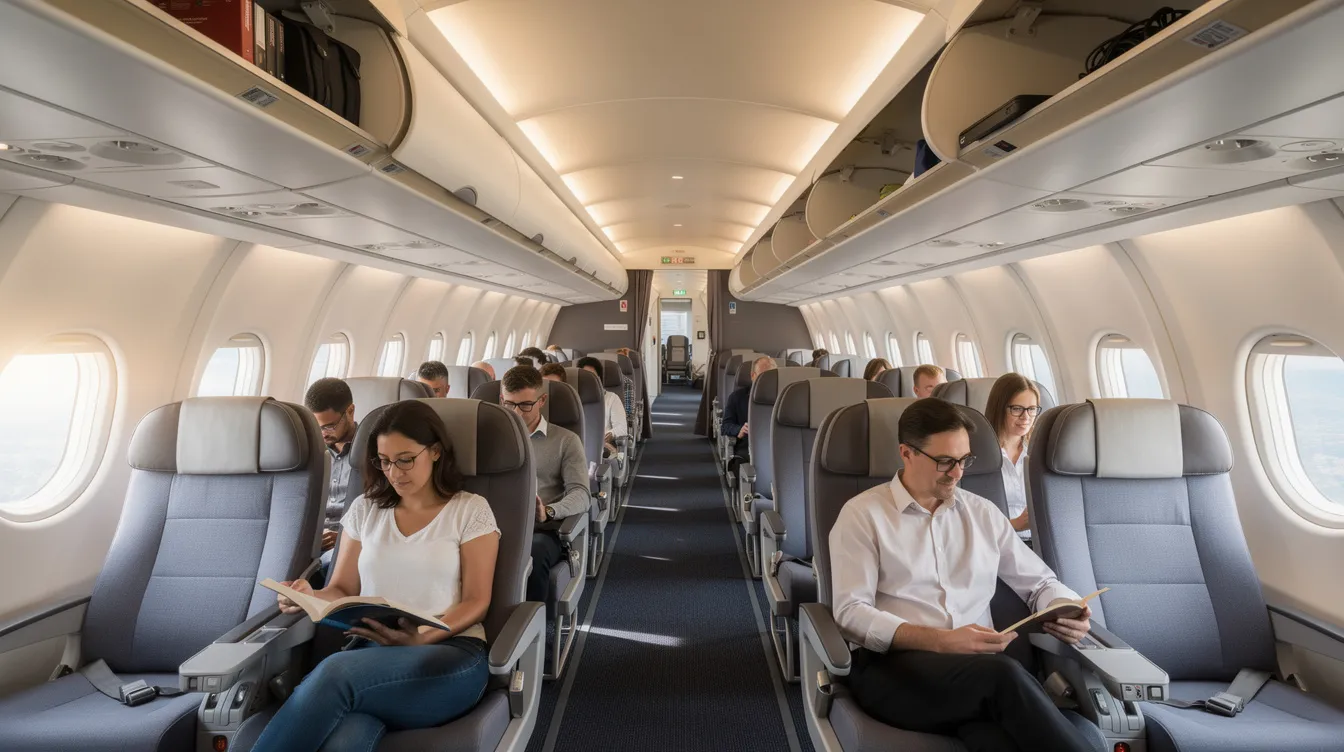
Not all planes feel the same. Here are the differences that matter most to passengers:
|
Feature |
Narrow-body (e.g., A320, 737) |
Wide-body (e.g., 787, A350) |
|---|---|---|
|
Aisles |
1 |
2 |
|
Typical seat layout |
3-3 |
2-4-2 or 3-3-3 |
|
Cabin altitude |
~8,000 ft |
~6,000 ft (787) |
|
Engine noise at takeoff |
Higher (~74 dB for 737-800) |
Lower (~69 dB for 787) |
|
Humidity control |
Basic |
Advanced (composite fuselage) |
Passenger planes have pressurized cabins and seating, but the quality of that pressurization varies. The Boeing 787 Dreamliner is a wide-body aircraft with a cabin altitude around 6,000 feet, roughly 2,000 feet lower than older types. Lower cabin altitude means less ear pressure, reduced fatigue, and better hydration. The Boeing 787 Dreamliner also offers more legroom for passengers compared to many older wide-body configurations.
The Airbus A330neo burns 25% less fuel than older models, and its newer engines (Rolls-Royce Trent 7000) run quieter thanks to a higher bypass ratio. A 1990s-era Boeing 767 and a 2018-delivered Airbus A350-900 differ in cabin noise by roughly 8 to 10 dB, a gap large enough that passengers consistently report noticing it.
Common aircraft include the Boeing 737 and Airbus A320, which together account for the majority of single-aisle flights worldwide. The A320 family alone has received over 20,100 orders. You can spot the difference between the two manufacturers on the tarmac: Boeing aircraft have a sharper, pointed nose design, while Airbus aircraft typically feature a rounder, bulbous nose.
Why Larger Planes Can Feel More Stable
Wide-body aircraft are designed for long-haul routes and carry more mass, which can dampen the sensation of turbulence. The Airbus A340-500/600 has large wing loading for turbulence, which contributes to a smoother ride in choppy air. All certified planes meet the same structural safety standards, and turbulence is uncomfortable but not dangerous. Modern aircraft structures are tested to withstand forces far beyond anything encountered in normal flight.
Helicopters, twin-engine piston aircraft, and business jets each have their own aerodynamic profiles. Commercial passenger jets, by comparison, fly at higher altitudes and cruise speeds that reduce exposure to low-level weather. Controllers manage separation between aircraft, and every flight runs under continuous monitoring.
Practical Steps to Reduce Anxiety Through Aircraft Knowledge
-
Choose seats over the wing on aircraft like the Boeing 737-800 or Airbus A321 to feel less movement during turbulence.
-
Avoid the last rows on small regional jets if engine noise is a trigger; those seats sit closest to the engines.
-
Read or watch a simple guide to your aircraft's typical sounds. Knowing that an Airbus A320 makes a loud whirring sound around 10 minutes after takeoff as flaps retract turns a startling noise into a neutral, expected event.
-
Check your current browser for seat map tools like SeatGuru or AeroLOPA, which are fully updated with most airline configurations and let you see exactly where each row, exit, and galley sits.
How Predictability Calms the Brain
The brain's threat detection system reacts strongly to unpredictable stimuli. A bump you did not expect triggers a stress response; the same bump, if you knew it was coming, barely registers. When a nervous flyer reads that their flight's route crosses a jet stream at a specific time and altitude, the turbulence that follows feels like a speed bump on a familiar road rather than an emergency.
Flight stages, turbulence forecasts, and weather updates can reduce anxiety during flights. SkyGuru uses your flight number and aircraft type to send real-time commentary, such as: "You may feel some bumps in the next 15 minutes as we cross a weather system. This is expected for your route and altitude." Users who have already looked up their aircraft type can download the app to turn that information into concrete reassurance throughout their journey. You can browse more options in SkyGuru's FAQ section.
Turning Abstract Fear into Manageable Facts
The content of your pre-flight search, from browsing an online resource for aircraft data to checking a site for privacy-related tail number restrictions (some registrations are forbidden from public display under programs like LADD), gives you a mental model of your flight. That model covers the equipment, the expected sensations, and the likely timeline of events.
Every piece of information, from aircraft type to tail number, replaces a question mark with an answer. Understanding your plane, checking the result of your flight search, noting the manufacturer, confirming the date and time; each step builds a picture that makes the journey from boarding to landing feel safer, calmer, and more under your control.
Flying becomes less intimidating when you understand what is happening around you. Knowing why turbulence occurs, why aircraft make certain sounds, and what sensations are normal can transform uncertainty into confidence. For more on this, see our guides on turbulence explained, fear of flying, and flight anxiety help. You can also learn about flight sensations explained and find practical nervous flyer tips to make your journey smoother.
FLEET SELECTION
JET CARDS
COST ANALYSIS


How to Auditing Your Operator's Maintenance Logs
Oct 05, 2025

How to Auditing Your Operator's Maintenance Logs
Oct 05, 2025

How to Auditing Your Operator's Maintenance Logs
Oct 05, 2025
Sky Guru Weekly
The smartest private aviation intelligence in your inbox.
.svg)

