



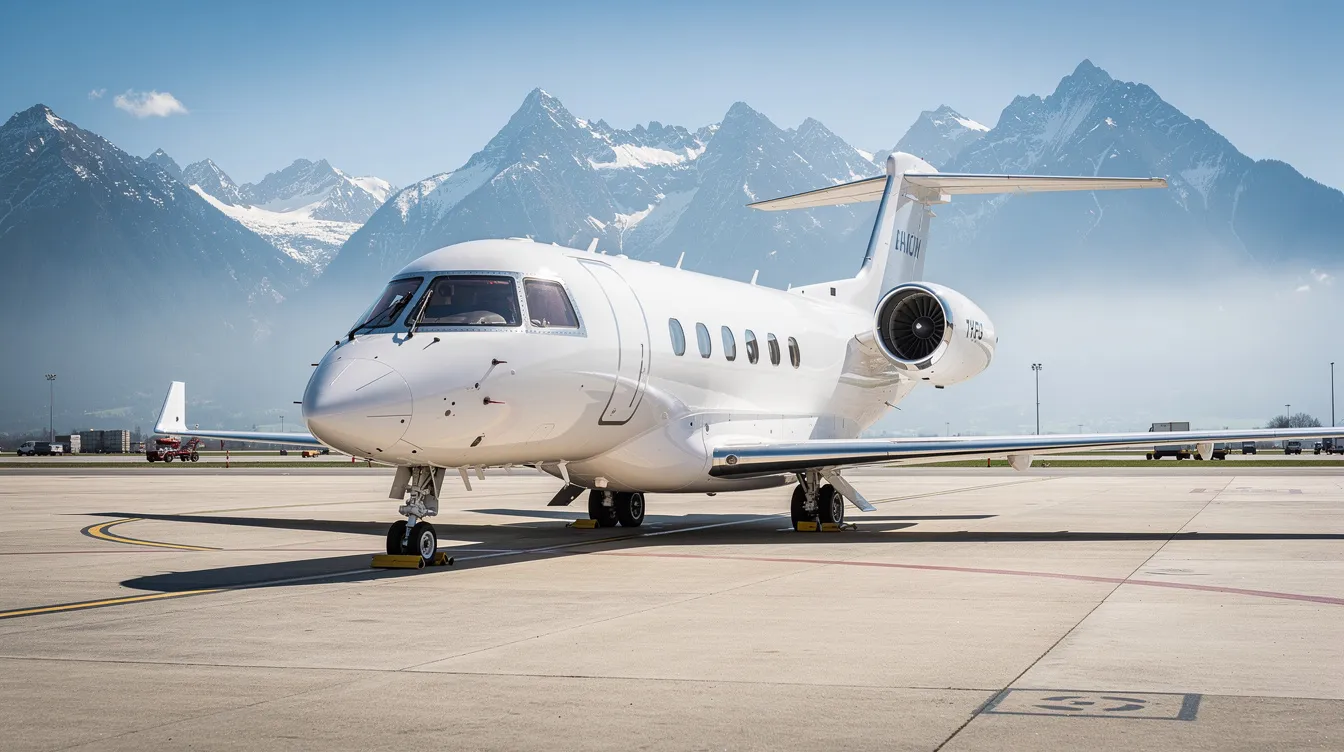
Quick Answer: What Is the NetJets Phenom 300 and How Much Does It Cost?
The NetJets Phenom 300 is a light jet operated by NetJets in a fleet of more than 150 aircraft, typically set up for 6 passengers plus crew and best suited to 1–3-hour regional trips. Embraer introduced the Phenom 300 in 2009, and it has become one of the best-selling light jets in the world because it combines private-jet speed and comfort with a size that works well for short regional flying.
A NetJets Phenom 300 usually includes Wi-Fi, a refreshment center, and generous baggage space. For 2025–2026, access generally runs about $215,000–$280,000 for a 25-hour jet card, or roughly $9,000–$12,500 per flight hour once fuel surcharges, airport fees, handling, and de-icing are included. Comparable on-demand Phenom-class charter often falls in the mid-$4,000s to $7,000+ per hour, depending on route and demand.
If you're weighing private aviation for frequent regional travel—or you're a nervous flyer trying to understand what this jet feels like, how safe it is, and whether the premium is worth it—those are the questions that matter most. This guide looks at NetJets pricing and access programs, the onboard experience and cabin comfort, what to expect in the air, the Phenom 300's safety standards and pilot training, and how it compares with commercial business class and other private options.
Is this cheaper than business class on commercial airlines? Per seat, usually not. But the tradeoff is schedule control, privacy, and major time savings from using smaller airports, skipping long security lines, and departing on your timeline. Even though the Phenom 300 is smaller than a commercial airliner, it meets the same stringent FAA certification standards and is flown by highly trained pilots who complete rigorous recurrent training.
The Embraer Phenom 300 and 300E: Why This Light Jet Dominates Private Aviation
The Embraer Phenom has been one of the world's best-selling light jets for over a decade. The Phenom 300E, launched in 2017, is its enhanced version featuring upgraded Prodigy Touch avionics and improved engine performance.
Key performance figures in simple terms:
-
High-speed cruise: approximately 450–460 knots (~495 mph, Mach 0.80)
-
Range: up to 2,010 nautical miles (~3,200 kilometers) with NBAA IFR reserves
-
Maximum altitude: 45,000 feet
-
Maximum payload: 2,636 pounds
-
Engines: twin Pratt & Whitney Canada PW535E turbofan engines
-
Designed for: short-to-medium hops of about 3.5 hours
The Embraer Phenom 300 is known for its combination of high speed and operational efficiency. It offers strong short-field takeoff and landing capabilities, allowing access to smaller airports that larger aircraft simply can't reach. The aircraft can operate in a variety of conditions, making it reliable for private travel across seasons and geographies.
Safety is worth addressing directly. As of January 2023, three hull-loss accidents and five fatalities have been recorded across the entire global Phenom 300 fleet—extremely low numbers given hundreds of thousands of flight hours logged. NetJets typically selects conservative configurations and avionics upgrades, prioritizing safety, redundancy, and operational and technical support across its fleet.
NetJets and the Phenom 300: Fleet Size, Routes, and NetJets Europe Operations
NetJets is one of the largest private aviation companies globally, with a fleet of 800+ aircraft worldwide and more than 150 Phenom 300 jets in its light jet category. That scale plays a key role in ensuring backup aircraft availability, consistent maintenance coverage, and a standardized cabin experience.
The NetJets fleet of Phenom 300s is deployed across the U.S. and Europe, focusing on popular regional routes—Los Angeles to Las Vegas, New York to Boston, Miami to the Caribbean, Paris to Geneva—where a light jet is more cost-effective than heavy jets for regional flights.
-
NetJets Europe maintains a large presence across 900+ airports, offering access to many more destinations and smaller city airports than most commercial airlines serve
London City Airport deserves special mention. Its short runway and steep approach require additional pilot training, strict procedures, and aircraft performance margins that are carefully calculated. NetJets Europe obtained certification to operate the Phenom 300 into this demanding airfield, further raised existing standards at the airport, and opened routes from London to as far as Istanbul nonstop. The airport’s CEO highlighted the significance of the certification for business-aviation operations there. NetJets Europe accounts for roughly half of the airport’s business-aviation traffic.
NetJets has signed orders for over 100 Embraer Phenom 300 aircraft as part of multi-billion-dollar fleet renewals, and many feature custom "Signature Series" interiors produced in collaboration with Embraer's development team.
Inside the NetJets Phenom 300 Cabin: Comfort, Layout, and What You'll Feel
Cabin Layout and Seating
Picture stepping through a dedicated airstair into a quiet, climate-controlled cabin. The crew greets you by name. Your bags are already loaded. For anxious travellers, this calm, controlled environment is immediately different from a crowded terminal.
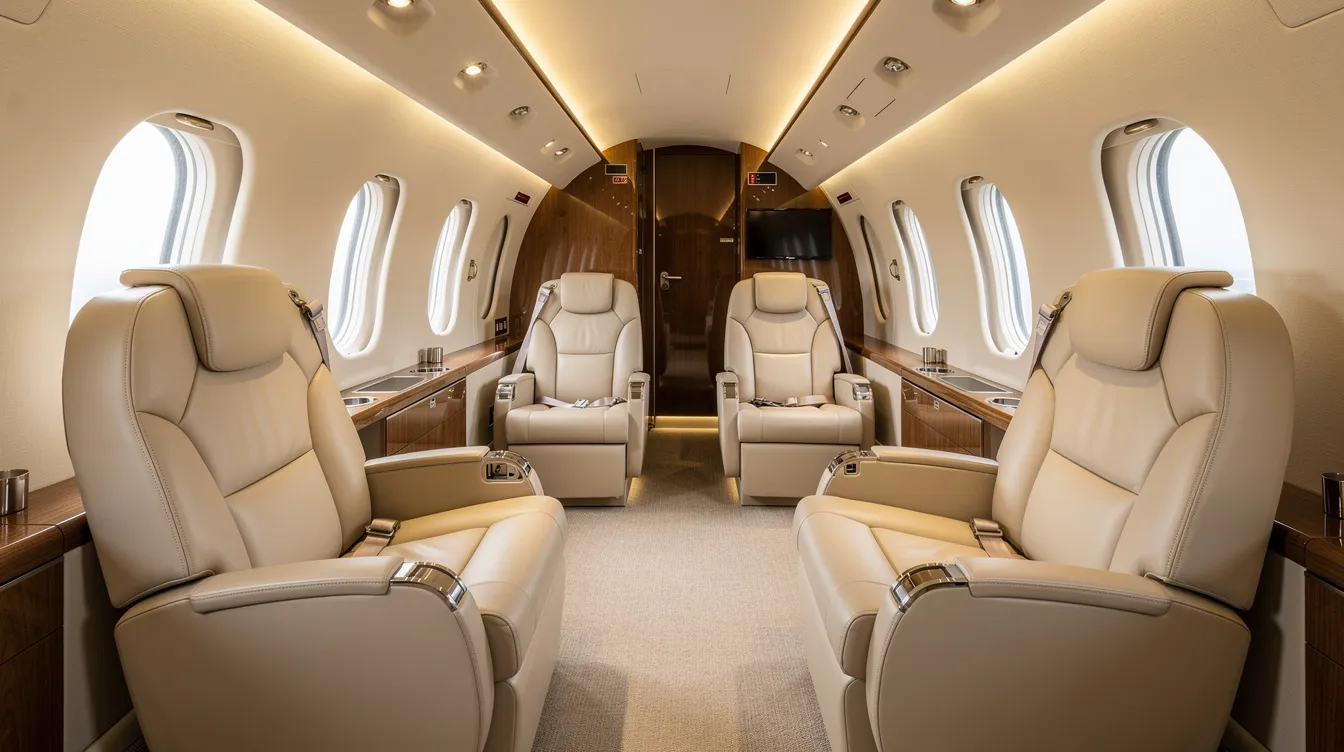
The Phenom 300 features a spacious cabin with customizable interiors and large windows. The cabin is designed in collaboration with BMW Designworks to maximize headroom and legroom. Typical NetJets layout includes:
-
6 leather seats in a club configuration
-
Fold-out tables for work or dining
-
Separate lavatory in the rear
Baggage and Storage
-
Baggage capacity ranging from 74 to 84 cubic feet
Cabin Altitude and Comfort
The cabin altitude is maintained at 6,600 feet at a cruising altitude of 45,000 feet—lower than many older aircraft. This reduces passenger fatigue, ear discomfort, and that heavy feeling some passengers describe on long flights.
Flight Sensations for Nervous Flyers
Common sensations nervous flyers might notice: feeling the acceleration during takeoff (more immediate than on airliners), hearing changes in engine sound during climb and descent, and light bumps from turbulence. All of these are completely normal.
Smaller aircraft do respond a bit more to turbulence than large commercial airlines. But pilots proactively adjust altitude and speed to keep the ride smooth. Understanding these sensations in advance—when gear and flaps move, why cabin pressure changes—can significantly reduce anxiety by making every noise feel expected.
Apps like SkyGuru can walk passengers through these phases in real time, explaining what's happening and why on a Phenom 300 or any other aircraft.
NetJets Phenom 300 Programs: Jet Cards, Fractional Ownership, and Lease Options
Jet Card Program Details
NetJets offers several ways to access the Phenom 300. Here's how jet card pricing and ownership compare:
Jet cards come in 25-hour blocks:
-
Card275: ~$215,000 for 25 hours (~$8,600/hr)
-
Card320: ~$280,000 for 25 hours (~$11,200/hr)
-
No monthly management fees, but blackout dates apply (~90 days/year on some tiers)
Fractional Ownership Overview
Fractional ownership (a NetJets share of typically 1/16):
-
NetJets offers fractional ownership for the Phenom 300 starting at $500K, with higher share costs reaching roughly $850,000
-
A 1/16 share covers about 50 flight hours annually
-
Monthly management fees range from $12,000 to $28,000
-
Per-hour occupied flight charges of $8,000 to $9,000+ before surcharges
-
Total first-year costs for fractional ownership can exceed $1 million
Lease Program Overview
Lease programs offer a middle ground: predictable access similar to fractional ownership, structured as lease payments plus hourly usage, with access paid through the lease and flight charges rather than long-term asset risk for owners who prefer not to hold the depreciation.
Choosing the Right Program
Which program suits which traveler? Jet cards work well for 25–50 hours per year. Fractional ownership suits customers flying 50–100+ hours annually. Leases appeal to frequent flyers who want guaranteed access without owning the asset. For deeper comparisons, see our jet card pros and cons guide.
Whichever program is chosen, operational safety standards, pilot training, and maintenance quality remain the same across the NetJets Phenom 300 fleet.
Beyond the Hourly Rate: Extra Costs, Taxes, and Comparing to Commercial Airlines
Common Extra Costs
Headline hourly rates rarely tell the full story of private jet cost. Common extras include:
-
7.5% U.S. federal excise tax on domestic flights
-
Fuel surcharges that change with Jet-A market pricing
-
Landing and handling fees at destination airports
-
Ramp or parking charges
-
Winter de-icing costs at cold-weather airports
Blackout days and peak-day surcharges during holidays and high-demand event weekends can raise rates further or limit guaranteed availability on certain card programs.
Cost Comparison to Commercial Airlines
Per person, a Phenom 300 flight is usually more expensive than a business or first class seat on commercial airlines. But the Phenom 300 becomes cost-competitive per seat when a group of 4–6 travellers books a last-minute, peak-season route where commercial premium cabin fares are extremely high.
On-Demand Charter Option
-
On-demand charter for the Embraer Phenom 300 lets you pay only for actual flight time, with no long-term contracts or capital outlay—worth exploring if you fly infrequently
The "right" choice isn't about finding the cheapest seat. It's about balancing budget, schedule control, privacy, and how often you fly per year. For a broader industry comparison, our best private jet programs comparison covers the market in detail.
Phenom 300 Flight Experience for Nervous Flyers: Turbulence, Noise, and Safety
Turbulence and Aircraft Design
If the idea of flying on a smaller private jet feels more intense than boarding a commercial airliner, that feeling is completely valid. Awareness of what to expect transforms uncertainty into confidence.
Turbulence happens because of winds, jet streams, mountains, and weather fronts. The Embraer Phenom 300 is designed and tested to withstand forces far greater than anything encountered in normal operations. Its advanced avionics include a Runway Overrun Awareness and Alerting System (ROAAS), traffic collision avoidance, weather radar, and the Prodigy Touch system built on Garmin G3000 technology—all reducing pilot workload and increasing safety margins.

Cabin Sounds and What to Expect
Common sounds you'll hear: noticeable spool-up of the engines on takeoff, slight pitch changes as autopilot adjusts during the flight, whirring of flaps and landing gear during the forward and rear phases of approach, and gentle thumps from runway seams on landing. All normal. All expected.
Safety Standards and Pilot Training
The myth that "smaller equals less safe" doesn't hold up. Both private jets and commercial airlines operate under rigorous FAA and EASA certification standards. Pilots on NetJets' Phenom 300 fleet complete the same class of recurrent training and proficiency checks demanded across the industry.
Coping Strategies for Nervous Flyers
Practical coping strategies: sit mid-cabin near the center of gravity, use noise-canceling headphones, practice slow breathing during turbulence, and focus on recognizable patterns—climb, cruise, descent. For people whose fear of flying affects their personal or professional life, using an app like SkyGuru to manage in-flight anxiety can provide advance notice of likely turbulence zones, real-time explanations of noises as they occur, and guidance through each stage of your journey.
Is a NetJets Phenom 300 Right for You? Alternatives, Trip Profiles, and How to Decide
Ideal Traveler Profiles
A NetJets Phenom 300 makes the most sense for travellers who fly regionally, value time savings and privacy, and expect to fly a certain number of hours each year. Think business travellers doing 1–3 hour hops, families visiting multiple properties, or executives needing access to airports not served by commercial airlines.
When Commercial Airlines Make Sense
Travelers better served by premium cabins on commercial airlines include solo or couple passengers on long-haul routes, once-a-year vacationers, or those mainly flying between major hubs with dense airline schedules. If you're flying private for the first time, reviewing your last 12–24 months of travel—total hours, typical routes, passenger count, missed connections—can clarify whether private access is worth the investment.
Trip Length and Jet Selection
Light jets like the Phenom 300 are most cost-effective for regional trips up to about three hours. Beyond that, midsize jets or even commercial airlines may be more practical.
Reducing Flight Anxiety
Even if private aviation isn't the right financial fit today, understanding how pilots manage turbulence, how predictable a flight really is, and what every sound means can make any kind of flying feel less intimidating. Understanding reduces fear. Predictability lowers anxiety. Knowledge creates calm, and tools like SkyGuru help you carry that awareness into every flight you take.
FAQs About the NetJets Phenom 300
What is the cabin length of the NetJets Phenom 300?
The cabin length of the Phenom 300 is designed to maximize comfort for up to six passengers, providing ample space for seating, movement, and storage.
Does the NetJets Phenom 300 have an emergency descent mode?
Yes, the Phenom 300 is equipped with advanced safety features, including an emergency descent mode that pilots can activate if needed to rapidly reduce altitude in case of cabin depressurization.
When was the first flight of the Embraer Phenom 300?
The Embraer Phenom 300 had its first flight in 2008 and entered production shortly thereafter, with service beginning in the following years.
What engines power the NetJets Phenom 300?
The aircraft is powered by twin Pratt & Whitney Canada PW535E turbofan engines, providing efficient and reliable performance.
Is the NetJets Phenom 300 capable of flying long distances?
While primarily designed for short-to-medium regional flights, the Phenom 300 is capable of flying up to 2,010 nautical miles, making it suitable for many common business and leisure routes.
How does the Phenom 300 handle turbulence for nervous flyers?
The Phenom 300 is designed with stability and safety in mind, and pilots use advanced avionics and weather data to avoid turbulence when possible. Understanding these systems can help reduce anxiety during flight.
What is the typical production volume of the Phenom 300?
Embraer has produced hundreds of Phenom 300 jets since production began, making it one of the most popular light jets worldwide.
What months are significant in the Phenom 300's production or service timeline?
April and July are notable months for key production milestones and fleet expansions, including new orders and deliveries.
How can I learn more about the Phenom 300 flight experience?
Apps like SkyGuru provide real-time explanations and insights during flights, helping nervous flyers understand what to expect and feel more comfortable.
Where can I find NetJets Phenom 300 flights?
NetJets operates its Phenom 300 fleet extensively in North America and Europe, including access to airports like London City, offering convenient regional travel options.
Conclusion: Why Understanding the NetJets Phenom 300 Eases Flight Anxiety and Informs Smart Travel Choices
Flying becomes far less intimidating when you understand what’s happening around you. The NetJets Phenom 300 offers a blend of speed, comfort, and safety that makes it a popular choice for regional private flights. Knowing its performance specs, cabin features, and safety standards can transform uncertainty into confidence.
For nervous flyers, anticipating the sensations of takeoff, turbulence, and landing helps reduce anxiety. The advanced avionics and pilot training behind this light jet ensure a secure journey, while the cabin’s thoughtful design minimizes fatigue and discomfort. Learn more about turbulence explained and how it affects your flight.
Whether you’re considering a jet card, fractional ownership, or lease, understanding the true costs and what to expect onboard empowers you to choose the best option for your travel needs. Even if private aviation isn’t your current choice, learning about the Phenom 300’s flight experience can make any kind of flying feel calmer and more predictable. Discover helpful nervous flyer tips to ease your anxiety.
Apps like SkyGuru provide real-time insights that deepen your understanding and ease your mind, helping you enjoy the journey as much as the destination. Explore our flight anxiety help resources for more support.
Ultimately, knowledge reduces fear, predictability lowers anxiety, and confidence grows with every flight. The NetJets Phenom 300 is more than a jet—it’s a tool for smarter, more comfortable travel. For detailed information on flight sensations and what to expect during your journey, visit our blog.
Understanding what’s happening during a flight can make travel feel far less stressful. Many travelers find reassurance by knowing what to expect before turbulence begins, and apps like SkyGuru help explain the flying experience in real time.
FLEET SELECTION
JET CARDS
COST ANALYSIS


How to Auditing Your Operator's Maintenance Logs
Oct 05, 2025

How to Auditing Your Operator's Maintenance Logs
Oct 05, 2025

How to Auditing Your Operator's Maintenance Logs
Oct 05, 2025
Sky Guru Weekly
The smartest private aviation intelligence in your inbox.
.svg)

