




Introduction: Why Free Flight Tracker Apps Matter for Anxious Travelers
A flight tracker app is a simple tool that shows you where an aircraft is right now, where it's headed, and when it should arrive. Free flight tracking apps have become essential companions for millions of travelers who want to reduce uncertainty before and during a trip.
If you're someone who gets nervous about flying, you're not alone. Many first-time travelers and anxious flyers use flight tracking to feel more in control. Instead of wondering whether your plane is on schedule or worrying about turbulence, you can track flights in real time and see exactly what's happening.
SkyGuru takes this a step further. Rather than showing only a dot on a map, it acts as a calm, educational companion that explains noises, turbulence, and sensations during your actual flight, helping you understand every stage of the journey.
How Free Flight Tracking Apps Work in Simple Terms
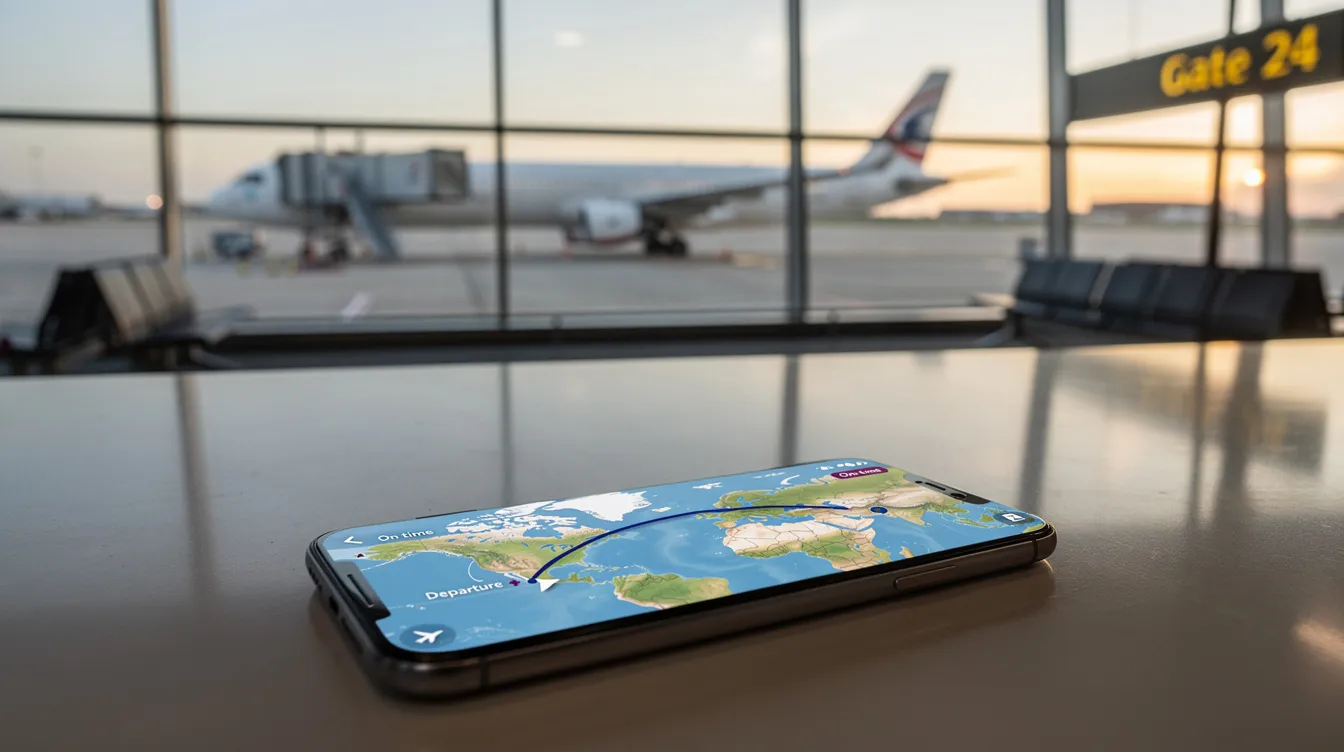
A typical flight tracking app shows live aircraft positions on a moving map. As your flight progresses, you see a small plane icon travel from departure to destination, with updates every few seconds or minutes. Quality data sources improve accurate position, altitude, and timing details in these apps.
The primary technology behind this is ADS-B (Automatic Dependent Surveillance–Broadcast). Most aircraft today transmit positional data using GPS-determined coordinates, broadcasting their location, altitude, and speed to ground receivers. Apps combine this with aviation schedule databases and airport feeds to give you a complete picture.
Live mapping displays show real-time air traffic moving globally or locally. For example, if you're tracking a New York JFK to London Heathrow flight on a winter evening, you'd see the aircraft climb steadily, follow oceanic tracks showing the North Atlantic route, and approach LHR with its estimated time of arrival updating as conditions change. You might even see how temperature conditions along the route affect flight altitude.
This is the same type of flight information that air traffic control and pilots monitor. What the aircraft sees on its instruments is similar to what you see on your phone. That visibility can help anxious passengers feel safer and more informed.
Key Features You Can Expect from Free Flight Tracker Apps
Most free flight tracker apps share a common set of great features for casual travelers and nervous flyers alike. The best free flight tracking apps should offer real-time map updates, easy search, and clear flight status displays.
Free apps rarely include all the features found in paid tiers, but here's what you can typically expect:
-
Live map view with aircraft moving across the globe, showing direction and progress
-
Flight number search - flight tracking apps should allow easy lookup by flight number, airline, or route
-
Departure and arrival boards with delay information and gate details
-
Basic aircraft details including aircraft type, speed, altitude, vertical speed, and estimated arrival times
-
Push notifications for gate changes, delays, and cancellations
-
Itinerary storage - mobile apps can store itineraries to help manage multiple flights and connections
For example, entering flight number "DL45" into a free app shows you when it departed, its current position on a detailed map, and its expected landing time. If the gate changes, real-time push notifications provide crucial alerts so you aren't scrambling at the airport. Accurate gate and terminal information is critical during tight connections, and these alerts can mean the difference between a relaxed transfer and a missed flight.
For nervous flyers, the map view showing altitude, speed, and steady progress can be genuinely comforting. Seeing the aircraft follow a smooth, predictable path helps prove that everything is behaving normally. Some apps even support Apple Watch, keeping flight details on your wrist.
Popular Free Flight Tracker Apps and What They Do Well
There's no single best flight tracking app for everyone. An aviation enthusiast wants deep data. A nervous flyer wants reassurance. A frequent traveler wants speed. Here's what the most popular options offer:
Flightradar24 is the most well-known live flight tracker. It tracks aircraft in real-time on a global map and is the #1 travel app in over 150 countries. With a rapidly growing network of over 50,000 ground stations for tracking, it provides excellent global coverage. Users can tap on aircraft icons for detailed flight information including airline liveries, high resolution photos of the actual aircraft, and even an Augmented Reality mode that labels planes in view when you point your phone at the sky. You can also filter flights by airline, altitude, or aircraft type to focus on individual flights that matter to you. The app shows aeronautical charts and oceanic tracks for transatlantic routes.
FlightAware is a popular flight tracker known for strong delay prediction. FlightAware tracks inbound aircraft to predict delays early, giving you current delay stats before gate agents may have updates. It provides clear airport delay overviews and is especially useful for domestic connections.
Flighty uses machine learning to predict delays before airlines announce them. It tracks inbound aircraft up to 25 hours before departure, giving you a significant head start. FlightStats provides historical on-time performance data for flights, helping you choose routes with better reliability. And AirHelp alerts users about compensation eligibility for delays, which can be valuable for European travel.
Most of these apps use a freemium model, and many are free today to download or try. The free version gives solid flight tracking, while paid tiers add advanced features. But for nervous flyers, none of these explain what's happening inside the cabin. That's where SkyGuru fills a different role entirely.
Free vs Paid: What You Get Without a Subscription
Most flight tracking apps are free to download and use right away. The free version typically covers everything a casual traveler or anxious flyer needs for a single trip.
Features included in free tiers:
-
Live tracking for most commercial flight routes
-
Simple search by flight number or airline
-
Basic aircraft details and flight status
-
Standard airport arrival and departure boards
What gets locked behind paid plans:
-
Weather overlays that enhance understanding of detailed weather conditions along your route
-
Extended flight history and playback features - users can view historical flight data up to 365 days back and watch playback of past flights
-
More frequent data refresh (seconds instead of minutes)
-
Unfiltered data access and advanced map layers
-
Inbound aircraft tracking and current weather radar
For reference, Flightradar24 offers 365 days of historical flight data in its Gold plan, along with features like aeronautical charts and expanded coverage. Gold upgrade prices vary depending on platform, and some features in the current period are strictly limited to subscribers. A Silver plan typically removes ads and adds some historical data access.
However, for anxiety reduction and basic travel planning, the free tier of a flight tracker plus an educational guide like SkyGuru is usually enough. You don't need to pay for premium features unless you want deep aviation data or all the above features for entertainment purposes.
How Flight Tracking Helps with Fear of Flying and Turbulence Anxiety
Many travelers feel a knot in their stomach before takeoff. During turbulence or unexpected delays, that anxiety can escalate quickly. The root cause is often uncertainty - not knowing what's happening or why.
Seeing your aircraft move steadily along its planned route on a map can interrupt catastrophic thinking. Instead of wondering "are we lost?" or "are we circling forever?", you can see the pathways flights follow and confirm that everything is normal. When a plane enters a holding pattern before landing, the tracker shows it clearly - you're circling because of live air traffic sequencing, not because something is wrong.
Common anxiety triggers like turbulence, unexpected turns, and altitude changes become far less frightening when you can see they match normal route adjustments. The detailed map shows your plane behaving exactly as most aircraft today do on similar routes, and modern apps can help individuals overcome their fear of flying by turning that information into reassurance.
Beyond external tracking, many anxious flyers benefit from in-cabin explanations of each stage of flight, noises, and turbulence. That's where pairing a tracker with a tool like SkyGuru or the SkyGuru app designed to reduce in‑flight anxiety adds real emotional value.
SkyGuru vs Standard Flight Tracking Apps: What's Different
A standard flight tracker shows where the plane is. SkyGuru acts as a pilot and therapist in your pocket, explaining what you're feeling and why it's safe.
SkyGuru provides real-time in-flight guidance for anxious fliers by using your flight details, aviation weather data, and your phone's sensors to predict and explain what you'll experience. The app explains what passengers will feel during flights - from engine noise changes during climb to pressurization pops in your ears.
Key features for nervous flyers include:
-
SkyGuru offers turbulence forecasts to help reduce flying anxiety
-
Real-time explanations of bumps, sounds, and sensations
-
SkyGuru includes coping tools for individuals afraid of flying, including breathing exercises
-
The app helps users understand flight stages to alleviate stress
While other apps show the aircraft on a map, SkyGuru focuses on what's happening to you inside the cabin. It's the only app specifically designed to address the emotional experience of flight.
Many travelers use both: a free flight tracking app for route and airport status, and SkyGuru for emotional support and in-flight understanding, backed by tools and support that reduce fear of flying. They complement each other perfectly.
Data, Privacy, and Safety in Free Flight Tracker Apps
Flight tracking is based on publicly broadcast aircraft data from ADS-B transponders. This data specifically excludes activities related to passenger information or internal aircraft systems. It does not interfere with aircraft safety, and there have been no incidents resulting from passengers using tracking apps.
Most apps collect some user data. The distinction matters:
-
Data linked to you: account email, subscription details, flight history you've saved
-
Data not linked to you: anonymous device stats, crash reports, general usage metrics (though not your device serial number)
Some apps use data to serve targeted ads or share analytics with third parties. Review each app's privacy section and adjust tracking permissions in your phone's settings if you prefer less data sharing.
SkyGuru is designed with anxious travelers in mind, so its focus is on reassurance and clarity, not aggressive advertising. Clean interfaces with minimal ads improve usability, especially when you're already feeling stressed.
Choosing the Best Flight Tracking App for Your Needs
The best flight tracking experience depends on what calms or helps you most. User-friendly apps improve the experience for frequent travelers and aviation enthusiasts alike, but what works for an aviation geek may overwhelm a nervous flyer.
Criteria to consider:
-
Map clarity and responsiveness
-
Global coverage (look for apps with an expanding number of ground receivers)
-
Ease of searching by flight number
-
Offline availability of flight information
-
Regular updates with performance improvements and bug fixes
Quick comparison:
-
Aviation enthusiast → Flightradar24 offers the deepest data, with the ability to view general aviation and commercial flight traffic, aircraft details, and even tap any airport icon for live boards
-
Casual traveler → FlightAware provides clear alerts and delay predictions without overwhelming detail
-
Fear-of-flying support → SkyGuru explains turbulence, flight stages, and cabin sensations in real time
With performance improvements enjoy faster data refresh and smoother maps. For nervous flyers, choose an app that feels simple, then pair it with SkyGuru. Try testing multiple free apps on an upcoming trip and notice which one genuinely lowers your stress.

Practical Tips: Using Flight Tracking to Stay Calm Before and During a Flight
How you use a flight tracker app matters as much as which one you choose. Push notifications keep travelers informed while traveling, but too many alerts can increase anxiety rather than reduce it.
The day before your flight:
-
Add your flight to the app and check the estimated time of departure
-
Look at current weather along the route — without obsessing
-
Note your gate and terminal details
On travel day:
-
Check the app before boarding for any delay information or gate changes
-
After takeoff, glance at the map once to confirm your route - then put it away
-
Check again before landing to see your actual time of arrival
Pair tracking with SkyGuru:
Track flights externally to know where you are, then let SkyGuru guide you through each stage. If the tracker shows you climbing through clouds, SkyGuru might explain that bumps are expected and offer breathing tips. It bridges the gap between seeing data and understanding what you feel.
Set healthy boundaries. Rather than checking every minute, look at the app at specific moments. Gate agents and the flight crew will announce anything critical. Your goal is predictability, not surveillance.
Understanding and predictability are powerful tools. Knowing what to expect can transform a fearful flight into a manageable, sometimes even enjoyable, experience.
Conclusion: Turning Flight Data into Confidence in the Sky
Free flight tracker apps help you see the big picture of your journey — route, timing, aircraft status, and even the pathways flights take across the globe. Whether you're reviewing past flights with historical data or watching live air traffic at the time of your departure, these tools turn the unknown into something visible.
The best flight tracking app is the one that gives you clarity without overwhelming you. Knowledge remains one of the strongest antidotes to fear. Learn more about how flight tracking apps reduce flight anxiety.
SkyGuru adds another layer — real-time, pilot-style explanations and anxiety tools that support the mind, not just the map. Flying remains one of the safest ways to travel, and using smart tools like flight trackers and SkyGuru can make each trip feel more predictable, understandable, and safe. For more on calming turbulence fears, see our article on turbulence explained.
For nervous flyers, understanding flight sensations explained can be very reassuring. If you want to prepare your mind and body for travel, check out our flying comfort tips.
Finally, if you want to deepen your knowledge about aviation safety and processes, explore our aviation education resources.
FLEET SELECTION
JET CARDS
COST ANALYSIS


How to Auditing Your Operator's Maintenance Logs
Oct 05, 2025

How to Auditing Your Operator's Maintenance Logs
Oct 05, 2025

How to Auditing Your Operator's Maintenance Logs
Oct 05, 2025
Sky Guru Weekly
The smartest private aviation intelligence in your inbox.
.svg)

