




Private jet charter sounds glamorous in theory—but what does it actually look like in practice? This comprehensive guide is designed for business travelers, families, and anyone considering private jet travel. We walk through real private jet charter examples with specific routes, aircraft types, timelines, and honest cost breakdowns. By providing these private jet charter examples, we ensure the page’s relevance to your search and help you make informed decisions about whether private aviation is right for your needs.
Understanding real-world private jet charter examples is crucial for making informed decisions. Whether you’re a business executive needing efficiency, a family seeking comfort and flexibility, or a first-time flyer curious about the process, knowing the actual costs, timelines, and trade-offs helps you plan with confidence and avoid surprises. This article is your practical resource for evaluating private jet travel options, with clear, scenario-based breakdowns.
At SkyGuru, we don’t sell charters or broker flights. Our app supports anxious and curious flyers with real-time flight explanations, turbulence forecasts, and reassurance—useful whether you fly commercial or private. People choose to charter private jets for efficiency, security, and celebrating milestones in luxury. Medical emergencies may necessitate the use of private charters to transport patients needing urgent care. Whatever brings you to private aviation, understanding what real private jet trips actually cost helps you plan with confidence.
Each section below is a mini case study covering route, aircraft, timing, cost breakdown, and pros/cons versus commercial flights.
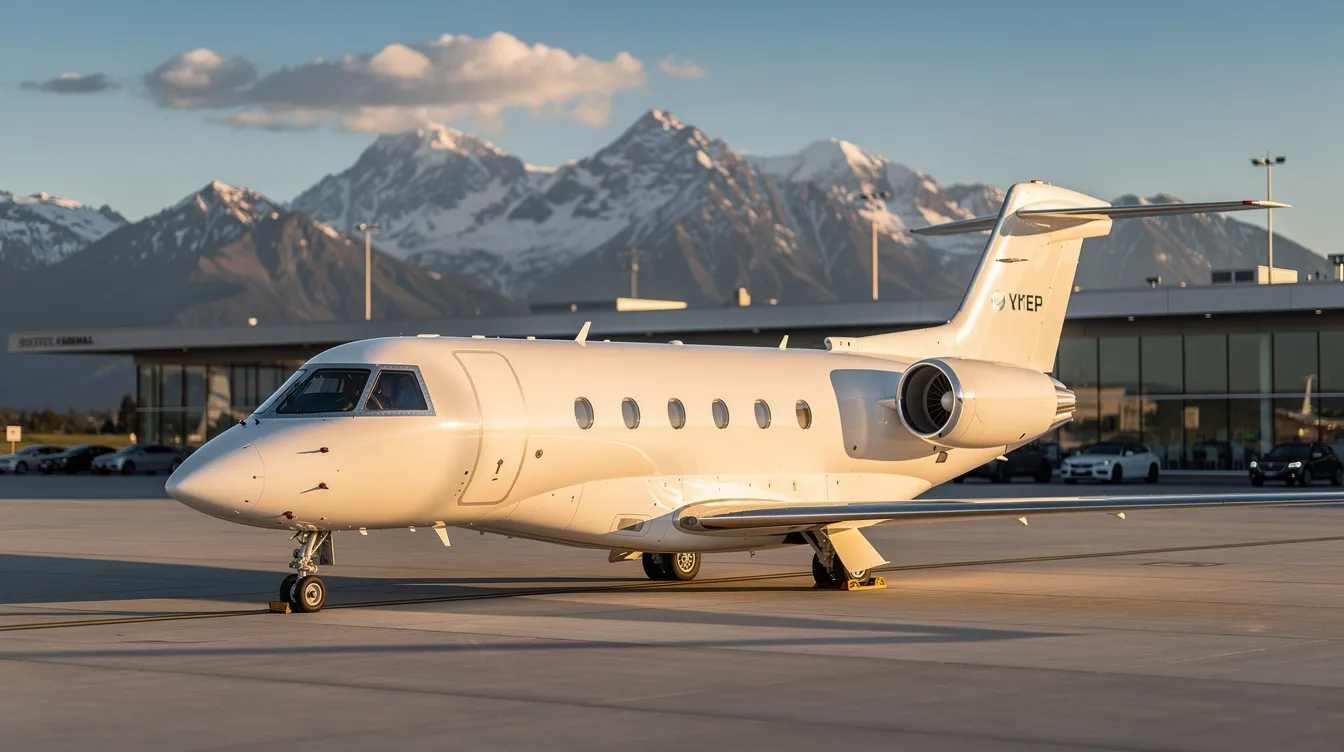
Key Types of Private Jets: Definitions
Before diving into the scenarios, it’s important to understand the main categories of private jets. Each type offers different passenger capacities, ranges, and amenities:
-
Very Light Jets (VLJs): These aircraft are designed for short to medium-range flights and typically accommodate 2–4 passengers.
-
VLJs are cost-effective and can operate from smaller airports, making them ideal for quick regional trips.
-
Light Jets: Slightly larger than VLJs, light jets usually seat 4–7 passengers and offer a bit more range and comfort, suitable for short to medium-haul flights.
-
Midsize Jets: These jets can accommodate 6–10 passengers and have a typical range of 2,000 to 3,500 nautical miles. Midsize jets are perfect for regional and medium-haul flights, often featuring onboard lavatories and service galleys.
-
Super Midsize Jets: Offering superior range and size compared to standard midsize jets, super midsize jets seat 8–9 passengers. They provide a more comfortable flying experience with modern onboard Wi-Fi, roomier cabins, and improved avionics for quieter, smoother flights.
-
Heavy Jets: Heavy jets offer a full suite of amenities, including large, comfortable chairs, enclosed bathrooms, lie-flat beds, premium entertainment facilities, and the option of having flight attendants onboard. They typically seat 10–16 passengers and are suitable for long-haul and intercontinental flights.
-
Ultra-Long Range Jets: These jets are designed for the longest nonstop flights, often exceeding 6,000 nautical miles, and can carry 12–19 passengers in ultimate comfort.
-
Executive Airliners: The largest category, executive airliners are converted commercial aircraft with luxurious interiors, seating 16–50 passengers, and offering conference rooms, bedrooms, and full-service galleys.
Table: Overview of Private Jet Types and Characteristics
|
Jet Type |
Passenger Capacity |
Typical Range (NM) |
Ideal Flight Type |
Type Keytures |
|---|---|---|---|---|
|
Very Light Jets (VLJs) |
2–4 |
1,000–1,200 |
Short regional flights |
Cost-effective, small airports access |
|
Light Jets |
4–7 |
1,200–2,500 |
Short to medium-haul |
More range, basic amenities |
|
Midsize Jets |
6–10 |
2,000–3,500 |
Regional and medium-haul |
Onboard lavatory, service galley |
|
Super Midsize Jets |
8–9 |
3,000–3,600 |
Long regional, short intercontinental |
Roomier cabins, Wi-Fi, quieter flight |
|
Heavy Jets |
10–16 |
3,500–6,000+ |
Long-haul, intercontinental |
Lie-flat beds, flight attendants |
|
Ultra-Long Range Jets |
12–19 |
6,000+ |
Longest nonstop flights |
Luxurious interiors, multiple zones |
|
Executive Airliners |
16–50 |
4,000–7,000+ |
Large groups, VIP travel |
Conference rooms, bedrooms, full galley |
Urgent Cross-Country Flight
Scenario Details
Scenario: A last-minute business trip from New York (Teterboro, TEB) to Los Angeles (Van Nuys, VNY) needed within 6–8 hours due to an unexpected client crisis.
Commercial options are sold out or badly timed. You need to depart late evening, land close to your meeting location, and work in a quiet private cabin environment during the flight. Executives use private jets for multi-city roadshows to visit four or five locations in a single day, which is impossible with commercial flight schedules—and urgent “Go Now” meetings can involve chartering a private jet that can depart within hours for last-minute negotiations.
Aircraft Choice Based on Flight Distance
A super midsize jet such as the Citation X or Challenger 350 is ideal, seating 8–9 passengers with coast-to-coast range and good speed (typical range: 3,200–3,600 NM). Super-midsize jets offer superior range and size compared to standard midsize jets, providing a more comfortable flying experience with modern onboard Wi-Fi, a roomier cabin, and improved avionics for a quieter and more comfortable flight.
Timeline Example
-
10:00 a.m.: Initial inquiry to charter broker
-
1:00 p.m.: Contract signed, passenger details confirmed
-
6:00 p.m.: Wheels up from Teterboro
Short-notice charters affect both pricing and availability—evening slots can see 40% reduced availability, pushing rates higher, and operators increasingly rely on detailed flight and weather data APIs to plan around turbulence and delays.
Cost Breakdown
Private jet charter prices are primarily calculated based on the hourly rate multiplied by the number of flight hours, along with additional fees such as landing fees and taxes. For this flight:
-
Flight time: ~5.5–6 hours
-
Hourly rate: $7,000–$9,000 for super midsize aircraft in the US
-
Base calculation: 6 hours × $8,000 = $48,000
-
Realistic total with taxes, landing, handling: $50,000–$60,000
Line-Item Breakdown
-
Base flight time charge: 6 hours × $8,000 = $48,000
-
Federal excise tax (~7.5% US): approximately $3,600
-
Landing and handling fees at TEB and VNY: $1,000–$2,000 combined
-
Ground transport (black car, transfers): $200–$500 if arranged
Extras to consider:
-
Catering: $50–$200 per person
-
Wi-Fi on some international routes: $1,000–$3,000
-
De-icing in winter: up to $2,000
Understanding “minimum daily usage”: Some charter operators charge as if the aircraft flew a minimum number of hours per day (typically 8–10 hours), even for short-stay or same-day returns. A same-day cross-country round trip could push costs to $90,000–$110,000.
Private vs. Commercial Comparison
-
Last-minute first class tickets: $20,000–$30,000 total for 4–6 travelers
-
Airport dwell time saved: 4–6 hours
-
Overnight risk eliminated: Priceless for critical meetings
-
Empty leg flights or selecting the right jet Can be a cost-effective solution for urgent travel if flexibility allows
Trade-offs
-
Cost premium is real: You’ll need rapid decision-making and wire/card payment within hours.
-
Specific jet model choice may be limited at the last minute.
-
Even in a private cabin, turbulence and unusual sounds still happen. SkyGuru can forecast bumps on this transcontinental route—Rocky Mountains, jet stream effects—and reassure nervous team members with real-time explanations.
Multi-City European Trip
Scenario Details
Scenario: A family of 6 plus 2 grandparents planning a 5-day summer trip in July 2026 across Europe, combining leisure and some business. This private jet case study shows how charter handles complex routing.
Itinerary
-
Day 1: London Farnborough (FAB) to Nice (LFMN)
-
Day 3: Nice to Florence (LIRQ)
-
Day 5: Florence to Zurich (LSZH), then back to London
Why Private Makes Sense
Complex routing, older relatives who struggle with large hubs, tight timing between meetings and family activities, and smaller airports closer to villas and hotels all make private jets a smart choice. Private jets can provide direct access to over 5,000 smaller, regional airports in the U.S., and European private aviation offers similar flexibility.
People often choose to charter a private jet to bypass the constraints of commercial travel, such as rigid schedules and long security lines. Selecting the right jet can also be a cost-effective way to manage complex, multi-city travel for families and business groups, optimizing both convenience and budget.
Aircraft Type
Midsize jets or super midsize jets, such as the Hawker 900XP or Praetor 600, are popular business jet options for such itineraries. These jets offer 8 seats, enough luggage space for a multi-day trip, and good performance at shorter runways in Europe. They typically offer a range of 2,500–3,500 nautical miles, making them well-suited for regional European hops and ensuring nonstop flights between cities.
Mid-size jets typically feature onboard lavatory services, Wi-Fi connections, and a service galley to serve food and drinks during flights.

Benefits
-
Avoiding multiple commercial connections and security lines
-
Flexibility to adjust departure times by 30–60 minutes when dinner runs late
-
Departing from business aviation terminals with 15–30 minute check-ins versus 2+ hours at major hubs
Estimated Legs and Flight Times
-
FAB–Nice: ~1.5–2.0 hours
-
Nice–Florence: ~1.0–1.2 hours
-
Florence–Zurich: ~1.0–1.2 hours
-
Zurich–FAB: ~1.5–2.0 hours
-
Total flight hours: ~6–7.5
Cost Estimate
-
Super midsize hourly rate in Europe: €5,500–€7,500/hour ($6,000–$8,000)
-
Base total range: €35,000–€55,000 ($38,000–$60,000)
-
Factors affecting price: Peak July pricing, positioning flights, crew overnights
Pricing Model Considerations
-
Single multi-leg charter quote often discounts 10–20% versus separate one-ways
-
Positioning flights add billable hours if the jet isn’t based near your starting point.
-
Crew overnight charges ($1,000–$2,000/night) during the 5-day itinerary
Efficiency and Time-Saving
Total Travel Hours Comparison
-
Private: Drive to the small airport 45–60 minutes before each flight, direct routing on the chosen schedule
-
Commercial: Likely connections (London–Paris–Nice, Nice–Rome–Florence, Florence–Zurich–London) with 2–3 hour layovers each
How Charter Consolidates Time
-
Security and boarding times compressed to 15–30 minutes
-
Baggage handling simplified—luggage stays with your group, minimal lost-bag risk
-
Immigration at quieter terminals, sometimes in-terminal for non-Schengen arrivals
The actual in-air time difference can be small, but door-to-door travel often shrinks from 25+ commercial hours to 12–15 hours with private aviation. Mid-size jets can house up to 10 passengers and have larger fuel tanks that support nonstop flights of over 2000 nautical miles, making them ideal for medium-haul travel across Europe.
Value of Time
Calculate your own value of time: If key decision-makers bill at $500–$1,000/hour, the time savings alone can justify charter flight costs for a group.
Empty Leg Opportunity
What Is an Empty Leg?
An “empty leg” is a private jet flying without passengers because it needs to reposition—for example, after dropping someone off or heading to pick up another client. These represent some of the most accessible real charter costs for first-time charter flyers. Empty leg flights are considered a cost-effective way to experience private jet travel, especially for flexible travelers.
Why Operators Discount These Flights
-
The jet would fly empty anyway
-
Any revenue helps offset crew, fuel, and airport costs
-
Discounts typically run 30–70% off standard rates
Concrete Example
A light jet needs to reposition from Las Vegas Henderson (HND) to San Francisco (SFO) on a Thursday afternoon after dropping a client. A couple and their two friends find the empty leg listing.
Typical Costs
-
Standard one-way charter: 1.0–1.2 flight hours at $3,500–$4,500/hour = $4,000–$6,000 plus fees
-
Empty leg advertised price: $2,000–$3,000 all-in
Very light jets (VLJs) are designed for short-to-medium-range flights and can operate from smaller airports, providing access to a wider range of destinations compared to larger jets. Light jets are ideal for 6–8 passengers on 2–3 hour flights.
Pros
-
Significantly reduced price versus regular charter
-
Private jet experience with minimal planning if your schedule is flexible
-
Similar onboard comfort as a full-price charter
Cons
-
Fixed departure window—time often dictated by the owner’s or the next client’s schedule
-
Route rarely adjustable—no detours or extra stops
-
Flights may be canceled or rescheduled if the original full-fare booking changes.
Best Suited For
-
Spontaneous leisure trips (weekend getaways)
-
Travelers who can tolerate uncertainty or last-minute timing shifts
-
People are curious to try private flying at a lower cost
Nervous flyers should be prepared for flexibility; having SkyGuru can soothe anxiety if schedules shift or weather changes unexpectedly before departure.
When an Empty Leg Makes Sense
-
You are traveling one-way and don’t need a guaranteed return flight
-
Your dates are fixed, but the departure time can move a few hours earlier or later
-
You are comfortable flying a specific aircraft model without customization
When It Doesn’t
-
Critical business meetings or medical situations where exact timing is non-negotiable
-
Multi-city itineraries where a simple point-to-point empty leg won’t cover the plan
-
Travelers needing specific catering, pet arrangements, or medical equipment requiring extra planning
View empty legs as opportunistic deals rather than primary planning tools.
Budget vs Luxury Traveler Comparison
Scenario Details
Two fictional travelers book the same route: Miami (OPF) to Teterboro (TEB) in October 2025.
-
Alex (Budget-conscious entrepreneur): Traveling with 3 colleagues, flexible on timing, focused on cost efficiency.
-
Isabella (Luxury-focused traveler): Flying with family of 6, values premium experience, specific timing needs.
Alex’s Choices
-
Aircraft: Turboprop aircraft (Pilatus PC-12) or very light jets (Phenom 100), both considered business jet models, with 4–6 seats; these are cost-effective options for entrepreneurs seeking private jet charter examples that balance comfort and affordability.
-
Flexible departure: Early morning or late evening for better pricing
-
Basic catering: Snacks, drinks, standard ground transport
Isabella’s Choices
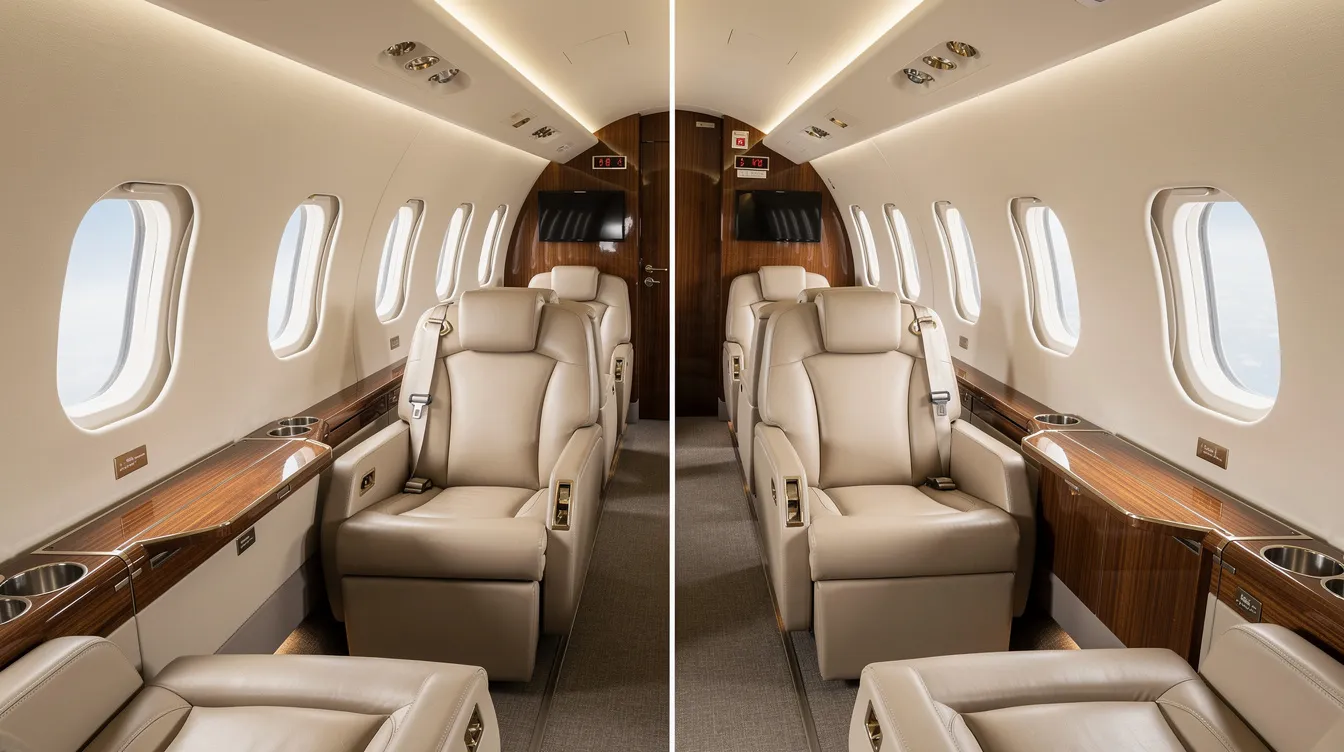
-
Aircraft: Large-cabin heavy jets (Gulfstream G550 or Global 5000) with lie-flat beds and separate lounge area, or super midsize jets such as the Challenger 350 or Citation X, which offer a premium yet practical alternative to heavy jets by combining spacious cabins and extended range with cost-efficient operation.
-
Mid-day departure: With a narrow time window
-
Premium catering: Dedicated flight attendant, chauffeured transport
Heavy jets offer a full suite of amenities, including large, comfortable chairs, enclosed lavatories, lie-flat beds, premium entertainment facilities, and the option of having flight attendants on board. Private cabin environments on jets allow for confidential negotiations and discussions without the risk of eavesdropping, making them ideal for business meetings or sensitive conversations. Private jets provide a distraction-free environment for confidential mergers and acquisitions discussions.
Real Charter Cost Ranges
-
Alex: Turboprop at $2,000–$3,000/hour → $5,000–$9,000 total
-
Isabella: Heavy jet at $9,000–$13,000/hour → $25,000–$40,000 total
Cost Per Person
-
Alex’s group of 4: $1,250–$2,250 per traveler
-
Isabella’s group of 6: $4,000–$6,500 per traveler
Trade-offs
-
Smaller jets: More noise, less cabin height, but closer airport options and lower operating costs
-
Larger aircraft: Quieter ride, more stable in turbulence, private bedroom/office options, higher fuel burn,n and landing fees
Some nervous flyers feel calmer in spacious cabins with more cabin space and a flight attendant explaining what’s happening. Others value the intimacy of a small cabin. Either way, SkyGuru provides real-time explanations of noises, turbulence, and climb/descent profiles.
Key Differences in Aircraft, Flexibility, and Experience
Aircraft Choice
-
Budget: Smaller jets, slower, more fuel-efficient, limited flight range, usually no dedicated flight attendant
-
Luxury: Large jets, extended range, more powerful jet engines, high-end interiors with stand-up cabins, professional cabin crew
Onboard Experience
-
Budget: Comfortable seats, simple catering from basic service galley, good for work, minimal extras
-
Luxury: Lie flat beds, conference rooms for business associates, a full galley with refrigeration facilities, advanced entertainment, and private suites
Flexibility
-
Budget: More flexible on aircraft size and exact times to capture lower rates
-
Luxury: More demanding of specific aircraft types, luxurious amenities, desired amenities, and tightly controlled timetables
Total Cost
Both represent private jet charter examples, but final cost can differ by 3–4× for the same route—driven mainly by aircraft size and service level. Special occasions such as milestone birthdays or graduations can be celebrated uniquely by chartering private jets, and private jets offer a grand entrance for the bride and groom at destination weddings or provide a setting for proposals.
How Real Private Jet Charter Costs Are Built Up
Understanding Cost Structure
Understanding cost structure helps you evaluate quotes intelligently. Private jet charter companies typically organize their fleets by cabin class, ranging from light jets for short domestic flights to ultra-long-range jets for intercontinental travel. Each cabin class is defined by its typical range in nautical miles (range NM), which determines suitability for different trip lengths.
Common Elements
-
Base hourly rate varies by aircraft category.
-
Total billable flight time includes positioning flights where the jet flies to/from your starting/ending airport empty
-
Taxes and airport/handling fees differ by country and airport size.
Private jets are categorized into several types based on size, range (NM), and passenger capacity, including Very Light Jets, Light Jets, Midsize Jets, Super Midsize Jets, Heavy Jets, Ultra-Long Range Jets, and Executive Airliners. Aviation professionals often use specialized flight and turbulence data APIs when analyzing these aircraft on specific routes. Very Light Jets (VLJs) typically accommodate two to four passengers, offering cost effectiveness and the ability to operate from shorter runways, with a range NM suitable for short regional trips. Midsize jets can accommodate six to ten passengers and have a typical range of 2,000 to 3,500 nautical miles (range NM)—most midsize jets and standard midsize jets fit this profile, making them ideal for medium-haul flights.
Key Cost Drivers
-
Aircraft type and passenger capacity (the biggest factor)
-
Route and flight distance, including whether nonstop flights are possible
-
Time of year and day of week (peak seasons like Christmas/New Year raise prices 30–50%)
-
Length of stay and whether aircraft/crew must wait or reposition
-
Extras: Catering, Wi-Fi surcharges, de-icing, flight attendants on smaller jets
High-level international conferences, such as the World Economic Forum in Davos, demand early private jet bookings. Private jet traffic jams can occur during high-profile events, as many wealthy attendees often arrive within a narrow timeframe. Private jets can prevent disruptions caused by canceled commercial flights during peak holiday seasons.
Factors that influence the overall cost of a private jet charter include the type of aircraft, flight distance, time of travel, and additional services requested. The cost of chartering a private jet can vary greatly depending on factors such as the size and type of aircraft, flight distance, number of passengers, and desired amenities.
Beyond price, evaluate safety record, aircraft age, and charter operator certifications. Apps like SkyGuru complement the operator by translating technical flight information into calm, understandable language—covering cruising altitudes, storage space limitations, and baggage capacity.
Choosing the Right Scenario for You
Summary of Scenarios
-
Urgent cross-country flights: About speed and control of timing, usually higher per-flight cost, but strong business travel justification
-
Multi-city European trips: Optimize complex itineraries for older/younger family needs, protect time and energy across popular aircraft routes
-
Empty legs: Opportunistic, lower cost, less control—cost efficient for flexible travelers
-
Budget vs luxury: Same sky, very different cabins and bills—finding the right jet and perfect jet depends on priority.s
Questions to Reflect On
-
Do you prioritize time, comfort, or price most?
-
Are your trips planned months ahead or truly last-minute?
-
Do you fly alone, in couples, or in larger teams requiring ample room?
Rugged humanitarian aid is often delivered by private charters to disaster zones, transporting relief supplies or personnel. Air ambulances are used for medical emergencies that require rapid, specialized transportation between facilities. Private aviation serves diverse needs beyond business and leisure.
Realistic Expectations
Private air travel is highly flexible but rarely “cheap.” Understanding these real private jet charter examples and types of private jets helps avoid surprises when reviewing quotes. Most aircraft require planning, though ultra-long-range aircraft and other jets can accommodate complex international flights with proper lead time.
SkyGuru recommendation: Download our app before any flight—commercial or private—to get turbulence forecasts, stage-of-flight explanations, and coping tools if you or your companions feel uneasy. Whether flying super light jets or vip airliners, feeling calm and informed can be as valuable as choosing the perfect aircraft type. Average range concerns, maximum range requirements, and aircraft considerations matter—but so does your peace of mind at cruising altitudes.
FAQs About Real Private Jet Trips and Costs
How much does a private jet cost for a typical 2–3 hour flight?
Costs vary significantly by aircraft size. Turboprops and very light jets typically run $5,000–$10,000 for a 2–3 hour flight. Light and midsize jets range from $8,000–$18,000, while heavy and ultra-long range jets often cost $20,000–$40,000 or more for the same flight time. Positioning flights and landing fees can shift totals up or down by 20%. These represent typical charter flight costs, though peak seasons and last-minute bookings command premiums.
Is flying private ever cheaper than buying business class tickets?
For group scenarios—6–8 passengers on a light or midsize jet—per-person cost may be similar to or slightly higher than scheduled flights in business class, but with major time savings. On peak holiday dates or to airports with poor commercial service, charter flight costs sometimes compare favorably. For solo travelers, commercial business class is almost always the more cost-efficient option. The calculation changes when you factor in productivity: private jets offer more luggage space, enclosed lavatory access, and distraction-free environments that commercial can’t match.
What if I’m anxious about turbulence or flying, even on a private jet?
Private jets feel different from airliners—sometimes smoother due to flying at higher cruising altitudes, sometimes more responsive to bumps due to smaller aircraft size, and many anxious travelers benefit from app-based support to manage that fear of flying. Piston aircraft and smaller jets tend to feel more motion than larger aircraft with bigger wingspans. Strategies that help: Talk with crew before takeoff about the route, choose larger aircraft if budget allows for more cabin space and stability, and use tools like SkyGuru for turbulence prediction and real-time explanations. Modern private jets meet strict safety standards similar to commercial aircraft—they operate with the same rigor, just with more personalized service.
Conclusion
Private jet charter offers a range of options tailored to different needs, budgets, and travel scenarios. From urgent cross-country flights on super midsize jets to leisurely multi-city European trips on midsize aircraft, each example highlights how private aviation can provide unmatched flexibility, convenience, and comfort. Empty leg flights present cost-effective opportunities for flexible travelers, while the budget versus luxury comparison underscores the diverse spectrum of aircraft and experiences available—and for many, using an app to ease fear of flying is part of making these private jet options truly accessible.
Understanding the real charter costs, including hourly rates, additional fees, and operational factors, helps set realistic expectations and enables informed decision-making. Whether you prioritize speed, privacy, or a premium onboard experience, private jet charter can be customized to fit your unique travel requirements.
Ultimately, private jet travel is about more than just transportation—it’s about saving time, reducing stress, and enjoying a seamless journey. By exploring these private jet charter examples, you can better evaluate if and how private aviation fits into your lifestyle or business needs. For nervous flyers, tools like SkyGuru provide valuable support, making every flight more predictable and comfortable, no matter the aircraft type you choose.
FLEET SELECTION
JET CARDS
COST ANALYSIS


How to Auditing Your Operator's Maintenance Logs
Oct 05, 2025

How to Auditing Your Operator's Maintenance Logs
Oct 05, 2025

How to Auditing Your Operator's Maintenance Logs
Oct 05, 2025
Sky Guru Weekly
The smartest private aviation intelligence in your inbox.
.svg)

