



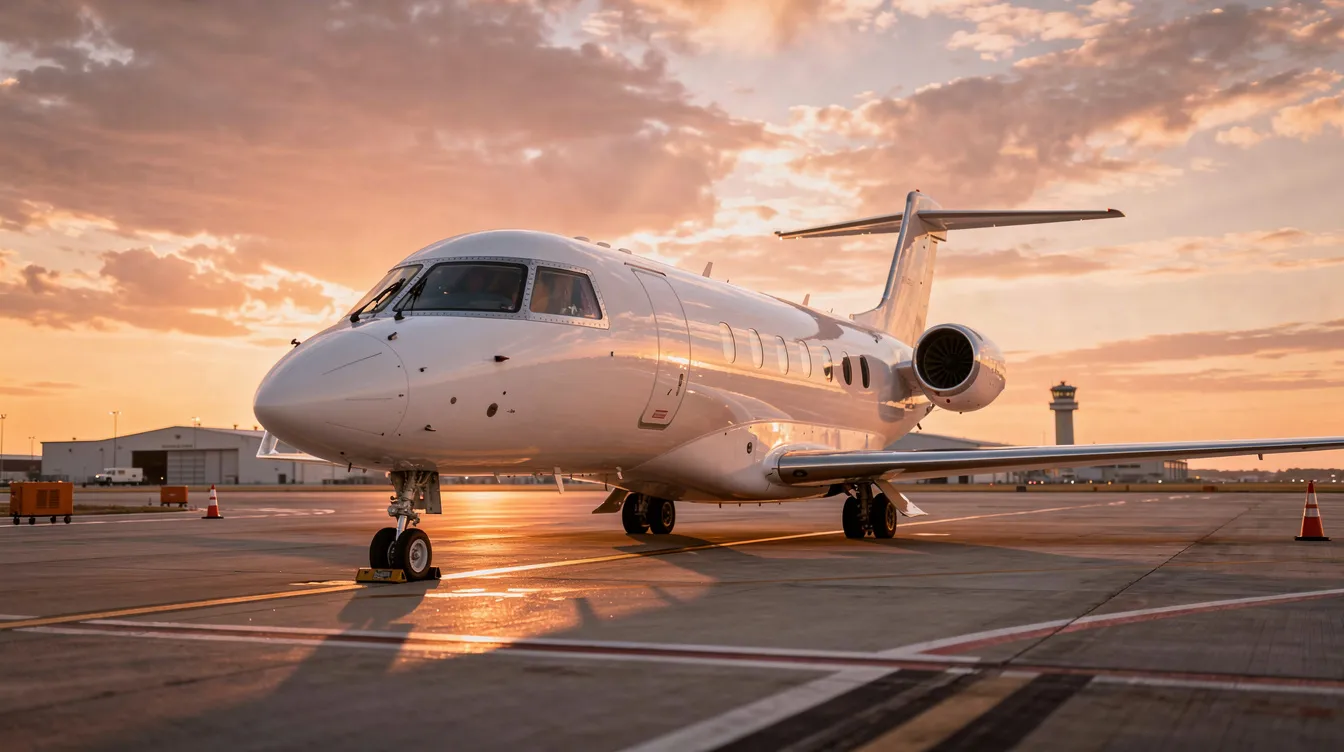
Ever wondered why a charter flight can cost more than a luxury car? While a commercial airline spreads expenses across hundreds of passengers on scheduled routes, a private jet divides those same costs among just a handful of travelers. Unlike commercial airlines, private jets offer greater flexibility and can land at airports closer to your destination, but this exclusivity and convenience come at a premium price.
The high costs of private jets stem from massive initial acquisition prices and substantial ongoing overhead expenses. Understanding this cost structure doesn’t just satisfy curiosity—it helps you make informed decisions about when private aviation makes sense. At SkyGuru, we focus on helping anxious travelers understand aviation, and knowing these costs reveals the rigorous safety and maintenance standards built into every flight.
Cost Stack Overview
Private jet pricing rests on three pillars: acquisition costs (buying the aircraft), fixed ownership costs (annual expenses regardless of flight hours), and ongoing operating expenses. Each layer compounds the others, creating the rates you see when booking.
Here’s what a typical midsize charter flight at $6,000–$8,000 per hour breaks down to, reflecting the operational costs included in the hourly rate:
|
Cost Category |
Approximate Share |
|---|---|
|
Fuel consumption |
25–35% |
|
Crew costs |
17–23% |
|
Maintenance reserves |
15–20% |
|
Landing and handling fees |
10–15% |
|
Operator overhead and margin |
10–15% |
The purchase price of a private jet can vary significantly, ranging from approximately $1 million for a small, pre-owned jet to over $75 million for a new, large-cabin aircraft. This highlights the substantial financial commitment and investment required for private jet ownership, as the expenses involved go far beyond the initial purchase and include ongoing costs that make owning a private jet a significant financial undertaking.
Acquisition Costs (The Starting Point)
Private jets are high-value assets with prices reflecting their capabilities.
Jet Purchase Price Ranges
-
Very Light Jets typically range from $3 million to $8 million in price.
-
Midsize Jets cost between $9 million and $25 million.
-
Large/Ultra-Long-Range Jets can cost $25 million to over $100 million.
-
The initial cost of purchasing a private jet can vary widely, ranging from approximately $2 million to over $100 million, depending on the model and whether it is new or pre-owned.
-
New aircraft command premiums for advanced technology and manufacturer warranties, while pre-owned aircraft trade at discounts but often require avionics upgrades and refurbishment, which can add to hidden costs.
Depreciation and Resale Value
-
Private jets typically lose about 10% of their value in the first year and roughly 5%–10% annually thereafter—a hidden cost that owners must absorb, along with unexpected expenses such as upgrades and modifications.
-
Resale value is influenced by factors such as aircraft age, condition, and market demand, making it an important consideration for owners planning their exit strategy.
-
The age and condition of a private jet are critical factors influencing its cost; newer aircraft typically command higher prices but offer better fuel efficiency and lower maintenance costs compared to older jets. Older jets may require extensive maintenance, impacting overall ownership costs.
Customization and Upgrades
-
Customization expenses for private jets can significantly impact the overall cost, with luxury amenities and specialized features potentially adding millions to the aircraft’s price.
Buyers choose between full jet ownership, fractional ownership, or chartering a private jet on demand. Each distributes acquisition risk differently.
Fixed Ownership Costs (Even When the Jet Doesn’t Move)
A significant portion of why private jets are expensive comes from costs that accumulate whether the aircraft flies or not. The average use of private jets is around 400 hours per year, which contributes to high fixed costs due to infrequent use.
Major fixed cost categories include:
Hangar Fees
-
$30,000 to over $200,000 annually, depending on location and aircraft size
Insurance Premiums
-
Annually, private jet insurance typically ranges from 1% to 3% of the aircraft’s value, which for a $20 million jet can amount to between $200,000 and $600,000.
-
Insurance for private jets typically costs between $15,000 and $85,000 per year, based on coverage needs for smaller aircraft, scaling dramatically with hull value.
Management Contracts
-
Monthly retainers plus per-flight charges for responsibilities such as scheduling flights, crew scheduling, maintenance coordination, and regulatory compliance, with legal and administrative support often costing several thousand dollars annually
Property Taxes
-
Many jurisdictions levy property taxes on private jets, adding to the fixed costs of ownership.
Subscriptions and Training
-
Subscriptions: Navigation data, Wi-Fi, and weather services
-
Mandatory training: Recurrent simulator checks and proficiency testing
These ongoing expenses can add up to significant dollars annually, making private jet ownership a major financial commitment even before considering variable costs like fuel and maintenance.
Whether you pursue fractional ownership or book charter flights, you inherit a slice of these ongoing expenses through hourly rates and management fees rather than paying them directly.
Per-Flight Operating Costs (What Drives Hourly Rates)
Operating costs are the most visible reason charter clients see high hourly prices when they fly private. Private jet travel, while offering unmatched flexibility, privacy, and convenience, comes with significant expenses. Fuel represents the highest variable cost for private jets, making up 25% to 35% of total operating expenses.
A midsize jet burns approximately 180–220 gallons per hour. Fuel is one of the largest variable expenses in aircraft operation, with costs for a midsize jet potentially exceeding $1 million annually due to consumption rates of around 200 gallons per hour. Hourly fuel costs for light jets can range from $300 to $3,500+ for heavy jets. The type and efficiency of jet engines play a crucial role in determining fuel consumption and overall operating costs, as different jet engines and jet fuels can significantly impact expenses, especially on longer flights.
Key per-flight components include:
-
Fuel consumption: The dominant variable expense
-
Crew salaries: Per flight hour allocations plus per-diem payments
-
Landing fees: Can vary significantly based on airport weight and location, ranging roughly from $100 to $15,000 per arrival
-
Airport fees and handling: Ramp services, fuel provision, catering coordination
-
Routine inspections: Required for private jets under rigorous safety regulations, with unexpected repairs sometimes adding to maintenance costs
-
De-icing: Seasonal charges during winter operations
Charter rates must also cover repositioning flights and administrative overhead, explaining why short journeys appear disproportionately expensive.
Supply Constraints
Private aviation operates with a limited global fleet of roughly 12,000–14,000 business jets worldwide. Unlike commercial airlines operating hundreds of seats per flight, private jets spread costs across just a handful of passengers, fundamentally changing the economics.
Specialized crews, finite airport capacity, and aircraft availability at busy hubs like New York, London, and Dubai create supply pressure that elevates prices during peak periods. This limited supply means private jet owners often face higher operational costs and increased competition for resources, especially during high-demand times. These constraints also affect the availability of empty leg flights, which can temporarily reduce prices but don’t change the underlying cost structure.
Barriers to entry are high, as private jet ownership represents a significant financial commitment, including not only the purchase price but also ongoing expenses such as maintenance, crew salaries, and management services.
Limited Fleet and High Barriers to Entry
Designing, certifying, and building private jets requires years and billions in investment. New aircraft enter the market slowly, with production lead times often stretching 18–36 months.
Key supply limitations include:
-
Many jets remain tied to corporate flight departments or are used only for private air travel
-
Complex regulatory approvals and strict aviation regulations slow fleet expansion
-
Commercial airlines can leverage economies of scale to purchase fuel and services at bulk rates, while private operators do not benefit from this cost advantage.
-
Charter-available aircraft represent only 50–60% of the total fleet
This limited supply, combined with steady demand from business executives and high-net-worth travelers, keeps hourly charter pricing elevated.
Crew Availability and Training Requirements
Private jet pilots face demanding standards, including simulator checks, medical exams, and recurrent training. Crew expenses for private jets vary widely, ranging from $85,000 to $300,000 annually per crew member, depending on their experience and the type of aircraft. Many private jets require multiple crew members, which contributes significantly to overall operating costs.
The pilot shortage creates competitive pressure:
-
Competition with commercial airlines for experienced captains
-
Six-figure salaries for qualified pilots on heavy jets
-
Standby pay for short-notice availability across time zones
-
Retention bonuses to prevent crew departures
These crew costs flow directly into charter and ownership expenses.
Airport Access and Infrastructure Limits
While private flights access smaller airports closer to destinations, these facilities have limited ramp, hangar, and slot capacity. Popular business aviation terminals charge premium landing fees and handling charges.
Infrastructure realities include:
-
Few FBOs handle larger jets in many regions
-
Peak-period surcharges at major metropolitan areas
-
Higher per-aircraft fees compared to commercial hub operations
-
Limited competition among service providers
Operational Complexity
Operational complexity is the invisible reason private jets are expensive. Unlike scheduled airlines with fixed routes, each private flight is essentially a custom project requiring unique planning, compliance, and ground arrangements, all of which add to the operating expenses.
For anxious flyers, understanding that extensive structure exists behind the scenes can be reassuring, and tools like SkyGuru’s real-time turbulence and flight explanation app translate that complexity into calming, plain-language insights. Every flight involves sophisticated flight planning, maintenance protocols, crew coordination, and regulatory compliance—all contributing to both cost and safety, and forming a significant part of the ongoing operating expenses.
Flight Planning and Weather
Private jets use significantly more fuel per passenger than airliners, contributing to higher costs. A light jet burns roughly 130 gallons per hour, while heavy jets consume 350+ gallons per hour.
Route planning factors include:
-
Wind optimization to maximize tailwinds
-
Alternate airports requiring additional fuel reserves
-
Weather avoidance adds flight duration
-
Turbulence forecasting for passenger comfort
Private flights rarely operate at full capacity, so fuel cost per passenger runs dramatically higher than commercial flights. Sophisticated weather tools—similar to what SkyGuru explains to nervous passengers and what the SkyGuru flight and weather API platform delivers to partners—help plan safe, efficient routes.
Maintenance and Downtime
Annual maintenance costs for private jets typically range from 5% to 10% of the aircraft’s value, which can include routine inspections, repairs, and unexpected maintenance needs. Operators budget maintenance reserves per flight hour to fund heavy checks costing hundreds of thousands of dollars.
Annual operating costs for private jets typically range from $500,000 to $1 million, but can be higher for older pre-owned aircraft that require more maintenance. Downtime for scheduled and unscheduled repairs means the jet generates no revenue, so profitable hours must cover both flying and non-flying days—exactly the kind of route and utilization details captured in SkyGuru’s turbulence and route data API.
Jets with complex cabins, Wi-Fi systems, and custom interiors—especially luxury jets—have additional systems requiring ongoing maintenance. These investments underpin the high safety standards that can reassure anxious travelers.
Crew Costs
Crew costs extend far beyond base crew salaries. They include recurrent simulator checks, accommodation during multi-day missions, per diems, uniforms, and positioning travel.
For a three-day international mission, additional costs include:
-
Hotel rooms for two pilots ($600+)
-
Ground transportation and meals
-
Per-diem allowances
-
Positioning flights to reach the aircraft
Regulations on flight and duty time may require augmented crews for long-haul flights, especially on heavy jets, further increasing ongoing costs. Flight attendants on extended missions add another layer of operational expenses.
Aircraft Management
Aircraft management companies handle day-to-day scheduling, flight maintenance coordination, and regulatory paperwork. These aviation services include:
-
Safety management systems documentation
-
Insurance negotiations and claims handling
-
Crew training records and medical tracking
-
Tax considerations, tax implications, and regulatory filings
Management fees typically include monthly retainers plus direct operating charges. Even charter clients who never own a jet indirectly pay for this infrastructure through trip fees.
Positioning Flights and Empty Legs
Private jets often reposition with no passengers to pick up clients or return to base. These leg flights still incur fuel, crew, and airport costs, and standard charter quotes usually include positioning time.
Empty-leg flights offer significant discounts, sometimes up to 75% off the normal cost, as they are repositioning flights that would otherwise fly empty. However, these opportunities are last-minute and subject to changes, making them suitable only for flexible travelers.
While empty legs reduce passenger costs, they don’t eliminate the underlying total cost structure—operators simply recover otherwise sunk expenses.
Market Dynamics
Market dynamics represent the final layer explaining why private jets are expensive. Pricing reflects not just costs but also value: time savings, privacy, and flexibility versus scheduled airlines.
Different access models—full jet ownership, fractional ownership, jet cards, on-demand charter—distribute costs and risk differently, but all rest on the same cost foundation.
How Charter Pricing Is Built
Operators build quotes starting from estimated flight hours, adding:
-
Fuel at current market prices plus fuel surcharges
-
Crew allocations and travel expenses
-
Landing fees and handling charges
-
Margins covering fixed costs and profit
Different aircraft types have distinct rate bands. A midsize jet at $6,000–$8,000 hourly costs less than heavy jets at $12,000–$15,000 due to higher fuel burn and additional costs for crew and maintenance.
Surcharges for de-icing, short-notice bookings, or premium catering can significantly increase the initial purchase price of a trip.
Ownership Models: From Full to Fractional to On-Demand
Full ownership suits very frequent flyers who can absorb acquisition, fixed, and variable costs—often those flying 400+ hours annually.
Fractional ownership allows multiple individuals to share the costs and responsibilities of owning a private jet, making it a more accessible option compared to full ownership. Shareholders pay lower upfront costs plus monthly management fees and hourly rates.
Leasing can provide flexibility and lower upfront costs compared to ownership, with options for wet leases that include crew and maintenance, or dry leases that only include the private aircraft.
Chartering remains the most cost-effective option for those who travel infrequently, providing luxury and convenience without fixed costs.
Regardless of model, the same drivers—crew costs, maintenance, insurance premiums, and fuel consumption—must be covered.
Value Perception: Time, Comfort, and Mental Well-being
Many busy executives and frequent flyers justify premium pricing through time savings: bypassing security lines, avoiding connecting flights, and controlling departure times.
Softer benefits include:
-
Privacy for business discussions
-
Tailored service and premium amenities like catering and Wi-Fi add to the experience.
-
Reduced exposure to crowds
-
A calmer environment than commercial cabins
For anxious travelers, more control and direct crew communication can ease fear. Many also benefit from apps that specifically target fear of flying, which explain what’s happening during the flight and provide coping tools. Whether flying commercially or privately, SkyGuru helps nervous passengers by explaining turbulence, flight stages, and in-flight sensations in real time—transforming uncertainty into understanding.
When Flying Commercial Still Makes More Sense
For most travelers, commercial aviation remains far more cost-effective. Per-seat costs on large commercial aircraft run dramatically lower than even discounted private travel options.
Commercial flights typically make more sense for:
-
Solo travelers or pairs
-
Flexible schedules allowing booking
-
Routes well-served by major airlines
-
Budget-conscious frequent flyers
Nervous flyers who cannot justify private jet chartering prices can still significantly improve their experience. Fear-of-flying apps that guide you through each stage of flight can make commercial trips feel far less stressful. Tools like SkyGuru explain noises, turbulence, and flight progress on regular airline flights—providing the understanding that reduces anxiety without the premium price tag.
Ready to transform flight uncertainty into confidence? Download SkyGuru before your next trip—whether commercial or private—and experience the difference that real-time aviation insights can make, as showcased in media coverage of the SkyGuru fear‑of‑flying app.
Frequently Asked Questions About Private Jet Costs
Why are private jets so expensive compared to commercial flights?
Private jets are expensive because their costs are divided among very few passengers, unlike commercial airlines that spread expenses across hundreds. High acquisition prices, fixed ownership costs, and complex operational requirements contribute to the premium pricing.
How much does it typically cost to own a private jet?
Ownership costs vary widely but generally range from $500,000 to over $1 million annually in fixed and operating expenses, excluding the initial purchase price, which can be millions to tens of millions of dollars.
What factors influence the price of a private jet?
Key factors include jet size and category, new versus pre-owned status, customization and upgrades, age and condition, and ongoing operational costs like fuel, maintenance, crew salaries, and hangar fees.
Are there more affordable alternatives to full private jet ownership?
Yes, options such as fractional ownership, leasing, and chartering provide access to private jets with lower upfront costs and shared expenses, making private aviation more accessible.
Can empty-leg flights reduce the cost of flying private?
Empty-leg flights are repositioning flights sold at discounted rates—sometimes up to 75% off—but they require flexible travel plans as availability is limited and subject to change.
How does private jet ownership impact mental well-being during travel?
Private jets offer privacy, comfort, and flexibility, which can reduce travel anxiety. Additionally, tools like SkyGuru provide real-time flight insights that help nervous flyers understand and cope with in-flight sensations, enhancing overall comfort.
Conclusion: Why Private Jets Command Their Price
Private jets are expensive because they combine high acquisition costs, significant fixed ownership expenses, and complex operational requirements—all spread over relatively few flight hours and passengers. The cost stack includes not only the purchase price of a new jet or older aircraft but also ongoing expenses like fuel, maintenance, insurance, crew salaries, and airport fees. Supply constraints, specialized crew training, and infrastructure limitations further elevate costs.
Market dynamics reflect the value of time savings, privacy, and flexibility that private aviation offers, making it a premium service for those who prioritize convenience and comfort. Whether through full ownership, fractional shares, leasing, or chartering, understanding these private jet pricing factors helps travelers and buyers make smarter decisions aligned with their needs and budgets.
For nervous flyers or those seeking to optimize their travel experience, tools like SkyGuru provide real-time insights that enhance comfort and confidence in the air—whether flying commercially or privately, and the SkyGuru FAQ covers setup, pricing, and in‑flight use in detail. Ultimately, the expense of private jets reflects a unique blend of luxury, exclusivity, and operational complexity that few other modes of travel can match.
FLEET SELECTION
JET CARDS
COST ANALYSIS


How to Auditing Your Operator's Maintenance Logs
Oct 05, 2025

How to Auditing Your Operator's Maintenance Logs
Oct 05, 2025

How to Auditing Your Operator's Maintenance Logs
Oct 05, 2025
Sky Guru Weekly
The smartest private aviation intelligence in your inbox.
.svg)

