



Private jets allow travelers to choose their own schedules, eliminating many of the issues associated with airline and commercial air travel—such as wasted hours due to delays, inflexible schedules, and long wait times, which often contribute to fear of flying and flight anxiety. While often seen as just a luxury, private aviation is not only about status; it also serves practical, time-saving purposes that provide real benefits. Yet even with this flexibility, departure times still shift. Understanding why helps transform unexpected changes from stressful surprises into predictable parts of modern air travel.
Quick Answer: Why Private Jet Times Change So Often
Scheduled times for private aviation flights can change due to external operational factors and passenger requirements. While flying private offers far more control than commercial airlines, private jets operate under the same fundamental safety rules, airspace regulations, and weather systems as every other aircraft.
Private jet flight times can be altered by weather disruptions, passenger itinerary shifts, aircraft maintenance, and air traffic control constraints. Weather is the most common cause for flight disruptions across all types of aviation, but crew fatigue, mechanical checks, and airport capacity also play significant roles. Last-minute bookings can also impact timing, aircraft availability, and overall efficiency, as arranging a jet on short notice may require adjustments to schedules or aircraft selection.
Here are the main categories driving most time changes:
-
Maintenance discoveries during pre-flight checks
-
Air traffic control slot assignments and flow controls
-
Weather along your route or at your destination
-
Passenger-driven changes like late arrivals or added stops
-
Last-minute bookings are affecting aircraft availability and timing
Unlike commercial flights with fixed schedules affecting hundreds of passengers, private jets affect fewer people but still prioritize safety over strict adherence to original plans. Private aviation can reduce total door-to-door travel time significantly, with some trips shortened from 12 hours to just 3.5 hours compared to commercial flights, thanks to direct flights that private jets offer. These direct flights eliminate layovers and unnecessary stops, providing a major advantage. The entire process is streamlined—private jets offer time efficiency and increased usable time by allowing travelers to save time and avoid airport lines and security lines, making the experience much more efficient than commercial air travel.
With private jets, travelers can make last-minute changes to their itineraries without the penalties typically associated with commercial airlines. Private jet charter services provide even greater flexibility, and knowing exactly when your flight departs gives you more control and predictability over your schedule. SkyGuru helps travelers understand what’s happening during any schedule change or in-flight delay by providing real-time explanations of each flight stage.
Crew Duty Limits
Pilots and cabin crew on private jets must follow strict duty-time laws, similar to commercial flights. Crew duty limits are regulated by the FAA in the U.S. and EASA in Europe, designed to prevent fatigue-related incidents.
“Duty time” means all time on the job, from reporting to final release. “Flight time” is strictly engine-running hours. The FAA caps duty periods at roughly 14 hours, depending on start time and flight segments, with mandatory rest afterward.
Consider a business traveler flying private from New York Teterboro to Miami. Business leaders and business travelers often have tight schedules and may need to visit multiple cities in a single day, making private jet travel essential for efficient business travel. If their Manhattan meeting runs 90 minutes late and pilots start duty at 8 AM, they hit the legal cap by 10 PM. The departure must move to the next morning because no waivers exist for these limits.
Repositioning flights complicates matters further. An empty leg from Miami to Teterboro to pick you up burns 2-3 hours of crew duty. If that earlier leg faces ground delays, your revenue flight pushes against limits, forcing schedule shifts.
How Crew Schedules Shape Your Departure Time
Private jet operators build 45-90 minute buffers into crew schedules, but passenger changes erode them quickly. Multi-leg days illustrate this well, as private jets can accommodate multiple stops in a single day, optimizing time for business travelers.
A light jet flying London-Paris-Geneva-London in a single day faces cascading effects. A 20-minute Paris de-icing hold shifts the Geneva departure from 4 PM to 4:45 PM, potentially hitting duty caps and forcing an overnight stay.
Crew swaps work at major hubs like Van Nuys or Farnborough,h where backup pilots are based locally. At smaller regional airports, finding replacement crew becomes difficult and expensive.
Practical tip: Share your meeting end times and flexible windows with operators early. This allows them to build realistic schedules and reduces time changes by helping them plan around duty limits.
Airport Curfews and Noise Restrictions
Many smaller airports popular with private jets have night curfews or noise limits. London City enforces a 22:30-06:30 curfew. Nice Côte d’Azur restricts summer night operations.
A private flight planned to land at London City at 22:05 must have its departure brought forward if earlier delays would push arrival past curfew. Missing the window means diverting to Luton or Stansted, adding transfer time and ground transportation costs.
Curfews vary by day and season, which explains why departure times to the same destination look different on Friday nights versus Tuesday mornings.
Maintenance Considerations
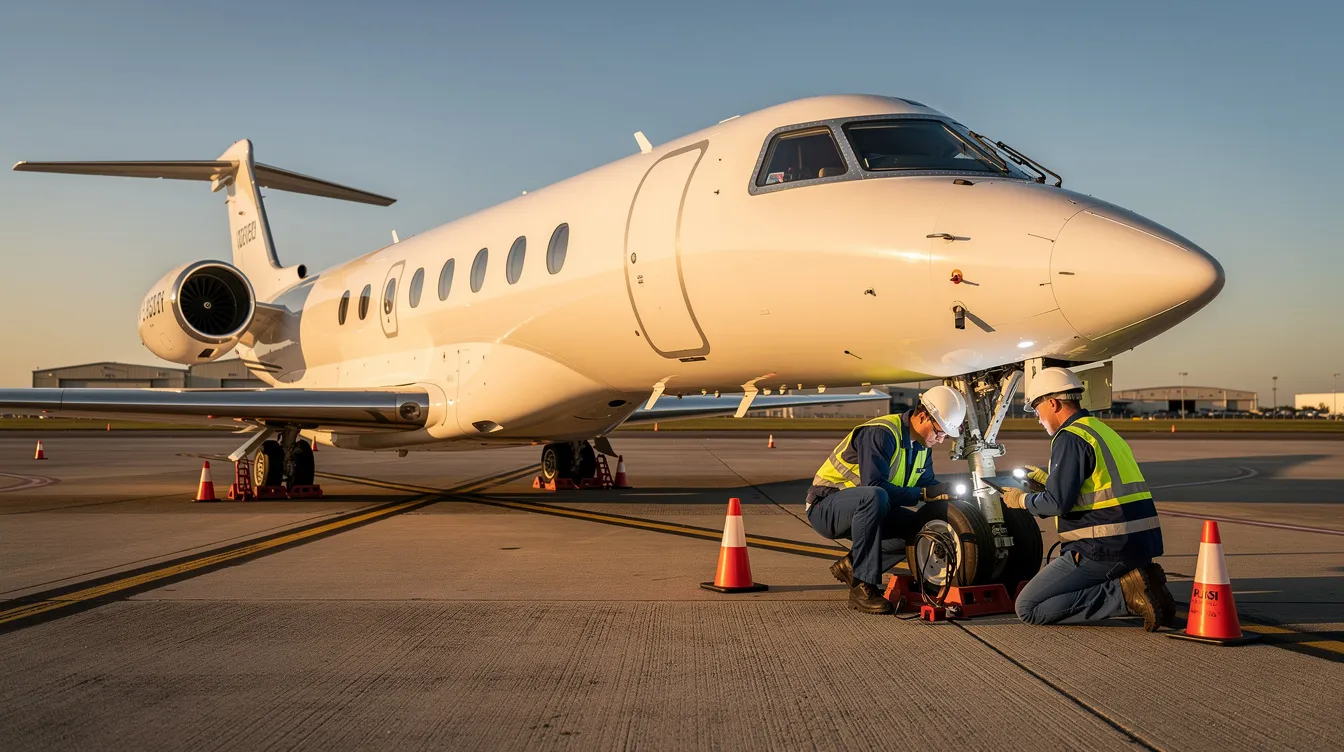
Private jets are maintained under strict schedules, and safety checks can cause last-minute departure changes even when the aircraft looks perfect from the outside. De-icing is a legal safety requirement in cold weather that can cause delays before departure.
All aircraft, from turboprops to long-range jets, have planned maintenance intervals based on hours flown, cycles, and calendar dates. The choice of aircraft significantly impacts flight time, with different types designed for specific travel needs. Not all private jets are the same—private planes vary in cruise speed, range, and comfort. For longer flights, more fuel is required, which can affect both timing and overall cost.
Consider a private jet in Los Angeles preparing for an early morning direct route to Aspen. A cockpit warning light triggers a required de-icing system check, delaying departure by 45 minutes while engineers inspect and resolve it.
Sometimes a different aircraft substitutes from the operator’s fleet, slightly changing the expected flight time due to different cruise speeds.
Routine Checks vs. Unexpected Repairs
Routine daily inspections rarely delay departures because operators build them into schedules. These include visual walkarounds, fluid checks, and avionics tests.
Unexpected findings change everything. A midsize jet in Geneva needing a replacement navigation light before night operations creates a one-hour delay while parts and technicians arrive.
In private aviation, operators choose caution over maintaining original departure times, especially when flying into mountainous areas where diversions are harder.
How Maintenance History Affects Aircraft Availability
Private jets follow long-term maintenance plans. Larger “C checks” can keep aircraft in hangars for days, forcing schedule reshuffles.
During busy seasons like the December holiday, travel to Aspen or the Caribbean, operators have limited aircraft available while others undergo heavy maintenance. This makes time changes more likely if any issue arises.
Air Traffic Control
Private jets share airspace with commercial flights and must follow air traffic control instructions. Air traffic control clearance is necessary for private jets in congested airspace, sometimes resulting in ground stops or delayed departure.
Unlike major airlines, which operate on fixed schedules and often use indirect routing, private jets benefit from greater flexibility and can frequently fly nonstop on more direct routes. This ability to fly nonstop not only reduces overall travel time but also offers busy travelers the convenience of eliminating stopovers, making journeys quicker and more predictable, especially during urgent or international travel.
Even when avoiding terminal queues, private flights face flow controls and slot times. High-demand periods can tighten airport slot availability, reducing the flexibility of private travel schedules.
An ATC slot is a specific time window for takeoff or landing. Busy airports often require specific takeoff and landing slots that can restrict flexibility in flight schedules. Missing your slot because a passenger arrives late at the FBO can push departure back 20-60 minutes.
Airport Congestion and Runway Capacity
Physical runway capacity at major hubs limits aircraft movements. A morning private flight from Teterboro to Chicago Midway might receive a controlled departure time because of heavy traffic after thunderstorms clear.
Private jets use less crowded airports, but those can still be affected when nearby major airports experience disruption,s causing airspace restrictions.
Route Changes and In-Flight Holds
Temporary flight restrictions can arise from events or VIP travel, necessitating route changes for private jets. Pilots reroute around thunderstorms for safety, which can add significant time to flight durations.
A private jet flying from Dallas to New York might be rerouted around Midwest storm systems, adding 30-40 minutes compared to the original direct route.
Holding patterns, where aircraft circle safely before landing, are routine during peak arrivals. Private jets benefit from more flexible flight paths and often operate at altitudes above commercial air traffic, which can reduce overall journey time when conditions permit.
Weather
Weather is the most common cause for flight disruptions across all types of aviation. Private flying offers flexibility to adapt to changing weather, allowing adjustments in departure times and routes to minimize delays. This is how private jets work to deliver real value—by maximizing efficiency and saving valuable time, rather than just providing luxury. Private plane flight times are influenced by multiple factors, including weather conditions, altitude, and routing efficiency.
Private flights may adjust departure to avoid storms, turbulence, low visibility, or strong headwinds forecast along the route. While private jets can climb above many weather systems, they still respect safety limits and airport weather minima.

Storms, Turbulence, and Thunderstorm Seasons
Summer afternoons in the U.S. Southeast bring regular thunderstorms. A private jet from Miami to Nassau in July might have its departure moved 45 minutes while a line of storms clears the departure corridor.
Flying earlier in the morning reduces exposure to convective storms. Operators often suggest shifting departure times by an hour for comfort and safety.
Fog, Low Visibility, and Wind
Morning fog in London, San Francisco, or coastal European cities can lower visibility below airport limits. A first-morning private flight from Milan Linate to London Biggin Hill might be pushed back 60 minutes while waiting for conditions to improve.
Strong headwinds can slow ground speed and extend journey duration, while tailwinds can shorten flights. A New York-London crossing with strong tailwinds might arrive 30 minutes early.
Other Common Reasons Private Jet Times Change
Beyond crew, maintenance, ATC, and weather, practical factors also shift departure times. Last-minute passenger additions may require changing to a larger aircraft, affecting flight schedules.
Ground logistics, including delays in catering or ground transportation, can impact the departure of private jets, especially during peak periods at smaller airports.
Private jets can access around 5,000 airports in the U.S., compared to only about 500 for commercial airlines, allowing travelers to land closer to their final destination. For business travelers, every minute saved is crucial—private jet travel allows you to arrive just 15 minutes before departure, significantly reducing time spent at the airport compared to commercial travel, which often requires hours of lead time. This efficiency is especially vital when attending a high-stakes meeting, where reliability and precise timing are essential. Each trip is more convenient, flexible, and productive, with private jets eliminating layovers and connecting flights.
Still, every change must respect safety regulations and airspace realities, and understanding these factors through educational tools that explain flight events and turbulence can make schedule shifts feel far less stressful.
Making Schedule Changes Less Stressful
Most private jet delays and time changes are driven by safety, legal, or environmental reasons, not hidden mechanical emergencies. Here’s how to prepare:
-
Allow buffer time around high-stakes meetings
-
Ask operators about weather or ATC risks on your route using professional flight data
-
Clarify crew duty limits when planning multi-leg days, potentially supported by route and schedule analysis data
-
Use real-time flight tracking and in-flight commentary tools to understand what’s happening
SkyGuru supports travelers by providing turbulence forecasts and clear explanations of each flight stage, and context for in-flight holds or route changes.
Understanding why private jet times change turns unpredictable moments into expected parts of safe, modern air travel.
Conclusion
Private jet departure times can change for a variety of important reasons, including crew duty limits, maintenance needs, air traffic control regulations, and weather conditions. While these factors may occasionally shift your flight schedule, they are all designed to ensure safety and efficiency. Flying private offers significant benefits such as flexible scheduling, access to private terminals, and time savings by avoiding long security lines and commercial airport hassles. Business and leisure travelers alike appreciate the ability to fly privately with greater control over their itinerary, often arriving just minutes before departure and landing closer to their final destination. Understanding why private jet times change helps set realistic expectations and reduces travel anxiety. With the right preparation and tools like SkyGuru, you can enjoy the convenience and reliability of private aviation while making the most of your valuable time.
FLEET SELECTION
JET CARDS
COST ANALYSIS


How to Auditing Your Operator's Maintenance Logs
Oct 05, 2025

How to Auditing Your Operator's Maintenance Logs
Oct 05, 2025

How to Auditing Your Operator's Maintenance Logs
Oct 05, 2025
Sky Guru Weekly
The smartest private aviation intelligence in your inbox.
.svg)

