



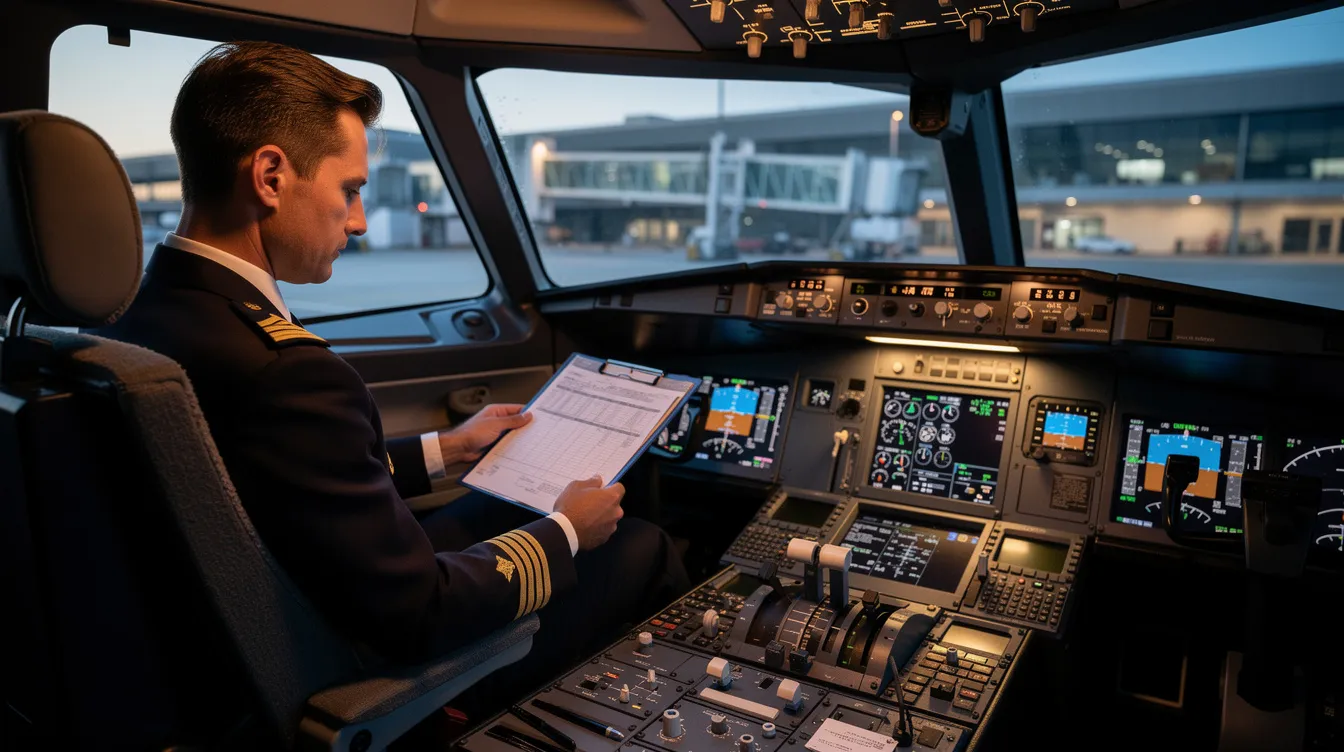
If you’ve ever sat at the gate wondering why your flight hasn’t pushed back, you’re not alone. Behind every departure announcement lies a structured decision chain involving multiple professionals who must independently agree that this specific plane can safely fly this specific route today—a process that applies to all types of flying vehicles, from small crop dusters to large commercial airliners.
Understanding who decides if a plane can fly transforms anxiety into informed confidence, and complements apps designed to help overcome fear of flying. For example, the process is similar whether the vehicle is a Boeing 747 or a small seaplane.
Passengers mostly see only the announcement: “This flight is delayed.” But behind that announcement are structured safety decisions, not guesswork or mood. These decisions are especially critical in the event of an emergency, ensuring preparedness for unexpected situations.
Quick Answer: Who Has the Final Say?
Before any commercial aircraft moves toward the runway, several independent layers of authority must align. This isn’t a single person making a gut call—it’s a coordinated system designed so that no single point of pressure can compromise safety.
The final operational decision is shared between:
-
The pilot in command (captain) holds ultimate legal authority for the safe flight
-
Airline operations/dispatch – creates the flight release and monitors conditions
-
Maintenance control – certifies the aircraft is airworthy
-
Air Traffic Control – issues clearance, ensuring safe separation from other aircraft. For instance, ATC may assign a different altitude or route in response to changing weather or traffic, demonstrating how specific instances require situational decisions.
The captain has the final say to refuse a flight for safety reasons, even when everyone else says “go.” According to FAA FAR 91.3(a), the pilot in command holds the direct responsibility and final authority over the operation of the aircraft.
Regulators like the FAA in the US, EASA in Europe, and other national authorities don’t decide for each flight. Instead, they establish mandatory safety standards and issue the initial Airworthiness Certificate that every aircraft must maintain. Some aircraft, such as seaplanes, are certified to land on water, illustrating how operational decisions and certifications can differ based on the type of aircraft.
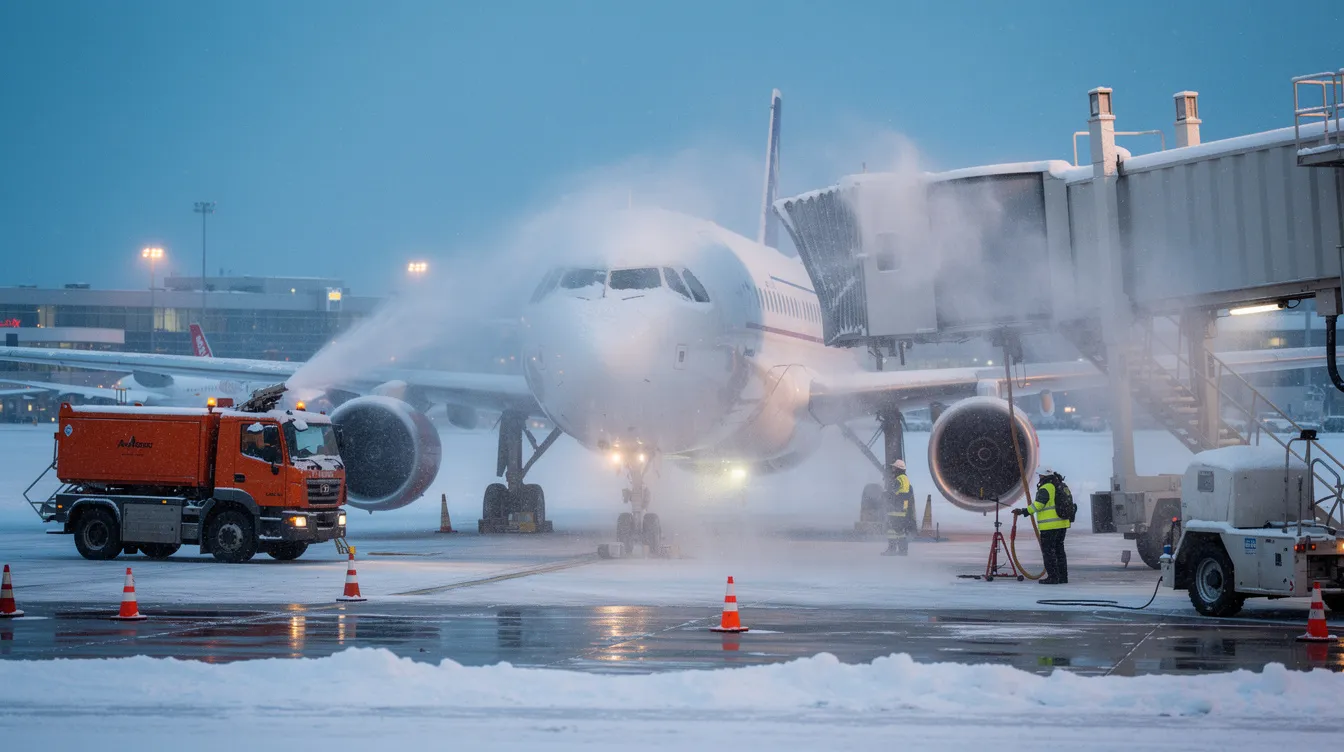
Consider a winter morning at Chicago O’Hare in January 2024. Amid -10°C temperatures and half-mile visibility, a United Boeing 737-900 was held at the gate. De-icing took 45 minutes longer than planned, and ice had begun re-accumulating on the wings. Despite dispatcher pressure to make the departure slot, the captain refused to push back until a re-inspection confirmed the aircraft was safe. Every actor—dispatch, maintenance, ATC—had technically approved. But the captain’s authority stopped the operation until safety was confirmed.
Passengers mostly see only the announcement: “This flight is delayed.” But behind that announcement are structured safety decisions, not guesswork or mood.
Role of the Pilot
The pilot in command—typically the captain—is legally defined as the individual with command responsibility for passengers, crew, cargo, and the aircraft itself. This pilot authority aviation principle means the captain can delay, divert, or cancel any flight when safety is in doubt, regardless of schedule pressure.
The decision to allow a plane to take off involves multiple key authorities, but the PIC holds the ultimate legal authority to initiate or reject a takeoff. The pilot in command must determine if the aircraft is in a condition for safe flight before every flight. This isn’t optional—it’s a legal requirement.
Preflight Inspections
Before departure, the captain evaluates multiple factors:
-
Weather conditions at departure, en route, and destination
-
Aircraft technical status via logbook and maintenance records
-
Fuel planning, including reserves and alternates
-
Runway conditions and required performance calculations
-
Crew readiness and duty time limits
-
Oxygen supply to ensure adequate oxygen levels for all occupants at high altitudes
The pilot conducts preflight inspections to ensure the aircraft meets airworthiness standards. An aircraft is considered airworthy if it conforms to its type design and is in a condition for safe operation—this includes preflight inspection by the pilot. Pilots must also ensure the aircraft can safely climb to and descend from cruising altitude, checking that control surfaces operate correctly for both climb and descent phases.
Consider an Airbus A320 departing London Heathrow for Madrid in October 2023. The British Airways captain reviewed the Minimum Equipment List for a deferred cabin light (allowed under MEL item 33-10-01), calculated crosswind performance against the aircraft’s certified limits, confirmed fuel loads met EU requirements, and conducted a walkaround checking tire wear and potential bird strike damage.
Decision-Making Models
Crew Resource Management (CRM) helps ensure the use of all available resources for safety during flight operations. The first officer cross-checks calculations, cabin crew reports serviceability issues, and ground teams provide accurate load sheets. Pilots coordinate to slow the aircraft during descent or on approach, ensuring safe speed management. Decisions are collaborative, but authority is not shared—the captain has the final word.
Pilots also use Aeronautical Decision-Making (ADM) models like DECIDE or 3-P to manage risks systematically during operations. They’re trained to be conservative: if air pressure readings, de-icing quality, or engine indications raise concerns, they are expected to stop the operation. Pilots are also trained to respond if the aircraft unexpectedly drops in altitude, managing such situations to maintain safety.
Authority in Action
The PIC must independently assess the safety of takeoff based on weather, aircraft performance, and personal limits, even after receiving clearance from air traffic control. And if a problem arises during takeoff before reaching a specific speed known as V1, the pilot may initiate a “rejected takeoff” to abort the flight safely. The PIC is also required to discontinue the flight immediately if unairworthy conditions arise during the flight.
Safety vs Scheduling Pressure
Airlines operate under significant scheduling, financial, and passenger-service pressure. A one-hour delay can cascade through the system, costing $10,000–$50,000 in crew repositioning, fuel, and missed connections. US DOT penalizes carriers with on-time performance below 70% with fines up to $27,500 per violation.
But safety standards are designed so these pressures cannot override safety rules.
Scheduling Pressures
Airline operations centers track aircraft rotations using tools like Sabre or Lido. They monitor crew duty limits, connection banks, and “tail numbers”—where one aircraft’s delay ripples through its entire day’s schedule. Regulations limit crew duty hours: FAA Part 117 caps duty at 14 hours with specific fatigue risk assessments, while EU FTL rules cap at 13 hours, extendable to 14 with required buffers.
The responsibility for determining if an aircraft is fit to fly is shared between the pilot in command and the aircraft owner or operator, each having distinct legal obligations. The flight dispatcher collaborates with the PIC in preflight planning, creating the initial route and fuel plan. But the captain must concur with the dispatch release before departure.
Legal Protections for Captains
Consider an evening flight from New York JFK to Los Angeles in February 2022. An APU failure required 90 minutes for repair, but the noise curfew loomed. The dispatcher pushed for MEL deferral (allowed if specific conditions were met), but the captain delayed 45 additional minutes awaiting a full functional test. The flight missed its slot, causing a 150-minute delay.
That captain was protected under “just culture” policies referenced in ICAO Doc 9859, where safety reports are non-punitive. The FAA Aviation Safety Action Program logs over 500,000 reports yearly, with less than 1% resulting in disciplinary action.
Passenger Perspective
From a passenger perspective, a decision that seems like an overreaction—returning to the gate for a minor smell of smoke—is actually standard risk management. NTSB statistics show 92% of cabin fires start as minor odors.
Many anxiety-triggering announcements (“we’re waiting for paperwork,” “we’re changing runways”) are the visible tip of these safety-over-schedule choices. They’re not random—they’re the system working as designed.
Weather and Risk Factors
Weather drives 20–30% of all flight delays. It’s one of the most common reasons a plane cannot fly as planned, with defined limits for takeoff, landing, and cruise at certain altitudes.
Airline dispatchers and meteorologists analyze forecasts across the entire route—not just departure and destination airports. They evaluate:
|
Factor |
Impact |
|---|---|
|
Wind |
Crosswind limits, jet stream fuel burn |
|
Visibility |
Landing category requirements |
|
Storms |
Deviation routes, holding fuel |
|
Icing |
Altitude restrictions, de-icing time |
|
Temperature |
Engine performance, weight limits |
Weather, runway safety and performance, aircraft airworthiness, and traffic separation are critical factors evaluated for safe flight departures. The decision to fly is influenced by various factors, including weather conditions, aircraft performance, and air traffic, which are assessed by both pilots and air traffic controllers.
Weather Impact Examples
Specific examples illustrate how weather grounds or restricts flights:
-
London Heathrow fog – December 2023 closure when visibility dropped below CAT I minimums
-
Amsterdam crosswinds – Polderbaan runway limits of 40 knots for larger aircraft
-
Atlanta thunderstorms – July ground stops reducing arrival rates from 80 to 20 aircraft per hour
Altitude and Performance
Air pressure, temperature, and density altitude directly affect aircraft performance. On a hot day in Denver—at 5,000 feet elevation with 35°C temperatures—reduced air density means longer takeoff distances. Hot air expands and becomes lighter than cool air. This can reduce engine thrust by 20–25%, sometimes requiring weight restrictions. Southwest offloaded 12 passengers from a July 2023 Denver departure for this reason.
The difference between “can’t fly” and “must fly differently” is important. Aircraft might reroute around turbulence at altitude, use alternate airports, or carry extra fuel for holding. On average, most commercial airliners fly at altitudes ranging from about 31,000 feet to 42,000 feet, which is equivalent to 5.9 to 7.2 miles in the air. Flying at high altitudes allows airplanes to travel faster due to thinner air, which results in less drag and greater fuel efficiency.
However, if a plane flies too high, it can encounter dangerous conditions due to insufficient lift caused by the thinning air, which can lead to hypoxia in unpressurized cabins. Commercial aircraft fly at high altitudes specifically to avoid weather disturbances and other hazards, such as birds and drones, ensuring safer travel.
ATC Weather Management
Air traffic control manages weather impacts through ground delay programs, miles-in-trail restrictions, and reroutes around storm systems, often relying on route-level turbulence and weather intelligence from platforms like the SkyGuru API. Air traffic control dispatchers are responsible for making decisions about flight routes and altitudes, ensuring safe and efficient air traffic management.
Consider a January 2023 winter storm in Frankfurt (Storm Henk). De-icing holdover times stretched to 45–60 minutes. Visibility dropped to 800 meters. Runway contamination reduced braking action significantly. Over 300 flights were cancelled—not through panic, but through systematic evaluation of each factor against defined safety thresholds.
Why Flights Get Delayed or Cancelled
Understanding why flights get delayed bridges the gap between “who decides” and “what you experience as a passenger.”
Technical reasons:
-
Unresolved maintenance issues that cannot be deferred
-
Failed checks or inspections
-
Systems not allowed under the Minimum Equipment List for that route or weather
Operational reasons:
-
Crew out of legal duty time
-
Airport curfews (strict night limits exist at Zurich, Sydney, and others)
-
Lack of available gates, stands, or runway slots
Weather-driven reasons:
-
Airport closure due to contaminated runways
-
Crosswinds above certified limits (smaller planes typically have lower thresholds)
-
Reduced arrival rates during thunderstorms
Ground Controllers manage aircraft movement on taxiways and provide directions to the assigned runway before takeoff. Before takeoff, the Local Controller provides formal takeoff clearance to ensure runway safety and prevent collisions. Air Traffic Control issues the final clearance for takeoff, ensuring safe separation from other aircraft.
Pilots have the ultimate responsibility for the safety of the flight, but they must follow the instructions and decisions made by air traffic control regarding altitude and flight paths during normal operations.
Airlines handle disruptions differently based on their hub structures and fleet availability. One carrier cancels early to re-protect passengers on alternate flights; another waits, hoping conditions improve. Neither approach is wrong—they reflect different operational philosophies.
Decoding common announcements:
|
Announcement |
What It Actually Means |
|---|---|
|
“Awaiting flow control.” |
ATC ground stop or spacing requirement |
|
“Late incoming aircraft” |
Your plane’s previous flight was delayed |
|
“Operational reasons” |
Dispatch/PIC no-go decision |
|
“Waiting for paperwork.k” |
Dispatch release or maintenance sign-off |
From SkyGuru’s behind-the-scenes perspective, many “mysterious” delays are actually predictable consequences of safety rules, weather at certain altitudes, and airport capacity management informed by detailed flight and turbulence data via the SkyGuru API.
How Maintenance and Regulations Shape the Go/No-Go Decision
No plane may fly unless it’s considered airworthy under national regulations and the airline’s approved maintenance program.
Certified maintenance technicians are responsible for performing repairs and inspections and for accurately recording all work in the aircraft’s logbooks. These licensed engineers—A&P/IA certificated in the US—inspect, repair, and then formally certify the aircraft as safe before service release.
The owner or operator of an aircraft is primarily responsible for maintaining it in an airworthy condition and ensuring compliance with all applicable Airworthiness Directives (ADs). Regulatory authorities like the FAA in the U.S. establish mandatory safety standards, including mandatory inspections at fixed flight-hour intervals and airworthiness directives for specific issues.
The aircraft logbook creates an unbroken chain of accountability:
-
Pilot records a discrepancy
-
Maintenance troubleshoots using built-in test equipment
-
Issue is fixed or deferred via MEL
-
Maintenance signs the release
-
The captain reviews and accepts (or declines)
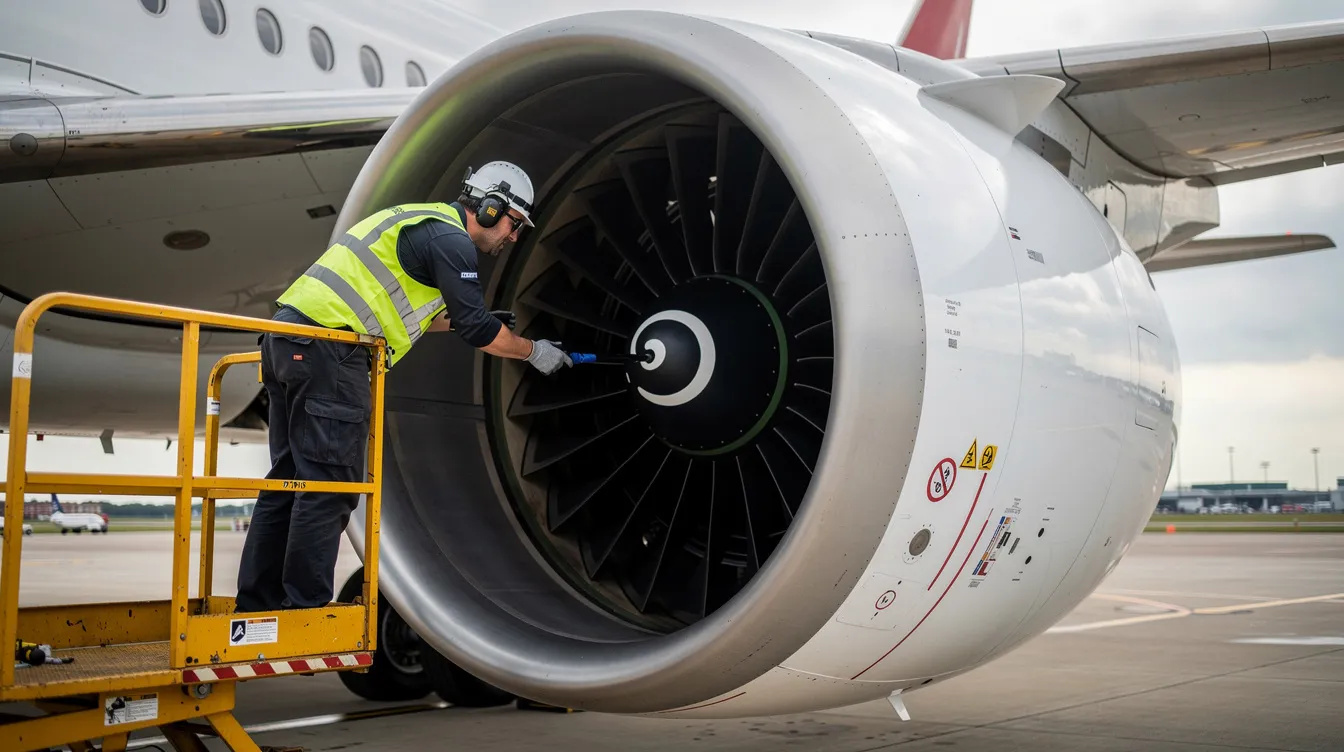
Consider a Boeing 737 in March 2024 with an inoperative weather radar panel. The MEL might allow dispatch if the forecast shows VMC conditions with no precipitation. But for an oceanic route with expected weather, the captain could exercise authority to decline departure until the system is repaired.
Even during peak holiday traffic—when schedule pressure reaches maximum—an aircraft cannot depart until maintenance has completed required work and signed the flight release. The captain then reviews everything and can still decline if not satisfied.
This layered system means a single “yes” is never enough. Maintenance, operations, pilots, and regulations all have to align before planes fly.
What This Means for Anxious Flyers
Everything described above translates into direct reassurance for anyone who fears flying, especially when paired with app-based tools that help reduce fear of flying.
Flights are not allowed to operate on a gut feeling or a financial gamble. They must comply with objective rules around weather, aircraft condition, and pilot authority. Every answer to “can this plane fly?” passes through multiple independent checkpoints, and tools like the SkyGuru fear-of-flying app featured in global media help passengers understand those checkpoints.
Many sensations that trigger anxiety are actually signs that crews are actively managing risk, and can be decoded in real time by an in-flight weather and route explanation app like SkyGuru:
-
Holding patterns – safe spacing managed by ATC
-
Unexpected altitude changes – optimizing for weather or traffic
-
Strong engine noise on takeoff – normal power for conditions (high density altitude requires more thrust)
Airplane wings are shaped to make air move faster over the top of the wing, creating a pressure difference that lifts the wing into the air. Sir Isaac Newton’s three laws of motion help explain how planes fly, including the principles of inertia, acceleration, and action-reaction forces. The physics are well-understood and predictable, and apps that provide real-time flight information and personalized commentary can translate those principles into plain language for passengers.
Real-time explanations of turbulence, weather conditions, and flight stages—like those provided by SkyGuru’s in-flight guidance app for nervous flyers—help passengers connect what they feel with the decisions happening in the cockpit. Understanding replaces uncertainty.
Reframe delays and diversions as evidence of a conservative safety culture, not as signs that something is wrong with aviation. NTSB data shows PIC decisions averted 78% of potential accidents in reviewed cases from 2018 to 2023. That conservative approach works, and media-acclaimed tools that explain turbulence and flight events in real time can make that culture more visible to anxious flyers.
Multiple professionals—most of whom you never see—must independently agree that the plane can safely fly before any door closes and engines start. The next time you hear “we’re waiting for clearance,” remember: that’s the safety system doing exactly what it should.
Frequently Asked Questions
Who has the ultimate authority to decide if a plane can take off?
The pilot in command (PIC) holds the ultimate legal authority to decide if a plane can take off. While dispatchers, maintenance crews, and air traffic controllers provide essential input and approvals, the PIC can refuse departure if safety concerns arise.
How do weather conditions affect the decision to fly?
Weather is a critical factor evaluated by pilots, dispatchers, and air traffic controllers. Conditions like visibility, wind, storms, and icing can delay or cancel flights. Safety protocols require flights to avoid unsafe weather or adjust routes and altitudes accordingly.
Can scheduling pressures make a pilot fly an unsafe plane?
No. Safety regulations and legal protections empower pilots to override scheduling pressures. The pilot’s responsibility for flight safety is paramount, and they must refuse to fly if the aircraft is unsafe or conditions are hazardous.
What role does maintenance play in determining if a plane can fly?
Certified maintenance technicians ensure the aircraft is airworthy by performing inspections, repairs, and recording all work in logbooks. The owner or operator is responsible for compliance with airworthiness directives, and no flight can proceed without maintenance clearance.
How does air traffic control influence the decision to take off?
Air traffic control manages runway clearances, traffic separation, and routing. They issue the final takeoff clearance but do not override the pilot’s authority. ATC may also adjust flight altitudes or routes based on real-time conditions to maintain safety.
Conclusion: The Complex Web of Flight Safety Decisions
Determining if a plane can fly is a multifaceted process involving rigorous checks, collaboration, and authority shared among pilots, maintenance crews, dispatchers, and air traffic controllers. The pilot in command holds the ultimate legal responsibility, empowered to override scheduling pressures and make safety-first decisions. Weather, aircraft condition, and airspace management all factor into this intricate decision-making web.
Behind every flight delay or cancellation lies a structured evaluation designed to prioritize safety above all else. Understanding this system reveals the depth of training, regulatory oversight, and real-time risk assessment that keep millions of flights safe worldwide each year.
For passengers, this means that every clearance to take off is not just a routine step but the result of a comprehensive safety culture. This culture ensures that flights only proceed when all conditions—including aircraft airworthiness, weather, and pilot authority—align to guarantee a safe journey through our shared skies.
FLEET SELECTION
JET CARDS
COST ANALYSIS


How to Auditing Your Operator's Maintenance Logs
Oct 05, 2025

How to Auditing Your Operator's Maintenance Logs
Oct 05, 2025

How to Auditing Your Operator's Maintenance Logs
Oct 05, 2025
Sky Guru Weekly
The smartest private aviation intelligence in your inbox.
.svg)

