



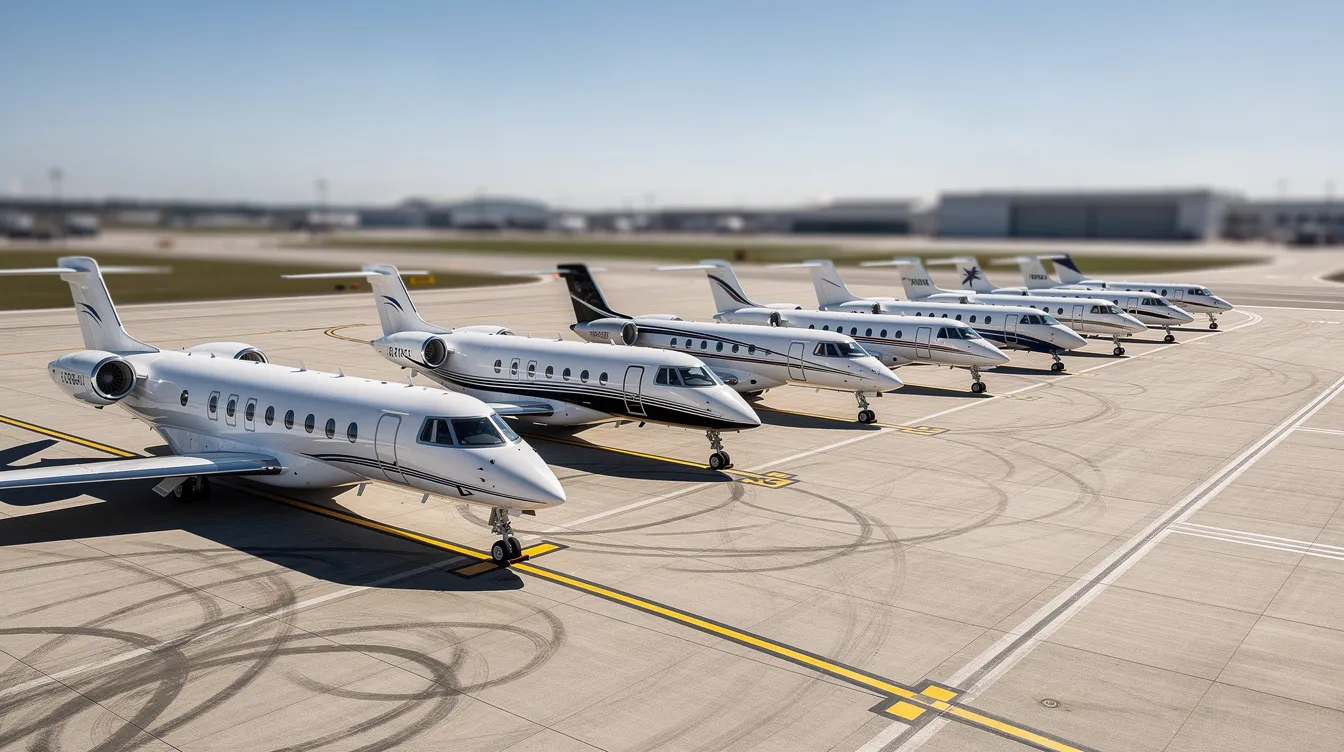
Selecting the right aircraft for your trip doesn’t have to be overwhelming. Whether you’re flying private for the first time or simply want a clearer framework for your next charter, this guide breaks down what actually matters when asking yourself: what private jet should I choose—while also highlighting the luxurious and personalized experience of private jet travel, with exclusive amenities designed for your comfort. This guide is designed for first-time private flyers, nervous travelers, and anyone seeking practical advice on choosing the right private jet. Choosing the right private jet can dramatically improve your travel experience, comfort, and peace of mind.
Start Here: What Private Jet Should I Choose for My Next Trip?
The best private jet for travel isn’t a single answer—it depends on three key factors: how far you’re flying (range), how many people are coming (passenger count), and how much comfort you want relative to your budget. At SkyGuru, we help nervous and first-time flyers understand every aspect of their flight, and choosing the right aircraft is the first step toward a comfortable flight. For more tips on managing flight anxiety, see our Fear of Flying Guide.
Here’s how these factors play out in real scenarios:
-
2–4 passengers, short hop (New York–Boston or London–Paris): A very light jet, like the Embraer Phenom 100, EV, or a light jet such as the Cessna Citation, CJ3+, handles these 200-mile trips efficiently at the lowest cost.
-
6–8 passenger medium-haul flights (Los Angeles–Chicago or Paris–Athens): A midsize jet like the Hawker 900XP or Citation XLS+ provides more space and range for 1,400–1,650 nautical miles. Certain midsize and super-midsize jets are specifically designed to comfortably accommodate eight passengers, making them ideal for group or business travel where roominess and amenities are a priority.
-
8–12 passengers, long range (New York–London or Dubai–Singapore): A long-range jet, such as a super midsize jet or heavy jet—think Challenger 3500 or Gulfstream G600—delivers the nonstop capability and spacious cabin needed for transatlantic journeys.
Even on a personal jet, fear of flying and turbulence anxiety are common. That’s why we built SkyGuru, an app that guides passengers in real time through turbulence forecasts, sounds, and flight stages on any aircraft type. This guide focuses on chartering or choosing what to fly on—not aircraft ownership—and is written for non-experts who want practical advice without broker jargon. For additional support, explore our In-Flight Guidance Blog and learn how understanding flight stages can ease anxiety.
Jet Size Categories Explained
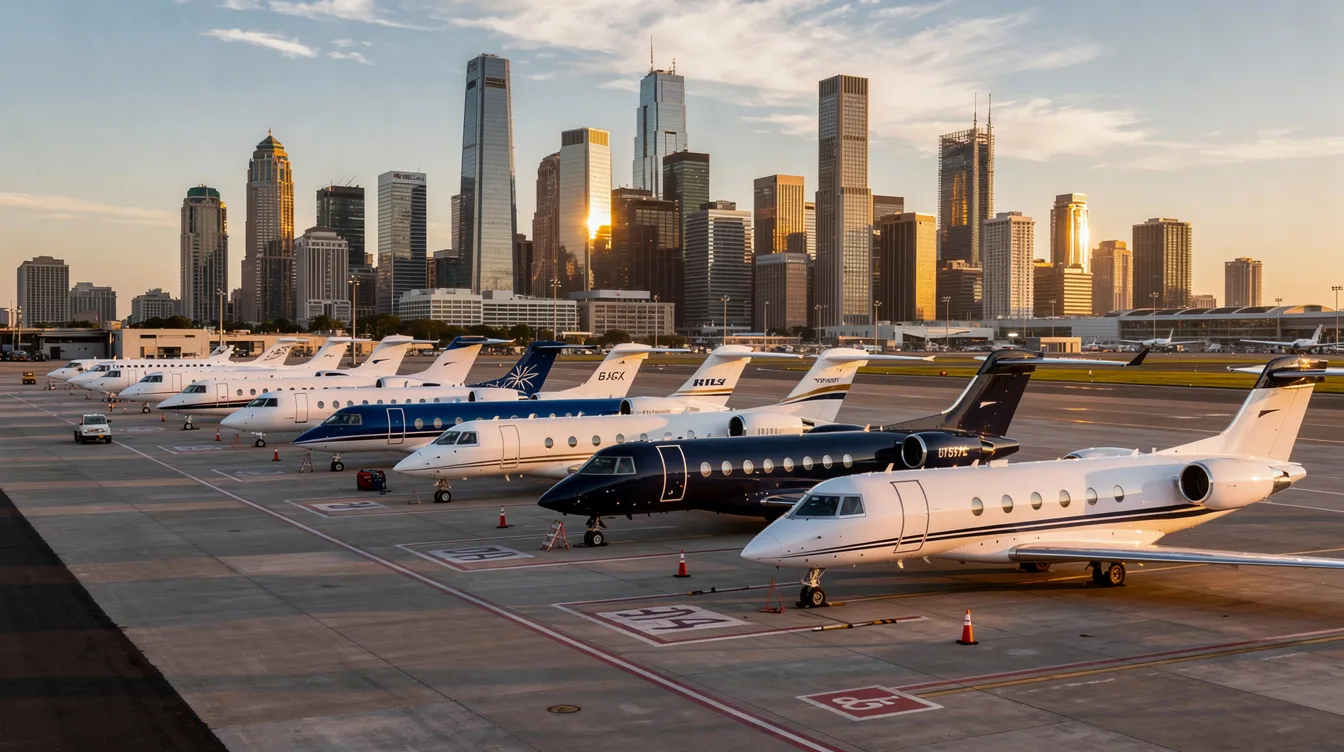
Understanding the five main jet size categories helps you match your trip to the ideal aircraft. These categories—very light jets, light jets, super light jets, midsize jets, super-midsize jets, and heavy or ultra long range jets—cover nearly all private charter options in North America and Europe as of 2025–2026. Super light jets bridge the gap between light and midsize jets, offering greater range and passenger capacity than traditional light jets, along with modern amenities and advanced onboard systems. Turboprop aircraft, while not technically jets, are also commonly offered for specific missions.
The distance of your journey largely determines the class of aircraft needed. Here’s a compact comparison:
|
Category |
Typical Seats |
Range (nm/hours) |
Example Routes |
Example Models |
|---|---|---|---|---|
|
Very Light Jet |
4–6 |
800–1,200 / 1.5–3h |
LA–Vegas, London–Geneva |
Phenom 100EV, HondaJet |
|
Light Jet |
5–8 |
1,200–2,000 / 2.5–4.5h |
Miami–NY, London–Málaga |
CJ3+, Phenom 300E |
|
Super Light Jet |
6–8 |
1,800–2,200 / 3.5–5h |
Dallas–NY, Paris–Ibiza |
Citation XLS, Embraer Legacy 450 |
|
Midsize Jet |
6–9 |
2,000–3,000 / 4–6h |
LA–NY, London–Dubai |
Hawker 900XP, XLS+ |
|
Super-Midsize |
8–10 |
3,000–3,800 / 6–8h |
NY–London, LA–Honolulu |
Challenger 350, G280 |
|
Heavy/Ultra-Long |
10–19 |
5,000–7,700+ / 9–16h |
NY–Tokyo, London–Singapore |
G650ER, Global 7500 |
This framework directly addresses the light jet vs midsize jet decision and helps you find the best private jet for your specific needs.
Very Light Jets (VLJs)
Very light jets are the smallest private jets, ideal for 1–3 hour hops with up to six passengers. They represent the entry point into private aviation and typically offer the lowest hourly charter rates—around $2,500–$4,000 per hour.
Very light jets (VLJs) represent the smallest category of private jets, typically seating 4 to 6 passengers and suited for short-distance flights. With a range of approximately 1,000–1,200 miles, VLJs offer the advantage of reaching destinations that commercial airlines often cannot. Their cabins have a height of about 4–4.5 feet, providing limited headroom. Popular models in this class include the Embraer Phenom 100EV, Cessna Citation Mustang, HondaJet HA-420, and Eclipse 500.
Ideal routes: Los Angeles–Las Vegas (236 nm), London–Geneva (410 nm), New York–Toronto, and Dubai–Muscat.
Pros: Cost-effective for point-to-point flights, can access shorter runways at smaller airports closer to your destination.
Cons: Limited luggage space (200–300 lbs typical), basic or curtain-style lavatory, no flight attendant, and tighter quarters that can feel claustrophobic.
For anxious flyers, the smaller cabin space of light jets, VLJs, can amplify turbulence sensations. If you’re prone to claustrophobia, consider stepping up to a light or midsize jet, and use SkyGuru’s real-time explanations to understand what you’re feeling. Learn more about managing turbulence with our Turbulence Prediction and Tips.
Light Jets
Light jets are often the entry level for serious business travel and family trips, seating 5–8 passengers with meaningful improvements over VLJs. Light jets can carry between 5 and 10 passengers and have a range of up to 2,000 nautical miles, making them suitable for regional travel.
Expect cabin heights around 4.5–5 feet, enclosed lavatories on most aircraft, and more luggage capacity. Charter rates typically run $4,000–$6,500 per hour. Well-known aircraft in this category include the Cessna Citation CJ3+, Citation M2 Gen2, Embraer Phenom 300E (the world’s best-selling light jet), and Learjet 45.
Sample trips: Dallas–Chicago (970 nm), Miami–New York, London–Málaga (900 nm), Munich–Athens.
Choose a light jet over a VLJ when you have 5–7 people, need cabin comfort for 3+ hours, want a fully private lavatory, or require a slightly longer nonstop leg. For nervous flyers, light jets already feel noticeably more spacious, and SkyGuru can help explain how turbulence behavior differs from commercial aircraft. Check our Fear of Flying Resources for more support.
Midsize Jets
For many families and business travelers, a midsize jet represents the sweet spot between cost, space, and range. Midsize jets typically accommodate up to 9 passengers and can fly distances of 2,000 to 3,500 nautical miles, offering a balance of comfort and range.
These executive jets feature stand-up cabins (around 5.7–6 feet height), generous baggage capacity, full galleys, and enclosed lavatories. Popular models include the Hawker 800XP/900XP, Cessna Citation XLS+, Gulfstream G150, and Embraer Legacy 450.
Typical itineraries: Los Angeles–New York (2,140 nm), London–Dubai, Singapore–Tokyo, Toronto–Vancouver.
Midsize jets are often suitable for longer domestic flights, while light jets are best for short-distance trips. The key differences for light jet vs midsize jet decisions:
-
Midsize offers more space, a quieter ride, and better turbulence damping
-
Light jets are cheaper per hour but may require fuel stops on 2,500+ nm routes
-
Midsize typically costs 20–40% more per hour than light jets
For anxious passengers, midsize jets handle turbulence more smoothly than smaller aircraft, which can be genuinely comforting. See our article on How to Reduce Flight Anxiety for helpful strategies.
Super-Midsize Jets
Super-midsize jets occupy the sweet spot for long domestic and many transatlantic flights. Super-midsize jets offer greater speed and range than midsize jets, accommodating up to 12 passengers and typically flying distances of 3,000 to 4,500 nautical miles.
These larger jets feature cabins around 6 feet high and 7 feet wide, often with lie-flat seating options, advanced avionics, and full connectivity. Thanks to advanced engines and improved fuel efficiency, super-midsize jets can extend their range and reduce operational costs compared to smaller categories. Leading models include the Bombardier Challenger 350/3500, Cessna Citation X/X+, Gulfstream G280, and Embraer Praetor 600.
Example routes: New York–London (3,000 nm), Los Angeles–Honolulu, Dubai–Zurich, Hong Kong–Sydney.
These aircraft typically include full galleys, better sound insulation, and smoother ride quality. Ultra-long-range jets prioritize passenger comfort with spacious cabins that can include features like lie-flat beds, separate zones for work and relaxation, and advanced entertainment systems.
For passengers sensitive to fatigue, noise, or anxiety, a super mid-size jet offers enough space to walk, work, and rest while using SkyGuru to follow each flight stage or exploring expert guidance on how an app can ease the fear of flying.
Heavy and Ultra-Long-Range Jets
Heavy jets and ultra-long-range jets are the long-range jet option for 8–16+ passengers on long-haul flights and nonstop intercontinental routes. Heavy jets can seat between 10 and 19 passengers and are designed for long-haul flights, with ranges typically between 5,000 and 7,500 nautical miles.
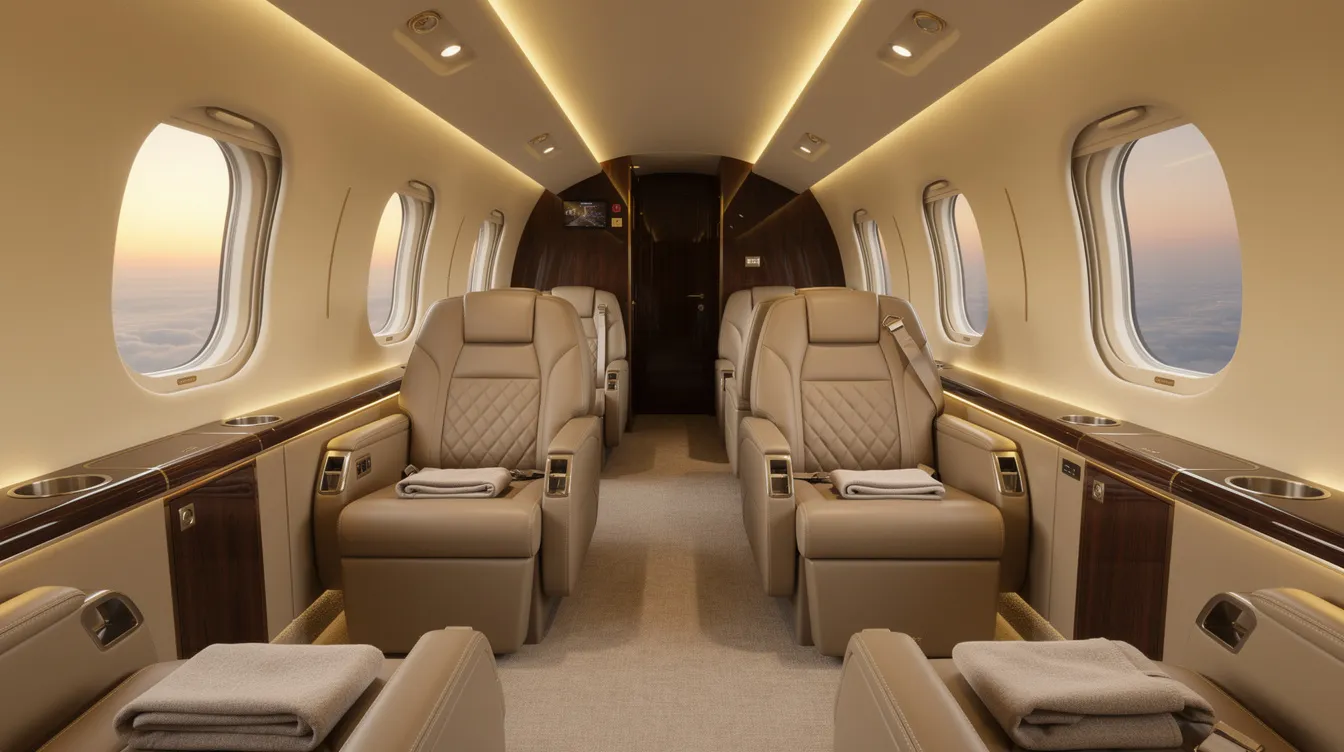
These large private jets feature cabin heights of 6+ feet with multiple zones—lounge, dining, and bedroom areas—plus at least one dedicated flight attendant. Heavy jets often feature luxurious amenities such as large comfortable chairs, enclosed bathrooms, lie-flat beds, premium entertainment facilities, and Wi-Fi, making them ideal for long-haul flights. Some even include a master suite and separate crew rest area.
Specific models: Gulfstream G550, G650ER, G700; Bombardier Global 6000, 7500, 8000; Dassault Falcon 7X, 8X. Above this class sit executive airliners like the Boeing Business Jet or Airbus ACJ series.
Real-world routes: New York–Tokyo nonstop, London–Singapore, Dubai–New York, São Paulo–Lisbon.
While these are the best private jets for long-haul travel in terms of comfort, they cost significantly more per hour ($12,000–$25,000+) and are overkill for short journeys. For overnight flights, the extra space to move, quieter cabins, and separate sleeping areas meaningfully reduce stress. SkyGuru can anticipate turbulence over known rough corridors like the North Atlantic tracks, and its widely covered media recognition for helping fearful flyers underscores how valuable this reassurance can be on long overnight sectors.
What About Turboprops?
Turboprop aircraft are not jets but are often offered by the same private charter providers. Alongside turboprops and jets, piston aircraft represent another category of private aircraft, typically used for shorter flights and smaller groups. Turboprops may be the right aircraft for very short trips or remote destinations with short runways where jets cannot operate efficiently.
Use cases: 30–90 minute flights to islands, mountain villages, or rural airfields.
Examples: Pilatus PC-12, King Air 350i, Daher TBM 960—typically carrying 4–8 passengers with ranges around 1,000–1,500 nm.
Pros: Lower cost ($2,000–$2,500/hour), excellent short-field performance for shorter runways.
Cons: Slower speeds (260–300 knots), louder cabins with propeller noise that can unsettle anxious flyers.
SkyGuru’s explanations of engine sounds and vibrations can help turboprop passengers understand what they’re hearing, and the app’s detailed in-flight weather and route information gives additional reassurance even when you’re offline.
Range vs Passenger Count
When asking what private jet to choose, two questions matter most: “How far do we need to go without stopping?” and “How many passengers and bags are coming?”
When choosing a private jet, consider the range, which indicates how many nautical miles the aircraft can fly before needing to refuel; this is crucial for determining the suitability of the jet for your typical travel distances.
Published range figures assume optimal conditions. Winter headwinds on New York–London can cut effective range by several hundred miles. The number of passengers you typically fly with is an important factor when selecting a private jet, as different jets accommodate varying passenger capacities, from four to over sixteen.
Aircraft size is a key consideration when choosing a private jet, as it affects both the range and passenger capacity; smaller jets are suitable for shorter trips, while larger jets are designed for longer distances and more passengers.
Plan using your longest typical route plus a margin: if you often fly 2,000 nm, look at jets with at least 2,400–2,800 nm advertised range.
Sample traveler profiles:
-
Executive couple plus 2 kids, NYC–Caribbean monthly (1,500 nm): Light or midsize jet
-
Team of 8, London–Riyadh quarterly (3,100 nm): Super-midsize jet
Longer nonstop private flights cross more weather systems. Using SkyGuru’s turbulence forecast and route weather data helps passengers mentally prepare for each leg.
Matching Jet Range to Your Real Routes
Here’s how common distances map to jet categories:
|
Distance |
Suggested Category |
Example City Pairs |
|---|---|---|
|
Under 500 nm |
VLJ or light jet |
San Francisco–Palm Springs, London–Paris |
|
500–1,500 nm |
Light or midsize |
London–Rome, Chicago–Denver |
|
1,500–3,000 nm |
Midsize or super-midsize |
New York–Cabo, Paris–Doha |
|
3,000–5,000+ nm |
Super-midsize or heavy; often a long-range jet for longer nonstop missions |
LA–Honolulu, Frankfurt–Johannesburg |
Alternative routing to avoid strong headwinds or storms can change the optimal jet choice for a specific date. SkyGuru uses real-time weather and turbulence data along your actual flight path, providing more accurate information than generic route assumptions.
How Passenger Count and Luggage Change the Equation
Passenger count and capacity should be considered when selecting an aircraft. Light jets typically seat up to 7, while heavy jets can accommodate over 14 passengers. Each extra person means extra weight, which may push you up a category even if the published seating says passengers “fit.”
Concrete examples:
-
4 passengers with hand luggage → Light jet fine for 1,500 nm
-
7 passengers with golf bags (400 lbs extra) → Midsize preferred
-
10 passengers with skis or media gear → Super-midsize or heavy jet needed
Some light aircraft have limited ski or golf bag capacity, even with adequate cubic feet. Anxious travelers often bring extra comfort items, so choosing a slightly larger jet than the minimum reduces crowding and stress.
Airport Limitations
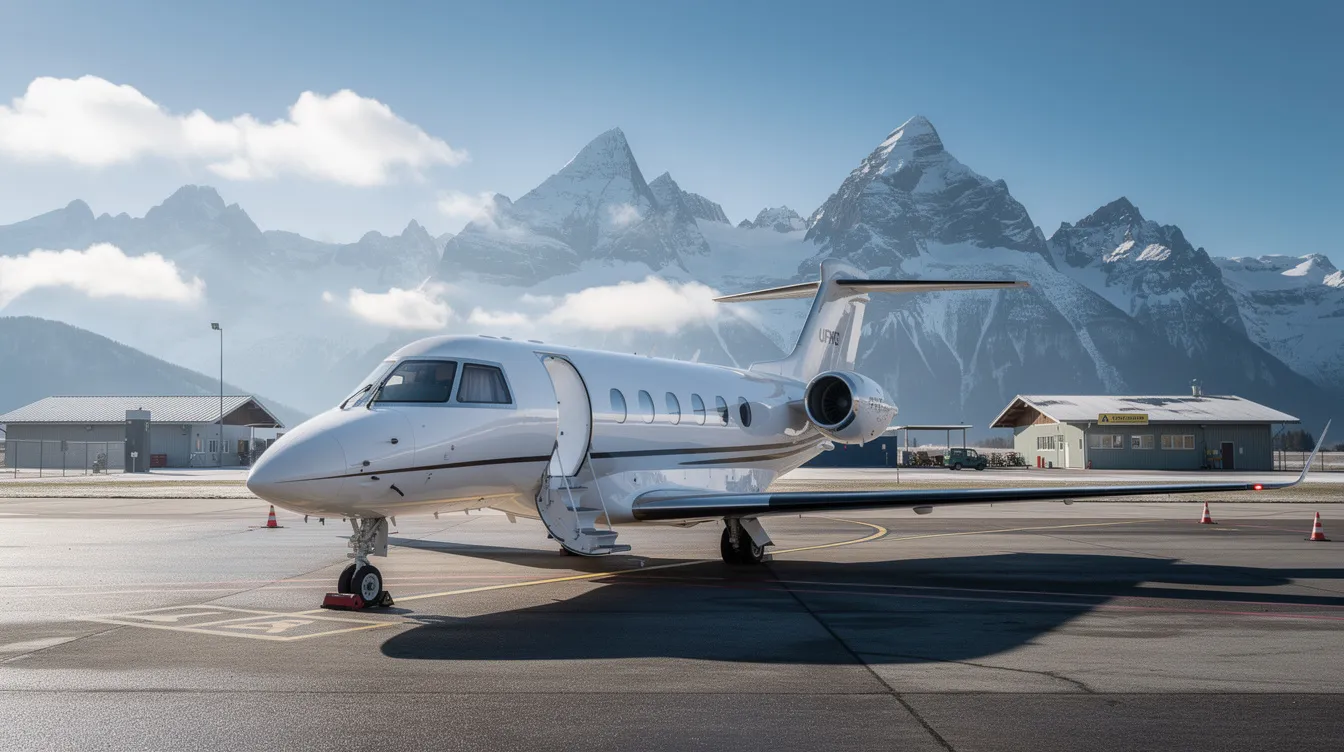
Choosing the right private jet isn’t just about comfort and cost—airport accessibility differs between aircraft sizes; smaller jets can access smaller, more convenient airports while larger jets require longer runways. Additionally, you’ll need to consider hangar space for your private jet, as hangar costs can vary significantly depending on the size of the aircraft and the location of the airport.
Runway length, elevation, temperature, and obstacles affect which categories can use a given airport. Smaller jets and turboprops often reach convenient local airports closer to city centers or remote destinations, while larger jets may be restricted to major hubs.
Tell your charter broker both your ideal airport and a backup, so they can suggest the right jet size for both fields. Smaller airports can feel more turbulent during low-level approach due to terrain and local winds; SkyGuru can explain these sensations in real time using detailed airport and route evaluations from its API platform.
Runway Length and Airport Size
Runway length and surface determine whether a heavy jet, mid-size jet, or light jet can safely operate with fuel and passengers.
Specific examples:
-
London City (EGLC): 4,948 ft runway with steep approach—typically limited to smaller jets with special certifications
-
Aspen (KASE): 7,000 ft elevation often favors turboprops and smaller jets, especially in summer heat
-
Courchevel (LFLJ): 1,700 ft one-way runway—turboprops only
-
Major hubs (JFK, Dubai DXB): Handle all sizes but have more complex slots and handling
If you insist on small regional airports near villas or ski resorts, you may be limited to a smaller aircraft regardless of budget. Verify runway constraints early, especially for winter or hot-day operations when performance margins shrink.
Weather, Terrain, and Noise Restrictions
Local terrain and noise rules influence which jets are practical:
-
Mountain airports: Frequent gusty winds where smaller, maneuverable aircraft are common
-
Coastal airports: Crosswinds and sea-breeze turbulence affect approach comfort
-
Urban airports: Strict noise limits (formerly Santa Monica, currently London City) reduce heavy-jet options
Some airports close at night or limit operations during certain hours. Anxious flyers using SkyGuru can benefit from knowing if their chosen airport is known for bumpier approaches and preparing with breathing exercises during descent, and the app’s strong media endorsements for reducing fear of flying may provide extra confidence before you depart.
Comfort vs Cost
The most common trade-off in flying private is comfort versus cost. Smaller jets are cheaper per hour but can feel tighter, bumpier, and more fatiguing. Larger jets cost more but significantly improve cabin space, quietness, and all the amenities.
When considering how to access a private jet, full aircraft ownership gives you complete control and unrestricted access to the aircraft, but also means taking on all responsibilities for costs like maintenance, crew, and storage. In contrast, fractional ownership offers more flexibility and lower upfront costs, but you share the aircraft and access with others.
Operating costs for private jets include fuel surcharges, landing fees, and crew expenses. Charter pricing typically works as an hourly rate multiplied by flight time plus fees:
-
VLJ: $2,500–$4,500/hour
-
Light jet: $4,000–$7,000/hour
-
Midsize: $6,500–$11,000/hour
-
Super-midsize: $10,000–$15,000/hour
-
Heavy: $12,000–$25,000/hour
For a 60–90 minute hop, a light jet is perfectly adequate. Overnight or 7-hour legs strongly favor super-midsize or heavy jets.
Cabin Space, Noise, and Ride Quality
Comfort factors in private jets include cabin altitude, width, and noise levels, which are key to passenger fatigue. The ability to stand up, move around, and not feel trapped is crucial for those with flight anxiety or claustrophobia.
Larger, heavier jets handle turbulence more smoothly and have better sound insulation. Cabin size comparisons:
-
VLJ: Good for 2 hours, limited headroom, narrow aisles
-
Light/Midsize: Comfortable for 3–5 hours, semi-stand-up cabins
-
Super-midsize/Heavy: Proper stand-up cabins, separate zones, ideal for 6–12-hour legs
Some newer long-range jets keep cabin altitude as low as 3,000–4,000 feet (versus 8,000 feet on commercial flights), reducing fatigue and headaches. A long-range jet is often worth the upgrade when you need true long-haul comfort without a stop. Turbulence-sensitive travelers should invest in at least a midsize for anything over 2–3 hours.
Onboard Amenities and Mental Well-Being
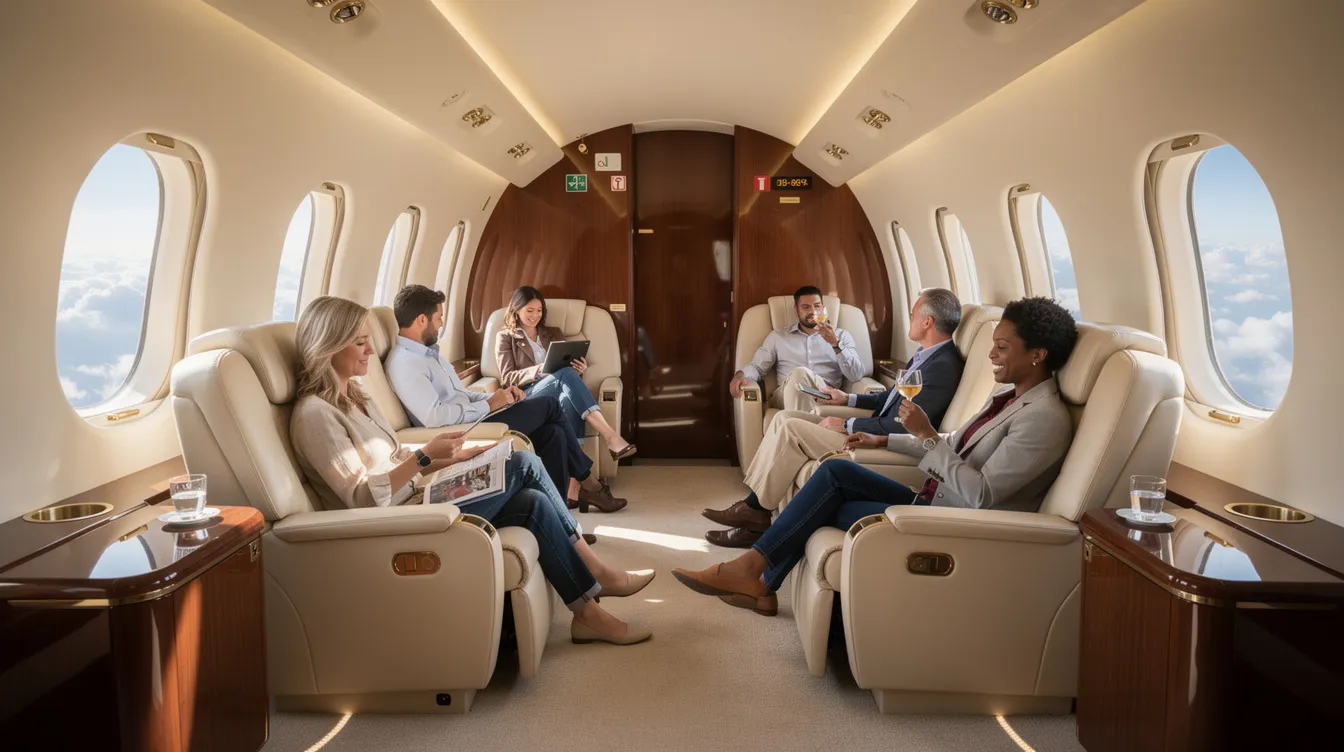
Cabin amenities like Wi-Fi, galley service, and sleeping arrangements are important factors in aircraft selection. Private jets can be equipped with a variety of amenities, including reclining seats, lie-flat beds, and fully equipped galleys, which enhance passenger comfort during flights. In addition to comfort, modern safety features such as advanced avionics and onboard safety systems play a crucial role in enhancing passenger safety and reliability.
Key amenity differences by category:
-
Lavatory: Curtain (VLJ) vs. fully enclosed (light+)
-
Galley: Snacks (light) vs. hot meals (super-midsize+)
-
Entertainment systems and Wi-Fi: Basic to advanced
-
Flight attendant: Typically, on heavy jets only
For emotional comfort:
-
Space to lie flat reduces overnight-flight anxiety
-
Reliable Wi-Fi lets nervous flyers use SkyGuru and other calming apps
-
A dedicated flight attendant provides reassurance and flexible mealtimes
Prioritize what matters to you: sleep capability, work space, privacy, food quality, Wi-Fi reliability, shower (ultra-long-range), or power outlets throughout the cabin.
Cost Optimization: When to Upgrade and When Not To
When upgrading makes sense:
-
Moving from light to midsize because adding a fuel stop on a 4.5-hour route negates savings and adds stress
-
A once-a-year special family trip where cabin comfort and anxiety reduction outweigh extra cost
When staying smaller is reasonable:
-
60–90 minute flight with 3–4 people and light luggage—a heavy jet offers little tangible benefit for the price
Empty legs, shared charters, or off-peak days (mid-week versus Monday mornings) can reduce costs 30–50% for larger jets. The right private jet isn’t necessarily the biggest—it’s the aircraft that matches your route, passengers, and emotional comfort needs.
For those considering ownership rather than charter, the upfront cost of a private jet can vary significantly based on the model and negotiation, with prices ranging from $5 million for very light jets to over $70 million for larger executive airliners. Annual operational costs for owning a private jet can range from $500,000 to over $4 million, depending on the size and type of the aircraft, including expenses for maintenance, fuel, insurance, and crew. Private jet management services can help offset ownership costs by generating charter revenue, allowing owners to rent out their aircraft when not in use.
Common Mistakes When Choosing Aircraft
Many first-time private flyers either overspend on unnecessary size or underspecify their needs and end up cramped—both scenarios can make anxiety worse. For example, sports teams often charter private jets for group or VIP travel, requiring spacious cabins and long-range capabilities to accommodate their entire roster and staff comfortably. Here are the most common errors and how to avoid them.
Safety should be prioritized when selecting a private jet. Verification of the operator’s record and third-party certifications is recommended before booking any private charter.
Choosing by Brand or Looks Instead of Needs
Saying “I want a Gulfstream” without considering range, airport, or how many passengers you have is a common mistake. Within each brand—Gulfstream, Bombardier, Cessna, Embraer—there are multiple sizes and ages. An older but well-maintained midsize can be a better fit than a flashy new small private jet.
Start with your mission profile: route, passengers, airports, budget, and personal preferences, including anxiety level. Then pick the model. Ask operators mission-focused questions rather than brand-driven ones, and bring SkyGuru along regardless of aircraft type.
Underestimating Luggage and Special Equipment
Travelers often forget skis, golf bags, instruments, camera gear, or baby equipment when booking. This leads to last-minute repacking or upgrading the aircraft at a premium cost.
Examples:
-
A light jet that seats 7 may not fit 7 large bags plus golf clubs
-
Surf trips or film shoots with bulky cases may exceed cargo door dimensions
Always list items in detail to the charter company. For anxious flyers, last-minute baggage problems spike anxiety—planning helps the day go smoothly.
Ignoring Range Margins and Fuel Stops
Booking an aircraft with just enough theoretical range without considering winds, reroutes, or holding patterns is risky. Winter headwinds can turn a “nonstop” light jet flight into one requiring fuel stops.
Every landing and takeoff adds complexity and turbulence exposure during approach and climb. Some nervous travelers prefer fewer segments even if it means a larger jet. Ask providers for realistic, seasonal nonstop capability.
Forgetting About Airport Constraints and Ground Transfers
Choosing based only on departure city while forgetting that your destination villa or resort may be closest to a small regional airfield is common. A heavy jet that cannot land at the nearest airport forces long ground transfers that erase the time benefits of private travel.
Plan the entire door-to-door journey, including car transfers. Short final approaches into small airports can feel more dynamic with tighter turns and steeper descents—SkyGuru can explain these maneuvers during private flights.
Overcoming Emotional Comfort and Fear of Flying
Optimizing only for price while ignoring nervous passengers is perhaps the biggest mistake. Cramped, noisy cabins or highly reactive light aircraft can intensify turbulence sensations, especially for first-time private flyers used to larger commercial aircraft and commercial flights.
Apps that focus on fear-of-flying support highlight how crucial it is to factor in mental wellness:
-
Choose at least a light or midsize jet if anyone is claustrophobic
-
Prefer aircraft with smoother ride reputations for long-haul trips
-
Encourage anxious travelers to download SkyGuru and use real-time explanations throughout international travel, drawing on specialized app-based techniques for managing fear of flying.
No matter which type of private jet you choose—from very light jets to Boeing Business Jets, from fractional ownership to one-time charter—combining sensible aircraft selection with SkyGuru’s in-flight guidance can dramatically improve your confidence in the air. Download the app, input your flight details, and let us help you understand every sound, bump, and flight stage on your next journey.
Frequently Asked Questions (FAQs)
What private jet should I choose for a short trip with a small group?
For short trips with 2–4 passengers, very light jets (VLJs) or light jets are ideal. They offer cost-effective, efficient travel with enough comfort for flights up to 3 hours. Examples include the Embraer Phenom 100EV and Cessna Citation CJ3+.
How do I decide between a light jet and a midsize jet?
Consider your typical flight distance and passenger count. Light jets suit regional trips up to 2,000 nautical miles with 5–8 passengers, while midsize jets accommodate up to 9 passengers and longer ranges (2,000–3,500 nm) with more cabin space and comfort.
Are heavy jets worth the extra cost for long-haul flights?
Yes, heavy jets provide superior comfort, quieter cabins, and amenities like lie-flat beds and flight attendants, making them ideal for long-haul international flights where passenger well-being and productivity matter.
Can smaller jets access more airports than larger jets?
Generally, yes. Smaller jets and turboprops can operate from shorter runways and smaller airports closer to your final destination, offering greater convenience and shorter ground transfers.
How does luggage affect private jet choice?
Luggage capacity varies by aircraft size. If you travel with bulky items like golf clubs or skis, opting for a midsize or larger jet ensures sufficient cargo space and avoids last-minute upgrades or repacking.
How can I reduce anxiety when flying private?
Choosing a jet with a spacious cabin and smooth ride quality helps. Additionally, using tools like SkyGuru’s real-time turbulence forecasts and in-flight explanations can provide reassurance and reduce fear of flying during your journey. For more tips and support, visit our Fear of Flying Resources.
Conclusion: Making the Right Choice for Your Private Jet Experience
Choosing the right private jet is a personalized decision that hinges on your travel distance, passenger count, comfort preferences, and budget. From very light jets perfect for quick regional hops to ultra-long-range heavy jets designed for nonstop intercontinental flights, each category offers unique benefits tailored to different needs. Prioritizing factors like cabin space, ride quality, and amenities can greatly enhance your comfort and reduce anxiety during flight. Additionally, considering airport accessibility and potential luggage requirements ensures a seamless travel experience from start to finish.
Remember, the best private jet for you balances practicality with emotional comfort, especially if you’re nervous about flying. Utilizing tools like SkyGuru’s real-time turbulence forecasts and flight insights can further ease anxiety and make your journey enjoyable. Whether you’re chartering for business or leisure, informed choices combined with personalized support pave the way for stress-free, luxurious private air travel.
Take your time to assess your specific needs, consult with trusted charter providers, and prepare to enjoy the unparalleled convenience, privacy, and comfort that private jet travel offers. For ongoing support, explore our In-Flight Guidance Blog and Turbulence Awareness Resources.
FLEET SELECTION
JET CARDS
COST ANALYSIS


How to Auditing Your Operator's Maintenance Logs
Oct 05, 2025

How to Auditing Your Operator's Maintenance Logs
Oct 05, 2025

How to Auditing Your Operator's Maintenance Logs
Oct 05, 2025
Sky Guru Weekly
The smartest private aviation intelligence in your inbox.
.svg)

