




Private aviation can feel overwhelming when you first explore it. Terms like charter jet, jet cards, and fractional ownership get thrown around as if everyone already knows what they mean. The truth is simpler: there are exactly four main ways to fly private, and each one fits different travel patterns, budgets, and commitment levels. Private aviation options are available around the world, making it possible to access private flights globally.
Those four options are on-demand charter, jet cards and membership programs, fractional ownership, and whole aircraft ownership. Think of them as a spectrum—from zero commitment to full control, and from occasional trips to hundreds of flight hours per year.
Flying privately allows you to skip long lines, security checks, and crowded terminals, enabling you to arrive at the airport just minutes before takeoff. Private jets provide a secure and exclusive space for passengers, allowing for privacy during flights, whether for business meetings or personal relaxation. The comfort is unparalleled, with customizable amenities such as plush seating and gourmet catering.
All the benefits of flying private include flexibility in scheduling, cost-effectiveness for frequent travelers, and exclusive offerings like jet cards and air taxis that are not available with commercial flights.
Whether you ultimately fly commercial or private, the physical sensations of flight remain similar. Turbulence, takeoff thrust, and cabin pressure changes can trigger anxiety in any aircraft. However, compared to commercial air travel and commercial flights, private aviation offers greater comfort, convenience, and a more personalized experience. Tools like SkyGuru help nervous flyers understand what’s happening in real time, turning unfamiliar bumps and sounds into explainable events.
Private Jet Charter: Flexible and Convenient On-Demand Flying
How Private Jet Charter Works
On-demand charters allow travelers to rent aircraft for specific trips without any long-term commitment. You pay only for the flights you take, much like renting a car for a weekend trip rather than buying one.
The process of booking a private jet typically involves contacting charter companies, which are responsible for managing bookings, ensuring safety standards, and facilitating the process of booking private flights tailored to your schedule.
Digital platforms and mobile apps now facilitate private aviation booking, allowing instant searching, quoting, and reservations. Booking through a broker can provide access to multiple fleets, potentially helping travelers find the best aircraft for their needs.
After booking, your account manager will provide detailed flight details, including directions to the terminal and other essential information.
Pricing and Fees
Charter flights typically cost between $2,000 to $10,000 per hour, depending on the aircraft model.
-
A Los Angeles to Las Vegas round-trip on a light jet might run $12,000 total.
-
A New York to Chicago one-way on a midsize jet costs $18,000-$22,000.
Private jet charters can be a cost-effective solution, especially for group travel or when flexible scheduling is possible.
Empty leg flights happen when a private jet must return to its base or reposition for its next charter. These flights are frequently offered at discounts of 50-75%, providing an affordable opportunity to experience private aviation. The trade-off: fixed routes, set departure times, and limited flexibility to make changes.
Key Benefits and Drawbacks
Benefits:
-
Greater flexibility in scheduling, enabling last-minute adjustments to travel plans.
-
Ability to land at more airports, including smaller regional locations, reducing overall travel time.
-
Personalized and secure experience.
-
Ease of booking private jet charters and private jet flights.
Drawbacks:
-
Per-hour rate may spike 20-50% during peak holidays.
-
Limited flexibility on empty leg flights.
Safety Standards
Safety standards for private aviation prioritize operators with independent safety ratings like ARG/US, Wyvern, or IS-BAO. These certifications mean the private jet operator exceeds baseline regulatory requirements for crew qualifications and maintenance. Experienced pilots are thoroughly vetted for their flight hours and safety certifications, ensuring a secure flight experience.
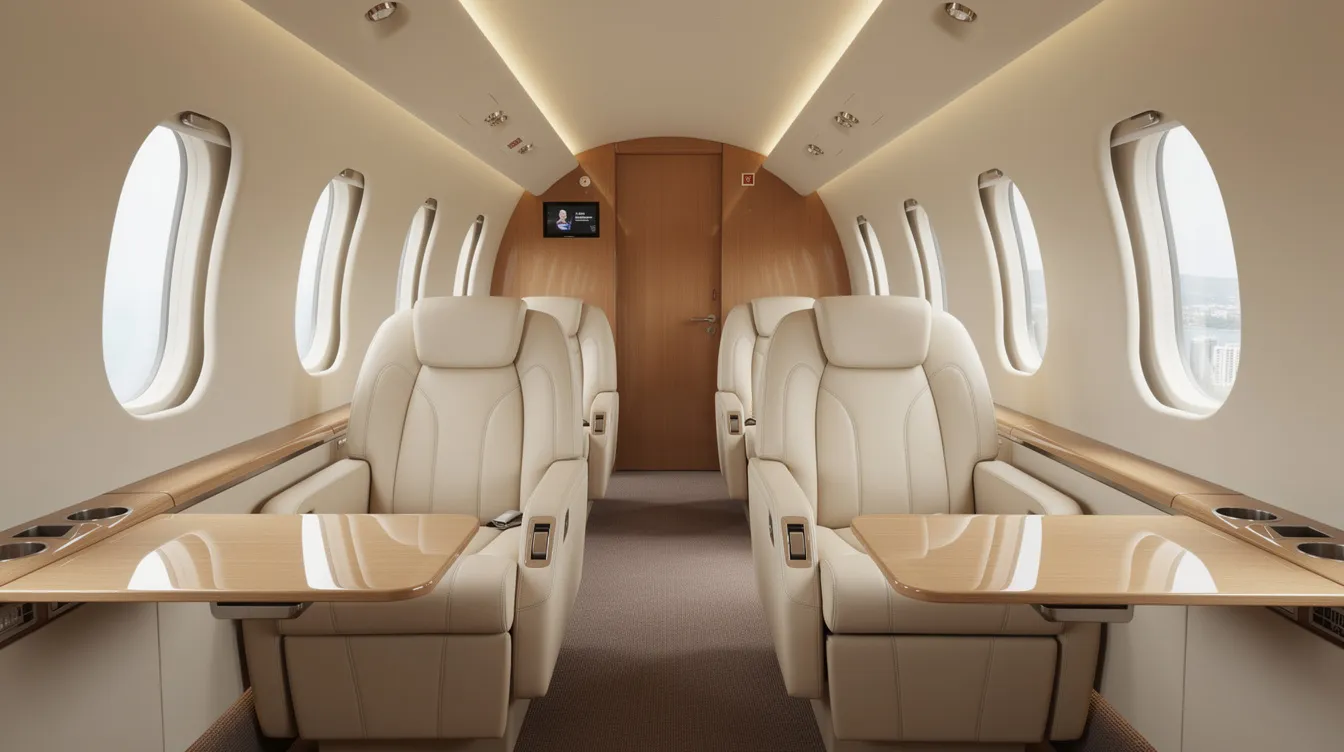
Types of Private Aircraft Available for Charter
When booking a private flight, it’s essential to assess your travel needs, including destination, number of passengers, luggage requirements (such as golf clubs), flight duration, and budget. Choosing the right airplane or private plane depends on your needs, including passenger count, baggage needs, and trip duration.
Here’s how the main categories break down:
|
Category |
Passengers |
Range |
Best For |
|---|---|---|---|
|
Light jets |
4-8 |
1,500-2,000 miles |
Short-haul trips (Paris-Ibiza, NYC-Boston) |
|
Midsize jets |
6-10 |
2,000-3,000 miles |
Medium routes with more space (NYC-Dallas) |
|
Heavy jets |
10-16 |
4,000-6,000 miles |
Long-haul with luxury amenities |
|
Ultra-long-range |
10-18 |
6,000+ miles |
Intercontinental travel (NYC-London) |
-
Light jets typically accommodate 4-8 passengers and have a range of 1,500-2,000 miles, making them ideal for short-haul trips.
-
Small planes are more cost-effective for short trips and can accommodate fewer passengers, enhancing privacy and comfort. A Cessna Citation CJ3+ seats 6-7 people comfortably for regional flights up to 3-4 hours.
-
Midsize jets can carry 6-10 passengers with a range of 2,000-3,000 miles, suitable for medium-range trips with more space for passengers and luggage.
-
Heavy jets are designed for long-haul flights, accommodating 10-16 passengers with a range of 4,000-6,000 miles, often featuring stand-up cabins and flatbeds.
-
Ultra-long-range jets accommodate 10-18 passengers and can fly over 6,000 miles, making them perfect for intercontinental journeys.
Cabin size affects how turbulence feels—smaller jets transmit gusts more directly due to lower mass.
If you plan to bring specialized items like golf clubs, you may need to upgrade to a larger aircraft or ensure additional space is available to accommodate your luggage.
Who Private Jet Charter Is For
Charter works best for travelers flying fewer than 25-30 hours annually or those who value maximum flexibility with zero upfront commitment, as on-demand charters do not require long-term commitments, unlike some membership programs.
Ideal scenarios include:
-
Last-minute winter business trip from Boston to Toronto
-
Multi-stop European vacation where routes vary
-
One-time wedding charter for 8-10 guests
For irregular or seasonal patterns—ski trips in January, conferences in specific months—charter avoids tying up capital in jet cards or shares, while aviation planners may use flight route and turbulence API data behind the scenes to optimize these trips. The per-hour rate may spike 20-50% during peak holidays, but annual costs stay lower than prepaid options for light users.
Jet Cards
How Jet Cards and Membership Programs Work
Jet cards allow travelers to prepay for flight hours at fixed hourly rates, making them suitable for frequent flyers who want predictable costs and guaranteed availability. You deposit funds upfront, then draw down hours as you fly.
Customers can purchase or add flight time directly through the provider's platform, making the process similar to booking commercial flights online. Spending money on jet cards or memberships can be a worthwhile investment for frequent travelers seeking luxury and convenience.
After purchase, your card activates within 24-48 hours. You gain access to a dedicated team or mobile app to request flights. Submit a request like “New York to Palm Beach next Friday,” receive confirmation within hours, and board at private terminals without long security lines.
These private terminals are typically operated by fixed base operators (FBOs), which provide specialized services such as check-in, security, and comfortable lounges for private jet travelers, while SkyGuru’s real-time flight information app can add another layer of comfort once onboard.
Notice periods typically run 24-48 hours for standard bookings, with longer lead times or surcharges during peak periods like late December. Aircraft guarantees specify category rather than specific model—you request “light jet” and receive whatever equivalent is available, with free upgrades when possible.
Pricing and Fees
Typical structures include 25-hour or 50-hour cards locked to an aircraft category like light jet or midsize. Minimum deposits range from $150,000-$250,000 depending on provider and aircraft class. In 2024-2025, expect $4,800-$7,000 per hour for light jets and $8,000-$14,000 for midsize.
Some programs layer annual fees of $2,000-$15,000 on top of hourly rates for additional perks.
Key Benefits and Drawbacks
Key benefits include:
-
Fixed pricing is immune to fuel surcharges
-
Guaranteed aircraft availability within 24-48 hours
-
Simplified booking via app or dedicated coordinator
-
Standardized service levels across flights
Key restrictions to understand:
-
Minimum flight times per leg (often 2 hours)
-
Peak-day surcharges (Christmas week, Super Bowl, major events)
-
Cancellation fees ($500-$2,000 within 48 hours)
-
Category lock-in—you choose light or midsize upfront
Membership programs for private jets often charge a monthly fee and provide access to shared flights, making private aviation more accessible for frequent travelers, especially those using apps that help them overcome the fear of flying. Consider taking advantage of these programs to maximize value and convenience when flying private.
Who Jet Cards Are Best For
Jet cards fit travelers logging roughly 25-75 private flight hours annually on semi-predictable routes.
Ideal profiles include:
-
A consultant commuting biweekly between Los Angeles and San Francisco
-
A family making regular ski weekends from London to Geneva
-
Executives want one point of contact instead of shopping for quotes
Jet cards sit in the middle on cost and commitment—more than charter, less than fractional ownership. They can serve as a trial step before deciding if buying a share makes sense later.
Fractional Ownership
How Fractional Ownership Flights Actually Work
Fractional ownership allows individuals to purchase a share of a private jet, providing access to the aircraft without the full costs and responsibilities of ownership. You buy a legal fraction—commonly 1/16 or 1/8—of a specific aircraft type.
Fractional ownership means you can use your own aircraft for private flights and fly privately whenever needed, while sharing responsibilities such as management and maintenance with other owners.
Providers like NetJets or Flexjet handle everything:
-
Hiring flight crew and cabin crew
-
Maintaining the aircraft
-
Scheduling flights
-
Providing access to a wider fleet when your specific plane is busy or in maintenance
Owners request flights with 4-10 hours' notice through their management company. If your assigned aircraft is unavailable, the provider supplies an equivalent from their fleet—fulfillment rates typically exceed 99%.
Peak periods like December 20-January 5 may involve allocation rules or require credits (1.5x hours). When owners want to exit, buyback formulas typically return 70-90% of original share value, depending on market conditions.
A CEO with a 1/16 midsize share might fly New York to Chicago 10 times annually (40 hours), plus Atlanta twice, with maintenance swaps handled seamlessly behind the scenes.
Pricing and Fees
-
A 1/16 share of a light jet might cost $400,000-$800,000 upfront and entitle you to approximately 50 flight hours per year.
-
Monthly management fees run $10,000-$20,000, plus occupied hourly costs of $4,000-$7,000.
-
Total annual spend for 50 hours: $600,000-$1.2 million.
Key Benefits and Drawbacks
Key advantages:
-
Consistent cabin experience
-
Priority access over jet card holders
-
Potential tax depreciation benefits (consult a tax professional)
-
Partial asset ownership
Key drawbacks:
-
3-5 year contract commitments
-
Complex resale and depreciation exposure
-
Less flexibility to switch providers or aircraft categories
Who Should Consider Fractional Ownership
Fractional ownership fits travelers or businesses flying roughly 50-150 hours per year on recurring routes, where access to detailed flight and route turbulence data APIs can also inform scheduling and aircraft choices.
Typical buyers include:
-
Regional CEOs
-
Family offices
-
High-net-worth individuals wanting structured, long-term solutions
This option makes sense when travel patterns remain stable for several years. If your routes or hours fluctuate significantly, jet cards offer more flexibility.
Whole Aircraft Ownership
How Day-to-Day Flying Works With Your Own Jet
Full ownership means buying and registering an entire aircraft in your name or your company’s name.
Typical workflow:
-
The owner or assistant contacts the management company with dates and routes.
-
Crew is assigned, flight plan filed, and the aircraft positioned if needed.
-
Basing the jet at a home airport like Teterboro reduces positioning costs for New York metro travelers.
-
Maintenance events—scheduled inspections lasting days or weeks—may require backup charter arrangements.
Owners accept this complexity in exchange for complete control over their travel experience.
Pricing and Fees
-
A used light jet like an early-2010s Embraer Phenom 300 costs $5-9 million.
-
Midsize jets run $12-18 million; large-cabin Gulfstream G650s reach $40-75 million.
Annual fixed costs:
-
Hangar: $100,000+
-
Crew salaries: $400,000+
-
Insurance: $50,000+
-
Maintenance programs: $300,000+
Variable costs: $3,000-$8,000 per flight hour for fuel, catering, landing fees, and handling.
Most owners—roughly 90%—use aircraft management companies rather than self-managing. These firms handle crew scheduling, maintenance coordination, regulatory compliance, and flight planning for 8-10% of operating costs.
Owners can place their jet on a charter certificate to offset expenses through charter revenue, though income rarely covers full ownership costs.
Key Benefits and Drawbacks
Advantages:
-
Total control over interior design
-
Immediate access when the aircraft is free
-
Maximum privacy
Drawbacks:
-
High upfront and ongoing costs
-
Complexity of management and maintenance
-
Financial sense only above roughly 200-300 flight hours annually
Who Whole Aircraft Ownership Is Really For
Full ownership makes financial sense only above roughly 200-300 flight hours annually.
Typical owners include:
-
Corporations with global operations
-
Ultra-high-net-worth individuals
-
Sports teams
For most private flyers, charter, jet cards, or fractional ownership will be more practical. Speak with specialized aviation, legal, and tax professionals before pursuing ownership—this guide is educational, not financial advice.
Comparing the 4 Options
Here’s how the four ways to fly private stack up across key dimensions:
|
Factor |
Charter |
Jet Cards |
Fractional |
Ownership |
|---|---|---|---|---|
|
Upfront cost |
$0 |
$150,000+ |
$400,000+ |
$5M+ |
|
Cost per hour |
$2,000-$15,000 |
Fixed rates (+10-20% vs charter) |
$4,000-$8,000 |
$3,000-$8,000 long-term |
|
Ideal annual hours |
Under 25 |
25-75 |
50-150 |
200+ |
|
Notice required |
24+ hours |
24-48 hours |
4-10 hours |
Immediate (if available) |
|
Commitment |
None |
Deposit-based |
3-5 year contract |
Full asset ownership |
Shared charter services allow travelers to book a single seat on a private jet instead of chartering the entire aircraft, significantly reducing costs. Membership programs for private jets offer cost-efficient access to flights, often including perks like guaranteed availability and discounted rates.
In contrast, flying commercial is typically the most affordable option for larger groups or families, making it a practical choice for group travel, while private jet charters are often chosen for special occasions or when privacy and flexibility are priorities.
A traveler flying 10 hours annually spends roughly $30,000 on charter. At 60 hours, jet cards run $300,000. At 150 hours, fractional costs approach $900,000. Ownership breaks even versus alternatives only around 300+ hours.
Familiarity matters for anxious flyers: fractional and ownership provide consistent aircraft types, while charter offers variety that can optimize cost and aircraft selection, and dedicated apps that support people with a fear of flying can further ease the experience.
Which One Is Right for You?
The right way to fly private depends on three factors: how often you fly, how predictable your schedule is, and how much commitment you’re comfortable with.
Simple decision guide:
-
Under 25 hours/year: Start with charter
-
25-75 hours with predictable trips: Consider jet cards
-
50-150+ hours on stable routes: Evaluate fractional ownership
-
200-300+ hours with major resources: Explore whole aircraft ownership
Create a one-year flight map before deciding. List destinations, months, and group sizes, then match that pattern to one of the four options using the comparison above.
Private jet travel options include on-demand charters and empty-leg flights for flexibility, jet cards for frequent flyers, and fractional ownership for those wanting partial equity. Each model serves different frequencies and preferences.
Regardless of which option you choose, anxiety around turbulence, takeoff, and unfamiliar sounds can still appear, and many travelers now rely on fear-of-flying apps like SkyGuru for reassurance. Tools like SkyGuru’s in-flight explanation app explain each stage of flight in real time, turning mysterious sensations into understandable events.
Start small. Most beginners benefit from trying a charter or a modest jet card before committing to fractional or ownership. Give yourself 1-2 years to understand your actual travel patterns before scaling up.
Understanding these four main ways to fly private makes the decision less overwhelming, especially when you pair them with apps designed to help your fear of flying. Focus on what matches your current needs, and remember that comfort, safety, and mental well-being matter just as much as the aircraft you choose.
Conclusion
Flying private offers unmatched convenience, comfort, and flexibility compared to commercial air travel, and tools like the SkyGuru fear-of-flying app are increasingly part of that comfort story for anxious passengers. Whether you choose on-demand charter, jet cards, fractional ownership, or whole aircraft ownership, each option provides unique benefits tailored to different travel frequencies, budgets, and commitment levels. By assessing your travel needs—including your final destination, preferred schedule, and the right aircraft size—you can select the private flying method that best suits you.
Additionally, private aviation’s ability to access smaller airports closer to your final destination often reduces overall travel time and enhances the experience. As you explore these options, remember that tools like SkyGuru can help ease any anxiety by explaining flight sensations in real time, making your journey as comfortable mentally as it is physically.
Start with the option that matches your current travel habits and scale up as your needs evolve. Flying private is no longer just for the elite—it’s an accessible way to make every trip more efficient, enjoyable, and personalized.
FLEET SELECTION
JET CARDS
COST ANALYSIS


How to Auditing Your Operator's Maintenance Logs
Oct 05, 2025

How to Auditing Your Operator's Maintenance Logs
Oct 05, 2025

How to Auditing Your Operator's Maintenance Logs
Oct 05, 2025
Sky Guru Weekly
The smartest private aviation intelligence in your inbox.
.svg)

