



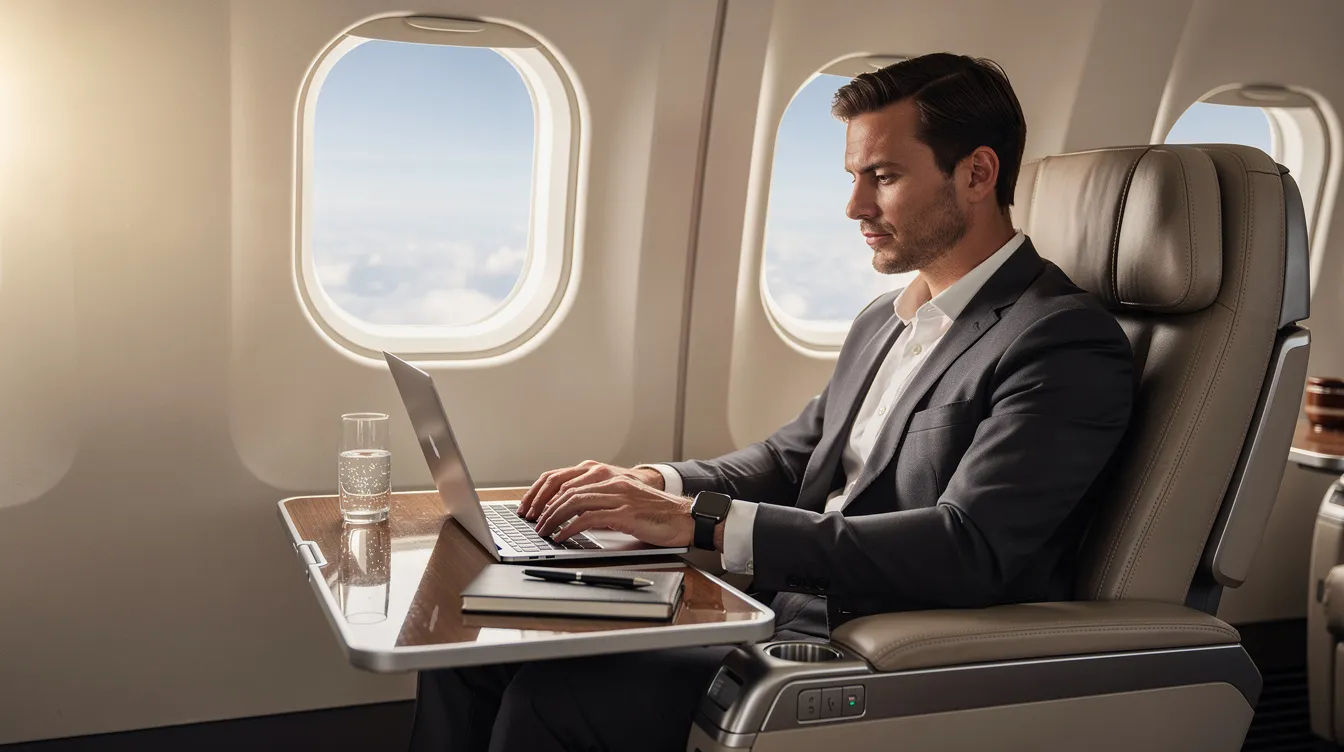
The question “Should I fly private?” rarely has a simple yes or no answer. Instead, it depends on a precise combination of your income, travel patterns, route complexity, and how much you value time and mental peace. This guide breaks down the real indicators that matter—beyond the Instagram appeal and the allure of luxury flying—so you can make a rational decision about private aviation.
Answer First: Should You Fly Private At All?
For most people reading this, the honest answer is: not yet, or only occasionally. Private jet travel makes financial sense when your time is worth $500 or more per hour, your routes are poorly served by commercial airlines, and your household income comfortably exceeds $750,000 annually. Below those thresholds, flying commercial—even in premium cabins—delivers far better value for money, especially on scheduled flights, which can be subject to delays and missed connections due to rigid timetables and airport procedures.
Here’s a quick decision guide based on three traveler profiles:
The Commercial Loyalist (Stay with airlines)
-
Household income under $500,000
-
Flies 4–8 times per year on well-served routes like NYC-LAX or Chicago-Miami
-
Private flights would cost 10–20x more with minimal time savings (1–2 hours door-to-door)
-
Better strategy: Upgrade to business class on commercial airlines for comfort without financial strain
The Occasional Charter User (Fly private 1–5 times per year)
-
Household income $750,000–$2 million, net worth above $10 million
-
Faces complex routings: multi-stop trips, underserved regional airports, or time-critical business travel
-
Uses empty legs and on-demand private jet charters for 30–75% discounts when scheduling aligns
-
Most travel still happens on commercial flights
The Regular Private Flier (Fractional ownership or jet card makes sense)
-
Income above $2 million, significant net worth
-
Flies 50–150+ hours annually on routes where commercial aviation adds hours of delays and connections, especially at major airports where congestion and wait times are common
-
Time value easily exceeds $500/hou.r
-
Can justify fractional ownership or jet card program costs as a business expense or lifestyle investment
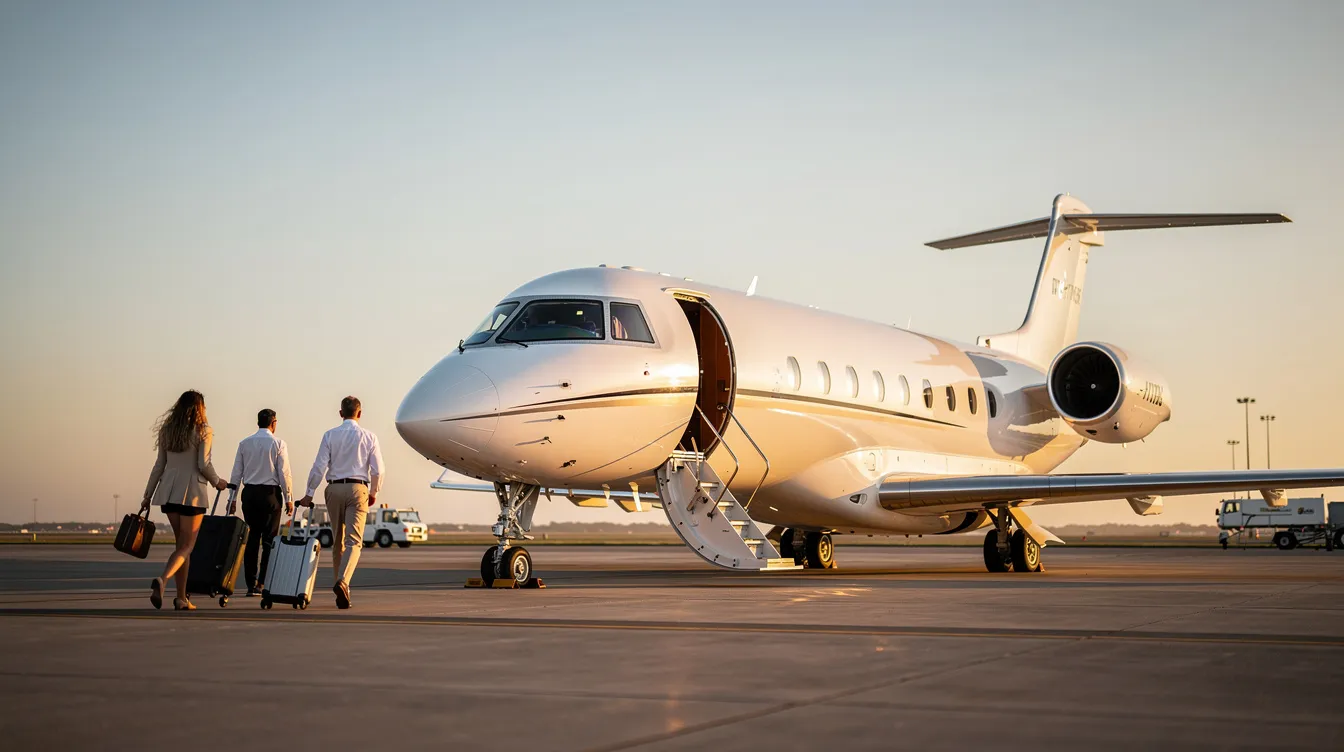
Private vs. Premium Commercial: Quick Comparison
Table: Cost, Time Savings, and Stress Level for NYC-Miami by Travel Class
|
Travel Class |
Typical Cost (NYC-Miami) |
Time Savings vs. Economy |
Stress Level |
|---|---|---|---|
|
Economy |
$250–$400 |
Baseline |
High (8/10) |
|
Business Class |
$1,200–$1,800 |
30–60 min (priority boarding/lounge) |
Moderate (4/10) |
|
First Class |
$3,500–$5,000 |
45–90 min (faster security, better rest) |
Lower (3/10) |
|
Light Jet Charter (4 passengers) |
$3,000–$4,500/person |
3–5 hours door-to-door |
Low (2/10) |
Flying commercial involves fixed schedules, which may lead to delays, cancellations, and missed connections, especially at major airports where congestion is common. But the cost difference remains dramatic. A round-trip first-class ticket on that same NYC-Miami route might run $8,000 total, while a light jet charter costs $24,000–$36,000.
This article focuses on when flying private is rational—justified by time savings, productivity gains, health considerations, or genuine anxiety management—not when it’s simply a status symbol. Private jets allow for a more comfortable flying experience, with additional legroom and reclining space compared to commercial flights, often accommodating fewer passengers, which enhances personal space. But comfort alone rarely justifies the price tag for most travelers.
For nervous fliers wondering if private aviation might calm their fears, there’s a more cost-effective first step. SkyGuru is a mobile app that helps anxious travelers on both commercial and private flights by explaining turbulence, sounds, and flight stages in real time. Before you spend $20,000+ to avoid crowded airports, consider whether understanding what’s happening during flight might solve the underlying problem.
Key Indicators You Should Consider
The decision to choose private air travel isn’t driven by any single factor. Instead, it emerges from a pattern across five key areas: your financial capacity, the routes you fly, your travel purposes, health and anxiety considerations, and practical logistics like group size. Deciding whether you want to fly privately often comes down to aspirations for greater convenience, time savings, or a preference for a premium travel lifestyle.
No single indicator is decisive. Someone with a $2 million income flying twice yearly on nonstop routes might get less value from private aviation than a business owner earning $800,000 who needs to visit three Midwest cities in one day. The goal is to evaluate your overall pattern honestly.
Here are the main indicator groups this section covers:
-
Financial capacity and cost benefit analysis
-
Route complexity and airport access
-
Travel purpose (business, family, lifestyle)
-
Health, anxiety, and safety perception
-
Group size and trip logistics
Throughout, I’ll use concrete numbers—specific incomes, flight hours, passenger counts, and route examples—because vague advice helps no one.
Financial Readiness and Cost–Benefit Analysis
Let’s start with the uncomfortable truth: private flights typically cost 5–10x what comparable commercial flights cost, even when comparing against business class. Chartering a private jet typically costs between $2,000 and $14,000+ per flight hour, depending on the aircraft’s size and range. A turboprop runs $1,800–$3,500 per hour. A light jet like a Cessna Citation CJ3 costs $2,800–$4,500 per hour. A midsize jet hits $4,500–$7,000 per hour, and large cabin jets like a Gulfstream G650 exceed $10,000–$13,000 per hour.
Income and Net Worth Guideposts
Based on wealth management benchmarks, here’s a realistic framework:
-
Occasional charter (1–5 trips/year): Household income above $750,000–$1 million, net worth above $10–$25 million. Private aviation costs should stay under 1–2% of annual spending.
-
Regular private flying (jet cards, fractional): Household income above $1.5–$2 million, substantial liquid assets. These options typically require you to pay upfront—either through membership fees or by purchasing flight hours or ownership shares in advance—for convenience, fixed rates, and guaranteed availability. The ongoing expense becomes manageable rather than painful.
-
Below $500,000 income: Private aviation should be a rare exception, not a pattern, unless fully reimbursed as a business expense.
For high-net-worth individuals, executives, or groups needing to travel efficiently, the benefits of private aviation often outweigh the high cost. But for most professionals, they don’t.
How to Run a Basic Cost-Benefit Analysis
-
Estimate your true hourly value (what’s an hour of your productive time worth?)
-
Calculate hours saved door-to-door on the specific route
-
Multiply saved hours by hourly value, then multiply by the number of travelers
-
Compare this “time value” against the cost premium of private over commercial
Concrete Example: New York to Miami (2026 Pricing)
Table: Cost and Time Comparison for NYC-Miami by Travel Option
|
Option |
Per-Person Cost |
Door-to-Door Time |
Time Saved |
|---|---|---|---|
|
Economy (American/Delta) |
$275 |
7–8 hours |
Baseline |
|
Business Class |
$1,400 |
6–7 hours |
~1 hour |
|
First Class |
$4,200 |
5.5–6.5 hours |
~1.5 hours |
|
Light Jet (4 passengers) |
$4,000–$5,000/person |
3.5–4 hours |
~4 hours |
If your time is worth $300/hour and you’re traveling with three colleagues, those 4 saved hours equal $4,800 in time value (4 hours × $300 × 4 people). That approaches breakeven with the charter cost per person—but only if you actually use those hours productively.
For most individuals, upgrading to business class at $1,400 delivers 80% of the comfort improvement at 25% of the private cost. Commercial travel remains the only viable option for budget-conscious travelers due to its cost-effectiveness.
Route, Airport Access, and Multiple Destinations
Where you live and where you fly often matter as much as how wealthy you are. The route structure is where private aviation delivers its clearest advantages—or reveals itself as unnecessary.
When Private Aviation Shines
-
You’re based near a regional airport with limited commercial service (think Aspen, Nantucket, or Jackson Hole)
-
Your destinations require multiple connections on commercial airlines, turning a 2-hour flight into a 7-hour journey.
-
You need to visit multiple destinations in a single day, which commercial aviation simply cannot accommodate.e
Private jets can access approximately 5,000 airports in the United States, compared to only about 500 accessible by commercial airlines, allowing for more convenient travel options. This 10x difference in airport access transforms what’s possible, especially since private jets can land at smaller airports that are often closer to your actual destination.
Concrete Example: Midwest Business Trip (2026)
Table: Commercial vs. Private for Multi-City Midwest Business Trip
|
Mode |
Total Travel Time |
Connections |
Cost |
|---|---|---|---|
|
Commercial (United/Delta) |
10–14 hours |
4–6 flight segments |
$1,800 in flights + hotel |
|
Turboprop Charter |
4–5 hours total |
Direct to each |
$8,000–$10,000 |
The commercial option might not even be possible in one day. You’d fly from Des Moines to Minneapolis, Minneapolis to Sioux Falls, then scramble to reach Fargo, likely requiring an overnight. The private turboprop lands at each city’s regional airport, gets you to meetings, and returns you home the same evening.
Private jets can land at smaller, more convenient airports, reducing ground travel time significantly compared to commercial flights that are limited to major hubs. A King Air turboprop landing at a smaller airport 15 minutes from your meeting beats a commercial flight landing at a major hub 90 minutes away. Additionally, boarding through private terminals streamlines the process, offering faster, more convenient, and secure access compared to the standard commercial experience.
Short-haul flights of 45–180 minutes and multi-stop itineraries are where flying private delivers the biggest time advantage per dollar. On a single 5-hour transatlantic route with nonstop commercial options, the calculus looks very different.
Purpose of Travel: Business, Family, or Personal Comfort
The reason you’re traveling significantly affects whether private aviation makes sense. Let’s separate three main categories: business-critical trips, family travel, and lifestyle convenience.
Business Travel Justifications
Private flights can be legitimately written off as a business expense (IRS Section 162 allows deductions when travel is more than 50% business-related) when used for business purposes. Private jet travel for business purposes can enhance work efficiency by allowing executives to visit multiple cities in a single day, conduct confidential meetings in-flight, and minimize travel downtime. Additionally, there may be tax advantages when flights are primarily for business activities, further justifying the expense.
-
Several high-value employees need to reach three cities in one day for site visits or client meetings.
-
A delay could risk six-figure deals or regulatory deadlines
-
You need to conduct meetings during flight on confidential matters (M&A discussions, due diligence, board preparation) that would be inappropriate in commercial cabins
Commercial airlines often have shared cabins and busy terminals, increasing exposure to illnesses and reducing comfort and privacy. When confidentiality matters, the private plane cabin becomes a mobile conference room.
Real-World Vignette: A 2025 founder flying from Los Angeles to Austin for morning investor meetings and afternoon customer visits can complete a round-trip on a G280 for roughly $40,000. The alternative—commercial flights with a Dallas connection each way—adds 8+ hours to the day and eliminates the possibility of returning home that night. If closing a $100,000 deal depends on being present and sharp, the math changes.
Family and Personal Travel
Flying privately offers unmatched privacy, as passengers typically know each other and can enjoy their time together without the presence of strangers, which is common in commercial flights. This matters most when:
-
You’re traveling with infants who would disrupt (and be disrupted by) packed commercial cabins
-
Elderly parents struggle with long layovers and crowded terminals
-
Pets can fly in-cabin without the stress and risk of cargo holds
Passengers on private jets benefit from personalized service, allowing them to customize their in-flight experience—including meal choices and cabin environment—which contributes to a more tailored and comfortable journey. No more settling for whatever airplane food the airline provides.
Lifestyle-Only Travel
If your primary motivation is convenience and prestige rather than productivity or family logistics, your financial threshold should be much higher. The returns here are emotional rather than financial, which is fine—but be honest about it.
Health, Anxiety, and Mental Well-Being
Mental and physical health are legitimate indicators, not afterthoughts. This is especially true for frequent travelers whose accumulated stress affects performance and quality of life.
For Travelers with Fear of Flying
Private jets can feel more personal and controlled—you know the pilot, you control the environment, and you board without the anxiety-inducing chaos of crowded airports. However, smaller aircraft can move more in turbulence than large commercial jets. The physics are straightforward: less mass means more sensitivity to air movement, with roll rates 20–30% higher in light jets versus wide-body commercial planes.
Private jets often fly at higher altitudes (up to 51,000 feet), allowing them to fly above commercial traffic and most weather systems, resulting in a smoother ride with less turbulence. This can help, but it doesn’t eliminate bumpy.
The critical insight: perceived safety and actual safety are not identical. Understanding what the aircraft is doing is often more effective than changing aircraft type.
SkyGuru: A More Cost-Effective First Step (detailed SkyGuru FAQ on how the app works)
Before paying $20,000+ per trip purely because of anxiety, consider trying SkyGuru. The app uses real-time sensor data and aviation weather information to:
-
Predict when turbulence is likely and explain why it’s safe
-
Walk you through each flight stage—takeoff, climb, cruise, descent, landing
-
Explain bumps and sounds as they happen, reducing the fear of the unknown
Studies show turbulence explanations can reduce cortisol levels by 35% in anxious fliers. For many users, the combination of premium commercial cabins plus a turbulence and flight-anxiety guidance app proves more cost-effective than moving entirely into private aviation.
Physical Health Considerations
Lower germ exposure is a health benefit of private travel due to fewer passengers and advanced cabin air filtration systems. For immunocompromised travelers or those with chronic conditions aggravated by long security lines and crowded terminals, private aviation may have genuine medical benefits beyond convenience.
Traveling by private jet allows passengers to arrive at the airport just minutes before departure, bypassing long check-in and security lines typical of commercial flights. You avoid the endless waiting, packed gate areas, and exposure that come with commercial air travel.
Group Size and Trip Logistics
The economics of flying private shift dramatically when traveling with a group rather than solo. A charter that seems extravagant for one person can approach business class pricing when split six ways.
Numeric Examples
Table: Private vs. Commercial Cost per Person for NYC-DC (2 hours)
|
Scenario |
Private Cost |
Per-Person Cost |
Commercial Business Class |
|---|---|---|---|
|
Solo traveler, NYC-DC, 2 hours |
$6,000 |
$6,000 |
$800 |
|
4 travelers, NYC-DC, 2 hours |
$6,000 |
$1,500 |
$800/person ($3,200 total) |
|
6 travelers, NYC-DC, 2 hours |
$6,000 |
$1,000 |
$800/person ($4,800 total) |
When the light jet carries 6 passengers, the per-person cost of $1,000 is only 25% above commercial business class—and you gain the entire aircraft to yourselves.
Logistics Advantages
-
Families with children and pets board directly at fixed base operators (FBOs) instead of managing strollers, car seats, and crates through crowded airports.
-
Sports teams, film crews, or project groups move equipment in one private aircraft without complex baggage constraints.
-
Everyone travels on the same schedule, eliminating the coordination nightmare of booking 8 people on commercial flights across different seat assignments.s
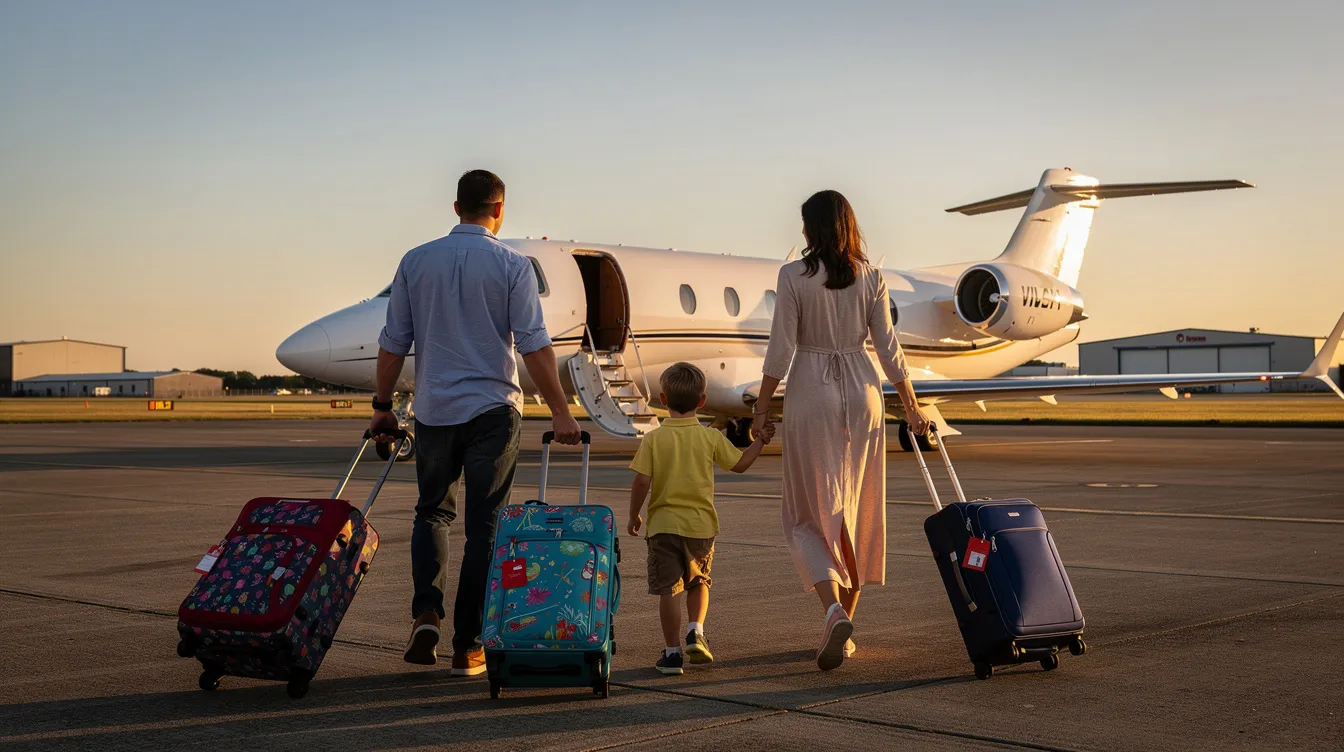
The FBO Experience
Boarding through a private terminal feels entirely different from commercial aviation. Picture a quiet lounge with comfortable seating, direct walk to the tarmac, no TSA bottleneck, no gate announcements. You’re on the plane within minutes of arriving at the airport, often through the same door you entered.
Travel Frequency Thresholds
The more often you fly, the more sense it makes to systematize your decision framework. The choice between commercial flying, on-demand charter, jet cards, fractional ownership, and owning your own aircraft depends heavily on your annual flight hours.
Private aviation options exist on a spectrum, ranging from chartering through reputable charter companies to full ownership of your own aircraft, with fractional ownership and co-ownership providing flexible alternatives to outright purchase. Charter companies play a key role in facilitating private flights, offering vetted staff, high safety standards, and customizable services to meet client needs.
Three useful frequency bands:
-
Under 25 private flight hours per year (1–5 trips)
-
25–100 private flight hours per year (regular regional travel)
-
100+ private flight hours per year (heavy usage)
Most readers who aren’t already using Business Aviation Weekly will fall into the first or second band. Jet cards or fractional shares rarely make sense below 25–50 hours annually.
Occasional Flyers: Under 25 Private Flight Hours Per Year
This group takes 1–5 private trips per year, typically clustered around peak events: December holidays, June weddings, September conferences, or urgent business situations.
Best Approach: On-Demand Charter and Empty Legs
Chartering private jets is often considered the least committal way to access private aviation, allowing users to pay as they go without the responsibilities of ownership. You book when needed through brokers or operators, with no annual minimums or upfront capital requirements.
Empty leg deals—flights that operators need to reposition anyway—can offer 30–75% discounts when your schedule aligns with available inventory. Platforms like PrivateFly and XOJET make these accessible.
Scenarios Where an Occasional Charter Makes Sense
-
An annual family trip where bringing grandparents, kids, and pets on a 90-minute private flight avoids two tight connections and a meltdown-prone layover
-
One-off urgent trip (last-minute international connection from a regional city) where the time saved justifies the premium cost. A multi-city business trip that’s impossible to execute in one day via commercial aviation
At this frequency level, most travel should still happen on commercial airlines, possibly in premium cabins. Treat flying private as an occasional tool rather than a lifestyle baseline.
For anxiety concerns at this usage level, try SkyGuru on your commercial flights before defaulting to expensive private charters. Many users report that understanding turbulence and flight stages reduces fear enough that private aviation feels optional rather than mandatory, and the SkyGuru FAQ explains how the app provides this real-time guidance.
Regular Users: 25–100 Private Flight Hours Per Year
This band includes frequent regional business travelers or families splitting time between multiple homes (New York and Florida, Los Angeles and Hawaii). At 25–100 hours, you’re flying private 2–4 times per month on average.
When Jet Cards and Fractional Ownership Make Sense
At this utilization, structured programs begin to pencil out:
-
Jet cards (e.g., NetJets 25-hour card at $150,000–$300,000 upfront for midsize access) guarantee availability at fixed hourly rates around $6,000–$9,000/hour
-
Fractional ownership allows individuals to purchase a share of a private jet, providing access to a larger fleet without the full costs and responsibilities of owning an entire aircraft .aft
The cost of fractional ownership in a private jet typically starts around $300,000 and can go up to $1 million, depending on the aircraft and the number of flight hours included. Programs often require hours of annual commitment.
Hybrid Approach
Even in this band, commercial flights (business class or first class) may still be optimal for long-haul routes like New York–London, where airlines offer multiple daily departures, competitive premium products, and time savings from private are modest. Reserve private aviation for shorter hops and complex multi-stop routings.
At 50+ private flight hours annually, the cumulative time saved per year can be measured in days, not hours—potentially 10–15 full working days recaptured. That materially impacts productivity and rest.
Heavy Users: 100+ Private Flight Hours Per Year
Senior executives, ultra-frequent entrepreneurs, or families with extremely travel-intensive lifestyles who fly privately multiple times per month fall here. At 150–400 hours annually, the entire calculation shifts.
Options at This Level
-
Large jet card blocks are negotiated directly with operators
-
Fractional ownership (25–50% share of a specific aircraft)
-
Full ownership for predictable routes and consistent aircraft type needs
Co-ownership of a private jet involves sharing the aircraft with partners, which can lead to complications in scheduling and usage, making it essential to choose partners carefully. Full ownership eliminates scheduling conflicts but brings substantial fixed costs.
Annual operating costs for a private jet can range from hundreds of thousands to millions of dollars, depending on factors such as aircraft type and usage intensity. Think crew salaries ($200,000–$400,000 for a full-time professional pilot team), hangar rent, insurance, maintenance reserves, and aircraft crew management fees.
Multi-Year Modeling Required
At this level, model 3–5 year cost scenarios, including:
-
Depreciation on owned aircraft
-
Tax treatment as a business aircraft
-
Opportunity cost of capital tied up in the airplane
-
Resale value assumptions
Even heavy users should retain some commercial aviation for ultra-long-haul routes. Modern first class and business class products on 10+ hour flights are efficient and comfortable, often matching private jets in sleep quality while avoiding the range and fuel considerations of crossing oceans in smaller aircraft.
Time Value Considerations
The fundamental question isn’t “Is a private jet cheaper?” (It rarely is. The question is: “Is the time and mental energy saved worth the premium over commercial flights?”
To answer this, you need to value your own time—and your team’s time—using a realistic hourly figure. A senior manager might value productive hours at $150–$200. A founder or executive whose decisions move large sums might calculate $500–$1,000 per hour.
This section covers both hard time savings (hours on a clock) and soft time savings (reduced jet lag, better sleep, clearer thinking).
Quantifying Door-to-Door Time Savings
The published flight time between two cities understates the true time cost of commercial aviation by hours. Here’s what a realistic comparison looks like:
Commercial Flight Timeline (NYC to Aspen, January 2026)
Table: Door-to-Door Time for NYC to Aspen (Commercial vs. Private)
|
Stage |
Time |
|---|---|
|
Travel to JFK |
60–90 minutes |
|
Arrive early for security |
90–120 minutes |
|
Security and boarding |
45–60 minutes |
|
Flight to Denver |
4.5 hours |
|
Connection time in Denver |
90–120 minutes |
|
Denver to Aspen |
45 minutes |
|
Baggage claim |
20–30 minutes |
|
Ground transport to the hotel |
15 minutes |
|
Total |
10–13 hours |
Private Flight Timeline (NYC to Aspen, January 2026)
|
Stage |
Time |
|---|---|
|
Travel to Teterboro (TEB) |
30–45 minutes |
|
Arrive at FBO |
15 minutes before departure |
|
Direct flight to Aspen |
4 hours |
|
Deplane and ground transport |
15–20 minutes |
|
Total |
5–5.5 hours |
Private jets can save an average of 127 minutes per flight compared to commercial aviation, significantly reducing travel time. On complex routes with connections, the savings multiply.
Converting Time to Value
If you and three colleagues each value time at $400/hour, those 6+ saved hours equal $9,600+ in time value (6 hours × $400 × 4 people). A midsize jet charter for this route might run $28,000–$35,000, so you’re still paying a premium—but the gap narrows considerably.
Flying private also gives higher schedule control. You can leave after a late-running meeting, change your departure the same day, or adjust for weather without rebooking. This flexibility prevents missed deals and rescheduled events that carry their own costs.
Productivity, Focus, and In-Flight Work
The privacy and quiet of private cabins transform flights from interrupted, semi-public laptop sessions into genuine working time.
The Commercial vs. Private Work Gap
Table: Usable Work Time on a 3-Hour Flight (Commercial vs. Private)
|
Flight Type |
Usable Work Time (3-hour flight) |
|---|---|
|
Commercial economy |
45–60 minutes |
|
Commercial business class |
90–120 minutes |
|
Private jet |
160–170 minutes |
On commercial flights, you lose time to boarding, drink service interruptions, seatmates, and the general reluctance to display confidential documents in plain view. On a private aircraft, nearly the full flight time is available for concentrated work or confidential meetings.
Many private jets are equipped with advanced technology and high-speed Wi-Fi, allowing passengers to stay connected and productive throughout the flight. Flying privately allows for a highly customizable experience, including personalized flight menus and cabin arrangements, which enhances passenger satisfaction and comfort. Your entire aircraft becomes a flying office with Wi-Fi (50–100 Mbps standard on newer jets), whiteboards for planning, and no eavesdropping concerns.
For anxious travelers, real-time explanations from SkyGuru—an app widely covered in media for helping nervous fliers understand turbulence—can free up mental bandwidth—even on commercial flights—so you can focus on tasks instead of monitoring every bump. Media coverage of SkyGuru highlights its effectiveness in reducing fear of flying. This partially closes the productivity gap between commercial flying and private flying without the cost increase.
Rest, Recovery, and Mental Load
The overall journey experience affects sleep, mood, and decision-making quality—especially on back-to-back travel days.
How Private Aviation Reduces Cognitive Load
-
Bypassing crowded airports eliminates the low-grade stress of navigating crowds, announcements, and potential disruptions.
-
Later departures mean fewer 4 AM alarm clocks and more nights in your own bed.d
-
No class seat assignments, no middle seat anxiety, no overhead bin competition
For executives making high-stakes decisions, arriving rested rather than frazzled can meaningfully affect outcomes. The soft costs of travel fatigue are real, even if hard to quantify.
Managing Anxiety Across Both Modes
For those with flight anxiety, turbulence fear, or panic around takeoff and landing, proactively managing fear is critical whether you fly private or commercial. SkyGuru’s stage-by-stage explanations and turbulence forecasts help users understand that bumps are normal, predicted, and safe—reducing anticipatory anxiety that otherwise consumes mental energy throughout the trip.
Factor your mental wellness into any time value calculation, not just clock hours saved.
When It Doesn’t Make Sense
Despite the appeal of private flying, many common situations make it an unwise choice. This section warns you away from private aviation in specific scenarios—even if that means forgoing short-term luxury for long-term financial health.
When Your Finances Don’t Comfortably Support It
If private aviation requires debt, dipping into emergency savings, or sacrificing core financial goals (retirement, education funds, housing stability), it is not appropriate, no matter how compelling the Instagram photos look.
Realistic Guidelines
-
If annual income is below $750,000 and net worth is below $10 million, private flights should be rare exceptions chosen for extraordinary circumstances.
-
Even for higher net worth readers, frequent private aviation should be a small, clearly budgeted fraction of overall spending—not something that requires justification after the fact.t
Consider: a $25,000 private round-trip, invested instead at 7% annual return over 10 years, grows to nearly $50,000. Over a career of annual trips, the opportunity cost reaches into the millions.
Upgrading to business class or first class on commercial airlines is often a much more financially sustainable way to gain comfort and rest. Commercial airlines offer extensive global networks with thousands of daily flights and established connections between international hubs. You don’t need to own your way to comfort.
If a trip’s cost makes you uneasy or you feel compelled to justify it afterward, that’s a sign to reconsider.
When Commercial Airlines Serve the Route Well
On dense, well-served routes, commercial aviation offers:
-
Multiple daily departures with convenient timing options
-
Competitive business class and first class products
-
Lounges and priority security that narrow the convenience gap
For example, New York to London has a half-dozen daily nonstops on major airlines. First-class ticket runs $10,000–$15,000 round-trip. An equivalent private flight on a heavy jet costs $150,000–$200,000. Time savings? Perhaps 2–3 hours door-to-door.
Commercial airlines operate under high safety standards with frequent, mandatory inspections and highly experienced flight crews. The product quality on major routes has improved dramatically.
Better Strategies for Well-Served Routes
-
Choose direct international flights with strong on-time records
-
Fly off-peak times to reduce congestion at commercial airports
-
Use SkyGuru to manage turbulence fear so commercial flights feel calmer
Private aviation is strongest where commercial aviation is weakest—underserved cities, poor schedules, multi-stop days. On trunk routes, it’s often a luxury way to fly that doesn’t deliver proportional value.
Using Private Flights Only to Escape Fear of Flying
Switching to private aviation purely because of turbulence fear or takeoff anxiety is usually not a durable solution—and can deepen avoidance patterns.
Here’s the uncomfortable reality: many very light jets and even big jets in the light-to-midsize category feel more movement in turbulence than large commercial planes. A prop plane or Cirrus Vision Jet will bounce more than a Boeing 787. The anxiety triggers may still be present, just in a more expensive setting.
A More Sustainable Path
-
Education about how aircraft and turbulence work
-
Step-by-step exposure using short commercial flights
Reducing anxiety on commercial flights first expands your future options. You can still choose to fly private for time and convenience, but you won’t feel forced into it by fear, which is both financially and psychologically healthier.
Environmental and Values Considerations
A private jet can emit 5 to 14 times more CO2 per passenger than a commercial flight on the same route. For readers who care about environmental impact, this may conflict with stated values.
Options for Environmentally Conscious Travelers
-
Reserve flying private for rare, high-impact situations (urgent medical travel, humanitarian response, truly irreplaceable business moments)
-
Purchase credible carbon offsets through verified programs
-
Combine essential meetings into fewer, more efficient trip clusters rather than multiple separate flights
SkyGuru is mode-agnostic—it helps passengers feel safer and calmer whether they choose commercial flying most of the time or occasionally decide to fly privately, and addresses how an app can help people overcome fear of flying.
The best travel choice balances finances, time, mental health, and personal ethics in a way you can live with over many years.
Frequently Asked Questions
What is the minimum income or net worth to consider flying private?
Private aviation typically makes financial sense for individuals with household incomes above $750,000 and net worths exceeding $10 million. Occasional charter users often fall into this bracket, while regular private fliers usually have incomes above $2 million and substantial liquid assets.
How do I decide between chartering a private jet and fractional ownership?
Chartering is ideal for occasional flyers who want flexibility without ownership responsibilities. Fractional ownership suits frequent travelers flying 25–100+ hours annually, offering guaranteed availability and lower per-hour costs but requiring upfront investment and annual commitments.
Can private jets land at any airport?
Private jets can access approximately 5,000 airports in the U.S., compared to about 500 for commercial airlines. This allows flying into smaller, more convenient airports closer to your destination, saving ground travel time.
Does flying private reduce exposure to germs and improve health safety?
Yes. Private jets have fewer passengers and advanced air filtration systems, significantly lowering germ exposure compared to commercial flights. This benefit is especially important for immunocompromised travelers or those concerned about health risks.
How much time can I save flying private?
Private jets can save an average of 127 minutes per flight by allowing passengers to arrive just minutes before departure, avoiding long security lines, and flying direct routes to smaller airports. Time savings multiply on complex or multi-stop itineraries.
Is flying private a good solution for fear of flying?
While private jets offer privacy and convenience, they do not eliminate turbulence or flight sounds, which can be more pronounced in smaller aircraft. Apps like SkyGuru provide real-time explanations and coping tools that can reduce anxiety effectively on all flight types.
What are the ongoing costs associated with owning a private jet?
Beyond the purchase price, owners pay for crew salaries, hangar rental, insurance, maintenance, and fuel. Annual operating costs can range from hundreds of thousands to millions of dollars, depending on aircraft size and usage.
Can I bring pets on private jets?
Yes, most private jet charters allow pets to fly in the cabin, avoiding the stress and risks of cargo holds. You must ensure pets have up-to-date vaccinations and meet destination country requirements.
How customizable is the in-flight experience on a private jet?
Private jets offer highly customizable experiences, including meal preferences, cabin environment, seating arrangements, and entertainment options, enhancing comfort and personalization.
What is a contract pilot, and how does that relate to private jet ownership?
Contract pilots are hired on a temporary or per-flight basis to operate private jets. Owners may choose contract pilots to reduce fixed staffing costs instead of employing full-time pilots.
How SkyGuru Helps You Decide and Fly Calmer (Private or Commercial)
Regardless of how you fly—economy, business class, private charter, or your own plane—the real goal is feeling in control, safe, and efficient. SkyGuru helps you achieve that on any flight, and its SkyGuru API platform can also provide detailed flight and weather data to partners.
What SkyGuru Does (plus what the SkyGuru API offers in terms of turbulence and route data)
-
Provides real-time explanations of turbulence and flight stages using your phone’s sensors and aviation weather data
-
Predicts when bumps are most likely and explains why they’re safe
-
Offers guidance, coping tools, and practical tips specifically designed for nervous fliers
-
Works in airplane mode on any flight—commercial or private
The experience flying private doesn’t eliminate turbulence or unusual sounds—smaller aircraft can actually amplify both. What it does offer is privacy and convenience. What SkyGuru offers is understanding.
A Simple Decision Process
-
For your next trip, choose the mode of travel that best fits your budget and schedule—this may be commercial, a private charter, or occasionally a charter company’s empty leg deal.
-
Download SkyGuru and enter your flight details
-
During flight, use the app to understand what’s happening in real time
-
Notice whether your anxiety decreases enough that commercial flights become genuinely manageable
Many users discover that their primary motivation for considering private was anxiety, and that this fear of flying is often solvable with app-based support without spending $20,000+ per trip.
Your Next Step
Before your upcoming trip, install SkyGuru and give it a test run on a short commercial flight. Let the app serve as your onboard aviation expert, making both private and commercial flights more predictable and less stressful.
Whether you ultimately decide to rent aircraft for select trips, explore a jet card program, or continue flying commercial with greater confidence, SkyGuru helps you make that choice based on genuine cost-benefit—not fear.
Download SkyGuru and fly with understanding.
FLEET SELECTION
JET CARDS
COST ANALYSIS


How to Auditing Your Operator's Maintenance Logs
Oct 05, 2025

How to Auditing Your Operator's Maintenance Logs
Oct 05, 2025

How to Auditing Your Operator's Maintenance Logs
Oct 05, 2025
Sky Guru Weekly
The smartest private aviation intelligence in your inbox.
.svg)

