



Flying private often raises a simple question: how does it compare to commercial aviation when it comes to safety? This guide is designed for travelers, business professionals, and anyone interested in understanding how private jet safety compares to commercial aviation. We cover safety systems, regulations, operator standards, and what passengers should know to make informed choices.
Private jet safety refers to the systems, regulations, and practices that ensure the safe operation of non-commercial aircraft. While both private and commercial aviation are governed by strict safety standards, private jet safety can vary depending on operator practices and regulatory oversight. Understanding private jet safety matters because it empowers you to make informed travel decisions, assess operator credentials, and ensure your well-being in the air.
Safety Systems Explained
Private jet travel is generally very safe, with accident rates often hovering just over one incident per 100,000 flight hours. The fatal accident rate for private aviation has been reported at around 0.221 per 100,000 hours in recent years. For context, commercial airlines (Part 121) have accident rates approximately between 0.133 and 0.152 accidents per 100,000 flight hours, with a near-zero fatal accident rate in recent years. Commercial airlines generally maintain the lowest accident rates—approximately 0.133 accidents per 100,000 flight hours.
Executive/corporate jets have roughly 0.26 accidents per 100,000 flight hours, often maintaining a zero death rate in specific reporting years. In 2024, private aviation saw a significant decrease in fatalities, with business jet accident fatalities dropping nearly 35%, from 32 in 2023 to 21 in 2024. This improvement reflects decades of investment in technology, training, and operational standards.
A safe flying experience in private aviation is built on a multi-layered approach involving regulation, technology, and personnel. Both private jets and commercial airlines, including those in business aviation, must adhere to Federal Aviation Administration (FAA) safety standards, which include routine inspections, pilot training, and maintenance checks. When these regulations are followed, private jets and commercial airlines are equally safe. Private aviation safety varies significantly depending on the type of operation, with professionally managed corporate and charter flights maintaining a safety record very close to commercial airlines.
|
Category |
Accident Rate (per 100,000 hours) |
|---|---|
|
Commercial Airlines |
0.133–0.152 |
|
Executive/Corporate Jets |
0.26 |
|
General Aviation (Owner-Flown) |
5.6+ |
The automobile fatality rate is estimated at 1.12 per 100 million vehicle miles, making private aviation generally a safer mode of transport than driving.
How Modern Private Jets Are Built for Safety
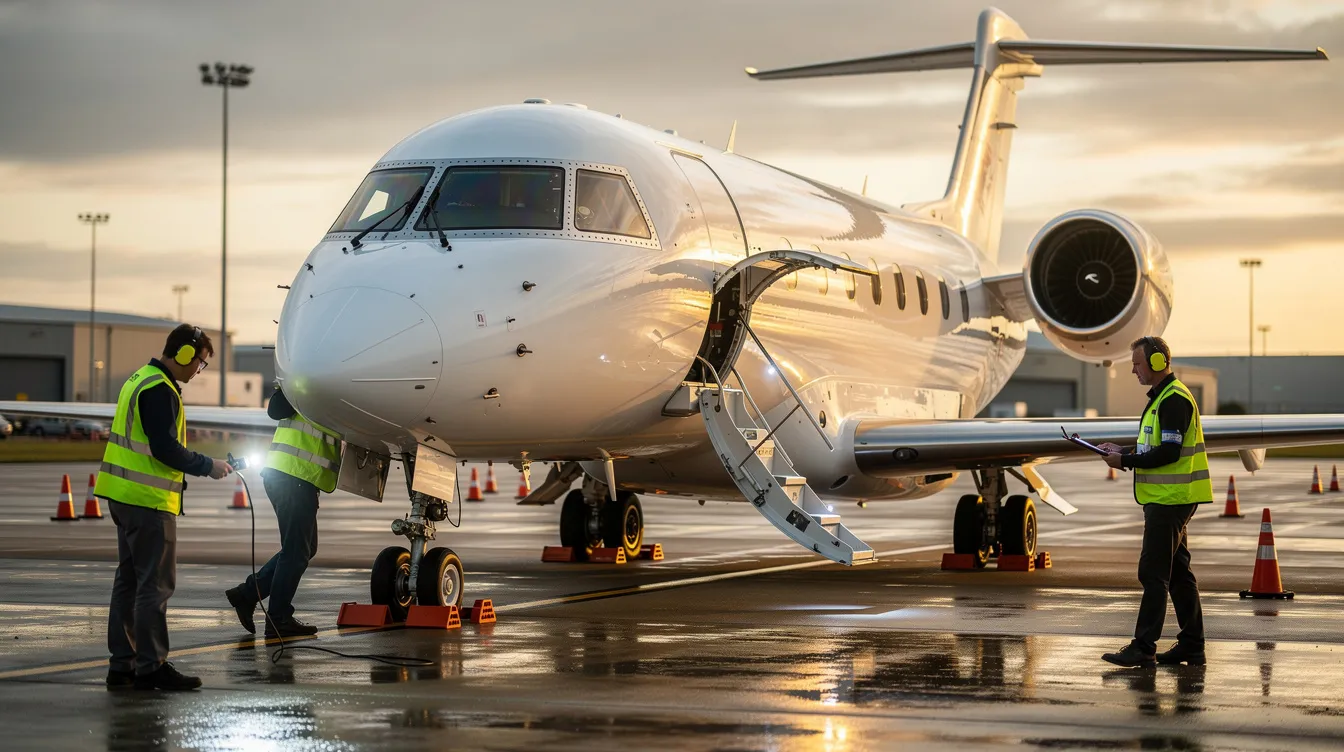
Current-generation business jets—Gulfstream G650/G700, Bombardier Global 7500, Embraer Phenom 300E, Dassault Falcon 8X—are certified to transport-category standards equivalent to large commercial aircraft. Aircraft size has minimal impact on safety when maintenance and operator quality are high; safety is more influenced by maintenance standards and operator credentials than by the size of the aircraft. This certification process spans years of testing, documentation, and flight evaluation before any aircraft enters service, and these standards are similar to those for commercial planes.
Modern private jets feature advanced safety systems, including state-of-the-art avionics that enhance situational awareness and sophisticated warning systems to prevent terrain incidents. Structural design follows damage tolerance principles: engineers assume some damage will occur during service life and design components to fail slowly and visibly rather than catastrophically.
Redundancy is central to jet safety:
-
Twin-engine jets operate with independent systems,s so one engine failure allows normal cruise and descent
-
Triple-engine designs like the Falcon 8X offer additional margins
-
Multiple independent hydraulic and electrical systems ensure control authority survives component failures
-
Manual reversion capabilities provide backup if electronic controls fail
Amenities and safety protocols can differ depending on aircraft size. Smaller planes typically have fewer flight attendants and more relaxed safety protocols compared to larger aircraft.
Professional Private Use corporate jets with two-person professional crews have shown accident rates as low as 0.07 per 100,000 hours, exceeding commercial safety in certain benchmarks.
Avionics and Cockpit Technology
Glass cockpit avionics integrate multiple data sources into digital displays, reducing pilot workload and error rates. Features like fly-by-wire technology and automated protections help minimize pilot error and enhance flight stability. Synthetic vision systems generate three-dimensional terrain pictures even in fog or darkness, while enhanced vision overlays real camera feeds for improved situational awareness.
Advanced safety technologies in private jets include Terrain Awareness and Warning Systems (TAWS), Traffic Collision Avoidance Systems (TCAS II), and AI-assisted fault detection systems that enhance safety by collectively improving overall flight safety.
Key systems passengers benefit from:
-
TCAS: Detects nearby aircraft and provides vertical guidance to avoid collisions
-
TAWS: Continuously checks terrain clearance and alerts crews to climb when necessary
-
Weather radar: Visualizes thunderstorm cells for route planning around severe weather
-
Runway overrun protection: Calculates landing distances and warns if conditions are marginal
When you feel the aircraft turn or change altitude unexpectedly, it’s often these systems guiding the crew through optimal paths. That gentle climb might be TAWS responding to terrain, or weather radar suggesting a route around convective activity.
Private jet pilots undergo extensive model-specific training before flying passengers, as mandated by the FAA. Training for private jet pilots includes regular simulator sessions, emergency procedure practice, and aircraft-specific education to maintain sharp skills.
Cabin and Life-Support Safety
Modern long-range business jets maintain cabin altitudes between 6,0 and 0–8,000 feet when cruising at 35,000 and 43,000 feet. The ear pressure changes you feel during climb and descent are the pressurization system working normally.
Oxygen systems include:
-
Portable bottles for medical or supplemental use
-
Quick-don masks for the crew at the flight deck
-
Passenger masks that deploy automatically if the cabin altitude rises above safe thresholds
Decompression events are extremely rare in modern aircraft due to redundancy and maintenance protocols. Fire detection covers engine bays, cargo holds, and lavatories, with automatic suppression systems activating without crew intervention. Cabin materials meet strict flammability and low-toxicity smoke standards.
Risk Management Processes
Top charter operators implement formal Safety Management Systems (SMS) as proactive approaches to managing risks. Unlike simple regulatory compliance, SMS treats safety as continuous improvement—identifying risks before they cause incidents. Reputable companies in the private aviation industry uphold rigorous maintenance, safety compliance, and third-party certifications to ensure safety and service quality.
Private jet operators often implement robust safety systems that exceed minimum regulatory requirements, including regular safety audits and proactive assessments to identify potential issues before they affect flight operations. Clients expect high safety standards, personalized service, and trust in the vetting processes of reputable operators.
Flight Planning Procedures
A typical private jet flight-planning sequence begins 24 hours before departure:
-
24 hours out:
-
Weather monitoring begins
-
Maintenance logs reviewed
-
Alternate airports identified
-
-
12 hours out:
-
Formal weather briefing conducted
-
Performance calculations run (fuel, takeoff/landing distances, climb gradients)
-
Flight plan filed with FAA
-
-
4 hours out:
-
Crew briefing on weather, route, alternates, and expected turbulence
-
Go/no-go release decision
-
Private flights offer more flexibility and flexible scheduling, allowing passengers to adjust departure times to avoid poor weather conditions, which significantly reduces risks associated with turbulence and storms.
Example: Winter flight from New York to Aspen
-
Mountain wave turbulence forecast above 20,000 feet
-
Icing expected from 12,000–24,000 feet
-
Crew plans cruise at 18,000 feet, identifies Denver as alternate
-
If conditions deteriorate, flight delays or diverts
Operational Control Centers
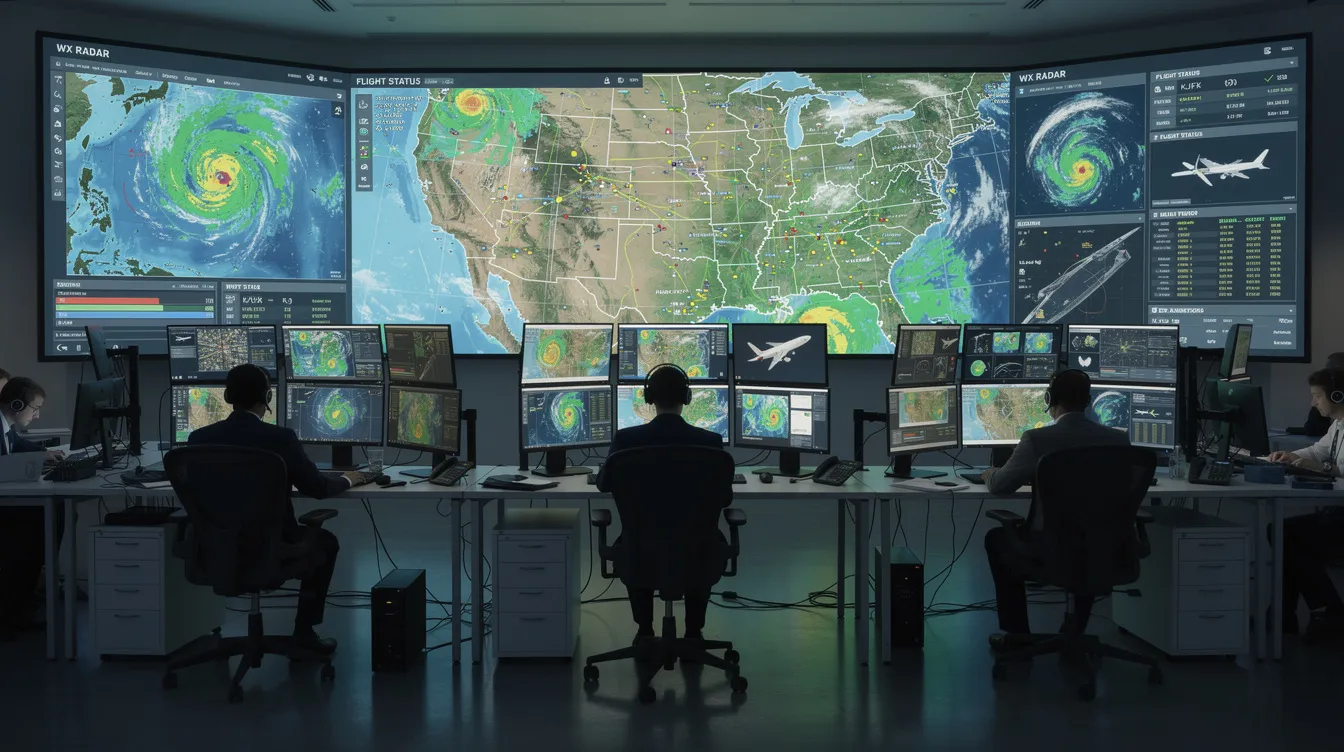
Modern operators maintain 24/7 operations centers with real-time aircraft tracking, live weather displays, and communication systems. Specialists monitor flights continuously and support crews during en-route decision-making.
When weather develops unexpectedly, the operations center can:
-
Alert crews to avoid specific altitudes or regions
-
Suggest alternate destinations before conditions become marginal
-
Request fuel stops if headwinds exceed forecasts
From the passenger’s perspective, this shows up as schedule changes, holding patterns, or diversions. These aren’t inconveniences—they’re real-time risk management protecting everyone aboard, and are often easier to accept when fear-of-flying tools explain what’s happening and why.
Human Factors and Crew Rest
Reputable private charter operators maintain rigorous hiring and training practices beyond FAA requirements, ensuring pilots are well-prepared for their roles. Leading private operators often demand extensive flight experience, but airline pilots flying commercial airliners are required to meet even higher minimum flight hour requirements and undergo comprehensive training standards. For example, airline pilots must typically log at least 1,500 hours of flight time and hold an Airline Transport Pilot (ATP) certificate, which is a higher standard than the commercial pilot certificate required for many private jet operations.
Part 135 regulations specify maximum duty periods (typically 9–10 hours) and minimum rest (9–10 hours between duties). Many operators add stricter internal limits.
Commercial airliners benefit from standardized procedures and industry-wide regulations, which contribute to their lower accident rates compared to private jets.
Crew pairing typically involves:
-
Experienced captains (2,000+ hours on type) paired with developing first officers
-
Two pilots on business jets provide critical redundancy over single-pilot operations
When a captain says “not yet” due to crew rest requirements, it’s a fatigue management decision protecting passengers. That “your flight is delayed for crew rest” message reflects professional risk management.
Certifications and Audits
Private jets operate under a tiered safety system that ranges from basic private use to professional charter services, with the highest standards often mirroring commercial airline protocols. Reputable operators are known for strong safety records, transparent documentation, and strict adherence to industry safety standards, often validated by third-party safety ratings and certifications.
Not all private operators are equivalent. Evaluating an operator's safety profile—including their safety standards, records, and safety-related features—is integral to the selection process and ensures a safe private jet experience. Third-party certifications separate those barely meeting regulations from those investing heavily in safety culture.
Regulatory Oversight: The Baseline
Private aviation safety is primarily governed by different sections of the Federal Aviation Administration (FAA) regulations:
|
Regulation |
Description |
|---|---|
|
Part 91 |
Personal/corporate use, lighter oversight |
|
Part 135 |
For-hire charter, stricter requirements |
Part 91 governs jets owned and operated for personal or corporate use, with lighter oversight and less stringent rules for pilot rest and training than other categories. General Aviation (Part 91 - Owner-Flown) shows significantly higher accident rates, often exceeding 5.6 per 100,000 hours.
Private aircraft are subject to the same FAA safety protocols as commercial flights, including seatbelt requirements and pre-flight safety briefings.
The FAA establishes comprehensive safety guidelines through Part 135 regulations, which cover all aspects of private flight operations, including maintenance schedules and pilot qualifications, while specialized aviation data and turbulence analysis APIs help operators anticipate and mitigate weather-related risks.
Accident rates in general aviation have decreased by over 12% in recent years due to improved technology and better use of detailed flight and weather route data.
Third-Party Certifications
Private jet operators can exceed FAA requirements by obtaining certifications from third-party auditors like ARGUS and WYVERN, which evaluate operator history, safety records, and crew experience.
Major certifications explained:
-
ARGUS Gold/Gold Plus/Platinum: Progressive tiers evaluating SMS compliance, documentation, and safety culture
-
WYVERN Wingman: Rigorous safety audit with industry-wide data comparison
-
IS-BAO Stages 1–3: Demonstrates years of SMS performance and risk assessment maturity
Choosing an ARG/US or WYVERN-certified operator is crucial for ensuring high safety standards in private aviation. An IS-BAO Stage 3 operator represents advanced SMS with data-driven operations.
Questions to ask your provider:
-
“Which third-party certifications does your operator hold?”
-
“When was your last external safety audit?”
Audits, Data, and Continuous Improvement
Regular safety audits and proactive assessments are essential for maintaining safety standards in private aviation, ensuring operators address potential issues before they affect flight operations.
Flight data monitoring (FDM) programs analyze hundreds of parameters from each flight:
-
Unstable approaches
-
High-speed taxiing
-
Hard landings
-
Over-speed events
When patterns emerge, targeted training follows. For example, if a particular mountain airport shows unstable approach patterns, operators add specific briefings and raise internal weather minimums.
What Passengers Should Know
This section provides practical guidance for travelers considering flying private—what to ask, what to observe, and how to interpret common situations.
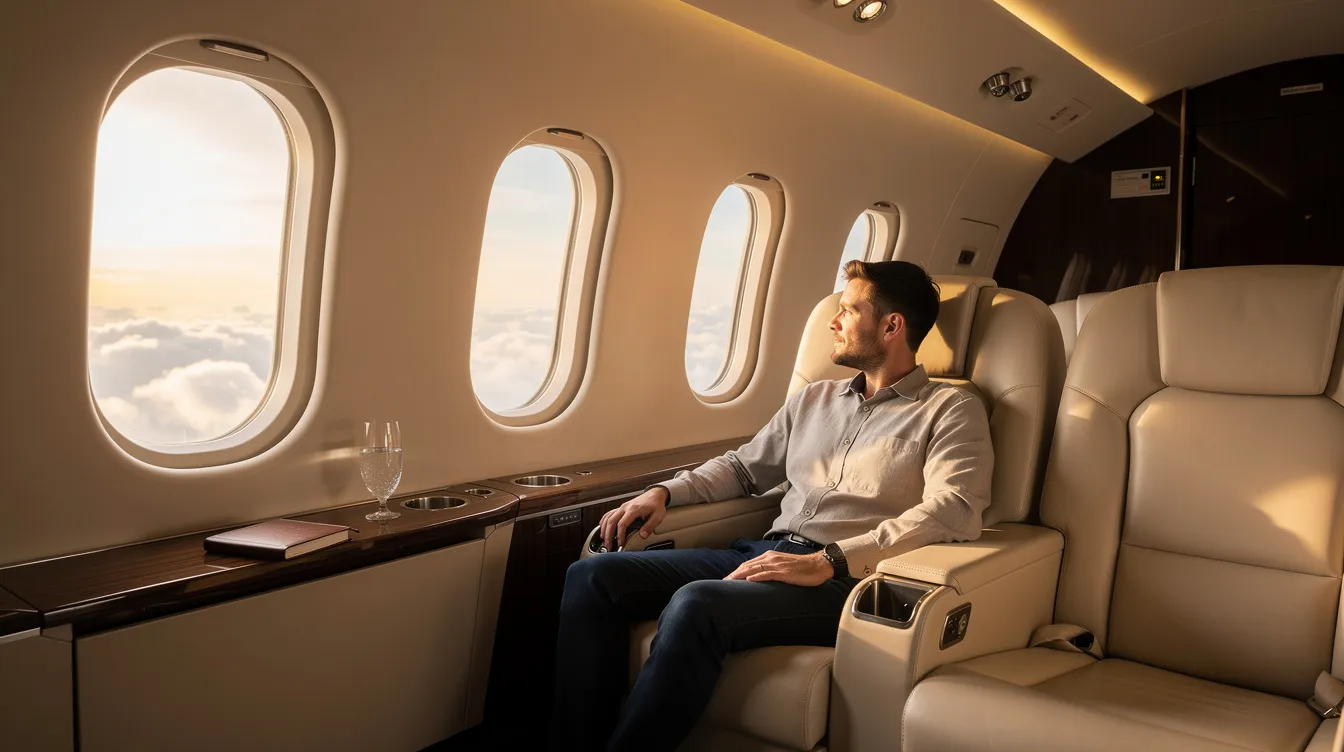
When flying on a private plane, passengers enjoy a high level of comfort and personalized service. Unlike commercial flights, private jets offer greater flexibility, less security hassle, and notable safety advantages over traditional commercial flights. Amenities often include spacious seating, gourmet catering, and the ability to use electronics such as tablets and phones during the flight, provided they are set to airplane mode. Many business aircraft also offer WiFi, allowing you to stay connected while in the air.
It’s important to remember that, as with any airplane, following crew instructions and observing safety protocols is essential. While private aviation offers a more relaxed environment, maintaining proper behavior is crucial for everyone’s safety. In contrast, disruptive incidents during commercial air travel can significantly impact the overall experience and safety for all passengers.
Choosing a Safe Operator or Broker
Questions to ask before booking:
-
Regulatory status (Part 135 or equivalent)?
-
Third-party safety ratings (ARGUS, WYVERN, IS-BAO)?
-
Average pilot experience on aircraft type?
-
Maintenance arrangements (in-house vs. third-party MRO)?
Asking about pilot qualifications—total hours, hours on type, recent training dates—is reasonable and welcomed by quality operators.
Red flags:
-
Reluctance to share the operator name
-
Evasive answers about certifications
-
Pressure to depart despite weather or crew rest issues
-
Unusually low pricing compared to market norms
Private terminals provide a more controlled and secure environment for private jet passengers, reducing security risks and health exposure. Private jets can utilize smaller airports, which often have less crowded terminals and shorter security lines, enhancing the overall travel experience and reducing stress for passengers.
Understanding Normal vs. Abnormal In-Flight Experiences
Normal sensations during private jet flights:
-
Steep climb angles (15–20 degrees, steeper than commercial)
-
Gear and flap noises (clunks, whirring)
-
Thrust changes during climb and descent
-
Autopilot adjustments (subtle pitch or roll changes)
Turbulence, while uncomfortable, is extremely rarely a structural safety issue. Business jets often cruise at higher altitudes (35,000–43,000 feet), above most weather, and nervous flyers can benefit from fear-of-flying apps that explain turbulence in real time.
Tools like the SkyGuru app provide real-time flight stage explanations, turbulence forecasts, and coping strategies—translating technical information into understandable insights for anxious travelers.
Passenger Responsibilities
Passenger responsibilities:
-
Wear seatbelts when seated
-
Follow crew instructions for weight-and-balance positioning
-
Correctly stow baggage
-
Disclose medical conditions or anxiety before flight
Flying private allows for greater control over fellow passengers, reducing the potential for disruptive behavior or exposure to illness, as passengers typically travel with acquaintances or business associates, while apps that help you overcome fear of flying can further improve overall comfort.
Speaking up about unusual smells, sounds, or feeling unwell is encouraged. Crews prefer early information rather than silent worry—most reports have simple explanations, and real-time flight commentary apps can help you distinguish between normal and abnormal sensations.
Managing In-Flight Anxiety
The intimacy of a private cabin—no strangers, direct crew access—can both help and intensify anxiety. Understanding flight phases in advance replaces uncertainty with expectation.
Evidence-based strategies for managing fear of flying are increasingly supported by dedicated digital tools, including apps designed specifically to reduce flight anxiety:
-
Pre-flight briefing from crew on expected sounds and sensations
-
Grounding techniques during turbulence (5-4-3-2-1 sensory exercise)
-
Breathing exercises (4-7-8 pattern: inhale 4, hold 7, exhale 8)
-
Real-time information tools that replace catastrophic thinking with facts
Example scenario: A first-time private flyer on an evening flight experiences turbulence over the Rockies. The pilot explains: “We’re passing through mountain wave turbulence at this altitude—expected and temporary.” With context provided, anxiety drops immediately. The crew’s transparency, combined with understanding what’s normal and using an app designed to help with fear of flying, transforms the experience.
Real-time tools like SkyGuru’s in-depth flight information app provide the same information professionals use, giving passengers a window into the cockpit without technical jargon—turning unknowns into understood events.
Understanding private jet safety transforms nervous uncertainty into informed confidence. The systems, processes, and professionals protecting passengers operate continuously—before, during, and after every flight. Ask the questions listed here, verify certifications, and trust that the boring, repetitive discipline of checklists and conservative decision-making keeps private jet travel extremely safe.
Frequently Asked Questions about Private Jet Safety
Are private jets safer than commercial airlines?
Both private jets and commercial airlines adhere to stringent FAA safety standards, including routine inspections and pilot training. While commercial airlines generally have slightly lower accident rates, professionally managed private jets with certified operators can offer safety levels very close to commercial standards. Learn more about private jet safety and how it compares to commercial aviation.
What certifications should I look for in a private jet operator?
Look for third-party certifications such as ARGUS, WYVERN, and IS-BAO. These organizations audit operators beyond FAA requirements, assessing safety culture, maintenance practices, and pilot qualifications to ensure high safety standards. See the section on Certifications and Audits for detailed information.
How does pilot training in private aviation compare to commercial airlines?
Private jet pilots undergo extensive model-specific training, including simulator sessions and emergency procedure drills. However, commercial airline pilots typically have higher minimum flight hour requirements and more standardized training, contributing to their low accident rates. For a deeper dive, refer to Risk Management Processes and pilot training details.
What advanced safety technologies are used in private jets?
Modern private jets feature advanced avionics like synthetic vision systems, Terrain Awareness and Warning Systems (TAWS), Traffic Collision Avoidance Systems (TCAS II), and AI-assisted fault detection. These systems enhance situational awareness and help prevent accidents. More about these technologies can be found in Safety Systems Explained.
Can flying private reduce exposure to health risks compared to commercial flights?
Yes. Private aviation offers controlled passenger environments, often flying from smaller airports with less crowded terminals. This reduces exposure to disruptive passengers and health risks, providing a safer and more comfortable travel experience.
Conclusion: Understanding and Trusting Private Jet Safety
Private jet safety is the result of a complex, multi-layered system involving rigorous regulations, advanced technology, and highly trained professionals. While private aviation offers unique advantages such as flexible scheduling, access to smaller airports, and controlled passenger environments, its safety standards often match or exceed those of commercial airlines when operated by reputable, certified operators worldwide. Understanding the safety systems, risk management processes, and certifications behind private jets empowers passengers to make informed decisions and travel with confidence.
Choosing an operator with strong credentials, including ARGUS or WYVERN certification, and pilots with extensive experience and ongoing training is crucial. Behind every smooth flight lies a dedicated team monitoring every detail—from pre-flight planning and maintenance to real-time operational control and pilot readiness.
For travelers concerned about safety, private aviation presents a secure and reliable option that combines cutting-edge technology with personalized service. By appreciating what happens behind the scenes, passengers can transform anxiety into assurance, knowing that private jets are not only safer than many realize but also continuously evolving to raise the bar in aviation safety.
FLEET SELECTION
JET CARDS
COST ANALYSIS


How to Auditing Your Operator's Maintenance Logs
Oct 05, 2025

How to Auditing Your Operator's Maintenance Logs
Oct 05, 2025

How to Auditing Your Operator's Maintenance Logs
Oct 05, 2025
Sky Guru Weekly
The smartest private aviation intelligence in your inbox.
.svg)

