



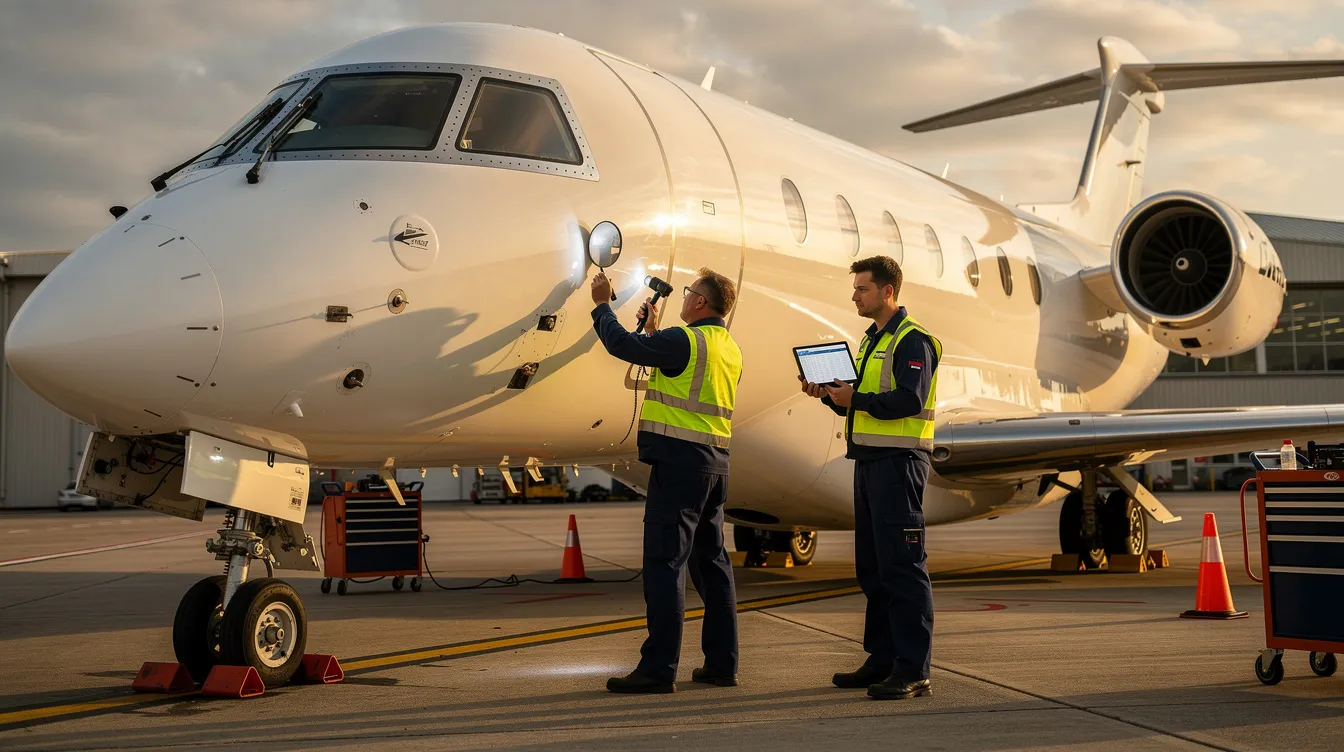
Maintaining a private jet represents one of the most significant financial commitments in jet ownership—often running from $300,000 to over $1 million annually, depending on aircraft size, age, and usage patterns. For light jets, annual maintenance costs typically range from $200,000 to $500,000, while large cabin business aircraft like the Gulfstream G550 or Bombardier Global 6000 can exceed $700,000 to $1.2 million when combining both fixed costs and variable costs for inspections, parts, and labor.
What exactly falls under “maintenance costs”? In plain terms: routine inspections, engine maintenance, component replacements, avionics upgrades, labor charges, and the inevitable downtime when your aircraft sits in a hangar instead of flying. Annual maintenance for a private jet typically costs between 5% and 10% of the aircraft’s total value—a figure that compounds as the jet ages.
This article focuses on private jet maintenance costs, aircraft maintenance schedules, and practical cost management strategies. Private jet operating costs typically range from $500,000 to $1 million annually, depending on the aircraft type and usage, making maintenance planning essential rather than optional.
From SkyGuru’s perspective: understanding how jets are maintained can actually reassure anxious travelers. Every inspection, every engine check, every replaced component represents the strict protocols that make private aviation remarkably safe, which is why the SkyGuru fear-of-flying app featured in media focuses so much on explaining what’s happening during a flight.
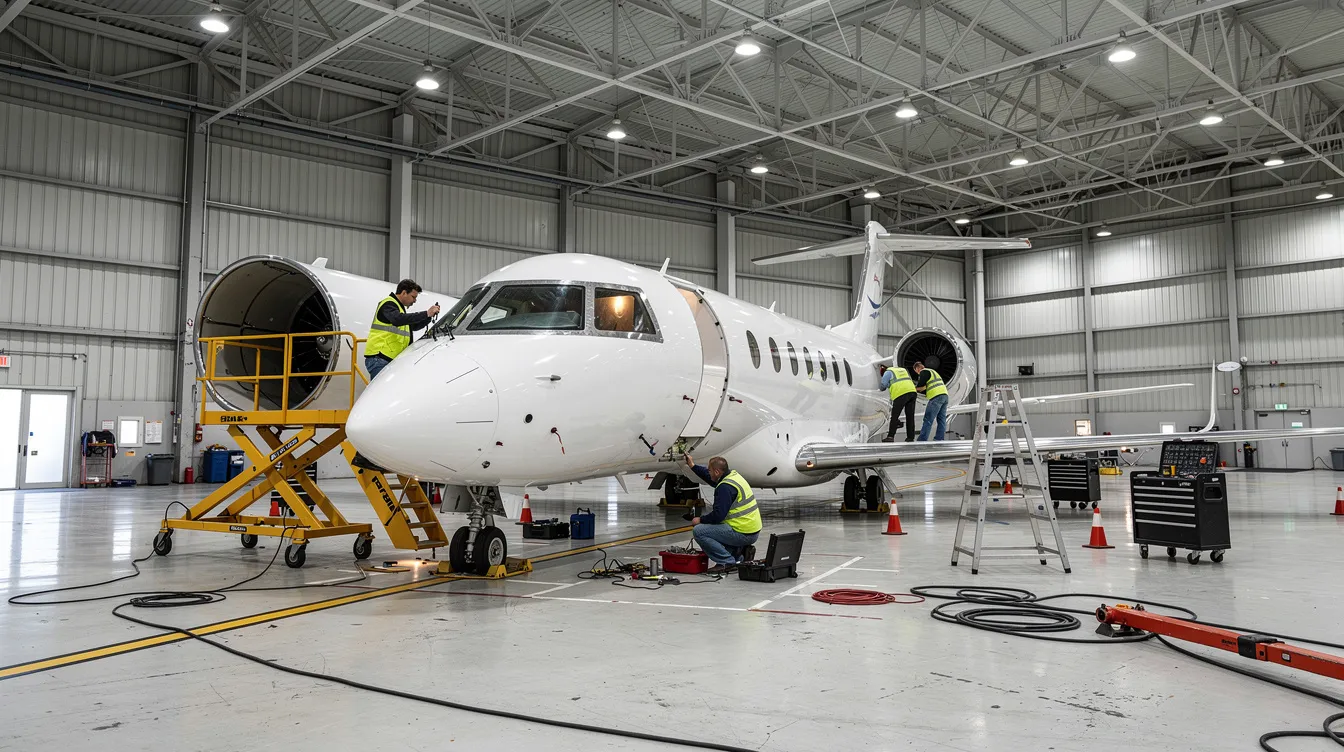
Scheduled Maintenance Checks
Scheduled maintenance forms the predictable backbone of private jet upkeep. These checks are mandated based on flight hours, calendar time, and cycles (takeoffs and landings), ensuring every aircraft remains airworthy and legally compliant. Scheduled inspections must be performed at specific intervals as mandated by regulatory bodies like the FAA and EASA.
For a typical business jet flying 300–400 hours per year, scheduled checks alone can cost from $80,000 to $250,000 annually, scaling with aircraft size and age. Costs scale with cycles, meaning frequent short trips lead to more regular inspections and higher cumulative expenses.
Routine Line Maintenance (Daily, Weekly, Monthly)
Line maintenance covers the regular checks performed before and after flights and at short intervals—daily walk-arounds, 25–50 hour checks—usually completed overnight or between trips at base or line stations.
Common tasks include:
-
Visual inspections of exterior surfaces
-
Fluid level checks (oil, hydraulic, fuel)
-
Tire and brake condition assessments
-
Basic avionics functionality tests
-
Simple component replacements (lights, filters)
A basic line check might cost $500–$2,000 in labor and consumables. Tire replacements for larger business jets run $1,500–$3,000 per tire—even a flat tire repair can hit $2,000–$3,000 due to specialized parts and certified labor requirements.
For light jets used in business travel during 2025–2026, annual line maintenance typically adds up to $10,000–$25,000, depending on utilization. Inspection costs for private jets can be high, with inspections required to ensure airworthiness and safety, often costing around $1,000 for each inspection cycle.
A-Checks and Similar Short-Interval Inspections
A-check style inspections (or equivalent manufacturer “Phase” checks) occur every few hundred flight hours or several months, depending on the maintenance program. These represent the next tier of scheduled maintenance depth.
Typical tasks include:
-
Detailed structural inspections and lubrication
-
Systems tests and calibrations
-
Minor component replacements
-
Software and avionics database updates
Cost ranges for 2025–2026: $5,000–$20,000 per event for light jets, $15,000–$40,000 for midsize and large cabin jets, depending on labor rates and findings. For an owner flying 250–300 hours annually, these checks might occur 2–3 times per year, becoming a predictable line item in the maintenance budget.
Note that avionics database subscriptions—required for modern business jets—add $3,000–$5,000 per year to maintenance-related fixed costs. These ongoing costs are often overlooked when calculating total operating expenses.
C-Checks and Major Calendar Inspections
C-checks (or equivalent major inspections) occur less frequently—typically every 36–60 months or after a specific number of flight hours—and require taking the jet out of service for 1–4 weeks.
The scope is extensive:
-
Detailed structural inspections, including corrosion checks
-
Interior removal to inspect hidden structure
-
Deep system tests across all aircraft systems
-
Systematic component replacements based on age and cycles
Realistic 2025 cost ranges: for a light jet like a Cessna Citation CJ series, a major inspection might cost $80,000–$200,000. For large cabin jets, expect $300,000–$800,000 depending on findings and interior work required. Older jets generally have 20–30% higher maintenance costs due to more frequent repairs and parts obsolescence.
These events drive significant spikes in annual maintenance costs. Private jet owners often budget reserves of $200–$400 per flight hour for larger jets to smooth these expenses. Most operators schedule C-checks during slower travel seasons—January or August—when business travel naturally decreases.
Engine Maintenance and Overhauls
Jet engines follow their own strict maintenance schedules, separate from airframe checks. High-utilization aircraft require more frequent, hourly-based inspections, leading to higher maintenance costs on the engine side. Flight hours and cycles accelerate wear and tear on engines, landing gear, and brakes, increasing maintenance costs throughout the ownership period.
Hot section inspections involve partial disassembly to examine high-temperature turbine components, typically required halfway to full overhaul. Costs run roughly $80,000–$200,000 per engine for modern business jet powerplants.
Full engine overhauls represent the largest single maintenance expense:
-
Light jets: $300,000–$600,000 per engine
-
Heavy and ultra-long range aircraft: $1 million or more per engine
Engine overhauls can cost between $200,000 and over $2 million, depending on the aircraft size. Many owners establish engine reserves of $200–$500 per flight hour per engine, or enroll in manufacturer programs to spread these costs.
For passengers, these strict engine maintenance requirements explain why jet engines are extraordinarily reliable—in-flight engine failures occur at rates under 1 in 10 million flight hours. Detailed flight-route data services like the SkyGuru API for flight and weather data show how modern aviation increasingly relies on granular operational and atmospheric information to keep those reliability numbers so high.

Regulatory and Calendar-Driven Inspections
Beyond hour-based checks, regulatory compliance costs include calendar-driven inspections required by authorities and insurance policies,s regardless of how much the aircraft flies.
Examples include:
-
Transponder and altimeter checks every 24 months ($1,000–$5,000 each)
-
Emergency equipment inspections every 12 months
-
Mandatory software and avionics updates for navigation compliance
Annual regulatory compliance checks total $10,000–$50,000 per year, ar depending on aircraft size and where work is performed. Record-keeping—digital logbooks and maintenance tracking—remains essential for legal compliance and preserving aircraft value at resale.
For nervous flyers, understanding these checks can be reassuring: when you notice routine bumps or noises during flight, they’re typically normal results of well-maintained systems operating exactly as designed. Articles on using an app to reduce fear of flying can complement this knowledge by translating technical safety practices into everyday language.
Maintenance Cost Summary Table
|
Maintenance Type |
Frequency |
Typical Cost Range (Light Jets) |
Typical Cost Range (Large Jets) |
Notes |
|---|---|---|---|---|
|
Line Maintenance |
Daily to Weekly |
$10,000–$25,000 annually |
Higher, depending on usage |
Includes visual inspections, fluid checks, and minor repairs |
|
A-Checks / Phase Checks |
Every few hundred flight hours |
$5,000–$20,000 per event |
$15,000–$40,000 per event |
Structural and systems inspections, software updates |
|
C-Checks / Major Inspections |
Every 3–5 years |
$80,000–$200,000 per event |
$300,000–$800,000 per event |
Extensive structural, system, and interior inspections |
|
Engine Hot Section Inspections |
Midway between overhauls |
$80,000–$200,000 per engine |
Similar but higher for larger engines |
Partial engine disassembly and inspection |
|
Engine Overhauls |
Every 6,000–8,000 flight hours |
$300,000–$600,000 per engine |
$1 million+ per engine |
Major expense, often budgeted via reserves or programs |
|
Regulatory Inspections |
Annual or biannual |
$10,000–$50,000 annually |
Similar but varies |
Compliance with FAA/EASA, includes equipment checks |
Unscheduled Repairs
Unscheduled maintenance encompasses repairs from unexpected component failures, which can be costly and disruptive. Unlike scheduled checks, these arise from unforeseen issues: component failures, bird strikes, hangar rash, avionics glitches, or environmental damage.
Even with perfect maintenance planning, private jet owners should budget for unscheduled repairs and unexpected costs that can add 10–30% on top of scheduled costs in an average year—potentially $50,000–$300,000 extra annually. Operational costs directly affect maintenance costs; higher usage accelerates wear on components, leading to increased unexpected repairs.
Common System Failures and “Aircraft on Ground” Events
“Aircraft on Ground” (AOG) describes any defect that makes the jet legally or practically unable to fly until fixed—even if passengers are waiting at the airport.
Common AOG causes include:
-
Navigation unit failures
-
Hydraulic pump issues
-
Starter-generator problems
-
Pressurization component malfunctions
Cost ranges vary dramatically: minor AOG events might cost $5,000–$20,000, while severe failures involving major components or emergency parts shipping can reach $50,000–$150,000 per incident.
Beyond repair invoices, owners often pay hangar fees at away airports ($1,000–$5,000 per day), crew repositioning flights, and experience disrupted travel plans. Supply chain delays in 2024–2025 made certain components harder to source, occasionally stretching repairs from days to weeks and increasing labor charges.
From a passenger’s perspective, delays due to maintenance—while frustrating—signal that strict safety rules are being followed rather than ignored. For travelers who struggle with this, guidance on overcoming the fear of flying with app-based support can make these safety delays feel less intimidating.
Cabin, Interior, and Comfort System Issues
Unscheduled cabin problems include broken seats, malfunctioning galley equipment, in-flight entertainment failures, Wi-Fi outages, and lavatory issues. While many don’t ground the aircraft legally, high-end business jets need quick repairs to maintain charterability and owner expectations.
Cost examples:
-
Damaged seat replacement or worn carpet section: $5,000–$30,000
-
Full cabin Wi-Fi hardware replacement on large jets: $100,000+
-
Full interior refurbishments (every 5–7 years): $200,000–$500,000
Interior wear correlates strongly with usage—corporate shuttle jets or high-frequency charter aircraft typically see 20–50% higher annual interior maintenance expenses than lightly-used owner-flown jets.
Corrosion, Paint, and Environmental Damage
Corrosion inspections sometimes uncover unexpected work, especially on older jets or those based near coastal or humid environments. Operating in adverse environmental conditions can increase corrosion and require more frequent maintenance checks.
Discovering corrosion during a scheduled check can add $20,000–$200,000 in structural repair costs, depending on severity and location. Paint condition matters too—a full strip and repaint costs $80,000–$150,000 for light jets, $200,000–$400,000 for large cabin or converted aircraft like a Boeing Business Jet, typically every 7–10 years.
Environmental damage from hail, lightning strikes, or foreign object debris causes sudden, high bills and extended downtime. Hangar storage reduces these risks by 40–60,% but doesn’t eliminate them.
Avionics and Technology Failures
Typical avionics issues include screen failures, GPS receiver faults, autopilot glitches, radar problems, and aging navigation systems becoming non-compliant with evolving regulations.
2025–2026 price examples:
-
Individual display replacements: $20,000–$60,000
-
Upgrading to a compliant avionics suite: $150,000–$500,000
Sometimes, completing a full avionics upgrade proves cheaper than repeatedly repairing obsolete components with limited parts availability. Many unscheduled avionics issues surface during pre-flight checks—these delays protect safety by catching problems before they become in-flight emergencies.
Advanced predictive maintenance technology, similar to what airlines use, is increasingly available for business jets, helping detect issues earlier and potentially reducing AOG events by 20–30%. Data-driven tools like the SkyGuru API platform for turbulence and route analysis illustrate how detailed flight and weather insights can support smarter maintenance and operational decisions.
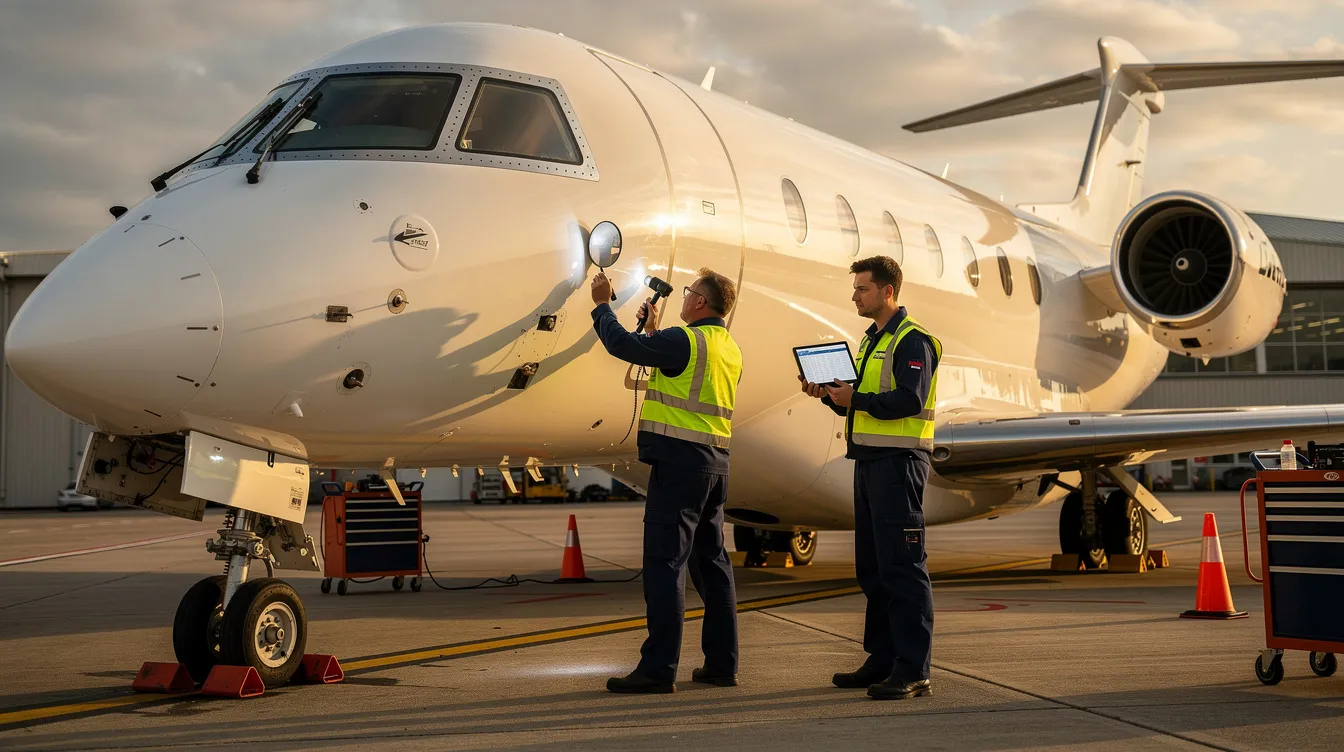
Maintenance Programs Explained
Most modern business jets, especially newer models, are supported by structured maintenance programs offered by manufacturers or third-party providers. Participation in hourly maintenance programs can help convert variable repair costs into predictable hourly expenses.
These programs transform large, unpredictable maintenance bills into more stable per-hour or monthly payments, covering engine maintenance, airframe upkeep, and major component replacements. Understanding how programs affect total maintenance costs, cash flow, and aircraft value helps owners make informed decisions.
Engine Maintenance Programs
Engine programs charge a fixed rate per flight hour for each engine. In return, the program covers future heavy maintenance,e including hot section inspections and full overhauls.
Typical per-hour costs (2024–2026):
-
Very light jets and light jets: $200–$350 per engine per hour
-
Large cabin and ultra long range aircraft: $400–$700+ per engine per hour
While lifetime costs may approximate self-funding, programs eliminate surprise seven-figure engine bills. Lenders and buyers often require or strongly prefer program enrollment.
Comparison example: Self-funding a $1.2 million overhaul every 6,000–8,000 hours versus paying $300/hour into reserves over the same period totals similar, y—but programs prevent sudden cash demands that can strain even substantial operating budgets.
Airframe and Component Programs
Airframe and component programs cover major systems—landing gear, avionics units, brakes, and high-value parts—under per-hour or per-year plans.
2025 cost examples:
-
Light and midsize jets: $100–$300 per flight hour
-
Large cabin jets: $300–$600 per hour
Coverage typically includes scheduled inspections, many component replacements, service bulletin work, and troubleshooting labor. Cosmetics and cabin upgrades remain excluded. These programs may require strict adherence to approved maintenance facilities, affecting where and when maintenance occurs.
Jets enrolling in respected programs often sell faster and at higher prices—partially offsetting program costs and enhancing aircraft value.
Comprehensive “Tip-to-Tail” Coverage
“Tip-to-tail” programs combine engines, airframe, and major components into packages covering nearly all mechanical and electronic aspects of the aircraft.
Comprehensive coverage for a modern midsize business jet might reach $600–$1,000 per flight hour total. For owners flying 300–400 hours annually, such programs turn unpredictable six-figure repair spikes into steadier cash flow—though they carry higher hourly fees and sometimes strict usage rules.
Prospective owners should compare program quotes against expected aircraft utilization and ownership horizon before committing.
Self-Funding Maintenance vs. Enrolling in Programs
The core trade-off: self-funding can be cheaper if major failures don’t occur, but it exposes owners to large, sudden expenses. Programs smooth cash flow and reduce risk, but add fixed costs, and a private jet requires budgeting not only for those plans but also for broader ownership commitments.
Evaluation steps:
-
Estimate expected annual flight hours
-
List upcoming major events (engine overhauls due within 3–5 years)
-
Compare program quotes to realistic self-funding scenarios
Factors influencing the decision include aircraft age, engine overhaul status, planned ownership duration, and whether the jet will be used for charter. Warranties for major components typically last for the first 5 years, after which maintenance expenses increase sharply—making program enrollment more attractive for post-warranty aircraft.
Lenders and professional management companies sometimes require certain programs for financing or managed charter fleet inclusion. First-time private jet buyers should consider consulting independent maintenance advisors to interpret program fine print.
Downtime Planning
Private jet maintenance cost isn’t only about dollars—every day a jet sits in a hangar is a day it cannot fly missions. The total estimated annual operating cost for a private jet can reach $780,00,0, considering both fixed and variable costs, making efficient aircraft utilization essential.
Effective downtime planning blends aircraft maintenance schedules, operational needs, and cost management. For anxious travelers, understanding that safety-driven delays represent normal, healthy jet upkeep can provide reassurance.
Aligning Maintenance with Flight Schedules
Operators use digital maintenance tracking and flight planning tools to forecast when A-checks, C-checks, and engine work will come due—often months or years in advance. This proactive maintenance planning prevents surprise groundings.
Best practices include:
-
Schedule major inspections during naturally slower seasons
-
Coordinate with key executives’ travel calendars
-
Avoid stacking multiple heavy maintenance events in the same year
Example: A midsize jet flying 350 hours annually may plan a 3-week C-check every 4–5 years, typically scheduled for January when business travel naturally decreases.
Owners who ignore maintenance scheduling often pay more for rush labor, overtime, and last-minute charter replacements. Budgets for aircraft maintenance typically increase by 5% to 7% for every year in service, making planning increasingly valuable.
Backup Options: Charter, Fractional Ownership, and Second Aircraft
Many corporate flight departments mitigate downtime through backup access: charter, jet cards, fractional ownership, or fleet second aircraft. The cost of maintaining a private jet should factor in these indirect expenses.
Chartering a comparable light jet during maintenance might cost $3,000–$5,000 per flight hour in 2025–2026. Owners with moderate usage (under 300 hours annually) may rely on charter during major maintenance rather than owning backup aircraft, since usage and aircraft type often determine which option makes more sense, which would add significant high fixed costs, including crew salaries, private jet insurance, and hangar fees.
Private aircraft ownership typically becomes cost-effective at 200-400 annual flight hours, while below 150 hours, chartering or fractional ownership is often more economical. For lower-utilization owners, those alternatives can also create meaningful cost savings.
For anxious flyers, being moved to a chartered backup aircraft is common practice, not a danger signal. It demonstrates that safety rules are respected when the primary jet requires attention, and tools that provide SkyGuru’s real-time in‑flight explanations can further clarify what’s happening and why the backup aircraft is just as safe.
Managing Maintenance Costs and Expectations Around Delays
Weather, parts availability, and shop workload, along with swings in fuel prices and jet fuel prices that indirectly pressure operating budgets, can all extend maintenance downtime beyond initial estimates, affecting both schedule and budget. The maintenance costs per flight hour can increase by roughly 8% annually as a fleet ages, making cost efficiency increasingly important while operators also track hourly operating costs over time.
Cost management tips:
-
Secure maintenance slots well in advance
-
Choose reputable shops known for on-time delivery
-
Avoid scope creep (adding cosmetic upgrades) unless budgeted
Annual fuel expenses can range from about $100,000–$200,000 for light jets to more than $800,000 for heavy jets, depending on usage.
Supply chain delays in 2024–2025 made certain avionics components harder to source, occasionally stretching repairs and increasing labor charges significantly. Fuel costs also shift with fuel consumption and changing fuel prices. Operators can reduce fuel consumption through efficient flight planning and save more by strategically purchasing fuel. Good operators keep owners informed with progress reports, revised ETAs, and clear explanations when extra work proves necessary.
Apps like SkyGuru for real-time turbulence explanations can help passengers understand when turbulence or unusual noises are unrelated to maintenance issues—supporting peace of mind even when they know the aircraft recently returned from the shop. The SkyGuru app FAQ further explains how the tool works offline, what data it uses, and how anxious travelers can get the most reassurance from its features.
Long-Term Planning: Life Cycle and Exit Strategy
Long-term owners should consider maintenance across the entire aircraft lifecycle: early years with warranty and lower costs, middle years with heavy scheduled checks, and late years with more component replacements and potential avionics obsolescence. Annual maintenance costs increase as aircraft age and usage increases.
Many owners choose to sell before the next major maintenance event—such as dual engine overhauls or a major 10–12 year inspection—which can be especially expensive for larger aircraft because of their size and complexity, to avoid those costs while maintaining an attractive profile for buyers. This strategy requires understanding when to evaluate new and used aircraft opportunities.
Purchase negotiation tip: If a pre-owned aircraft is 1–2 years away from an expensive event, that should be reflected in the acquisition price—potentially reducing the purchase price by $200,000–$500,000 for imminent major maintenance, and in high-end cases, some upcoming events can approach or exceed a million dollars.
A well-documented maintenance history adds hundreds of thousands of dollars to resale value compared to poorly documented aircraft. Owning a private jet involves substantial ongoing expenses, typically ranging from $500,000 to $1 million annually, including fixed costs like liability insurance, hangar fees, crew costs, and pilot salaries, as well as variable costs such as jet fuel and maintaining a private jet; over the aircraft lifecycle, some ownership decisions may involve several million dollars.
Private jet maintenance cost represents a significant financial commitment—but one that becomes manageable with proper planning, program enrollment decisions, and realistic expectations. Understanding maintenance and downtime proves just as important as comparing cabin layouts or range when evaluating private jet travel. Whether you’re considering jet ownership, exploring fractional options, or simply curious about what keeps private aviation remarkably safe, knowledge transforms substantial operating costs into informed investment decisions.
Frequently Asked Questions (FAQs)
How much does it cost to maintain a private jet annually?
Maintenance costs for private jets typically range between 5% and 10% of the aircraft’s value annually, translating to $300,000 to over $1 million depending on the jet’s size, age, and usage patterns.
What factors influence private jet maintenance costs?
Costs vary based on aircraft type, flight hours, number of cycles, age, environmental conditions, and whether the owner participates in maintenance programs or self-funds repairs.
How do maintenance programs affect private jet upkeep costs?
Maintenance programs convert unpredictable repair expenses into fixed hourly or monthly payments, helping owners manage cash flow and avoid large unexpected bills for engine overhauls and component replacements.
What is the difference between scheduled and unscheduled maintenance?
Scheduled maintenance includes routine inspections and overhauls planned according to manufacturer and regulatory requirements. Unscheduled maintenance covers unexpected repairs due to component failures or damage.
How does private jet insurance impact maintenance costs?
While insurance itself is a fixed operating cost, comprehensive coverage helps mitigate financial risks from unexpected repairs or accidents, indirectly influencing overall maintenance budgeting.
When does private jet ownership become more cost-effective than chartering?
Ownership generally becomes cost-effective at 200 to 400 flight hours annually, as fixed costs like maintenance, insurance, and pilot salaries spread over more hours.
How do pilot salaries factor into private jet operating expenses?
Pilot salaries are a high fixed cost, ranging from $85,000 to $300,000 annually per pilot, depending on aircraft type and experience level.
Are maintenance costs higher for new or used aircraft?
New aircraft often benefit from warranties and lower initial maintenance costs, but have higher insurance premiums. Used aircraft may have lower upfront costs but can incur higher maintenance expenses due to aging and potential component obsolescence.
How much downtime should owners expect during maintenance?
Major inspections like C-checks can ground jets for 1 to 4 weeks, while routine line maintenance typically occurs overnight or between flights to minimize operational disruption.
Can maintenance delays affect flight schedules?
Yes, factors such as parts availability, weather, and shop workload can extend maintenance downtime, requiring owners to plan backup options such as chartering or fractional ownership to maintain travel flexibility.
Conclusion: Balancing Costs and Confidence in Private Jet Maintenance
Maintaining a private jet involves complex, ongoing expenses that extend well beyond the initial purchase price. From scheduled inspections and engine overhauls to unscheduled repairs and regulatory compliance, private jet maintenance costs typically range from $500,000 to over $1 million annually, depending on aircraft size, age, and usage. These costs are influenced by factors such as flight hours, cycles, environmental conditions, and the choice between self-funding and maintenance programs.
Effective maintenance planning and downtime management are essential to control expenses and ensure aircraft availability. Participation in maintenance programs can help smooth unpredictable repair costs, while strategic scheduling minimizes operational disruptions. Understanding the breakdown of fixed and variable costs—including fuel expenses, crew salaries, hangar fees, and landing fees—provides a clearer picture of the total ownership costs.
For many owners, the financial commitment is justified by the convenience, flexibility, and safety that private jet travel offers. However, those flying fewer than 150 hours annually may find chartering or fractional ownership more cost-effective. Ultimately, informed decisions based on transparent maintenance and operating cost knowledge empower owners to optimize their investment and enjoy the full benefits of private aviation with confidence.
FLEET SELECTION
JET CARDS
COST ANALYSIS


How to Auditing Your Operator's Maintenance Logs
Oct 05, 2025

How to Auditing Your Operator's Maintenance Logs
Oct 05, 2025

How to Auditing Your Operator's Maintenance Logs
Oct 05, 2025
Sky Guru Weekly
The smartest private aviation intelligence in your inbox.
.svg)

