



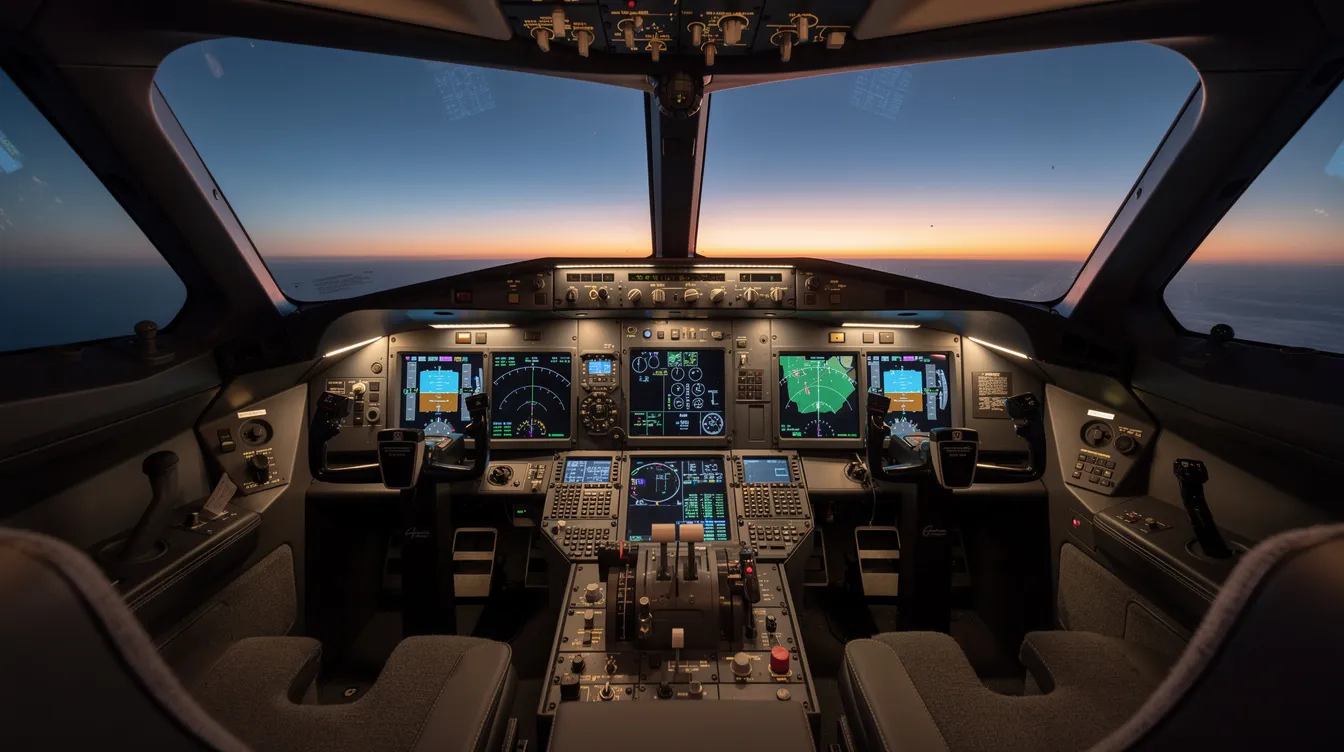
This guide is intended for travelers, business professionals, and anyone interested in understanding the process behind private jet flight planning. When you step aboard a private jet, you’re entering the final stage of a process that began hours—sometimes days—before you arrived. Private jet flight planning is the behind-the-scenes orchestration that transforms a simple request (“Get me from New York to Miami by 3 PM”) into a safe, efficient, and comfortable journey. Understanding this process helps passengers appreciate the safety, efficiency, and flexibility that private aviation offers.
Time Savings and Flexibility
Private jet travel offers significant time savings—typically between 90 and 180 minutes on many business routes, and often 2 to 9 hours per trip—by allowing travelers to avoid long security lines, bypass commercial flight bottlenecks, and access more airports, including those closer to their final destination. Flying private also provides unmatched flexibility, letting you choose your departure times, routes, and airports, which is not possible with commercial airlines. Additionally, private jet charters provide a more personalized travel experience, including tailored in-flight catering and customized itineraries, features rarely available on commercial flights.
Charter Planning vs. Flight Planning
This isn’t the same as booking your trip. When you work with a charter broker to select an aircraft, confirm your schedule, and arrange catering, that’s charter planning. What happens next is operational flight planning: the technical work where pilots, dispatchers, and aviation experts build the actual flight, calculating routes, fuel loads, weather risks, and backup options.
Cost Factors in Private Jet Travel
Private jet charter costs vary significantly based on factors such as aircraft type, distance traveled, and timing. Prices typically range from $1,200 to $4,000 per flight hour for turboprops and light jets. A short 40-minute flight in a small aircraft might cost about $2,800, whereas a 1.5-hour journey in a midsize jet could reach approximately $34,500—prices rise with the jet size and flight duration. Pricing factors include the type of aircraft, length of the route, seasonal demand, and additional fees that can increase the base rate by 20-40%. Companies in the private aviation industry facilitate access to private aviation for clients, offering both business and leisure travel solutions that balance luxury, privacy, and cost-effective travel.
But beyond cost, there’s a complete guide to preparation that most passengers never see. Whether you’re flying a light jet on a short trip across state lines, a midsize jet for regional business, or a heavy jet crossing oceans, the planning principles remain the same—only the complexity scales. Flying private allows travelers to avoid long security lines, access more airports—including those closer to their final destination—and benefit from a global network of private aviation companies that streamline travel worldwide.
For travelers who experience anxiety about turbulence, unexpected route changes, or unfamiliar noises, understanding this planning process can be transformative. Every decision pilots make follows a logical, safety-focused structure. Tools like SkyGuru help passengers see these decisions in real time, turning mysterious maneuvers into understandable actions. Clients benefit from personalized service and cost-effective travel options when they access private aviation platforms, making the experience more comfortable and tailored to their needs.
This article covers the four pillars of private jet flight planning, and for roughly 30% of travelers who experience some level of flight anxiety, apps designed to help with fear of flying can make understanding these pillars even more reassuring:
-
Route Planning — How pilots choose the path from departure to destination
-
Fuel Strategy — Why aircraft carry specific amounts of fuel
-
Weather Considerations — How conditions shape every decision
-
Alternate Airports — The backup plans built into every flight
Private jet flight planning supports both business and leisure travel, providing flexibility, efficiency, and a tailored experience for clients.
Route Planning
A “route” in private aviation is never a straight line. It’s a carefully sequenced path built from airways, waypoints, standard instrument departures (SIDs), standard terminal arrival routes (STARs), and air traffic control clearances.
What’s a SID? A Standard Instrument Departure is a predefined departure procedure that guides aircraft safely out of an airport’s airspace, managing traffic flow and terrain avoidance.
What’s a STAR? A Standard Terminal Arrival Route is the arrival equivalent—a structured path that funnels aircraft toward the destination runway.
When pilots or dispatchers begin planning a private jet flight, they start with a city-pair: Teterboro to Van Nuys, London to Nice, Dubai to Geneva. For each specific trip, flight distance and comprehensive flight details—including aircraft type, airports, and logistical data—are carefully considered. Using planning software and navigation databases, they generate several route options, weighing distance, winds, restricted airspace, and expected delays. A flight time calculator is often used to estimate travel time and optimize travel plans, ensuring the most efficient routing possible.
Private jet flight plans are generally designed to have the shortest flight time possible, as most private flights cover shorter distances compared to commercial flights. But achieving that shortest time requires respecting the system. In the United States, the FAA Command Center publishes “playbook” routings for high-density corridors—preferred paths that keep traffic flowing during peak periods. In Europe, Eurocontrol’s Network Manager validates flight plans and may assign specific routings, especially in congested airspace.
When planning a private jet flight, factors such as optimal weather conditions, traffic layout, and the specific needs of the flight must be considered to ensure safety and efficiency.
Private aviation platforms can offer more flights and accommodate multiple stops for complex itineraries, providing travelers with increased flexibility and a wider range of options compared to commercial airlines.
Concrete example: A Citation Latitude flying from Teterboro (KTEB) to Miami’s Opa-Locka (KOPF) might follow jet route J79 southbound, passing waypoints like Hartford and Atlantic City, then proceed direct to destination—approximately 1,900 nautical miles at FL410, taking around 3.5 hours.
For a London Luton (EGGW) to Geneva (LSGG) private charter, Eurocontrol might assign a specific SID, route the aircraft through controlled airways, and deliver it via a published STAR—all validated through their integrated flight plan processing system.
Aircraft type matters significantly. Light jets typically max out around FL370 and have limited range, forcing them onto lower, potentially windier paths. Heavy jets cruise higher—FL450 or above—where thinner air reduces drag and jets can access efficient oceanic tracks.
Private aviation allows for greater flexibility in routing and scheduling, enabling travelers to choose departure times and destinations that best suit their needs, unlike commercial flights, which adhere to fixed schedules. Private jet operators tailor routes and schedules to the specific trip requirements of their clients, ensuring that travel plans are optimized for efficiency and convenience. However, Friday afternoon departures from the Northeast U.S. or peak holiday weekends in Europe may prompt planners to accept slightly longer routes to avoid expected congestion around major hubs.
Flight plans are typically filed 1-3 hours before domestic departures (longer for complex international trips) through FAA or ICAO systems. The pilot in command, corporate dispatcher, or a third-party provider like Icarus Jet handles the filing. And plans can change: ATC may re-route flights just before departure or during flight via datalink. If you see the track shift on your map, it’s usually traffic management—not a safety concern.
Optimizing Flight Time and Efficiency
Balancing shortest distance against shortest time is where planning gets strategic. At typical business jet cruising altitudes (FL390–FL450), jet streams can exceed 200 knots. Flying with that tailwind versus against it creates dramatic differences.
Eastbound transatlantic flights from New York to London might complete in 5.5 hours, while the westbound return—fighting the jet stream—can take 7+ hours in the same aircraft. Planners query upper-wind forecasts from meteorological models to select optimal tracks.
On longer legs, step climbs optimize efficiency. A heavy jet departing Los Angeles for Honolulu might start at FL430. As fuel burns off and the aircraft lightens, crews request higher altitudes—FL450, then FL470—where thinner air reduces drag and improves fuel economy by 10-15%. Throughout these stages, fuel usage is carefully monitored, and fuel stops are strategically planned for longer distances to ensure uninterrupted travel.
What affects your private jet’s flight time?
-
Winds aloft (can add or subtract an hour on long sectors)
-
ATC flow programs (30-60 minute delays during peak periods)
-
Aircraft performance (midsize jets cruise around 450 knots, heavies reach 490)
-
Step climbs (5-10% efficiency gains on long-haul flights)
Flight time calculators and advanced flight and weather data APIs allow planners to estimate block times accurately to within five minutes. These tools also help plan for fuel stops and manage fuel usage, especially on routes covering longer distances. Sometimes a slightly longer ground track is chosen deliberately—avoiding expected holding or congestion gives passengers a smoother, more predictable arrival.
Ensure the aircraft has enough range to reach the destination without unplanned refueling stops—this matching of mission to aircraft is fundamental to planning.
Fuel Strategy
Fuel strategy anchors every private jet flight plan. It’s a balance of safety margins, aircraft performance, operating costs, and what’s available at departure and destination airports.
Calculating fuel uplift requires multiple inputs: route length, expected flight time, forecast winds, aircraft type (light jet burns differently than a heavy jet), payload weight (passengers plus baggage), and anticipated delays. Smaller jets have strict weight limits, and although baggage fees don’t apply, efficient packing is necessary. Small jets often have very limited baggage space, and exact luggage details should be provided beforehand to avoid issues.
Companies in the private aviation sector leverage advanced analytics, including detailed route and turbulence data platforms, to optimize fuel usage, helping clients achieve cost-effective travel by minimizing unnecessary fuel expenses while maintaining safety and flexibility.

Basic fuel categories in plain language:
|
Category |
Purpose |
|---|---|
|
Taxi fuel |
Covers ground operations from pushback through takeoff |
|
Trip fuel |
Burns during the actual flight segment |
|
Contingency fuel |
Extra margin (typically 3-5% of the trip) for winds or errors |
|
Alternate fuel |
Enough to reach the backup airport if needed |
|
Final reserve |
Minimum 45 minutes of holding fuel—regulatory requirement |
|
Captain’s extra |
Discretionary addition based on experience and conditions |
Regulators like the FAA and EASA set minimum legal requirements, but operators frequently exceed these based on company policy. Planning a private jet flight requires matching the mission profile to the right aircraft and operator to ensure safety, comfort, and efficiency.
Real-world example: A midsize jet flying from Dallas Love Field to Aspen in winter faces challenging conditions—a high altitude airport (7,800 feet elevation), potential icing, and possible holding for RNAV approaches. Planners might calculate:
-
Trip fuel: 4,500 lb
-
Contingency: 1,200 lb (accounting for density altitude and holding)
-
Alternate fuel to Eagle: 2,000 lb
-
Final reserve: 1,000 lb
-
Taxi: 500 lb
-
Total uplift: approximately 9,200 lb
That’s 20% above regulatory minimums—conservative planning for terrain and contaminated runways.
Planning differs dramatically between a 40-minute Geneva-Zurich hop in a light jet (perhaps 1,500 lb total fuel) and a 6.5-hour Dubai-London sector in a Gulfstream G650 (potentially 25,000 lb or more).
Trade-offs exist: extra fuel adds weight, which can limit runway performance at shorter airports and actually increase fuel consumption. Some operators practice “tankering”—loading extra fuel at airports where it’s cheaper, then carrying it forward. But the extra burn from hauling that weight must be weighed against savings.
Final fuel uplift is decided at the aircraft before departure, with the pilot in command holding authority per the operations manual. Passenger count determines the minimum jet size for comfortable seating, with legal seating capacity not always equating to comfortable capacity on long-haul flights.
Fuel Consumption by Jet Type
Fuel consumption scales predictably with aircraft size and power:
|
Aircraft Category |
Approximate Hourly Burn |
|---|---|
|
Light jets (Phenom 300, Citation CJ3) |
150–300 gallons/hour |
|
Super midsize (Praetor 600, Citation Longitude) |
250–400 gallons/hour |
|
Heavy jets (Gulfstream G550) |
350–500 gallons/hour |
|
Ultra long-range aircraft (Global 7500) |
400–600+ gallons/hour |
Despite higher absolute burn, heavy jets can be efficient on a per-passenger basis for long-range private jet flights with many seats filled. A G650 carrying 12 passengers from London to New York burns roughly 35,000 lb—about 2,900 lb per passenger. A light jet carrying 4 passengers on a shorter leg might burn 1,000 lb per passenger.
Comparative example: A 2-hour Los Angeles to Las Vegas leg requires roughly 800 gallons in a light jet versus 1,200 gallons in a heavy jet—50% more fuel for minimal passenger benefit. Dispatchers match aircraft to mission, avoiding oversizing for short trips where possible.
Modern avionics and flight management systems continuously refine fuel predictions in-flight. Pilots can throttle back 10-20 knots or adjust altitude to optimize burn based on actual conditions versus forecast. Optimized flight plans can save operators 10-15% on annual fuel costs while reducing emissions.
Weather Considerations
Weather is perhaps the most critical variable in private jet flight planning. It affects route selection, altitude choices, fuel requirements, and scheduling—sometimes forcing complete replanning hours before departure.
Planners draw from multiple data sources:
-
METARs — Hourly airport weather observations
-
TAFs — Terminal forecasts covering 24-30 hours ahead
-
SIGMETs — Significant meteorological information (severe turbulence, icing, volcanic ash)
-
Prog charts — Upper-level forecasts showing jet streams and frontal systems
-
Radar and satellite — Real-time precipitation and cloud imagery
-
Upper winds — Winds and temperatures at flight levels
Risk management is a key part of private jet flight planning, ensuring that all contingencies are considered for the safety and comfort of clients. This comprehensive approach is especially important when tailoring private jet rental experiences to specific routes and client needs.
Weather affects every phase differently. At departure, crosswinds above 25 knots may limit light jets, and low ceilings trigger de-icing procedures (adding 20-40 minutes). En route, clear air turbulence from jet stream shear or mountain waves requires altitude adjustments. On arrival, visibility below minimums triggers alternate planning.
Weather can impact flight paths and times, particularly for smaller aircraft. Private jets are more prone to experiencing turbulence compared to larger aircraft, which can affect passenger comfort and safety during flights.
Concrete scenario: Planning a winter private jet flight from Chicago to New York with a snow forecast at the destination. Planners would:
-
Check TAFs showing visibility dropping below minimums
-
Add 2,000+ lb holding fuel for expected ground delay programs
-
File an alternate (possibly Newark or Philadelphia)
-
Coordinate de-icing time into the schedule buffer
-
Review upper winds for turbulence crossing the Appalachians
What is a SIGMET? A Significant Meteorological Information advisory warning of conditions hazardous to all aircraft—severe turbulence, icing, or embedded thunderstorms. Valid for 4-6 hours.

Turbulence planning involves scanning jet stream positions (turbulence often occurs at the edges, not the core), checking mountain wave forecasts for Rockies or Alps crossings, and reviewing convective activity. Planners propose altitudes and routings that minimize bumps—sometimes stepping 4,000 feet above or below the turbulent layer.
Icing considerations affect route design. Even business jets with robust anti-ice systems may fly modified routes to minimize time in supercooled clouds (typically between -10°C and -20°C) during climb and descent phases.
Thunderstorms demand respect. Summer convective lines can stretch 200+ nautical miles, forcing private jets to deviate 100-300 nm around active cells. A 20 nm buffer from any thunderstorm is standard practice. If your flight appears to “detour” significantly on a summer afternoon, this is why.
For nervous flyers, understanding these decisions reduces anxiety. Tools like SkyGuru—a mobile app widely covered in the media for helping passengers overcome fear of flying—explain altitude changes, routing modifications, and turbulence encounters in real time—transforming mysterious bumps into expected, planned-for events.
Arrange for specialty catering, Wi-Fi, or pet accommodations well in advance, as these may not be standard on all aircraft—weather delays can compress preparation time. Private jet rental services coordinate these amenities as part of a comprehensive risk management and client service approach, ensuring a seamless and personalized private aviation experience, especially when combined with tools that explain turbulence and flight events in real time.
Seasonal and Regional Weather Patterns
Planning shifts dramatically by season and geography. Companies with a global network are uniquely positioned to support clients in planning for seasonal and regional weather challenges across different continents, leveraging their interconnected resources and expertise to ensure seamless travel.
Winter in North America and Europe:
-
Icing and snow dominate
-
Mountain airports like Aspen frequently trigger alternates
-
North Atlantic crossings face stronger jet streams and ETOPS-like spacing requirements
Summer U.S. Midwest:
-
Convective SIGMETs can force 200 nm reroutes
-
Afternoon departures often face 45-minute delays
-
Evening arrivals may require holding until cells dissipate
Asian monsoon season (June–September):
-
Mumbai-Delhi routes regularly divert around CB lines
-
Hong Kong approaches become unpredictable
-
Planning buffers increase substantially
Caribbean hurricane season (June–November):
-
Alternates shift to mainland airports
-
St. Barts (TFFJ) trips might use San Juan as backup
-
Go/no-go decisions are often made on the day of
Mountain wave turbulence peaks from December through March in the Rockies and Alps. Planners file at FL340 or FL440 to straddle turbulent cores rather than punch through them. Smaller destination airports—alpine resorts, island airfields—have more weather-related closures, requiring conservative planning and flexible passenger expectations.
Alternate Airports
Every IFR private jet flight (which is most of them) considers alternate airports—designated backups if the destination becomes unusable. When destination weather forecasts fall below specified minima, filing an alternate becomes mandatory, and fuel planning must account for reaching it.
Regulatory basics simplified:
-
If the destination forecast shows a ceiling below 2,000 feet or visibility below 1 mile within the arrival window, an alternate must be filed
-
Fuel calculations must include a full flight to the alternate plus 45 minutes of reserve
-
Alternates must meet their own weather requirements
Choosing an alternative involves multiple factors:
|
Consideration |
Why It Matters |
|---|---|
|
Runway length/strength |
Must accommodate aircraft weight |
|
Approach types |
Precision ILS approaches offer lower minimums |
|
Operating hours |
24/7 airports preferred for flexibility |
|
Customs availability |
Essential for international arrivals |
|
Ground handling |
FBO services, ground transportation, catering, and access to private terminals for streamlined boarding and enhanced privacy for clients |

Example: A private charter to Aspen (KASE) faces notorious weather variability and challenging terrain. Typical alternates include:
-
Eagle/Vail (KEGE) — 11,200 ft runway, reliable weather, 30-minute drive
-
Denver (KDEN) — 16,000 ft runways, all approach types, guaranteed accessibility
For Innsbruck (LOWI) in the Alps, planners might select Graz (LOWG) or Munich (EDDM) based on terrain separation and services. Shared flights can also be arranged for groups or business teams, offering a cost-effective and flexible solution for reaching alternative or remote destinations.
How diversions actually work: When weather deteriorates, the pilot in command makes the diversion decision—typically at the published minima during approach. The crew announces the change: “We’re diverting to Eagle; ground transport is being arranged.” FBO teams at the alternate scramble vehicles, and passengers often reach their original destination within 1-2 hours by car or helicopter.
Alternates aren’t just about weather. Runway closures (NOTAMs for construction), sudden airport saturation (post-holiday traffic at South Florida airports), medical emergencies, or en-route technical issues all trigger alternate use. For international private jet travel, alternates must sometimes have customs and immigration services—critical when arriving from outside the Schengen Area or into the U.S.
Booking one to two weeks in advance is recommended to ensure availability. If flying around holidays or major events, book further in advance and expect potential peak-day pricing.
Verify the operator holds an FAA Part 135 certification and check for third-party safety audits from organizations like ARGUS or Wyvern. It is important to inquire about the crew’s total flight hours and specific experience with the assigned aircraft model. Vet the operator’s safety history and third-party certifications for safety records.
Planning for Remote and High-Risk Destinations
Alternate planning intensifies for challenging destinations. Island strips, high-altitude airfields, and locations with limited fuel and ground support demand conservative approaches.
Case study: A heavy jet flying to a remote Indian Ocean island (perhaps the Maldives) faces alternatives potentially 500-800 nm away—Colombo or Diego Garcia. Fuel planning becomes extraordinarily conservative, with reserves calculated to accommodate worst-case diversions. Weather triggers are agreed with the crew before departure: “If destination visibility drops below X at the decision point, we divert.”
Similarly, a mining strip in northern Canada might have the nearest suitable alternate 200 nm away in Yellowknife, with Edmonton as a secondary. Gravel runways may limit jet types, and fuel availability could require tankering the entire round-trip load.
Layered contingency planning:
-
Primary alternate — Weather-suitable, services available
-
Secondary alternate — All-weather capability, larger runway
-
Clear triggers — Fuel minimums, weather thresholds, systems status
Passengers traveling to remote destinations should expect flexibility in arrival windows. Go/no-go decisions may only finalize after day-of weather assessment. This isn’t uncertainty—it’s professionalism, ensuring that the commitment to safety never bends to schedule pressure.
What All of This Means for Private Jet Passengers
Passenger Experience During Flight
These four pillars—route planning, fuel strategy, weather considerations, and alternate airports—converge into a single, coherent flight plan filed before every private jet departure. The document (typically ICAO format) represents hours of analysis distilled into waypoints, fuel figures, and contingencies.
What passengers experience is the outcome of this planning: a slightly longer route chosen to avoid turbulence, extra taxi time for de-icing, schedule adjustments when destination weather shifts, or the rare diversion handled with ground transportation already arranged. Private jet rental services provided by leading companies ensure that clients' travel plans are executed seamlessly, from booking to arrival, offering a level of convenience and flexibility unmatched by commercial flights.
Private jets are generally considered to be less safe than larger commercial flights due to their smaller size, which makes them more vulnerable to turbulence and adverse weather conditions. Despite being less safe than commercial flights, private jets are still safer than other forms of private travel, such as cars, trains, or buses. Flying on private jets typically results in cleaner cabins due to fewer passengers, which reduces the chances of disease transmission compared to commercial flights, and in-flight information apps that work even in airplane mode can further enhance passengers’ sense of safety and control.
For anxious travelers, understanding this depth of preparation transforms the flight experience, and apps designed specifically to help with fear of flying can further reduce stress during each phase of the journey. Access private aviation platforms and companies support clients with tailored travel plans and personalized service, ensuring every detail is managed for comfort and peace of mind:
-
That altitude change wasn’t a problem—it was a planned step climb for efficiency.
-
That route deviation avoided a thunderstorm cell that the crew saw on radar
-
That holding pattern was built into fuel planning before you boarded
-
That firm landing was the crew executing a stable approach to a challenging runway
Many noises, altitude shifts, and course adjustments are expected parts of a carefully planned operation—not signs of danger- and specialized apps that help you overcome your fear of flying can put these sensations into a reassuring context.
Questions to Ask Before Departure
What you can ask before departure:
-
What’s our planned route today?
-
What’s the expected flight time with current winds?
-
Any weather we’re watching en route or at the destination?
-
What’s our alternate if needed?
Private flights depart from Fixed Base Operators (FBOs), requiring a brief pre-departure arrival time. Arriving at the FBO should occur 15–30 minutes before departure, unlike commercial travel’s longer requirements. Even for private flights, a valid government-issued photo ID or passport with visas for international trips must be accessible for crew verification. Confirm necessary amenities such as Wi-Fi, lie-flat seats, and catering options when booking a jet.
Efficiency and Flexibility Benefits
Traveling by private jet saves passengers between 90 and 180 minutes on many business routes thanks to faster check-in, access to smaller airports, and more flexible routing, making it a notably more efficient choice than commercial flights. Traveling by private jet can save significant time—typically between 2 and 9 hours per trip—by avoiding commercial flight bottlenecks like long check-ins and layovers. Private jet charters offer significant flexibility compared to commercial flights, allowing travelers to choose their departure times, routes, and even the airports they use, including smaller regional airports that commercial airlines may not service.
Private jet charters provide a more personalized travel experience, allowing for tailored services such as in-flight catering and customized itineraries, which are typically not available on commercial flights.
Tools like SkyGuru bring this behind-the-scenes planning into the cabin, interpreting turbulence forecasts, flight phases, and routing changes in real time. It's in-depth FAQ explains how the app works in flight mode, what data it uses, and how it supports nervous flyers. When you understand why something is happening, anxiety diminishes. The mysterious becomes logical. The unfamiliar becomes expected.
Every private jet flight represents layers of expertise, regulatory compliance, and conservative safety margins working in harmony. The next time you board, you’ll know that the smooth journey ahead was designed hours before you arrived—by professionals whose entire focus was getting you there safely, efficiently, and comfortably.
That’s the reality of private aviation: meticulous preparation, invisible to most passengers, but always working in your favor.
Conclusion
Private jet flight planning is a complex, meticulous process that ensures every journey is safe, efficient, and tailored to the traveler’s unique needs. From carefully selecting the optimal route and calculating precise fuel requirements to navigating ever-changing weather conditions and identifying reliable alternate airports, every element is orchestrated behind the scenes by experienced professionals. This comprehensive planning not only maximizes safety but also delivers significant time savings and unparalleled travel flexibility, especially for international travel. Understanding the depth of preparation involved reveals why private jet travel consistently saves time and offers travel flexibility unmatched by commercial airlines. For passengers, this means a seamless, personalized experience where comfort and peace of mind are paramount, allowing you to focus on your journey rather than the complexities of aviation logistics.
FLEET SELECTION
JET CARDS
COST ANALYSIS


How to Auditing Your Operator's Maintenance Logs
Oct 05, 2025

How to Auditing Your Operator's Maintenance Logs
Oct 05, 2025

How to Auditing Your Operator's Maintenance Logs
Oct 05, 2025
Sky Guru Weekly
The smartest private aviation intelligence in your inbox.
.svg)

