



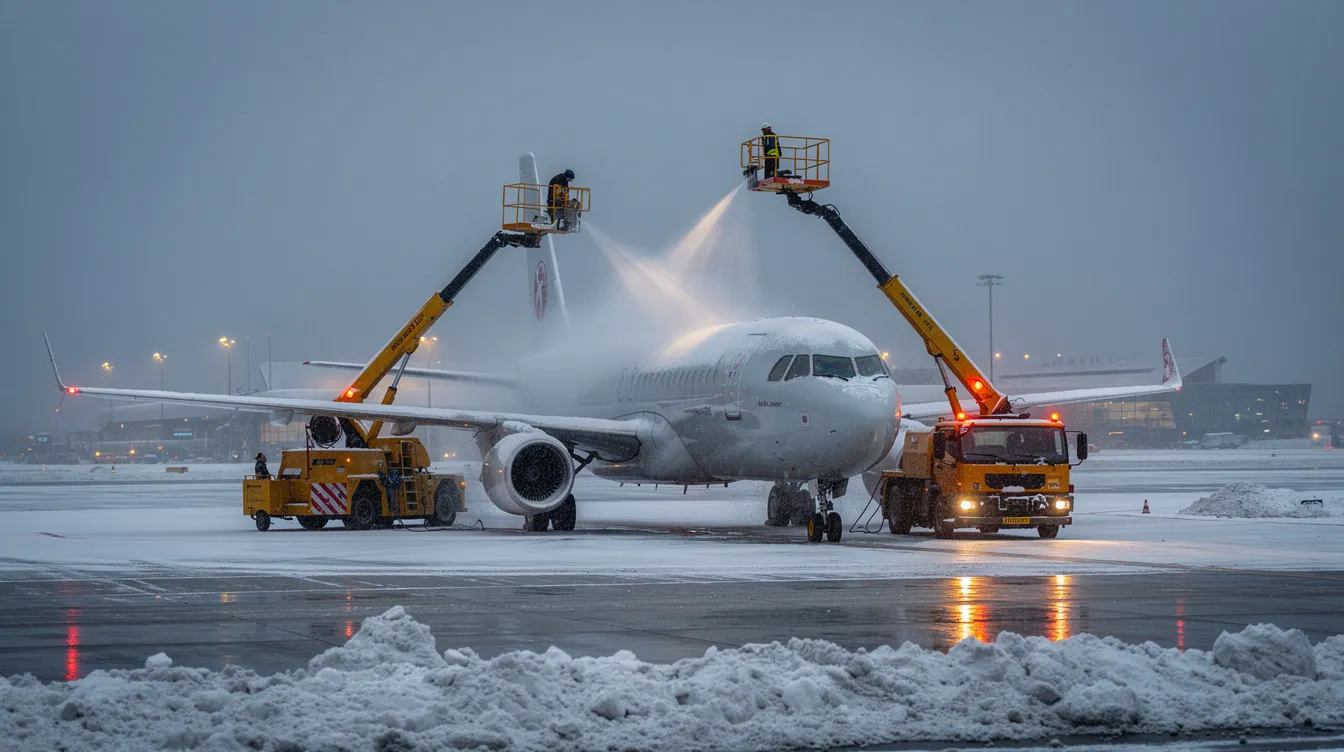
Private aviation offers a level of flexibility that commercial airlines simply cannot match. Private jet travelers can access thousands of smaller airports, providing more flexibility in flight routes and reducing the likelihood of delays associated with major airport congestion. You skip crowded terminals, avoid TSA screening, and board on your own schedule.
But private flights aren’t immune to delays—and when they occur, they can disrupt travelers’ travel plans just as significantly as commercial flight delays. Protecting your travel plans requires proactive planning and awareness of potential disruptions.
Private jet flights typically have fewer operational disruptions compared to commercial airlines, as they are less affected by issues like understaffing and crew scheduling. However, after the pandemic, many countries reopening their borders led to widespread understaffing in airlines and airports, impacting the industry’s ability to manage increased travel demand. Industry data shows private jets achieve 85-90% on-time performance within 15 minutes, compared to 75-80% for commercial travel. Still, when delays happen—roughly 10-15% of flights—they average 45-90 minutes.
The real difference lies in understanding why. When you know the private jet delays' reasons, the waiting becomes far less stressful. Unlike commercial flight delays caused by late-arriving aircraft rotating through multiple legs, private charter flight operations face different challenges. Private jet charter services are designed to meet specific flight needs, offering tailored solutions for private travel that prioritize convenience and flexibility.
The top causes of delayed flights in private aviation:
|
Cause |
Typical Impact |
|---|---|
|
Weather conditions |
40-50% of delays; can cause rerouting, holding, or cancellations |
|
Crew duty time limits |
15-20% of delays; may require crew replacement or rescheduling |
|
Maintenance and mechanical issues |
10-15% of delays; more frequent during peak seasons due to longer operating hours |
|
Airspace and air traffic control (ATC) restrictions |
20-25% of delays; can result in ground holds or rerouting |
|
Late-arriving aircraft from repositioning |
Delays departure until aircraft arrives |
|
Increased demand during peak season |
Harder to find available aircraft and crew; longer wait times |
|
Airport constraints (slots, curfews, runway hours) |
May require rescheduling or use of alternate airports |
Operational challenges in private jet charter are often managed through strong, relationship-driven partnerships with air carriers, ensuring safety, reliability, and quality service for clients.
Understanding these triggers is exactly why tools like SkyGuru exist. When your private charter or jet card flight is delayed, real-time in-flight guidance and plain-language explanations can significantly reduce anxiety. Instead of wondering what’s happening, you’ll know—and that knowledge makes all the difference.

Weather
Weather is the number one cause of both commercial and private flight delays. Bad weather can significantly affect flight availability, causing air traffic control delays and flight rerouting due to thunderstorms, heavy fog, and other adverse conditions.
Even when skies look clear at your departure airport, conditions elsewhere along your route or at your destination can force changes.
-
Weather is responsible for nearly 80% of all air traffic control delays, often affecting flights even when conditions are clear at the departure and destination airports.
-
Private jets still fly under the same weather safety rules as commercial aviation: IFR flight plans, airport minimums, runway conditions, crosswind limits, and visibility thresholds.
High winds can exceed an aircraft’s safe operating limits for takeoff or landing, potentially causing delays. Smaller runways used by private aviation can be more sensitive to crosswinds, snow removal delays, or braking-action reports. A runway that works fine for a Boeing 737 might challenge a light jet in 25-knot crosswinds.
Broader weather systems, such as storms or atmospheric disturbances, can also influence flight delays and require pilots and ATC to adapt routes and schedules accordingly.
How private jets mitigate weather delays:
-
Flexible routing via Eurocontrol and FAA tools
-
Access to nearby airports as alternates
-
Earlier or later departure windows
-
Less crowded FBOs with priority de-icing
Private jets have the flexibility to operate from smaller airports that are less affected by weather-related disruptions compared to major commercial airports. They can also fly at higher altitudes than commercial planes, enabling them to avoid heavy traffic and certain turbulence.
When the primary airport is congested or fogged in, private jets can reroute to the nearest suitable airport if weather systems disrupt the original flight plan.
SkyGuru helps anxious travelers understand exactly why a flight is delayed and what pilots are waiting for. Real-time weather and turbulence explanations turn confusing holds into understandable safety decisions.
Thunderstorms, Turbulence, and Convective Weather
Summer thunderstorms and cumulonimbus clouds can force air traffic controllers to slow departures or change routings, even if the sky looks fine from the FBO window. Thunderstorms can ground flights or force lengthy rerouting due to hazards like lightning and wind shear.
During peak convective season, afternoon storms along busy corridors—like the New York–Miami route—create significant delays. ATC imposes 20-40 mile separation between aircraft, metering departures at half the normal rate. In summer 2025, Florida-bound private flights saw 25% delays due to convective storms.
Private jets may depart earlier or later than planned to dodge the worst weather. This is a major reason private flights change times on short notice.
What thunderstorm delays usually mean for you:
-
More holding time (20-40 minutes typical)
-
Speed reductions and altitude changes
-
Reroutes adding 100-200 nautical miles
-
Schedule shifts rather than outright cancellation
Snow, Ice, and Low Visibility
Snow and ice require de-icing and runway clearing, which adds time to flight operations. Freezing rain can form ice on aircraft surfaces at rates of 0.5-1 inch per hour, requiring Type IV de-icing fluid with holdover times of 45-90 minutes.
At busy airports during winter mornings, queues for the de-ice pad at fixed base operator terminals can add 30-60 minutes to your wheels-up time. Fog and low visibility can trigger Low Visibility Procedures at airports, reducing the number of allowed takeoffs and landings.
Low cloud ceilings at popular winter destinations like Aspen, Innsbruck, or London City can temporarily drop below private jet approach minimums. A pilot may delay or divert rather than attempt an approach in marginal conditions—this ties directly to Federal Aviation Administration safety regulations.
During the January 2026 blizzard on the U.S. East Coast, secondary airports like Teterboro and Westchester closed for 48 hours. Smaller airports closed first, impacting private flights before big hubs reopened. This is common: smaller airports often lack rapid snow removal equipment that major airports deploy every 15 minutes.
Crew Duty
Pilots and crew members operating private jets must follow strict flight and duty time limits ("Pilots must adhere to strict FAA regulations regarding flight hours and mandatory rest periods, which can result in delays if exceeded." [<fact>3</fact>]) to prevent fatigue.
-
“Duty time” includes everything on the clock:
-
preflight preparation (1-2 hours)
-
flying time
-
turnarounds
-
post-flight tasks
-
Under FAR Part 135, flight crews have limits of 8-14 hours depending on start time, plus a mandatory 10-hour rest minimum.
Here’s where it gets tricky:
-
A late inbound leg, air traffic control delay, or long ground hold can push crew beyond legal limits.
-
When that happens, operators must find a new crew or reschedule the flight entirely.
Last-minute changes to passenger itineraries are a common cause of delays in private aviation. If you ask to push departure by two hours, you might inadvertently time out your crew. Complexities in the flight schedule, especially during peak seasons, can further impact crew availability and contribute to delays.
What clients can do to minimize crew-related delays:
-
Arrive at least 30 minutes early
-
Avoid repeated same-day schedule changes
-
Confirm time zones when planning international travel
-
Coordinate ground transportation realistically
During high-demand periods like Christmas–New Year 2025/2026 or major events like Art Basel and Monaco Grand Prix, finding a fresh backup crew becomes harder. This extends the delay risk when your original flight crews can’t legally fly.
How Crew Duty Limits Create Last-Minute Changes
Consider a concrete example: a jet is scheduled for a morning repositioning flight (TEB to LAX) and an afternoon charter flight (LAX to TEB). The crew’s duty clock starts at 6:00 AM.
If weather delays the morning leg by 90 minutes, the afternoon charter may push beyond duty limits. A 60-90 minute air traffic delay can trigger a cascade: duty time exceeded, crew replacement needed, new departure slot requested.
Typical timeline when duty limits are hit:
-
Morning reposition wheels-up at 8:00 AM (duty started 6:00 AM)
-
90-minute weather hold lands crew at 1:00 PM
-
Afternoon charter brief begins at 2:00 PM
-
FDP clock ends at 4:00 PM
-
30-minute passenger delay times out the crew at 4:30 PM
-
New crew or overnight delay required
Private operators sometimes proactively move departure time earlier or later to keep the crew legal for the whole trip. This is one of the main reasons why private jets reschedule—it’s about safety, not poor service.
Maintenance
Modern business jets boast 99% dispatch reliability, but safety regulations for private aircraft are as strict as those for commercial airlines. Even minor mechanical issues or mechanical problems must be verified before departure, and operators often face logistical challenges in obtaining aircraft parts needed for repairs.
There’s a difference between scheduled maintenance (planned checks and inspections) and unscheduled maintenance. Unplanned maintenance issues can ground an aircraft until repairs are completed or a replacement is provided. ("Unplanned maintenance issues can ground an aircraft until repairs are completed or a replacement is provided." [<fact>2</fact>])
Common private jet mechanical issues:
-
Sensor alerts or avionics glitches
-
Tire or brake concerns identified during preflight
-
Minor hydraulic leaks
-
Cabin pressurization warnings
-
Inoperative non-critical equipment
Industry estimates suggest around 1 in 10-12 private flights may encounter some sort of mechanical snag—most resolved with short delays of 1-3 hours at major hubs with on-site technicians. During peak seasons, longer operating hours can increase the likelihood of technical issues, which may cause delays or cancellations as maintenance teams work to ensure safety.
From the passenger’s perspective, a flight delayed for “mechanical issues” can feel stressful. But it reflects a conservative safety culture, not an emergency. Private aviation operators must take immediate action to address safety violations, poor service, or underperformance to protect client interests and maintain high standards. SkyGuru content explains in simple terms what a “maintenance delay” typically means, helping nervous flyers avoid catastrophic interpretations.
When a Private Jet Goes “AOG” (Aircraft on Ground)
AOG means an aircraft is grounded until a specific defect is fixed, inspected, or signed off by certified maintenance staff. ("Unplanned maintenance issues can ground an aircraft until repairs are completed or a replacement is provided." [<fact>2</fact>])
Example scenario: During preflight, the pilot calls out a landing-gear indication anomaly. The flight is paused while technicians troubleshoot. This might cause a 2-3 hour delay—or require a different private plane entirely.
Being AOG at a small airport with limited maintenance facilities can stretch delays significantly. At large business aviation hubs like Teterboro, parts and technicians are readily available. At smaller airports, mobile maintenance teams may need several hours to arrive.
What you can ask your operator during a maintenance delay:
-
What’s the current status of troubleshooting?
-
Is a backup aircraft available?
-
What’s the realistic estimated departure time?
-
Will aircraft type or cabin layout change?
Airspace Restrictions
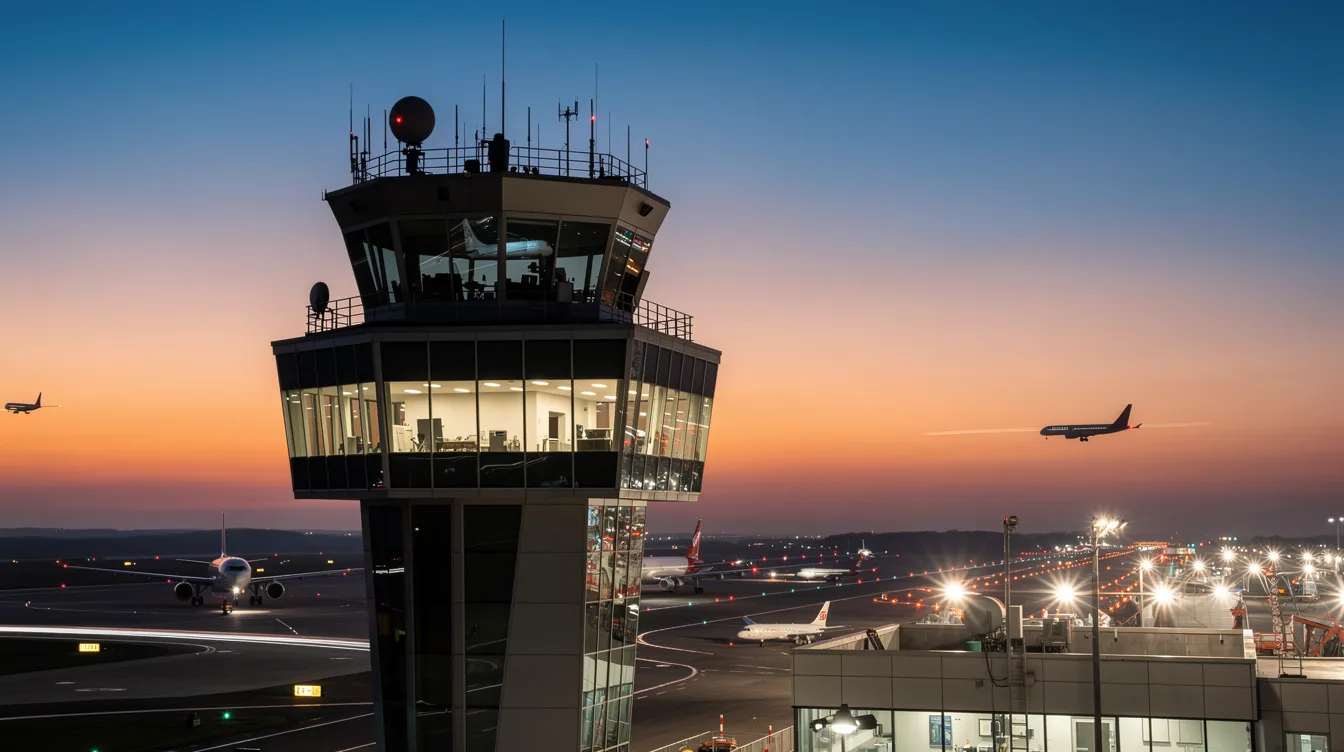
Even private jets must obey air traffic control instructions, national airspace rules, and temporary restrictions. At most airports, air traffic control manages aircraft movement, safety, and flight coordination. Air traffic control (ATC) delays are often caused by the need to maintain safe separation between aircraft, which can be affected by weather, high traffic volume, or operational issues. ("Air traffic control (ATC) delays are often caused by the need to maintain safe separation between aircraft, which can be affected by weather, high traffic volume, or operational issues." [<fact>4</fact>])
ATC delays can occur even when weather conditions are clear at both the departure and destination airports, as issues hundreds of miles away can impact flight operations.
The growth in air travel demand has outpaced the development of airport infrastructure, leading to increased ATC delays as many major airports operate at or near maximum capacity. Air traffic control staffing shortages can lead to flow control measures, causing delays in departures. Pilots can request an approved flow time, which is a specific departure time assigned by ATC, to better plan around potential delays and minimize their impact on the flight schedule.
Private jets do not get to “jump the queue” in busy airspace. At crowded airports like Teterboro, Van Nuys, or London Farnborough, they receive takeoff and landing slots like everyone else. In the context of delay reporting, late arrival is a specific category within the FAA's delay classification system and can significantly impact flight schedules.
Ground Delay Programs and Flow Control
A Ground Delay Program assigns controlled departure times to keep arrivals at busy airports within safe limits.
What happens step by step:
-
Flight plan filed with ATC
-
ATC issues an expected departure clearance time (EDCT)
-
The operations team relays the new departure time to passengers
-
Jet holds at FBO until the slot opens
-
Wheels-up at assigned time
When New York-area airports have morning low clouds and high volume, GDPs push all flights—including private charter flights—into delayed departure slots. A reactive ground stop briefly halts all departures, regardless of local weather at your departing flight location.
With good contingency planning, operators sometimes adjust routings, altitudes, or alternate airports to escape congestion. But safety and ATC instructions always come first.
Temporary Flight Restrictions and Special Events
Temporary Flight Restrictions (TFRs) can close airspace or require complex arrival/departure procedures. Triggers include presidential movements, G7 conferences, major event gatherings like the Super Bowl, or large airshows.
Real-world examples:
-
TFRs around Davos during the World Economic Forum in January 2026 forced 1-2 hour shifts for private aviation
-
Super Bowl LVIII TFR diverted 30% of private arrivals to Deer Valley
-
F1 Las Vegas 2025 closed KLAS private ramps for 4 hours
Operators monitor NOTAMs and TFRs days in advance, but last-minute updates can still affect your scheduled flights.
Tips for peak-event travel:
-
Book earlier on major event days
-
Allow more schedule flexibility
-
Ask your broker which airports are least exposed to TFRs
-
Consider nearby airports like San Francisco International as alternatives
Other Common Reasons Private Jets Experience Flight Delays or Get Rescheduled
Increased Demand and Aircraft Availability
Private jet operators face significant operational challenges due to increased demand, which has surged by 23% year-to-date, leading to potential issues with aircraft availability and scheduling. During peak seasons, finding available aircraft and crew becomes harder.
Late-Arriving Aircraft and Domino Delays
Late-arriving aircraft issues occur when your jet is finishing a prior trip, and that leg is delayed. This creates a domino effect on your own departure time—still less common than with airline service, but possible.
Ground Handling and Smaller Airport Challenges
Ground handling delays due to slow services, such as refueling or baggage handling, can also contribute to flight delays at the FBO.
The flexibility of private jets to use smaller airports can lead to operational challenges, as these locations often lack the necessary ground resources and staffing to handle diversions effectively. Smaller airports may lack essential ground resources, which can lead to extended delays when diversions occur.
Diversions and Flexibility
Private jet diversions can occur for a variety of reasons, including real-time conditions, crew judgment, and operational preparedness, rather than just extreme emergencies. ("Private jet diversions can occur for a variety of reasons, including real-time conditions, crew judgment, and operational preparedness, rather than just extreme emergencies." [<fact>16</fact>])
Private aviation allows for greater flexibility in diversions compared to commercial airlines, as private jets can access thousands of smaller airfields, but this flexibility can also lead to logistical challenges.
Additional Delay Causes
Additional delay causes:
-
Peak-season demand (Christmas/New Year, Art Basel)
-
Previous-leg delays affecting your departure
-
Airport curfews (Van Nuys: 10 PM–7 AM)
-
Runway inspections after bird strikes
-
Customs/immigration operating hours for international charter flights
How to Plan Around Delays and Stay Calm When Plans Change
You can’t eliminate all delays, but you can meaningfully reduce both the risk and the stress they cause.
Practical planning tips:
-
Avoid ultra-tight same-day connections
-
Choose less congested,d smaller airports when possible
-
Leave Slack before critical meetings
-
Book peak-season charter flights earlier
Ask your broker or operator about weather outlook, ATC programs, crew duty windows, and backup aircraft policy 24-48 hours before departure. Private jet operators must proactively manage diversions and delays, as the absence of a contingency plan can lead to significant operational and financial impacts.
For anxious flyers: expect some level of variability in departure time. Understanding that most delays are safety-driven helps reframe waiting time as protection, not inconvenience.
This is exactly where SkyGuru helps. By entering your specific flight details in the app, you receive real-time explanations of turbulence, sounds, and flight phases. When the pilot announces a delay, reroute, or holding pattern, you’ll understand why—reducing panic and helping you fly privately with confidence.
Download SkyGuru before your next private or commercial flight. Turn unknowns into understandable, manageable information that supports calmer, more confident air travel.

Frequently Asked Questions (FAQs)
Why do private jets sometimes reschedule flights?
Private jets reschedule flights primarily due to factors like weather changes, crew duty time limits, maintenance issues, or airspace restrictions. These adjustments ensure safety and compliance with regulations while aiming to minimize inconvenience for passengers.
Can private jet delays be avoided during peak travel seasons?
While private jets offer more flexibility than commercial flights, delays during peak seasons can still occur due to high demand for aircraft and crew. Booking early, choosing less congested airports, and allowing schedule flexibility can help reduce delay risks.
How do private jets handle air traffic control delays differently from commercial flights?
Private jets must adhere to the same air traffic control rules as commercial airlines but often have access to smaller airports and can fly at higher cruising altitudes. This flexibility allows operators to request alternate routes or departure times to mitigate delays.
What are my rights if my private jet flight is significantly delayed or canceled?
Unlike commercial flights, private jet travelers do not have standardized regulations for compensation or full refunds during delays. However, many private operators provide personalized solutions such as rescheduling, alternate airport options, or partial refunds depending on the situation.
How can I stay informed about potential private jet delays?
Using real-time flight tracking and apps like SkyGuru can provide updates on weather, airspace restrictions, and other factors influencing your flight. Communicating regularly with your operator or broker also ensures you receive timely information about any schedule changes.
Conclusion
Private jet delays can be frustrating, but understanding the common reasons behind them—such as weather, crew duty limits, maintenance, and airspace restrictions—helps set realistic expectations. While private aviation offers greater flexibility and fewer disruptions than commercial flying, it still operates within strict safety and regulatory frameworks. Planning ahead, choosing less congested airports, and staying informed through real-time tools like SkyGuru can reduce delay risks and travel anxiety. Ultimately, private jets prioritize your safety and comfort, turning necessary delays into manageable and transparent parts of your journey.
FLEET SELECTION
JET CARDS
COST ANALYSIS


How to Auditing Your Operator's Maintenance Logs
Oct 05, 2025

How to Auditing Your Operator's Maintenance Logs
Oct 05, 2025

How to Auditing Your Operator's Maintenance Logs
Oct 05, 2025
Sky Guru Weekly
The smartest private aviation intelligence in your inbox.
.svg)

