




Private jet delays and cancellations happen less frequently than with commercial travel, but they’re not impossible. Even the most carefully planned private flights can face disruptions from weather, mechanical issues, or air traffic control (ATC) constraints.
This guide is for private jet travelers, charter clients, and anyone considering private aviation who wants to understand what happens when plans change. Understanding the causes and management of private jet delays and cancellations helps travelers set realistic expectations and make informed decisions.
The good news? Private aviation handles these situations differently from airlines. Smaller crews, less congested airports, and flexible scheduling mean problems get solved faster and more personally. Private jet charter flights allow travelers to avoid the long queues and hassles associated with commercial airlines, providing a more punctual and luxurious travel experience. When delays or technical issues arise, private jet providers work closely with their customers to communicate updates and accommodate their needs, ensuring a smoother experience during disruptions.
For anxious travelers, uncertainty can feel as stressful as the delay itself. That’s why understanding what happens behind the scenes matters. Apps like SkyGuru help explain what’s happening during flights—including delays, turbulence, and reroutes—reducing fear of flying through real-time information and coping tools.
Private jet charters are designed to meet specific flight needs, offering tailored solutions for complex itineraries or busy travel seasons, and providing flexibility that commercial airlines often cannot match.
When it comes to private jet travel, operators and air carriers play a crucial role in ensuring safety, smooth operations, and high service quality, maintaining reliability even amid regulatory and operational challenges.
Here’s what this guide covers:
-
Why weather is the leading cause of disruptions and how operators respond
-
What happens when mechanical issues ground your aircraft
-
Why aircraft swaps occur and what they mean for you
-
How charter providers coordinate solutions behind the scenes
Weather Delays: Why Safety Comes Before Schedule
Weather is the most common cause of private jet delays and cancellations. Inclement weather, such as thunderstorms and heavy fog, can significantly impact flight availability, causing delays and requiring air traffic controllers to adjust flight routes for safety. These disruptions are especially pronounced at major airports, where operational challenges and congestion can further complicate timely departures and arrivals.
Private aviation follows strict safety-first protocols. No reputable operator will push through dangerous conditions to stay on schedule. The flight schedule is carefully managed and adjusted in response to weather and ATC constraints, ensuring both safety and efficiency.
Common Weather Disruptions
Conditions that affect private flights include:
-
Low visibility and heavy fog are slowing departures and arrivals, particularly at certain times such as peak travel hours or busy days of the week
-
Thunderstorms triggering ground stops at busy airports
-
Icing conditions are grounding flights until conditions improve
-
Strong crosswinds exceeding aircraft limits for safe landing
-
Turbulence along the route requires path adjustments
Inclement weather is a leading cause of private jet disruptions due to smaller aircraft being more susceptible to strong crosswinds and turbulence. Summer thunderstorms in the New York–Florida corridor routinely impose ATC ground stops, while winter icing at Teterboro and Boston Logan grounds flights until conditions clear.
Private jets offer flexibility that commercial airlines can’t match. Operators can adjust departure times by hours to dodge storm lines, divert to alternate airports like White Plains instead of JFK, or re-route dynamically when fuel and airspace permit. Private aviation allows for greater flexibility in scheduling, enabling travelers to adjust their departure times and choose alternative airports to avoid congestion and delays. Managing the flight schedule and making real-time adjustments are key to minimizing disruptions.
However, private jets face the same FAA-mandated restrictions and ATC flow programs as airlines. Pilots, dispatchers, and operators use sophisticated weather forecasting tools—the same aviation data that powers SkyGuru’s real-time turbulence predictions for passengers—to proactively monitor and adjust the flight plan as needed. Having a solid plan and contingency strategies in place is essential for responding to unexpected changes and minimizing the impact of delays.
How Weather Delays Are Managed on the Day of Your Flight
Picture this scenario: You’re scheduled to depart from Teterboro at 16:00 in October. A line of thunderstorms builds along the Eastern Seaboard, and ATC imposes departure slots.
Here’s what typically happens:
-
2–4 hours before departure: Your operator receives ATC and weather updates, and reviews estimated flight times to anticipate how long the journey will last and to plan for possible delays.
-
You receive communication: A call, text, or email explaining your new estimated departure time, including updated flight times, so you know what to expect for your overall travel duration.
-
Options are presented: Leave earlier, leave later, switch airports, or adjust your destination (Miami International to Opa-locka, for example)
Flight crews then recalculate fuel, routes, and alternates once the weather picture clarifies. This might slightly lengthen your route, but it improves comfort and safety.
During these waits, SkyGuru can help nervous flyers understand why you’re paused at the FBO (Fixed Base Operator), why you hear thunder but aren’t departing, and what to expect once airborne.
Mechanical Issues: What Happens When the Aircraft Needs Attention
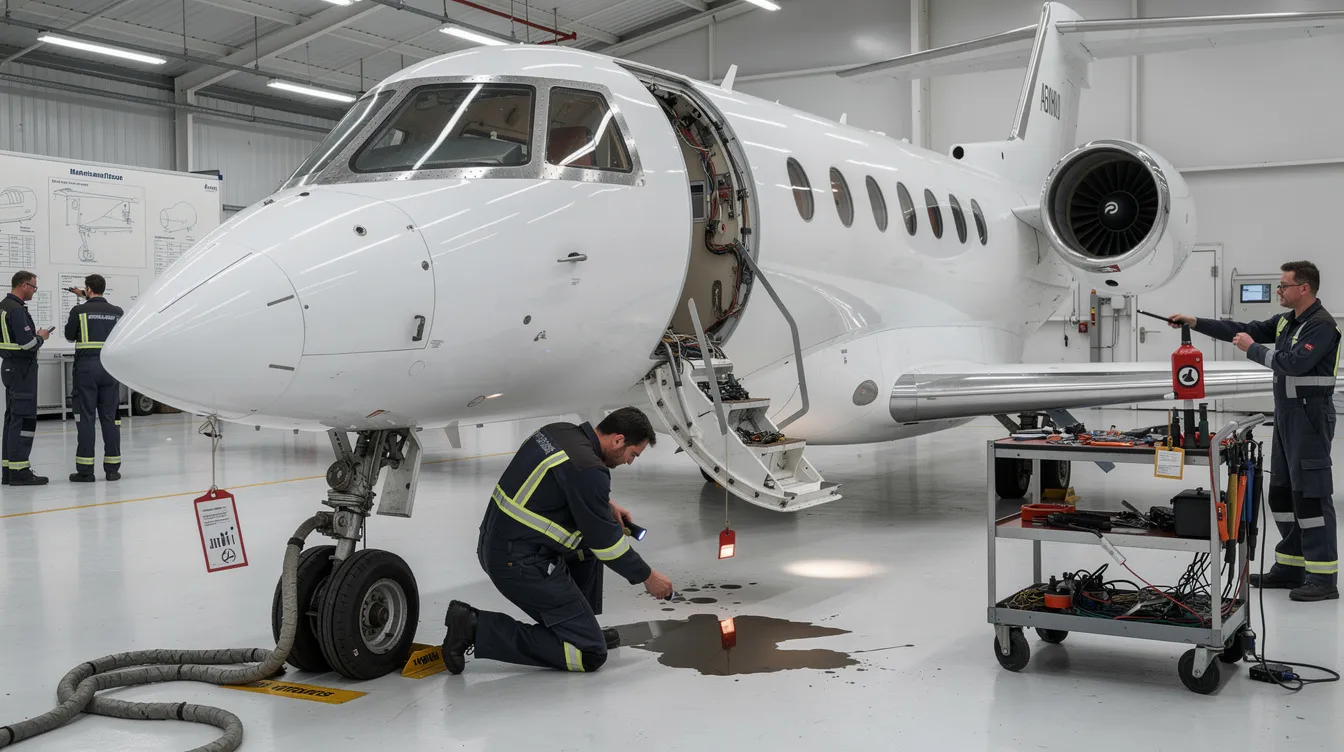
Private jet safety standards are extremely strict. Any mechanical concern—no matter how minor—can delay or cancel a flight. Technical issues can arise from the increased operational hours of planes during peak travel seasons, leading to delays as maintenance checks and repairs are required for the specific airplane being serviced.
Routine Maintenance Procedures
Routine maintenance includes:
-
Scheduled inspections based on flight hours, calendar days, and cycles
-
Pre-flight and post-flight checks on every trip
-
Compliance with FAA and EASA requirements
Operators use sophisticated software to monitor weather and crew duty times, as pilot rest requirements can lead to delays. Common causes for private jet delays and cancellations often stem from safety, regulatory, or operational requirements.
Minor issues may be deferred under strict rules while still allowing safe dispatch. Critical items—pressurization faults, flight control problems, and required navigation equipment failures—immediately ground the aircraft.
Real example: A hydraulic warning light appears during pre-flight checks in Dallas. The flight is delayed while maintenance is inspecting. If parts need sourcing from off-site, coordinating the movement of those parts from Point A to Point B can escalate delays from minutes to hours.
Private jet operators maintain 24/7 maintenance control teams and partner service centers to troubleshoot quickly. Proactive recovery strategies include creating alternative itineraries and sourcing backup aircraft for mechanical issues.

Last-Minute Technical Problems: Your Options as a Passenger
You arrive at the FBO (Fixed Base Operator) in Geneva at 08:00 for a flight to London. During engine start checks, the crew finds an abnormal indication and shuts down to investigate.
Typical steps:
-
Crew informs operations and updates you in the lounge with a clear, honest summary
-
Maintenance performs diagnostics with a rough time estimate (60–90 minutes for inspection)
-
If delays extend significantly, the operator sources a substitute aircraft from their fleet or partner network
Your choices:
-
Wait for the repair if the estimated time is reasonable
-
Accept a different aircraft type with similar or better capabilities
-
In rare cases, reschedule if no safe aircraft is available
Passengers should verify the operator’s safety record, crew training, and specific cancellation policies before booking a private flight. SkyGuru can help anxious travelers cope with waiting through breathing exercises and explanations of what maintenance checks actually involve.
Aircraft Changes: Why Your Jet Might Be Swapped at the Last Minute
Aircraft swaps are a normal part of private jet operations, often done to protect your schedule and safety rather than disrupt it. Even during these changes, operations remain safe, as safety protocols are always prioritized.
Common reasons for aircraft changes:
-
Another client’s flight ran late, affecting positioning
-
Unscheduled maintenance was discovered on your assigned jet
-
Weather or runway restrictions make a different aircraft more suitable
Replacement aircraft are:
-
Similar or higher cabin class when possible
-
Operated under identical safety and maintenance standards
-
Piloted by crews meeting equivalent training requirements
You’re notified as soon as the operator confirms the swap, with details on the model, seating, luggage capacity, and any timing changes. Prioritize operators with independent safety ratings like ARG/US Platinum or IS-BAO Level 3.
How to Respond If Your Aircraft Is Swapped
Ask these practical questions:
-
What are the differences in seats, range, luggage space, and Wi-Fi?
-
Does this change our departure or arrival airport?
-
Is the new jet suitable for today’s runway and weather conditions?
-
Does this affect our ability to fly nonstop?
-
Will the crew be different, and how experienced are they?
Aircraft swaps usually signal your provider is solving a charter issue quickly rather than canceling. Requesting an ARG/US trip check can provide an unbiased safety analysis of the specific aircraft and crew.
How Private Jet Providers Handle Problems Behind the Scenes
Professional charter companies, fractional programs, and jet card providers coordinate aircraft, crews, and slots across multiple airports daily. Private jet operators manage delays through proactive contingency planning, monitoring weather, crew duty limitations, mechanical issues, capacity limitations, and security procedures. Security-related staffing and protocols can also contribute to delayed flights and operational slowdowns.
The operations team response chain:
-
The operations control center monitors weather, ATC notices, ATC staffing, and fleet status 24/7, as ATC staffing affects flight operations by causing delays, reroutes, and reduced efficiency, especially during staffing shortages or government shutdowns.
-
When issues appear (storms in Chicago, for example), they review affected flights immediately, considering how capacity limitations and ATC staffing shortages may require slowing things down, resulting in extended taxi times, increasing delays, and reroutes for both commercial and private flights.
-
Clients are prioritized by departure time and critical constraints, with special attention during peak season when demand surges and operational challenges intensify.
Backup tools available:
-
Access to partner operators and vetted aircraft when the fleet is constrained
-
Ability to reposition aircraft and crews overnight
-
Alternate airport suggestions (Van Nuys instead of LAX, Fort Lauderdale Executive instead of Miami, or South Florida airports, which are often impacted by operational slowdowns and staffing shortages)
Updates often begin 12–24 hours before forecast disruptions. During day-of issues, clients receive regular text, email, or app updates with estimated departure times and route changes.
FAA-mandated flight cuts at the nation's 40 busiest airports require all operators, including private jet companies, to reduce their total daily scheduled domestic operations by 4% initially and by 10% thereafter. Private flights at these high-traffic airports are subject to the same FAA-mandated reductions as commercial flights and are not exempt from these operational limitations. ATC staffing shortages due to FAA regulations can lead to longer taxi times, delayed departures, and reduced airspace capacity, affecting both commercial and private flights.
SkyGuru complements operator communication by showing travelers when to expect turbulence, how long holds may last, and what flight phase they’re in.
Realistic Scenarios: From Minor Delay to Full Cancellation
|
Scenario |
Location |
Cause |
Outcome |
|---|---|---|---|
|
ATC Flow Delay |
Newark, May 2025 |
ATC flow program |
45-minute delay; departure shifted to 18:15 |
|
Aircraft Swap |
Los Angeles, 2024 |
Landing gear indication |
The passenger moved to a midsize jet; 1-hour later |
|
Full Cancellation |
Small island, 2023 |
Runway closure due to a storm |
Rebooked the next morning; hotel and transport arranged |
Understanding cancellation policies is critical,l as some providers offer refunds, whereas others provide credits towards future flights.
Private Jet Reliability vs Commercial Airlines: What to Expect
Private jet charter flights are less affected by understaffing issues that commonly plague commercial airlines and air carriers, as they operate with smaller crews and at less congested airports. In 2025, 23.3% of U.S. flights were delayed more than 15 minutes or canceled, marking the largest percentage in eight years, according to the Bureau of Transportation Statistics.
Key Advantages
-
Fewer legs per day per aircraft, reducing domino-effect delays
-
Access to nearby airports and smaller airports with less congestion
-
Custom flight schedules tailored to the passenger
Understaffing in the airline industry, exacerbated by the COVID-19 pandemic, has led to increased flight delays and cancellations as airlines and air carriers struggle to meet demand with reduced personnel.
Systemic issues still affect private flights. During a government shutdown, air traffic control staffing shortages can lead to longer taxi times and possible delays for both commercial and private flights. The FAA has mandated a reduction in flight operations at the nation’s 40 busiest airports, affecting all operators, including private jet companies. Prolonged government shutdown impacts can disrupt the entire aviation industry, causing staffing shortages, delays, rerouting, and operational disruptions across ATC facilities and private jet services, highlighting the widespread effect on the aviation ecosystem and air carriers.
Private flights operating at designated high-traffic airports are subject to the same FAA-mandated reductions as commercial flights. Choosing to fly from alternative airports instead of major hubs can significantly reduce the likelihood of delays.
FAQs: Common Questions About Private Jet Delays and Cancellations
Are private jets less likely to be delayed than commercial flights?
Often yes, especially at uncongested airports. But they share the same airspace, weather constraints, and ATC limitations as commercial carriers.
Can I get my money back if my flight is canceled?
It depends on your contract terms. Review cancellation and refund policies before booking—some providers offer refunds while others provide credits.
How often do private jet flights get canceled for safety reasons?
Genuine safety cancellations are relatively rare but taken seriously. If your provider cancels for safety, that reflects a strong private jet safety culture.
How can I feel calmer when delayed or rerouted?
Ask for clear updates from your provider, build buffer time into connections, and use SkyGuru for real-time explanations and coping tools during uncertain moments.
Staying Calm and In Control When Plans Change
Private jet travel is highly reliable, but weather, mechanical issues, and system-wide constraints can still cause disruptions. Safety and regulatory compliance always come before convenience—and that’s exactly how it should be.
Practical Mindset Tips
-
Expect the possibility of minor delays and avoid scheduling immovable events immediately on land.ng
-
View delays as evidence that professionals are protecting your safety
-
Ask questions when uncertain—clear information reduces anxiety
Booking private charter flights allows you to avoid air travel disruptions and inconvenience, especially during peak travel seasons when commercial airlines face significant delays. Flying private offers greater flexibility and reliability during challenging travel conditions, making it a preferred choice for those seeking a smoother experience.
SkyGuru helps nervous or curious travelers understand why turbulence, holds, and route changes happen using real-time data during your flight. Download the app before your next trip and enter your flight details so you’re prepared with explanations and coping tools if disruptions occur.
Even when something goes wrong, you can still fly feeling informed, supported, and in control.
Conclusion: Confidence in Private Jet Travel Despite Delays and Cancellations
While private jet delays and cancellations can occur, they are generally less frequent and better managed than in commercial aviation. The entire aviation ecosystem—from operators to air traffic control—works together to prioritize passenger safety and minimize disruptions. Private aviation’s flexibility, proactive communication, and contingency planning help travelers navigate weather, mechanical issues, and operational challenges with greater ease and confidence.
Understanding the reasons behind delays and how providers respond can reduce anxiety and build trust in private jet travel. By choosing reputable operators with strong safety records and transparent policies, passengers can enjoy a reliable, personalized travel experience even when plans change.
With tools like SkyGuru offering real-time insights and explanations, travelers can stay informed and calm throughout their journey. Ultimately, private jet travel remains a safe, flexible, and professional option for those seeking to avoid the common frustrations of commercial flights while enjoying exceptional service and peace of mind.
FLEET SELECTION
JET CARDS
COST ANALYSIS


How to Auditing Your Operator's Maintenance Logs
Oct 05, 2025

How to Auditing Your Operator's Maintenance Logs
Oct 05, 2025

How to Auditing Your Operator's Maintenance Logs
Oct 05, 2025
Sky Guru Weekly
The smartest private aviation intelligence in your inbox.
.svg)

