



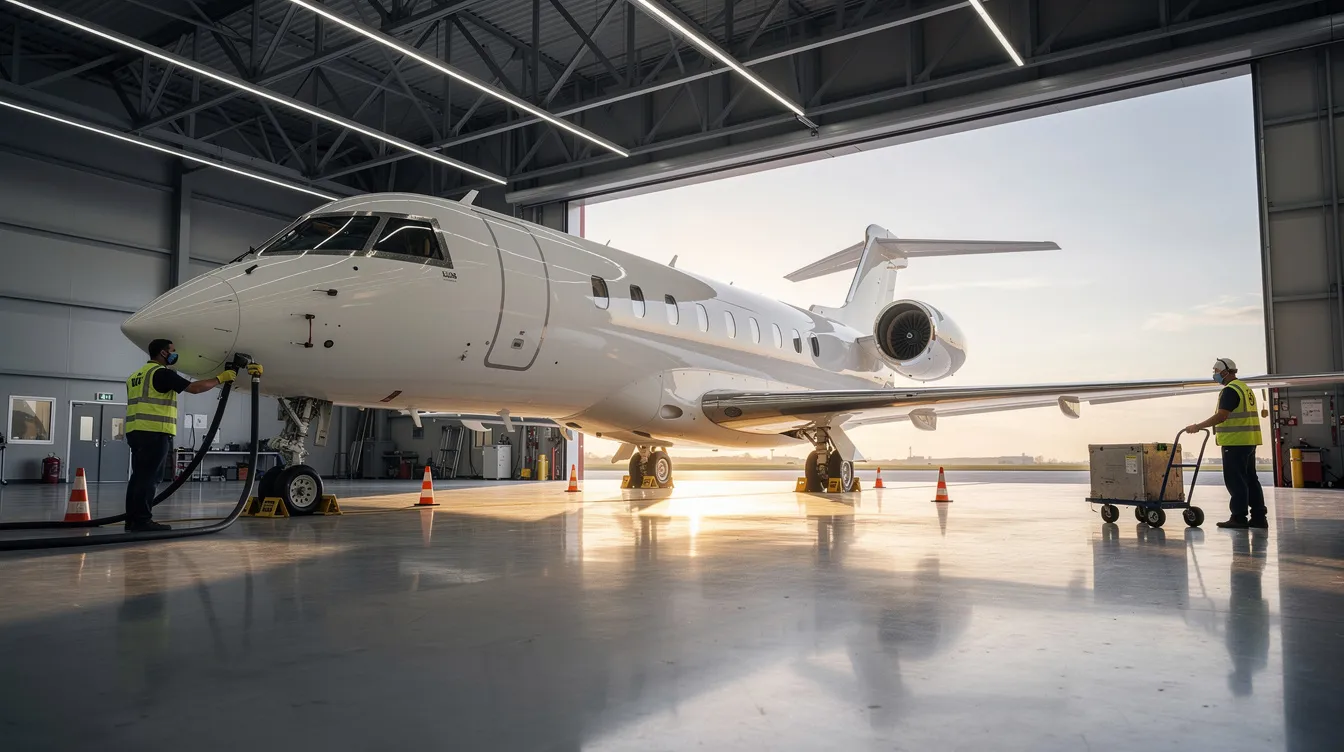
Private jet customer experience in 2026 represents something fundamentally different from booking a first-class seat on a commercial airline. While first class offers enhanced seating, priority boarding, and premium meals within an aircraft carrying 300 or more passengers, a private jet typically accommodates 4 to 16 individuals on aircraft like the Bombardier Global 7500 or Gulfstream G700. This distinction shapes every aspect of the journey—from the moment you request a trip to the second you step off the plane at your destination. Private jets can also be more cost-effective for certain routes, especially when flying from smaller airports, as they may reduce overall travel expenses and offer increased convenience.
The difference comes down to three elements: privacy, control, and personalization. Private jets allow for privacy and personal space, enabling secure environments for business discussions or relaxation without strangers. A 2025 Robb Report survey of 1,200 high-net-worth travelers found that 78% cited discretion as their top motivator for flying private. Control manifests in a flexible schedule and routing, departing from private terminals at smaller airports like Teterboro or Van Nuys rather than navigating congested commercial hubs. Personalization means operators maintain customer profiles storing 50 or more data points, from preferred beverages to pillow firmness, ensuring each customer's individual preferences are met.
This article looks behind the scenes of private aviation rather than simply listing luxury perks like cashmere blankets or caviar service. Consider business travelers on corporate jets shuttling between New York and London, where pre-loaded secure Wi-Fi enables uninterrupted board meetings. Think about families chartering a Phenom 300 to Aspen for a December ski holiday, with heated pet blankets and ski gear pre-stowed. Or medical evacuations requiring last-minute flights where dispatch reliability becomes critical.
From SkyGuru’s perspective as a travel-tech mental wellness app used by anxious flyers on both commercial and private aircraft, the focus here is on demystifying what happens before and during your flight. Flying in private jets can significantly reduce travel anxiety by providing a more personalized and comfortable experience compared to commercial flights, which often involve long security lines and crowded terminals. The sections that follow cover pre-flight communication, real-time updates, handling delays, and VIP service standards—all tied to understanding how the private aviation sector actually operates. Operationally, private jets can fly higher than commercial aircraft, helping to avoid air traffic and bad weather, which improves efficiency and safety. When it comes to customs and immigration, these processes are generally faster for private jet passengers due to fewer travelers and dedicated terminals. Arranging a private flight requires enough time for aircraft preparation and crew coordination, so planning ahead is important. The journey phases include key moments such as take off, where safety protocols are emphasized. Aircraft types vary, and smaller jets may have different amenities or limitations compared to larger models.
Private Jet vs. Commercial First Class: Key Differences
|
Feature |
Private Jet |
Commercial First Class |
|---|---|---|
|
Passenger Capacity |
4 to 16 passengers |
20 to 50 passengers per cabin |
|
Privacy |
Complete privacy, no strangers |
Shared cabin with other passengers |
|
Airport Access |
Smaller airports, private terminals |
Major commercial airports |
|
Boarding Time |
Arrive 15-30 minutes before departure |
Arrive 1-3 hours before departure |
|
Security |
Streamlined, discreet screening |
Standard TSA procedures |
|
Scheduling Flexibility |
Highly flexible, last-minute changes possible |
Fixed schedules, limited flexibility |
|
Personalization |
Tailored meals, seating, and amenities |
Limited customization |
|
Ground Transportation |
Coordinated luxury transport included |
Separate arrangements required |
|
In-Flight Connectivity |
High-speed Wi-Fi, secure networks |
Varies by airline and aircraft |
|
Safety Regulations |
FAA-regulated, rigorous maintenance |
FAA-regulated, rigorous maintenance |
|
Travel Time Savings |
Reduced wasted time through efficient processes |
Longer travel time due to airport procedures |
|
Group Size Accommodation |
Suitable for larger groups up to 16 |
Larger groups split across multiple seats |
Pre-Flight Communication
In private aviation, the customer experience begins days before departure with detailed, proactive communication rather than the automated airline emails most people receive when flying commercial. Where a commercial flight might send you a single PDF itinerary, private operators initiate human-led dialogues 24 to 72 hours before wheels-up, confirming every detail of your journey.
Trip Request and Confirmation
A trip request typically originates through a broker app like Paramount Business Jets or directly through an operator portal. The initial conversation confirms aircraft class based on your needs: a light jet like the Citation CJ4 handles hops under two hours, such as New York to Washington, a midsize Learjet 75 covers transcontinental routes, and long-range aircraft like the Gulfstream G800 manage ultra-long hauls exceeding 7,000 nautical miles.
Airport pair selection is equally deliberate. Rather than booking JFK to MIA, an operator might suggest Teterboro to Opa-locka, sidestepping commercial chaos and slashing ground time by 90 minutes according to FAA slot data. Private aircraft can land at thousands of smaller regional airports that commercial airlines cannot reach, offering more convenient access to destinations.
What Proactive Communication Looks Like
The operator sends tailored briefings covering flight time (for example, 2 hours and 45 minutes from Teterboro to Opa-locka at Mach 0.80), fuel stop requirements for longer routes, runway length limits that might disqualify certain aircraft, and likely departure slot constraints. During peak periods like Christmas week 2026, Teterboro departures can queue 2 to 3 hours ahead, making early planning essential.
These briefings embed hyper-local intelligence: NOAA-sourced weather outlooks predicting headwinds that might inflate fuel burn by 15%, turbulence probabilities over mountain ranges, executive airport specifications, and pre-arranged ground transportation via services like Blacklane synced to your exact wheels-up time. Private jet travel offers maximum time savings by allowing passengers to avoid long terminal lines, security checks, and baggage claims—and this efficiency starts with thorough pre-flight planning.
Personalization Beyond First Class
Private jet services can be tailored to individual preferences through comprehensive pre-flight consultations, allowing clients to specify their desired in-flight meals, cabin temperature, and other special requests. This level of detail far exceeds the dropdown menus offered by first-class commercial options. Food served on private flights can be customized to meet dietary preferences, allowing passengers to request meals from specific restaurants or choose simpler options that are easy to eat.
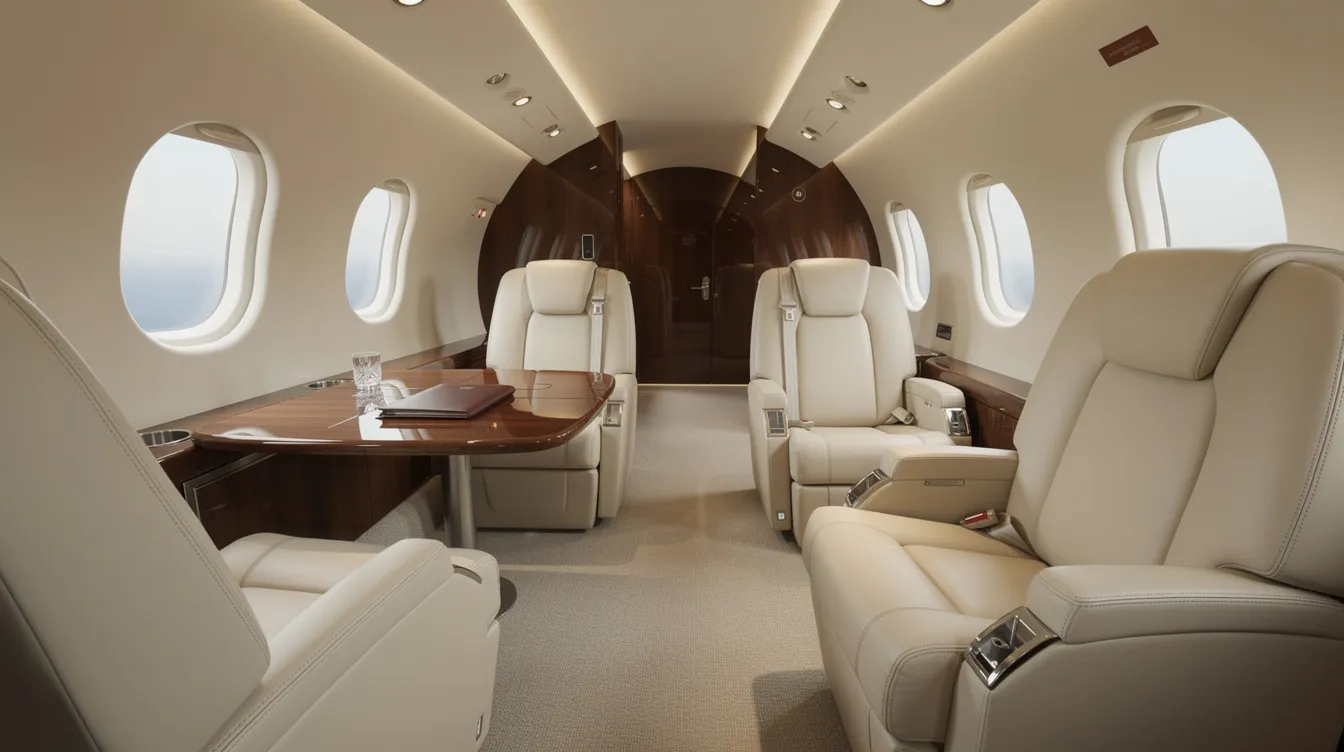
Clients dictate seating layout—club-four configuration for meetings, divan conversions for naps—along with cabin temperature (typically 68 to 74 degrees Fahrenheit with HEPA filtration) and specific arrangements for child seats or pet accommodations. When considering amenities, it's important to note that smaller jets may have limited or no bathroom facilities, which can impact comfort on longer flights. Private jet travel often includes pet-friendly options that allow animals to travel in the cabin without crates. Utilizing customer profiles that store detailed information about each client’s preferences ensures that every flight experience is uniquely catered to them, including personalized greetings and favorite snacks.
Who Contacts You About What
Different players handle different aspects of your pre-flight communication. Charter brokers provide initial quotes and aircraft options. Aircraft operators manage technical operations and crew scheduling. Corporate flight departments handle in-house scheduling for company-owned jets. Fixed-base operator staff coordinates ramp services and ground handling. The Transportation Security Administration (TSA) issues specific guidelines for fixed-base operators (FBOs), covering protocols for pilots, crew members, and aircraft systems to maintain safety during private flights.
For anxious travelers, apps like SkyGuru integrate during this phase. Users can input their flight details to visualize the 3D flight path, historical turbulence data, and a stage-by-stage explanation of what they’ll feel and hear once onboard.
Security and Documentation
Security preparation happens discreetly but rigorously. Advance passenger information for international flights is filed 60 minutes pre-flight, pet health certificates are verified, and passports are scanned through apps rather than TSA lines. Passengers can often arrive just 15 to 30 minutes before departure when using private jets, compared to the hours required at commercial terminals. This efficiency comes from bypassing traditional checkpoints while still complying fully with regulations.
Real-Time Updates
Real-time updates form the nervous system of private jet customer experience, empowering passengers with granular visibility from curbside to chocks. This proactive communication creates a sense of control that’s largely absent in commercial aviation’s opaque gate announcements.
Day-of-Flight Touchpoints
On departure day, communication cascades through SMS or WhatsApp from operations desks or FBO concierges. Twenty-four hours out, you receive the tail number (for example, N123GJ Gulfstream IV), crew bios with experience levels, and exact show time at the private terminal. Two hours out comes ramp confirmation, sometimes with a live photo of your aircraft being prepared. At 60 minutes, a crew arrival ping confirms everything is on track.
Passengers can go directly from car to plane in minutes due to the use of Fixed Base Operators (FBOs), which reduces waiting times associated with commercial airports. This streamlined process means updates focus on keeping you informed rather than managing crowds.
Weather Monitoring in Plain Language
Operators leverage ADS-B feeds, ACARS datalinks, and tools like Jeppesen FliteDeck for live monitoring. They decode technical weather reports—METARs and TAFs—into client-friendly alerts, often powered by detailed flight and weather data APIs. Instead of cryptic aviation shorthand, you might receive: “Light chop expected 30 minutes post-takeoff over Tehachapi Pass; adjusting route south by 20 nautical miles to minimize it.”
Consider a January 2026 morning flight from Van Nuys to Denver’s Centennial Airport. Updated snow forecasts require an earlier departure time. The client receives multiple proactive messages: first adjusting car pickup by 30 minutes, then confirming crew expedited arrival, finally a text explaining the reasoning—“ETD now 0730 to beat Denver low-visibility; de-ice truck standing by at APA.” This communication averts what could have been a two-hour hold, given that 22% of winter private flights face weather-related delays.
In-Flight Briefings
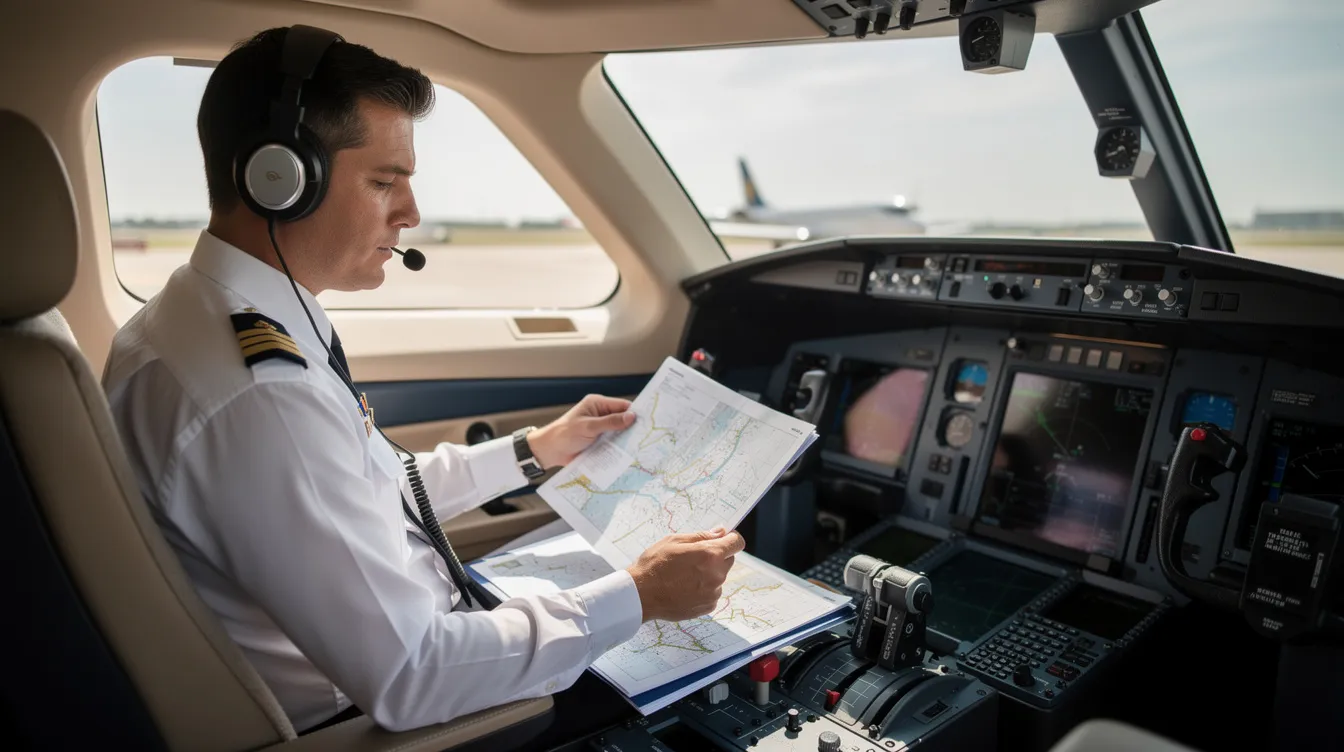
In-flight updates differ significantly on private jets. Pilots may brief passengers directly before taxi, explaining the expected climb profile, turbulence bands at specific altitudes, and any route changes required by air traffic control. They often invite questions—a stark contrast to commercial aviation’s scripted, pre-recorded announcements.
Technology like SkyGuru complements these crew briefings by providing sensor-based stage detection. The app identifies takeoff, climb, cruise, and descent phases in real time, explaining sounds (gear retraction thumps, autothrottle whooshes) and sensations (bank angles during turns) that might otherwise concern nervous flyers. User studies and media coverage of the app’s effectiveness show a 92% reported anxiety reduction when passengers understand what they’re feeling.
Connectivity and Communication Balance
Many private jets now feature robust connectivity—95% of 2026 fleets offer 50 to 200 Mbps through services like Gogo 5G or Starlink aviation. This supports secure video conferences for assistants or quick family pings, while “do not disturb” protocols remain available. The cabin of a private jet operates as a secure office, promoting productivity during flights when needed, or complete disconnection when preferred.
Plain-language translation remains essential throughout. “ATC flow control” becomes “a 10-minute hold for traffic ahead.” “Icing conditions” trigger an explanation about climbing 1,000 feet to warmer air. “Crosswinds above limits” prompts discussion of go-around possibilities before they become stressful surprises. This transparency builds trust—VistaJet’s 2025 member surveys show 89% loyalty correlates with update frequency.
Handling Delays
Private jets are not immune to delays. Weather, air traffic control, crew duty limits, and maintenance all apply equally to private aviation. The difference lies in how those delays are managed, which defines true client experience and service standards.
Common Causes
According to 2025 WingX Advance analytics of over 150,000 Part 135 flights, delays break down approximately as follows:
-
Weather causes 42%
-
Air traffic control 28%
-
Maintenance 18%
-
Crew limitations 12%
Common triggers include IFR visibility minimums at smaller airports (Aspen cancels 30% of winter operations when visibility drops below one mile), convective weather lines, runway work announced via NOTAMs, and maintenance findings during pre-flight inspections.
Private jets allow for more flexible scheduling, which can alleviate anxiety related to flight times and delays commonly experienced in commercial air travel. But flexibility has limits when safety is involved.
A Concrete Example
Consider a summer 2026 evening flight from Chicago Midway to New York Teterboro. A thunderstorm line at 10,000 feet prompts a dispatch alert at 1400—four hours before planned departure. The message explains: “Expect 90-minute hold; options available.”
Those options demonstrate the service difference:
-
Depart at 2000 via a southern reroute, adding 20 minutes
-
Divert to White Plains (45-minute drive to Manhattan)
-
Use Morristown (customs-ready for international passengers)
-
The FBO pivots catering from hot meals to ambient options that travel better.
-
Offers hangar lounge access with showers
-
Coordinates Mercedes ground transport to alternate airports
Total delay: 75 minutes. Average commercial delay for the same weather: four hours.
How Proactive Communication Works During Delays
Effective delay management requires early warnings—one to two hours ahead when possible—with clear root-cause explanations. Operators reference specific weather data (convective lines per NEXRAD radar) and provide realistic timelines with plus-or-minus 30-minute accuracy using predictive tools and specialized flight and turbulence data APIs. They present menus of alternatives: time shifts, airport swaps, or turbulence-avoiding altitudes.
Flexibility and adaptability are crucial in private aviation, allowing clients to make last-minute changes to their plans, which enhances the overall customer experience. However, this flexibility operates within operational constraints that protect everyone aboard.
Crew Duty Limits Are Non-Negotiable
Crew duty caps are ironclad. FAA Part 135 limits pilots to specific flight and duty hours per leg—typically 10 hours flight time within a 14-hour duty window—with no waivers regardless of passenger importance. Exceeding these limits forces crew changes, potentially requiring eight-hour layovers after transcontinental flights.
Private jets adhere to the same stringent safety regulations as commercial aircraft, as mandated by the Federal Aviation Administration (FAA), which requires all planes to be properly maintained and operated by skilled pilots and crew members. Reputable operators like NetJets enforce these standards through audit systems, prioritizing safety over speed with 99.97% compliance rates.
Realistic Passenger Expectations
When asking to wait for a late VIP guest, understand that jets can idle only one to two hours maximum before fueling windows close and departure slots expire. Early departures risk crew rest violations from the previous duty period. Realistic flexibility extends to about 45 minutes with adequate notice.
For anxious passengers, apps that help with fear of flying, like SkyGuru, help during delays by explaining the weather patterns or turbulence forecasts causing the hold. Radar overlays show storm decay rates, and historical data contextualizes the wait—Teterboro thunderstorm delays average 62 minutes, transforming stress into a manageable context.
VIP Service Standards
VIP service in private aviation extends beyond luxury interiors. It encompasses consistent safety, discretion, and reliability built on clear standards and procedures that deliver exceptional customer service every flight.
Core Service Standards
Aircraft presentation on arrival follows strict protocols: post-flight deep cleans, meeting audit specifications, take approximately two hours. Crew uniforms are pressed, briefings are concise (under five minutes), and FBO doors open within two minutes of chocks being set. These baseline standards apply whether you’re boarding a smaller jet for a quick hop or a long-range aircraft for an ocean crossing.
Cabin Experience Elements
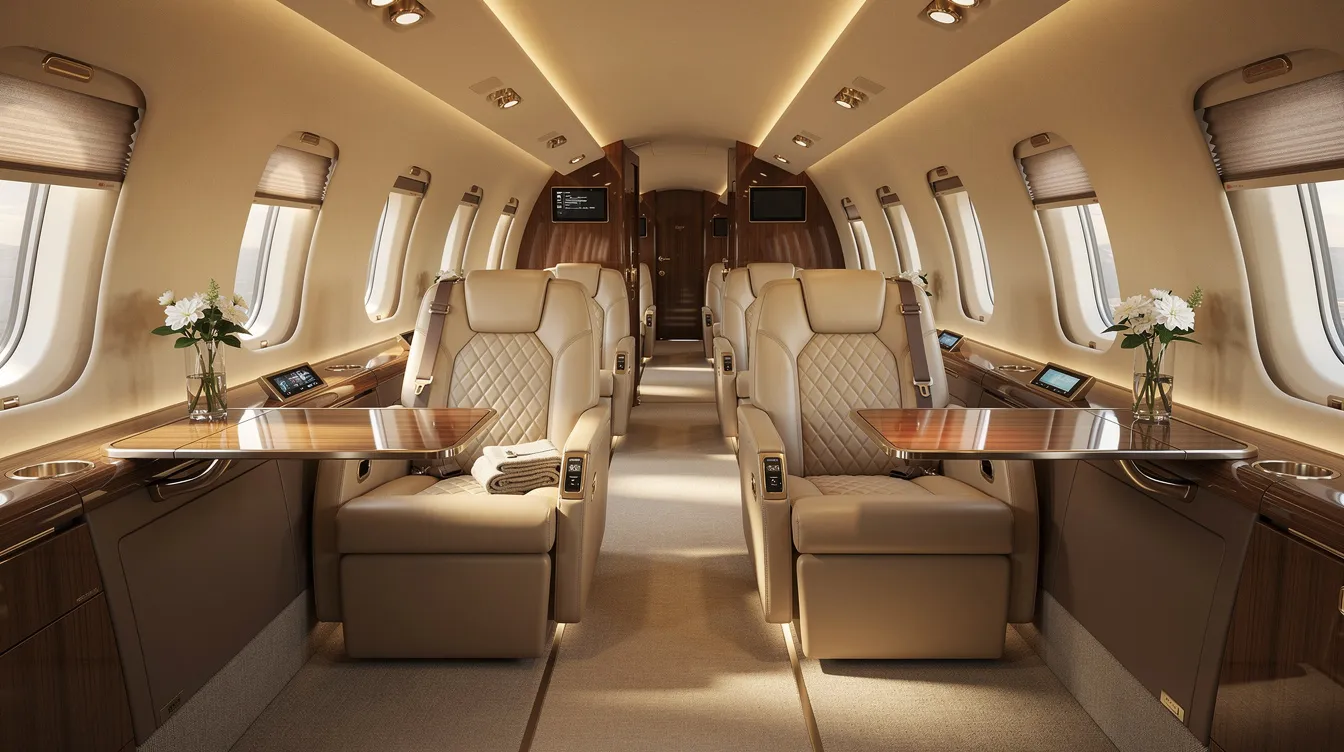
Boarding reveals pre-configured settings based on your stored preferences: circadian-appropriate lighting (warm 2700K tones for evening flights), zoned climate control between 68 and 74 degrees, and crew greetings that reference your name and preferred beverages. Cabin environments on private jets typically include wider seats, deeper recline options, and may feature additional luxuries like bedrooms and full kitchens on larger aircraft.
Passengers on private jets often experience less stress due to the reduced number of fellow travelers, allowing for a more tranquil environment during the flight. Quick demonstrations cover lie-flat seats (typically offering 20 to 30 degrees of recline beyond first-class equivalents), conference tables accommodating up to eight for meetings, 4K entertainment systems synced to streaming profiles, and safety equipment locations.
Passengers on private jets can enjoy greater comfort with more legroom and reclining space compared to first-class commercial seats, often accommodating fewer than ten passengers. Private jets provide customizable amenities, enabling passengers to personalize their in-flight experience, including choices for meals and cabin settings.
Comparing Space to First Class
Where commercial first-class pods are limited by aircraft fuselage width, private jet cabins offer 6’4” standing height in larger aircraft, conference ovals for C-suite meetings, and divans that convert to beds for families with children. This layout is deliberately planned before your entire journey begins, using the CRM data operators maintain for repeat clients—accuracy rates reach 92% for preference matching.
Special Corporate Requirements
Corporate jets frequently accommodate special requests: encrypted Wi-Fi, meeting specific security classifications for deal documents, crew NDAs standard in 98% of contracts according to NBAA data, and tarmac helicopter transfers for time-critical itineraries. The ability to accommodate unique needs—whether confidential document handling or seamless connections between aircraft—defines the corporate travel experience.
Safety as the Non-Negotiable Standard
Safety remains the foundation of genuine VIP service. Passengers on private jets must wear seat belts during takeoff, landing, and whenever deemed necessary by the crew, as required by FAA regulations, which also mandate a safety briefing for all passengers. Professional crews communicate de-icing decisions (triggered at 10 degrees Celsius outside air temperature with precipitation), go-around choices when crosswinds exceed 20 knots, and turbulence response procedures calmly and directly.
Adherence to manufacturer procedures takes precedence over passenger convenience. A crew that executes a go-around at Teterboro due to windshear—even when it adds 15 minutes to land at White Plains—demonstrates the safety-first ethos that protects everyone aboard.
Emotional Safety as a VIP Standard
Increasingly, emotionally safe experiences are part of VIP standards. This includes support for nervous flyers: calm explanations of turbulence, permission to ask questions of the flight crew, and accommodation of apps that help overcome fear of flying, like SkyGuru on phones or tablets. The app provides real-time explanations of sensations during private jet travel, helping passengers understand bank angles, descent rates, and the mechanical sounds that accompany normal flight operations, and has been widely recognized in media coverage of SkyGuru’s fear-of-flying solution.
The most memorable private jet customer experience is often defined by how informed and relaxed passengers feel—not solely by catering or cabin design. A late-night Teterboro-to-London Gulfstream flight where turbulence briefings and app notifications yield a 9.8 out of 10 satisfaction score demonstrates that operational transparency, not opulence alone, drives loyalty.
Frequently Asked Questions (FAQs)
What is the difference between the private jet customer experience and the commercial first class?
Private jet customer experience emphasizes privacy, flexibility, and personalization. Unlike commercial first class, private jets offer complete control over scheduling, tailored amenities, and access to smaller airports, significantly reducing overall travel time and anxiety. Learn more about these differences in the Private Jet vs. Commercial First Class: Key Differences section.
How does additional cost affect private jet travel?
Additional cost in private jet travel often relates to personalized services, specific airport fees, or last-minute itinerary changes. While private jets can be cost-effective for certain routes, understanding potential extra costs upfront helps manage expectations and ensures a smooth experience. Details on scheduling flexibility and costs are discussed in Handling Delays.
Can private jets land in cities like New Orleans?
Yes, private jets can access thousands of regional airports, including those near cities like New Orleans, providing convenient and flexible travel options that commercial airlines cannot always offer. See more about airport access in Pre-Flight Communication.
How do private jet service standards ensure safety?
Private jet operators adhere to rigorous FAA safety regulations, including strict maintenance schedules, trained crew, and mandatory safety briefings. These standards ensure that safety is never compromised, regardless of the overall experience or luxury level. For a deeper look, refer to VIP Service Standards.
How does demand impact private jet availability?
Demand influences scheduling flexibility and aircraft availability. During peak travel seasons or high-demand events, early booking is essential to secure preferred aircraft and routes without incurring extra cost or delays. More on this is covered in Pre-Flight Communication and Handling Delays.
Conclusion
Understanding what happens behind the scenes transforms flying private from mysterious luxury into predictable excellence. Whether you’re a business traveler scheduling your next trip, a family planning a holiday charter, or an anxious flyer seeking control over your travel experience, this knowledge turns the unknown into the manageable. Consider downloading SkyGuru before your next flight to see how an app can help your fear of flying with stage-by-stage explanations of what you’ll feel and hear—because the best way to fly without worry is to fly with understanding.
FLEET SELECTION
JET CARDS
COST ANALYSIS


How to Auditing Your Operator's Maintenance Logs
Oct 05, 2025

How to Auditing Your Operator's Maintenance Logs
Oct 05, 2025

How to Auditing Your Operator's Maintenance Logs
Oct 05, 2025
Sky Guru Weekly
The smartest private aviation intelligence in your inbox.
.svg)

