



If you’ve ever wondered what private jet charter costs actually look like, here’s the direct answer: most charter flights run between $2,000 and $15,000+ per flight hour, depending on the aircraft and route. Private jet charter pricing is primarily driven by the aircraft’s size and hourly rate, with total costs often ranging from $2,000 to over $20,000 per billable flight hour.
Unlike flying commercial, where you pay per seat, the cost to charter a private jet means renting the entire aircraft. You’re paying for the whole plane, crew, and operational costs—whether you fill every seat or fly solo. Flying a private plane via charter offers the luxury, flexibility, and convenience of private aviation without the long-term commitment or expense of ownership, making it an attractive alternative to buying or fractional ownership.
This fundamental difference is why comparing private aviation to commercial flights requires a different mindset.
Here’s what many first-time charter clients don’t realize: the hourly rate you see quoted is just the starting point. Taxes, landing fees, crew overnight expenses, and extras like in-flight catering can add 20–40% to your final cost beyond the base hourly rate. That “all-in” price is what actually matters when planning your budget.
To put things in perspective, consider a one-way flight from New York to Miami. A light jet charter might cost around $9,500–$10,500 total. Split among 6 passengers, that’s roughly $1,600 per person—competitive with last-minute first class tickets on the same route, but with the added benefits of privacy, flexible scheduling, and avoiding crowded terminals.
What drives these numbers? Several factors: aircraft size, flight time, route complexity, and add-ons like ground transportation or premium catering. On-Demand pricing is subject to current market demand, route popularity, and aircraft availability, offering maximum flexibility without long-term contracts—much like how specialized aviation data services, such as the SkyGuru API platform for flight and weather data price access based on usage.
One quick note: SkyGuru isn’t a charter broker or booking platform. We’re a travel-tech app designed to help travelers—including those on private flights—feel calmer and more informed in the air. Our real-time explanations of flight stages, turbulence forecasts, and coping tools work whether you’re in seat 32C or a private jet cabin. Understanding costs before you book is the first step; feeling confident once you’re airborne is where we come in.
Introduction to Private Jets
Private jets epitomize the highest level of personalized air travel, delivering unmatched exclusivity, flexibility, and comfort that commercial airlines simply cannot offer. Whether you’re flying for business or leisure, a private jet charter allows you to set your own schedule, choose your preferred airports, and enjoy a tailored in-flight experience.
Unlike commercial flights, where you’re limited by fixed routes and crowded terminals, private jet travel puts you in control of every aspect of your journey.
When considering a private jet charter, it’s important to understand that private jet charter prices can vary dramatically. The cost depends on several key factors, including the type of aircraft you select, the flight distance, and any additional services you might require—such as in-flight catering or ground transportation.
For some trips, private jet charter prices may be just a few thousand dollars per hour, while for longer flights on larger jets, costs can reach tens of thousands per hour. This wide range makes it essential to research your options and compare offers to find the best fit for your needs and budget.
By understanding these variables, you can make informed decisions and enjoy all the benefits that private jet travel has to offer.
Average Private Jet Hourly Rates by Aircraft Type
Most private jet charter costs are calculated based on hourly rates that differ significantly by aircraft category. Private jet charter costs can range from $1,200 to over $10,000 per billable flight hour, depending on the type of aircraft and other factors. The general rule: the larger the aircraft and the farther it can fly without refueling, the higher the private jet hourly rates.
Here’s how pricing typically breaks down across aircraft categories based on 2025 North American market conditions:
|
Aircraft Category |
Typical Hourly Rate (USD) |
Passenger Capacity |
Best For |
|---|---|---|---|
|
Very Light Jets (VLJs) |
$2,000 - $3,000 |
4-7 |
Short regional trips, small groups (2-4 pax) |
|
Light Jets |
$3,000 - $4,500 |
6-9 |
Short to medium-haul flights |
|
Midsize Jets |
$4,500 - $6,500 |
7-9 |
Longer flights, increased comfort |
|
Super Midsize Jets |
$6,000 - $8,500 |
8-10 |
Transcontinental flights, larger cabins |
|
Heavy/Large Cabin Jets |
$8,500 - $12,000 |
9-16 |
International, long-range luxury travel |
|
Ultra Long-Range Jets |
$11,000 - $18,000 |
10-19 |
Nonstop intercontinental flights |
Estimated hourly rates for turboprops range from $2,000 to $4,000, light jets from $3,000 to $8,000, midsize jets from $4,000 to $10,000, and heavy jets from $8,000 to $15,000+. Keep in mind that rates vary by aircraft age, operator, and specific model—a brand-new 2025 Gulfstream will typically command higher rates than a 2015 model of the same type.
What Determines the Cost of a Flight?
Beyond the headline private jet hourly rates, your total private jet charter cost depends on flight time, aircraft type, routing logistics, and various operational factors. Understanding these elements helps you compare quotes from different charter providers more fairly—and spot when one quote is genuinely better value versus just appearing cheaper.
The cost of chartering a private jet is influenced by various factors, including the type of aircraft, flight distance, travel timing, and any additional services requested. This section breaks down the three biggest cost drivers: flight time, aircraft choice, and distance with routing complexity—factors that also shape professional flight and turbulence data provided via the SkyGuru API.
When right-sizing an aircraft for your group, passenger count is a key factor that determines which aircraft types are suitable, directly impacting operational efficiency and trip planning.
Even though SkyGuru doesn’t sell flights, once you’ve booked your private charter, our app can help you feel more confident about what’s happening in the air—from explaining unexpected turbulence to walking you through each flight phase in real time.
Flight Time
Billable flight time is usually calculated “wheels up to wheels down,” plus any positioning legs required to get the aircraft to your departure point or return it to base afterward. This distinction matters because an aircraft might need to fly empty for 1–2 hours just to pick you up, and those hours often appear on your invoice.
The basic formula is straightforward: billable flight hours multiplied by the private jet hourly rate equals your base flight cost, with taxes and fees added on top. For example, a 2-hour light jet flight at $3,500 per hour produces a $7,000 base cost. A 5-hour midsize jet leg at $5,000 per hour means $25,000 base.
Most operators impose daily minimums—often 2 flight hours per day. This means a quick 45-minute hop might still cost $7,000 (2 hours × $3,500) on a light jet because you’re paying for the minimum regardless of actual air time. Short-range light jet charter can cost around $15,000 to $20,000 for round-trip travel precisely because of these minimums and associated fees.
Multi-leg trips with lots of short hops throughout a single day can actually cost more than one simple out-and-back route, even if the total distance isn’t huge. Each takeoff and landing cycle adds wear, fuel burn, and operational complexity.
One-way pricing is available for popular routes, allowing payment only for the time in the air without covering the cost of the aircraft return. This can create savings on high-demand corridors where operators know they’ll easily fill the return leg.
For longer flights, more time aloft means more opportunities to encounter turbulence or weather diversions. That’s where an app like SkyGuru helps passengers stay calm through real-time explanations of what’s happening and why.
Aircraft Type
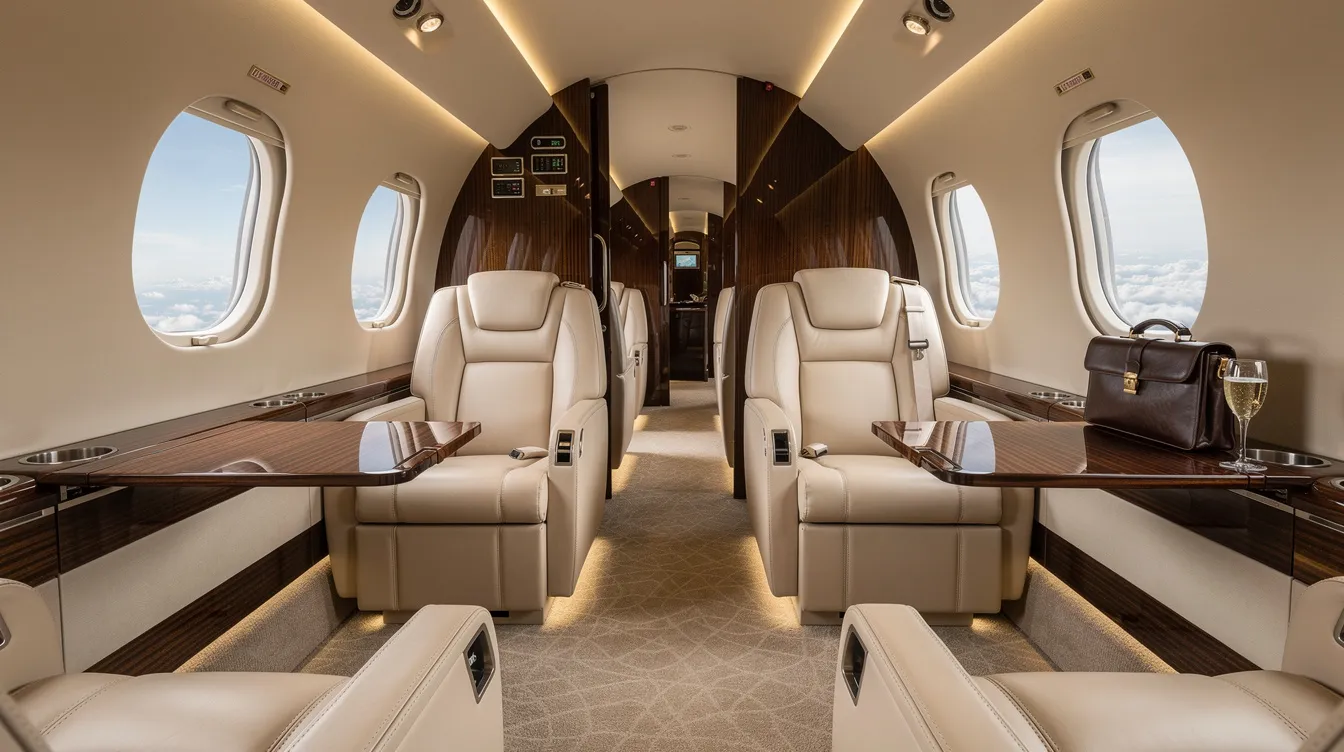
Aircraft size, aircraft weight, range capabilities, and onboard amenities all drive the base cost to charter a private jet. Larger aircraft burn more fuel, require more specialized maintenance, have higher crew salaries, and typically feature more luxurious cabins—all of which justify higher private jet hourly rates.
Consider a concrete comparison: a Pilatus PC-12 turboprop at roughly $2,000–$2,500 per hour versus a Gulfstream G650 at $12,000–$15,000 per hour on the same 2-hour route. The G650 offers intercontinental range, a spacious stand-up cabin, and premium amenities. The PC-12 gets you there just fine on regional routes, but with a more modest cabin experience.
Aircraft type and size significantly affect charter costs, with larger jets incurring higher operational, fuel, and maintenance costs. A heavy jet might burn 200+ gallons of fuel per hour compared to 60–80 gallons for a light jet—that fuel consumption difference alone adds thousands to longer flights.
Choosing a jet that’s “too big” for your group and flight distance can inflate your private jet charter cost without adding real value. Right-sizing is key: small groups under 5 passengers on shorter flights usually fit best in turboprops, VLJs, or light jets. Larger teams or longer legs may justify midsize jets or heavy jets.
For anxious flyers, it’s worth noting that quieter, more modern personal aircraft can feel smoother and less stressful. The cabin noise difference between a 2010 light jet and a 2024 model can be significant—sometimes worth a modest premium for certain travelers.
Distance & Routing
Longer routes cost more simply because you’re flying for more hours. But routing details can make two “similar” trips price out very differently. Fuel stops, airport choice, and even wind patterns all influence your final cost.
Some routes require fuel stops due to aircraft range limits. A light jet flying from Los Angeles to New York might need to stop in Denver or Dallas for fuel, adding 0.5–1 extra billable hour plus landing fees and handling charges at the intermediate airport. A super midsize jet can make the same trip nonstop, saving time even if the hourly rate is higher.
Costs for landing at specific airports and using private terminals, also known as Fixed Base Operators (FBOs), can significantly contribute to charter expenses. Busy airports like JFK, LAX, and London Heathrow typically charge higher landing fees than nearby secondary options like Teterboro, Van Nuys, or London Luton. Choosing smaller airports when practical can reduce your total bill.
Air traffic control routings, weather deviations, and headwinds or tailwinds can slightly lengthen or shorten actual flight time, nudging the final cost up or down. A strong headwind on a transatlantic crossing might add 30–45 minutes to your flight duration.
SkyGuru’s in-flight commentary can translate these routing changes and holding patterns into plain language, helping passengers understand why the plane is circling or taking an unexpected path—reducing anxiety during the trip.
Why Private Jet Prices Change From Trip to Trip
Two people flying the same route a week apart can receive very different quotes. Private jet charter cost is dynamic, not fixed—think of it more like hotel pricing than retail shopping. Several factors create this variability.
Seasonal demand and peak periods play a major role. Holidays like Christmas through New Year, major events such as the Super Bowl, Art Basel Miami, or the World Economic Forum in Davos, and summer weekends to popular destinations can push prices up 20–50%. When everyone wants to fly to Aspen the week before Christmas, available aircraft become scarce and premium-priced.
Aircraft availability and supply directly affect your quote. If a suitable jet is already parked at or near your departure airport, your price can be significantly lower than if it must be ferried from hundreds of miles away. The charter market constantly shifts as aircraft move between cities.
Repositioning costs are a hidden factor that many travelers don’t anticipate. Here’s an example: a jet based in Dallas needs to fly empty to Aspen before your Aspen-to-Los Angeles trip. That 1.5–2 hour positioning leg becomes part of your cost, even though you’re not aboard for it.
Empty leg flights are one-way private jet flights that occur when a chartered aircraft needs to return to its home base or reposition for another flight without any passengers on board. Travelers can benefit from significant discounts on empty leg flights, as operators often offer these flights at reduced rates to offset costs associated with flying without passengers. However, while empty leg flights can provide cost savings, they require flexibility in travel plans, as the timing and routing may not always align with a customer’s needs.
Booking timing matters too. Last-minute charter flights can be more expensive due to limited availability, but occasionally, there are “must-move” aircraft that create short-term deals when operators need to reposition planes anyway.
Private jet charter services also provide on-demand flights, offering flexible, immediate, and personalized travel options tailored to your schedule. Pricing models include pay-as-you-go for individual trips and prepaid Jet Cards for frequent travelers. Jet Cards lock in hourly rates and guarantee availability but require an upfront commitment. For very frequent flyers seeking equity in a specific aircraft, fractional ownership programs present another alternative.
Private jet travel is especially favored for business purposes, delivering efficiency, flexibility, and productivity benefits that commercial airlines struggle to match—yet many executives still face fear of flying that dedicated apps can help alleviate.
Think of private jet pricing like reserving an entire hotel room for a night—the cost fluctuates based on date, location, and demand, which can increase anxiety for some travelers. Because of this variability, online “average cost to charter a private jet” calculators provide estimates rather than exact prices. Only a formal quote reflecting current conditions can reveal your actual cost.
Being flexible with travel dates and airports can help lower private jet charter expenses, as peak seasons and specific routes tend to be pricier. Flying midweek instead of Friday afternoon, or using Van Nuys instead of LAX, might save money on the same basic trip.
Additional Costs to Be Aware Of
Base private jet hourly rates don’t include taxes and many operational charges that can add thousands of dollars to a multi-day trip. Additional costs associated with private jet charters can increase the overall cost by 20-40% beyond the base hourly rate. Here’s what to expect:
Landing and Airport Fees
-
Landing and airport fees typically run $100–$1,500+, depending on airport size and aircraft weight. Airport landing fees can vary significantly within this range per flight. Landing and handling fees vary by airport and aircraft weight, with some high-density hubs charging over $1,000. Major international airports like Heathrow or JFK sit at the high end; small regional fields charge much less.
Ramp and Handling Fees
-
Ramp and handling fees cover parking, towing, and basic ground services at the FBO. Expect around $100–$500 per stop, which adds up on multi-city itineraries.
Crew Costs
-
Crew costs include overnight fees, per diems, and hotel expenses for multi-day trips. These overnight expenses specifically cover lodging and meals for crew members when they are required to stay away from home. Crew expenses for overnight trips typically range from $200 to $600 per crew member per night. A three-day trip with a two-person flight crew could mean $1,200–$3,600 just in crew fees.
Fuel Surcharges
-
Fuel surcharges fluctuate with oil prices. Fuel surcharges are additional fees applied based on fuel price fluctuations, often exceeding 20% of operating costs. When jet fuel prices spike, some operators add approximately $300+ per flight hour on top of standard rates.
Deicing and Winter Operations
-
Deicing and winter operations catch many travelers off guard. Deicing can range from roughly $1,500 for a light jet to $10,000+ for a heavy jet during snow and ice conditions. Flying to Aspen in January? Budget accordingly.
Catering and Onboard Services
-
Catering and onboard services can vary greatly depending on your preferences. Additional options such as catering, ground transportation, and in-flight entertainment may significantly increase the total cost of your private jet charter. Catering expenses typically range from $230 to $2,000 per leg. While basic snacks and beverages might be included, custom meals featuring premium alcohol or special dietary requirements usually incur extra charges.
Wi-Fi and Connectivity
-
Wi-Fi and connectivity charges depend on the aircraft. Some jets include unlimited Wi-Fi; others bill metered data, especially on international routes where satellite connectivity is expensive.
Taxes
-
Taxes add to the bottom line. Federal Excise Tax of 7.5% is applied to all domestic flights within the United States, contributing to the overall cost of private jet charters. International routes may incur additional head taxes or segment fees per passenger.
Ground Transportation
-
Ground transportation to and from the FBO can easily add $200–$1,000+, depending on city and vehicle class. Chauffeured SUVs in Manhattan or Los Angeles premium areas cost more than standard sedan service in smaller markets.
The best practice? Ask for an “all-in” quote that clearly itemizes these hidden costs and additional fees. A quote that looks $5,000 cheaper initially might be $2,000 more expensive once all the extras are included.
Federal Excise Tax
One important aspect of private jet travel in the United States is the federal excise tax, which applies to all domestic charter flights. This tax is set at 7.5% of your total charter cost and is typically included in your final invoice.
The federal excise tax is a standard part of private jet pricing and ensures compliance with U.S. aviation regulations. When budgeting for your private jet trip, it’s crucial to factor in this tax, as it can add a significant amount to your overall charter cost. By being aware of the federal excise tax and other associated fees, you can plan your private jet travel more accurately and avoid surprises when you receive your final bill.
Chartering Options
Chartering a private jet opens up a world of travel possibilities, offering unmatched flexibility, comfort, and convenience compared to commercial flights. With a variety of chartering options available, you can select the aircraft that best matches your needs—whether that’s a nimble light jet for quick regional hops or a spacious large cabin jet for long-haul journeys.
Each aircraft type brings its own set of features, from seating capacity and cabin amenities to range and baggage space, allowing you to tailor your private jet experience to your specific requirements.
Private jet charter is ideal for both business and leisure travelers who value privacy, efficiency, and the ability to bypass the hassles of commercial airports. Unlike flying commercial, where you’re limited to scheduled routes and crowded cabins, chartering a private jet means you set the itinerary and enjoy a personalized, stress-free journey.
Whether you’re traveling solo, with colleagues, or with family, the right chartering option ensures your trip is as comfortable and seamless as possible.
Rental Options
Renting a private jet offers a flexible and cost-effective alternative to traditional charter or ownership, making private aviation accessible for a wide range of travelers. With private jet rental, you can choose from an extensive selection of aircraft types and sizes, ensuring you find the perfect fit for your trip—whether it’s a short business meeting or an extended vacation.
Rental periods are highly adaptable, ranging from a few hours to several days or even weeks, giving you the freedom to plan your travel around your unique schedule.
Private jet rental is especially appealing for those who want access to a diverse fleet and a broader range of destinations without the long-term commitment or expense of owning a personal aircraft. It’s an excellent solution for both business and leisure travelers seeking the convenience and luxury of private jet travel, with the added benefit of only paying for the time and services you actually use.
By exploring rental options, you can enjoy all the advantages of private aviation while maintaining maximum flexibility and control over your travel experience.
Real-World Private Jet Route Examples
These simplified examples illustrate how different factors combine to create actual trip costs, based on typical 2024–2025 North American and transatlantic pricing. Treat these as starting points—always request a detailed quote reflecting current fuel prices, taxes, and aircraft availability.
Example 1: New York (Teterboro) to Miami One-Way in a Light Jet
Flight duration runs approximately 2.5 hours in a light jet. At $3,500 per hour, the base flight cost is roughly $8,750.
Add sample landing and handling fees at both airports ($400–$800 total) plus the 7.5% U.S. Federal Excise Tax (approximately $650), and the rough all-in cost lands around $9,500–$10,500.
Private jet travel can be made more affordable by sharing the cost with fellow passengers, which can save individuals 40-70% compared to flying solo. Split this among 6 passengers, and per-person cost becomes approximately $1,600–$1,750—competitive with last-minute first class ticket prices on the same route, but with private terminal access, no security lines, and the ability to bring pets onboard without restrictions.
Example 2: Los Angeles (Van Nuys) to Aspen Round Trip Weekend in a Midsize Jet
This popular ski season route runs approximately 2 hours each way, totaling 4 flight hours. A midsize jet at $5,000 per hour produces a $20,000 base cost.
Add crew overnight expenses for two nights ($600–$1,000), winter operational costs including potential deicing in Aspen ($2,000–$5,000 depending on conditions), landing fees at both airports ($400–$600), and various handling charges.
The all-in range typically falls between $23,000–$28,000 depending on exact dates and weather conditions. Peak demand periods like Christmas week or Presidents’ Day weekend push toward the higher end.
Example 3: London (Luton) to Dubai One-Way in a Heavy/Ultra-Long-Range Jet
This intercontinental route covers approximately 7 flight hours. At $11,000 per hour for a heavy jet, the base flight cost reaches $77,000.
International handling fees, overflight permits, premium catering for the longer flight, and additional services push the estimated total to $85,000–$95,000. Luxury ultra-long-range aircraft with sleeping accommodations and shower facilities command rates at the higher end of this spectrum.
For long overnight or turbulence-prone routes like this, tools like SkyGuru—highlighted by media outlets for helping nervous flyers manage anxiety—help nervous flyers manage anxiety by explaining the noises, bumps, and flight phases in real time—whether you’re flying commercial or on a private charter.
Getting Accurate Quotes
Booking empty legs—discounted private jet flights available when an aircraft operates without passengers, typically due to repositioning or maintenance—can provide significant savings on private jet travel if your schedule allows flexibility.
To ensure you get an accurate quote, follow these steps:
-
Request a detailed quote that includes all positioning flights, taxes, and operational fees.
-
Compare “base hourly rate” quotes to “all-in” quotes to see the true total cost.
-
Ask for itemized breakdowns of all additional charges, such as landing fees, crew costs, and catering.
-
Confirm availability and timing for empty leg deals if you have flexible travel dates.
The difference between a “base hourly rate” quote and an “all-in” quote can be 20–40% or more.
Frequently Asked Questions (FAQs) About Private Jet Charter Cost
How much does it cost to charter a private jet?
The cost to charter a private jet varies widely depending on aircraft type, flight duration, route complexity, and additional services. Hourly rates typically range from $2,000 to over $18,000 per hour. Additional fees such as taxes, landing fees, and catering can add 20–40% to the base price.
What factors influence private jet hourly rates?
Private jet hourly rates are influenced by aircraft size, age, range, and onboard amenities. Larger and newer jets with longer ranges generally command higher hourly rates due to increased fuel consumption, maintenance, and crew requirements.
Can I save money by booking an empty leg flight?
Yes, empty leg flights—one-way flights without passengers when the jet repositions—are often offered at significant discounts. However, they require flexibility in travel dates and routing.
Are there hidden fees in private jet charters?
Reputable operators provide transparent pricing, but additional costs such as landing fees, crew overnight expenses, fuel surcharges, and catering can increase the total cost. Always request an all-inclusive quote to avoid surprises.
Is it cheaper to charter a private jet or buy a first-class ticket?
Chartering a private jet is usually more expensive than a first-class commercial ticket. However, when traveling with groups, flying to smaller airports like those near San Francisco, or requiring flexible schedules, private jet charters can offer better value.
How do I choose the right aircraft for my trip?
Choosing the right aircraft depends on passenger count, flight distance, and comfort preferences. For example, a Learjet is ideal for short to medium regional flights with up to 8 passengers, while heavy jets suit longer international routes.
What additional costs should I budget for beyond the hourly rate?
Budget for landing and handling fees, crew overnight costs, fuel surcharges, catering, taxes (including the 7.5% Federal Excise Tax in the U.S.), and ground transportation. These can add 20–40% to your base hourly rate.
Can I bring pets on a private jet charter?
Most private jets allow pets on board, often with fewer restrictions than commercial flights. Always confirm pet policies with your charter operator before booking.
How far in advance should I book a private jet charter?
Booking at least a few days in advance helps secure the best aircraft availability and pricing. Last-minute bookings are possible but may come at a premium.
Does flying private reduce travel time?
Yes, flying private saves significant time by allowing departures from smaller airports closer to your home or destination, avoiding long security lines, and offering flexible scheduling.
Conclusion: Making Sense of Private Jet Charter Cost (and Staying Calm in the Air)
Total private jet charter cost is driven primarily by private jet hourly rates, flight time, aircraft type, route complexity, and extras like taxes, landing fees, and handling charges. While online calculators provide helpful estimates, only a written quote that includes all fees and taxes shows your true final cost.
Comparing aircraft types and routing options helps you right-size your trip and avoid paying for more jet than you actually need. A short hop for 4 passengers doesn’t require a Gulfstream; a transcontinental business trip for 12 might. The economical option isn’t always the smallest plane—it’s the one that matches your specific trip details.
Private charter offers flexibility that flying commercial simply cannot: departing from smaller airports closer to home, setting your own schedule, bringing pets onboard, and skipping crowded terminals. Whether you’re comparing jet cards, fractional ownership, or simple on-demand charter flights, understanding the cost structure helps you make informed decisions.
Once your trip is booked, understanding what happens during the flight itself is the next step toward stress-free travel, especially if you’re among the many travelers dealing with fear of flying, which apps can help you manage. That’s where SkyGuru comes in, with a turbulence-prediction app widely covered in the media for helping nervous flyers. Download the app, enter your flight details—including private jet flights when data is available—and receive turbulence forecasts, real-time explanations of flight stages, and coping tools designed for those who experience fear of flying.
Understanding how private jet rental costs break down removes the mystery from the booking process. Knowing what to expect in the air removes anxiety from the journey itself. Together, both forms of knowledge make private jet travel feel more transparent, safer, and far less stressful than it might otherwise seem.
Whether this is your first charter or your fiftieth, the more informed you are, the better your experience will be—both on the ground and at 41,000 feet.
FLEET SELECTION
JET CARDS
COST ANALYSIS


How to Auditing Your Operator's Maintenance Logs
Oct 05, 2025

How to Auditing Your Operator's Maintenance Logs
Oct 05, 2025

How to Auditing Your Operator's Maintenance Logs
Oct 05, 2025
Sky Guru Weekly
The smartest private aviation intelligence in your inbox.
.svg)

