



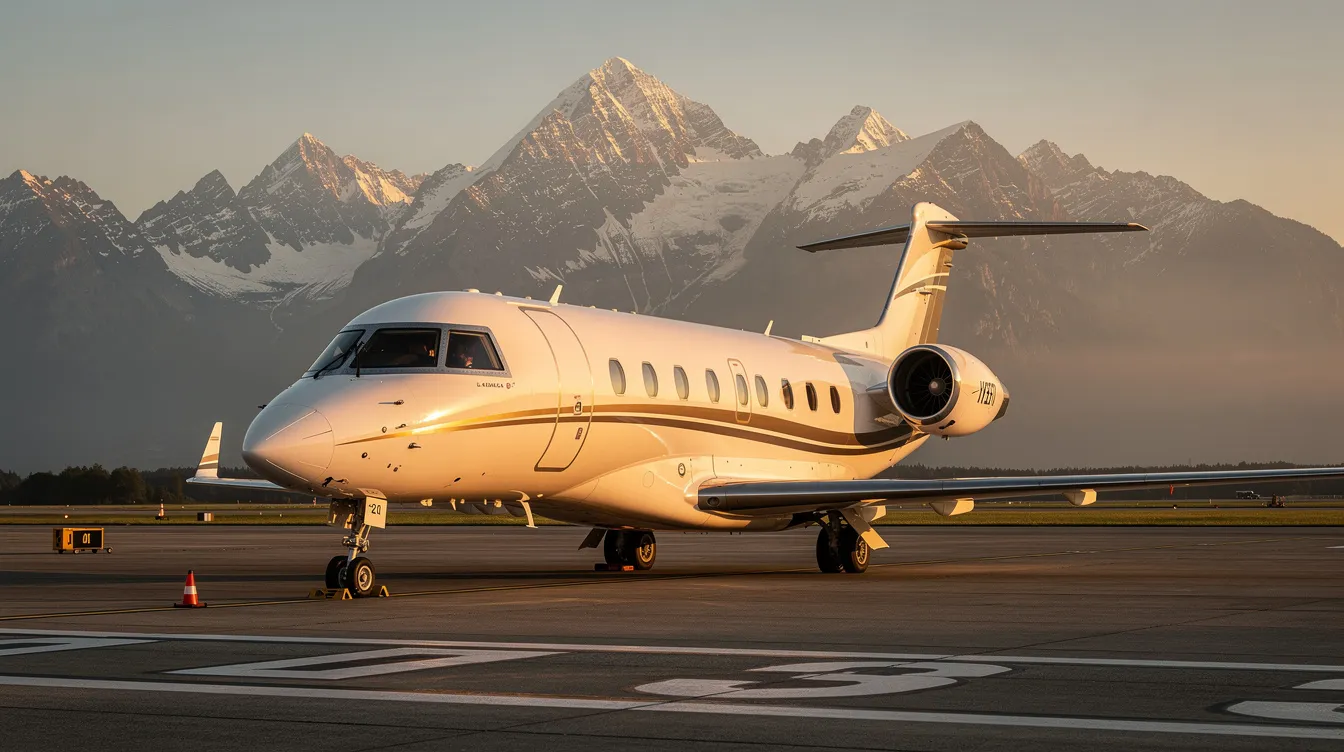
Private aviation industry trends are rapidly transforming how travelers access, book, and experience non-commercial air travel. Private aviation refers to non-commercial air travel using business jets, turboprops, or helicopters—distinct from the scheduled flights you’d book through a commercial airline. Think of it as the difference between taking a taxi directly to your destination versus riding a city bus that stops for everyone along the way.
This guide is designed for business travelers, aviation enthusiasts, and anyone interested in understanding the latest trends shaping the private aviation industry. Staying informed about these trends is crucial for making smart travel decisions and anticipating changes in the market.
Main Ways to Access Private Jets
The private jet ownership market is divided into several models, including full ownership, fractional ownership, and charter services, each catering to different needs and budgets of users. There are four main ways to access private jets, plus flexible leasing options that offer customizable terms and cost savings for travelers seeking access without long-term commitments:
|
Access Model |
How It Works |
Best For |
|---|---|---|
|
Charter flights |
Rent an entire aircraft for a single trip through a broker or operator. Charter services allow users to book a private jet for one-off trips without any ownership commitment, offering maximum flexibility and pay-as-you-go pricing. |
One-off trips, maximum flexibility |
|
Jet cards |
Prepaid blocks of flight hours (typically 25–200 hours) on a specific fleet |
Frequent but unpredictable travel |
|
Fractional ownership |
Purchase a share (e.g., 1/16th) of a jet for proportional access. Fractional ownership allows multiple owners to share the costs and usage of a private jet, making it a more affordable option for those who do not need full-time access to an aircraft. |
Regular users want ownership perks. |
|
Full ownership |
Buy and operate the jet outright. Full ownership means the user purchases and operates the aircraft themselves, suitable for those with high usage needs and the budget to support ongoing operational costs. |
Ultra-high-volume users (400+ hours/year) |
Each of these models caters to different user needs and budgets: charter services are ideal for occasional flyers seeking flexibility, fractional ownership suits those who want regular access without the full cost of ownership, and full ownership is best for ultra-high-volume users who require maximum control and availability.
This article focuses on private aviation industry trends through a supply-and-demand lens—examining how aircraft and pilot availability intersect with surging bookings, rather than glamorous onboard amenities or celebrity sightings. Market insights are essential for understanding these industry trends and making informed decisions in this evolving sector.
Before diving deeper, let’s clarify some terms you’ll encounter throughout:
-
Jet market demand measures booking requests and flight hours flown
-
Aircraft supply issues cover production delays, resale inventory shortages, and fleet utilization rates
-
Charter services dominate on-demand rentals, comprising 40–50% of all private aviation activity. Charter services allow users to book a private jet for one-off trips without any ownership commitment, offering maximum flexibility and pay-as-you-go pricing.
-
Fractional ownership allows multiple owners to share the costs and usage of a private jet, making it a more affordable option for those who do not need full-time access to an aircraft.
-
Full ownership means the user purchases and operates the aircraft themselves, suitable for those with high usage needs and the budget to support ongoing operational costs.
-
End user refers to who’s actually flying: corporate clients (60–70% of flights), private individuals, governments, or medical services.s
Most private flights today happen in North America and Europe, which together account for the vast majority of the global business jet fleet. However, strong growth is emerging in the Asia Pacific and the Middle East, with forecasts showing 15–20% annual demand increases through 2032. The global market is segmented by regions such as the Middle East, North America, and Asia Pacific, and regional developments and demands are shaping the overall industry landscape.
Across the world, the total number of private jets continues to rise, reflecting the international scope and growth prospects of the industry.
From SkyGuru’s perspective, grasping these trends empowers anxious travelers—whether opting for private jets to avoid crowded airports or sticking with commercial airlines—by demystifying delays, turbulence, or reroutes tied to supply strains. Real-time explanations of flight dynamics, like why a jet diverts for weather or crew limits, foster a sense of control and diminish fear of flying. Private jet travel also offers significant time savings by allowing passengers to bypass long security checks and layovers, giving them more control over their schedule and reducing travel-related delays.
What follows is a beginner-friendly, data-backed overview using concrete examples from the post-COVID surge through 2025, plus forecasts extending to the early 2030s. The private jet charter services market is projected to grow from USD 17.67 billion in 2026 to USD 25.79 billion by 2031, at a CAGR of 7.86%, driven by increasing ultra-high-net-worth wealth and corporate globalization. Meanwhile, the broader private aviation market is expected to see a steady growth trajectory, with the demand for eVTOL jets anticipated to rise due to increasing awareness and adoption of environmentally friendly travel options. The private jet charter services market was valued at USD 16.38 billion in 2025 and is expected to increase to USD 25.79 billion by 2031, growing at a compound annual growth rate (CAGR) of 7.86% over the forecast period. Meanwhile, the broader private aviation market is projected to reach 23.7 billion by 2033, largely driven by the growth in fractional ownership.
Supply and Demand in Private Aviation
In private aviation, supply-and-demand basics mirror economics 101, but with jets: demand spikes from increased bookings and flight hours flown, while supply hinges on a finite number of aircraft (roughly 25,000 business jets and turboprops globally in 2025) and qualified pilots. When requests exceed availability, prices rise and wait times stretch longer.
Drivers of Demand
Since 2020, demand has surged for several reasons:
-
COVID-19 concerns: Private flights let travelers avoid crowded hubs and close-quarters contact on commercial airlines
-
Growing wealth: The global population of ultra-high-net-worth individuals surpassed 625,000 in 2025, controlling assets of USD 30 trillion and expanding at 4% annually
-
Remote work: Flexible schedules now enable spontaneous trips that weren’t practical before
-
Time efficiency: The increasing demand for time efficiency and flexibility in travel is a significant driver, as private jet travel allows passengers to bypass long lines and fly on their own schedule
The rise in purchasing power and net worth of individuals, particularly in a post-pandemic environment, is expected to accelerate market growth as more people seek luxury travel options. Private aviation is also experiencing a significant demographic shift, with a younger generation of travelers, such as Gen X and Millennials, becoming predominant in the market.
By 2024–2026, business jet activity lingers 8–12% above 2019 levels. The private jet charter services market is projected to grow from USD 17.67 billion in 2026 to USD 25.79 billion by 2031, driven by increasing ultra-high-net-worth wealth and corporate globalization. In 2026, the private aviation industry is entering a mature phase of stable growth, with an expected annual increase of approximately 4.5%.
Sources of Supply
Supply comes from three sources:
-
New deliveries from manufacturers (700–900 annually through 2030)
-
Pre-owned aircraft circulating in the resale market
-
Operator fleets from 2,000+ charter providers, fractional programs, and jet card companies worldwide
The private jet ownership market is divided into several models, including full ownership, fractional ownership, and charter services, each catering to different needs and budgets. Fractional ownership allows multiple owners to share the costs and usage of a private aircraft, making it a more affordable option for those who do not need full-time access.
Regional Demand Patterns
-
North America leads with over 60% of the global fleet and more than 80% of charter revenue.e
-
Europe shows resilient business and leisure demand despite regulatory scrutiny. ny
-
Asia Pacific and the Middle East exhibit the fastest percentage growth, with India’s fleet up 25% since 2019
-
Latin America accelerates with airport infrastructure upgrades
Demand extends beyond luxury trips. Medical flights account for 15–20% of activity (organ transports, air ambulances), while sports and entertainment charters serve NBA teams and touring musicians. Global business jet activity is expected to rise approximately 3% year-over-year by 2026, driven by an increase in personal wealth and technological integration.
For travelers, market growth means more routes, newer, spacious cabins, and modern connectivity—but also higher prices and tighter availability during peak periods like holidays and major events.
Next, we examine how these demand patterns impact aircraft availability across regions and jet types.
Aircraft Availability Trends
Aircraft availability simply means how easy it is to find and book a suitable private aircraft at a reasonable price when you want to fly privately. When availability is high, you get better route options and competitive pricing. When it’s tight, expect higher hourly rates, stricter peak-day rules, and less negotiating room.
Recent Availability Challenges
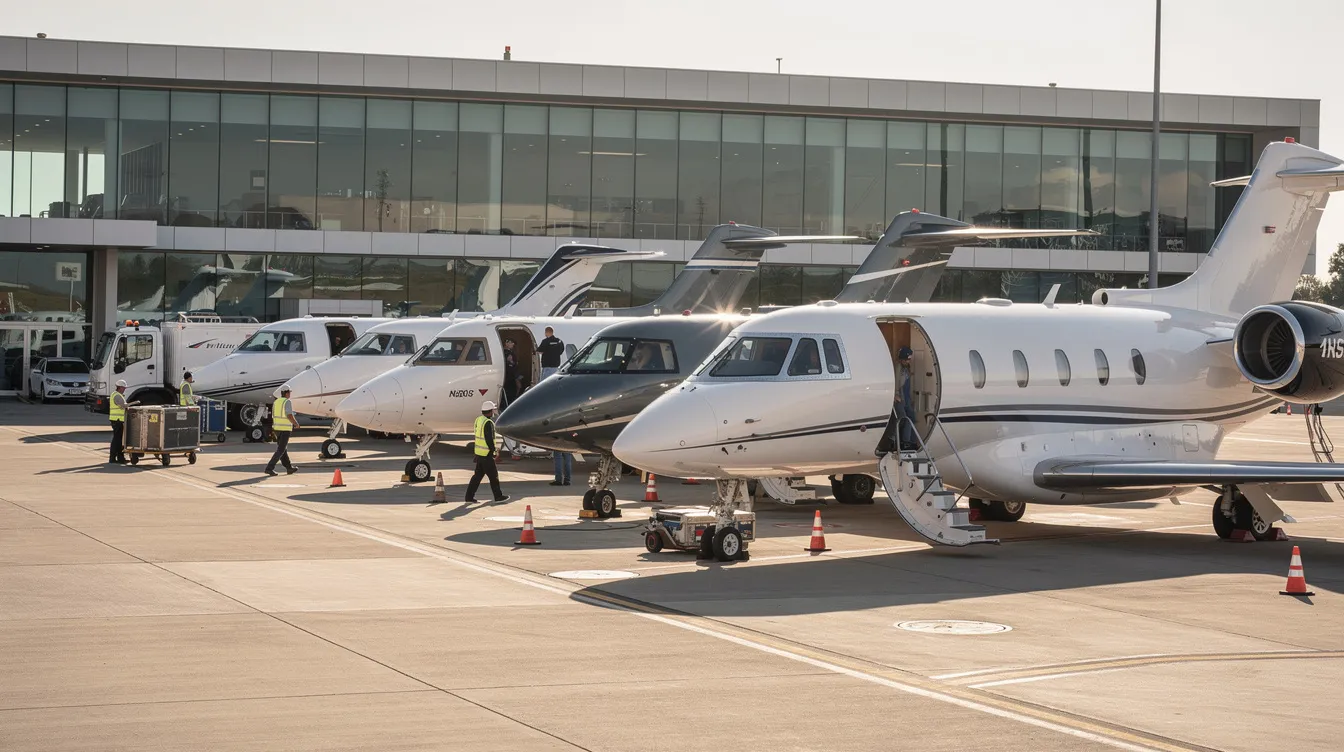
Between 2021 and 2023, high demand combined with supply bottlenecks created the tightest availability and record-high charter pricing in North America and Europe. Midsize jet rates jumped as much as 89% at peak period,s according to JetNet data.
Sources of Aircraft Availability
Two main sources determine availability:
-
New aircraft production from OEMs like Gulfstream Aerospace Corporation, Bombardier, Dassault Aviation, Textron, and Embraer
-
Pre-owned jets circulating in the resale market
Historically low used-jet inventory characterized 2022–2023: roughly 3% of the fleet was for sale compared to the normal 8–10%. By 2025, this eased slightly but remains below long-term averages.
North America accounts for roughly 70% of new private jet deliveries, although growth is accelerating in Europe and Asia-Pacific. This concentration shapes fleet age and availability patterns worldwide.
Availability by Aircraft Size and Region
|
Segment |
Availability Status |
|---|---|
|
Large-cabin/ultra-long-range |
Often wait-listed for delivery slots in the late 2020s |
|
Mid-size jets |
Moderate pre-owned supply |
|
Light jets |
More pre-owned options available |
Regional differences also matter. In Asia Pacific and the Middle East, fleets tend to be young and skewed toward larger jets. In Latin America and parts of Africa, older fleets and fleet modernization programs influence what’s available for charter services. Private aviation is increasingly focusing on security and privacy, particularly in emerging markets such as Southeast Asia and Latin America.
For the end user, constrained aircraft supply leads directly to:
-
Higher hourly charter rates (still +15–25% above 2019 levels in 2025)
-
Stricter 72-hour booking requirements during peak periods
-
Tighter cancellation terms and minimum-hour rules
Next, let’s look at how new aircraft deliveries and the pre-owned market shape overall availability.
New Deliveries and OEM Production Capacity
Manufacturers’ production plans directly affect how many aircraft reach the market each year. Post-COVID, OEMs ramped up carefully rather than aggressively, citing supply-chain issues with engines, avionics, and skilled labor from 2022 to 2025.
Major players are rolling out new generation models that draw strong order backlogs:
-
Dassault Aviation: Falcon 6X (6,000nm range, 2025 entry), Falcon 10X (2027)
-
Gulfstream Aerospace Corporation: G700 and G800 (7,700nm range, $78M list price)
-
Bombardier: Global 7500 and 8000 (8,000nm range capability)
These backlogs extend 2–3 years, stabilizing OEM revenues but limiting near-term availability for buyers wanting factory-new jets before 2028–2030.
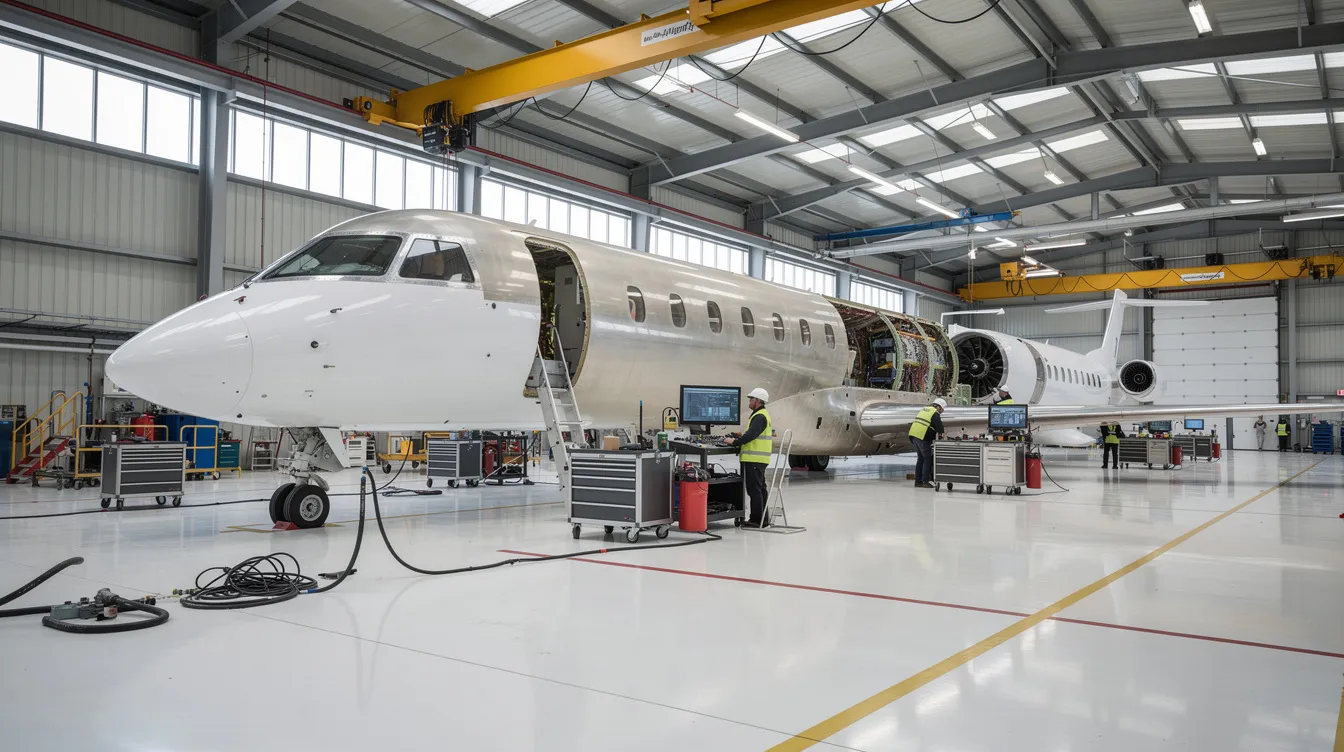
Innovations in cabin design and range—enabling nonstop flights from North America to Asia Pacific or Middle East to North America—influence what types of jets companies prioritize. Ka-band WiFi connectivity (Gogo 5G launching in 2025) and 30% range improvements appeal to business travelers needing productivity aloft.
OEMs are also designing aircraft certified for higher SAF blends and more efficient engines, appealing to corporate clients under ESG pressure. This intersection of technology and sustainability shapes the competitive edge for manufacturers in emerging markets.
Pre-Owned Market and Fleet Modernization
When new-build delivery slots stretch years out, the pre-owned market becomes essential for balancing aircraft supply.
From 2021 to 2023, pre-owned prices surged 30–50% while time-on-market shrank dramatically. Buyers accepted older aircraft simply to secure capacity quickly. A Gulfstream G550 might have appreciated 40% in value—unusual for an asset that typically depreciates.
The 2024–2026 trend shows normalization:
-
More aircraft returning to market as owners upgrade
-
Inventory up 20–30% from the 2022 low
-
Pricing cooling but still elevated above pre-2019 levels
-
Annual sales steady at 1,200–1,500 transactions
Refurbishment extends aircraft life significantly. Cabin refreshes, avionics upgrades, and connectivity retrofits allow 10–15-year-old jets to compete with new deliveries for charter services. These modernization investments range from $5–20 million, depending on scope.
Regional patterns differ:
-
North America and Europe: Lead in refurb activity and fleet modernization programs
-
Asia Pacific and Middle East: Often prefer newer aircraft and faster 5–7 year replacement cycles
Charter providers increasingly expand fleets with pre-owned aircraft to serve jet card members and ad hoc charter demand while keeping purchase costs 30–50% below new delivery prices.
Next, we’ll explore how pilot shortages are becoming as critical as aircraft supply in shaping the private aviation market.
Pilot Shortages
Pilot availability now rivals aircraft supply as a critical constraint in the private aviation market. Even if jets sit ready on the tarmac, flights can’t happen without qualified crews.
Causes of Pilot Shortages
Both commercial airlines and business aviation compete for the same pool of licensed pilots. Demographic trends—accelerating retirements and training pipeline gaps—keep the labor market tight through the late 2020s. The global industry needs roughly 25,000 new business aviation pilots by 2030, according to civil aviation authority estimates.
After the 2020 travel slump, many experienced pilots retired early or left aviation entirely. When demand rebounded strongly by 2022–2024, structural shortages emerged. Between 2022 and 2024, the industry faced 2,000–3,000 pilot vacancies according to NBAA data.
Why Business Aviation Pilots Are Harder to Replace
-
Need specialized skills for shorter runways and varied airports
-
Frequent repositioning (200+ flights annually) versus predictable airline routes
-
Flexible scheduling demands versus structured crew rotations
-
Training costs exceeding $500,000 to reach qualification

Some operators cap flight hours or limit peak-time bookings because they simply cannot crew all their aircraft. In North America, 80% of business aviation pilots are over 50 years old according to AOPA data.
Regional Variations in Pilot Pressure
|
Region |
Pilot Situation |
|---|---|
|
North America |
Tightest pressure, aging pilot population |
|
Europe |
Significant shortages, competitive with airlines |
|
Asia Pacific & Middle East |
Attracting pilots with 20–50% pay premiums |
For private aviation users, pilot shortages mean:
-
Higher hourly rates (10–15% premium embedded)
-
48–72 hour cancellation risks during peak events
-
Event scarcity (Super Bowl charters carry 50%+ premiums)
-
Less flexibility for last-minute trip changes
Safety remains robust despite shortages. Operators still follow strict duty-time limits and training requirements mandated by the FAA and EASA. SkyGuru’s in-flight guidance app can help anxious passengers understand who is flying them and what procedures keep every flight safe.
Training Pipelines and New Career Paths
The industry is investing to solve pilot shortages over the next 5–10 years, though results take time to materialize.
Since 2023–2024, over $1 billion has flowed into flight schools and cadet programs sponsored by airlines and large private operators. These programs create structured pathways from zero flight hours to commercial certification.
Corporate and private aviation offer different lifestyle tradeoffs versus airlines:
-
Pros: More varied destinations, often nicer aircraft, potential for relationship-building with regular clients
-
Cons: Less predictable schedules, more repositioning, smaller company structures
Advanced simulators, standardized training syllabi, and access to detailed flight and turbulence data via the SkyGuru API accelerate the path from trainee to line pilot while maintaining safety standards. Virtual reality training from companies like Redbird can reduce total training time by 20–30%.
Cross-border mobility remains complicated. Visa rules, licensing recognition between regions (JAA/FAA harmonization challenges), and language requirements affect how easily pilots move between North America, Europe, the Asia Pacific, and the Middle East markets.
Next, we’ll look at how fuel and cost pressures are shaping the economics of private aviation.
Fuel and Cost Pressures
The cost to fly private breaks down into variable costs (60–70% of the total) and fixed costs:
|
Cost Category |
Components |
Typical Share |
|---|---|---|
|
Variable |
Fuel, crew, maintenance, airport/handling fees |
60–70% |
|
Fixed |
Aircraft ownership, insurance, and hangar fees |
30–40% |
Fuel Price Volatility and Cost Management
From 2022 onwards, volatile jet fuel prices and general inflation have sustained pressure on operators worldwide. Fuel represents 30–40% of variable costs alone.
Fuel price swings translate directly into what travelers pay. When prices peaked at $8/gallon in 2022 (versus the normal $3–6 range), operators passed costs through via:
-
Higher hourly charter rates
-
Fuel surcharges on bookings
-
Minimum-hour rules to guarantee revenue per trip
Example fuel economics:
|
Aircraft Type |
Fuel Burn Rate |
Cost Impact of 25% Fuel Increase |
|---|---|---|
|
Light jets |
~100 gal/hour |
+$125–150/hour |
|
Large jets |
~400–500 gal/hour |
+$500–625/hour |
Regional cost differences also affect the market. European hubs charge 20% higher fees than comparable facilities. Fort Lauderdale and specialized FBOs in North America and the Middle East offer more competitive fuel and handling pricing.
Maintenance and insurance costs have risen 15–25% post-2020 due to labor shortages, parts delays, and higher asset values across the fleet.
Operator Responses to Cost Pressure
-
Optimizing scheduling to reduce empty legs (currently 20% of flights)
-
Using AI-based pricing tools for dynamic rate management
-
Promoting jet cards and membership models for predictable cash flow
-
Fleet standardization to reduce maintenance complexity
For travelers, prices will likely remain above 2019 levels even if demand softens. Practical tips for controlling costs:
-
Be flexible on dates (±2 days can save 20–30%)
-
Consider smaller aircraft types
-
Plan routes through cost-effective airports
Next, we’ll examine how sustainability and environmental costs are influencing private aviation.
Sustainable Aviation Fuel (SAF) and Environmental Costs
Environmental pressure increasingly shapes costs and strategy across private aviation.
Sustainable aviation fuel is made partly from renewable sources—waste oils, agricultural products—that can be blended with conventional jet fuel. It reduces lifecycle carbon emissions by up to 80% compared to traditional fuel. Currently, aircraft are certified for blends up to 50%, with 100% SAF testing underway for 2026.
The catch: SAF costs 2–4× more than conventional fuel ($10–15/gallon versus $4–6). Using a 10% SAF blend adds 10–20% to flight fuel costs.
Policy drivers accelerating SAF adoption:
|
Region |
Requirement |
|---|---|
|
Europe |
ReFuelEU mandates 2% SAF by 2025, rising to 70% by 2050 |
|
United States |
Tax credits supporting 2030 SAF goals |
|
Middle East |
Dubai's positioning as a regional SAF hub |
Stricter environmental compliance mandates and expanding carbon levies are impacting the industry, with regulations such as the EU Emissions Trading System and CORSIA requirements increasing operating costs for European routes. California’s climate-risk disclosure laws mandate that US-based operators report Scope 3 emissions for corporate clients, reflecting increasing demands for transparency.
Nearly all operators in private aviation are focusing on fuel-efficient designs and transparent pricing for SAF-compatible charters. Environmental impact is becoming a core part of the buying decision, with operators investing in SAF and offering carbon reporting. The adoption of SAF is becoming a key focus, with some companies already doubling their SAF use in 2024 to meet rising regulatory demands.
The private aviation sector is working toward a net-zero carbon emissions goal by 2050, utilizing carbon offset programs alongside fuel improvements.
Corporate clients facing ESG reporting requirements increasingly ask for emissions data, SAF options, and carbon offset programs when booking charter services, sometimes relying on specialized turbulence and route analytics via the SkyGuru API platform. This demand shapes how charter providers compete.
Tools like the SkyGuru real-time flight information app can help explain turbulence, weather deviations, and fuel-saving flight profiles in real time—giving anxious passengers more context when flights take longer, or route changes are made for environmental or operational reasons.
Next, let’s break down the key private aviation market trends shaping the industry.
Key Private Aviation Market Trends
Below is a bullet-style overview of the main private aviation industry trends shaping the market, organized from the most general to more specific trends:
Persistent High Demand for Charter Services and Memberships
-
Jet card and subscription programs are forecast to grow close to 9–10% CAGR through 2031.
-
On-demand charter continues tripling corporate RFPs compared to pre-pandemic levels.
-
The private jet charter services market is projected to grow from USD 17.67 billion in 2026 to USD 25.79 billion by 2031, driven by technology-driven booking solutions and increased demand for flexible travel options.
Shift Toward Larger, Longer-Range Jets
-
Large business aircraft are expected to hold a dominant market share of 39.80% in 2026 due to increased business travel.
-
Demand for ultra-long-range jets and smart cabins with advanced connectivity and wellness features is rising.
-
Approximately 37.5% of private jets in the U.S. are heavy or long-range jets catering to intercontinental flights, while light jets account for 36.5%, midsize jets for 20.5%, and very light jets for 5.5%.
Growth of Light Jets for Regional Connectivity
-
There is a growing trend of using light jets and turboprops to connect smaller airports, which helps bypass congested hubs.
-
The light-aircraft segment is projected to grow at a 7.92% CAGR from 2026 to 2031, offering cost-effective regional connectivity that attracts a wider range of private aviation travelers.
Technology Integration
-
Artificial intelligence applications are increasingly being used for dynamic pricing, customer service, and maintenance scheduling, enhancing operational efficiencies and client experiences.
-
Apps for instant pricing and AI-driven fleet optimization are becoming standard among jet operators.
-
Real-time weather and turbulence forecasting tools like the SkyGuru turbulence prediction app improve transparency for nervous flyers.
Sustainability Focus
-
The rise of electronic Vertical Takeoff and Landing (eVTOL) technology is expected to bolster market growth, offering sustainable and efficient travel options.
-
Sustainable aviation fuel adoption is accelerating among major players like Dassault Aviation.
-
Carbon offset programs are expanding across the industry.
Regulatory and Environmental Pressure
-
European carbon levies and discussions on restricting very short flights are affecting operations.
-
Geographic diversification is accelerating as the Asia Pacific and Middle East markets show higher growth rates.
Each trend connects back to supply, demand, and cost pressures—themes we’ll explore in the sections ahead.
Next, let’s see what these trends mean for future private flyers and how to navigate the evolving market.
What These Trends Mean for Future Private Flyers
Supply constraints, increasing demand, pilot shortages, and fuel pressures together shape what you can expect when choosing to fly private between now and the early 2030s.
For occasional charter users:
-
Expect app-based booking with AI-powered instant pricing to become standard.
-
Peak periods will carry 20%+ rate premiums.
-
Book 2–4 weeks ahead for popular dates and remain flexible on departure times to access better availability.
For jet card members:
-
Stable, locked-in rates provide insulation from market volatility.
-
SAF options will increasingly appear in program offerings.
-
Expect 90%+ availability during off-peak periods, but plan for holidays and major events.
For frequent business flyers:
-
Large-cabin jets with intercontinental range will dominate corporate flight departments.
-
AI-driven scheduling optimization becomes essential.
-
Pilot constraints may limit peak-time flexibility even with dedicated aircraft.
**For first-time private flyers:
-
Light jets offer the most accessible entry point for regional trips.
-
Transparency tools and real-time pricing apps lower barriers to understanding the market, and apps that help overcome the fear of flying with in-flight guidance can make the experience less stressful.
-
Ask detailed questions about pilot experience, safety protocols, and environmental options.
Regional Outlooks Through the Early 2030s
|
Region |
Outlook |
|---|---|
|
North America remains |
Stable dominance, 5–7% annual growth |
|
Europe |
Resilient demand but increasingly regulated |
|
Asia Pacific |
15–20% growth rates, infrastructure expansion |
|
Middle East |
Rapid hub development, SAF investments |
|
Latin America & Africa |
Improving access, fleet modernization |
Practical Tips for Navigating the Market
-
Be flexible by ±2 days when possible (saves up to 30%)
-
Query pilot experience (aim for 2,000+ hours)
-
Ask about SAF availability and carbon reporting
-
Consider mid-size jets for cost efficiency on medium routes
-
Book earlier for popular dates and locations
Regardless of flying privately or commercially, understanding how the market works—and what happens physically during a flight—transforms anxiety into confidence. Knowledge about why delays occur, how weather affects routing, and what pilots do during turbulence creates a sense of control.
The SkyGuru blog on fear of flying provides real-time flight explanations and turbulence insights to help travelers feel more informed and calmer in the air. When you understand the market forces driving availability and costs, and the physics keeping you safe at 40,000 feet, air travel becomes less mysterious and more manageable—whether you’re on a private charter or a commercial airline.
Frequently Asked Questions (FAQs)
What are the main factors driving demand in the private aviation industry?
Demand is driven by increasing ultra-high-net-worth individuals, the desire for time efficiency and flexibility, demographic shifts toward younger travelers, and the appeal of avoiding crowded commercial airports, especially post-pandemic.
How do aircraft supply issues affect private jet availability?
Limited new aircraft production, low pre-owned inventory, and long delivery backlogs create tight availability, leading to higher charter rates and stricter booking requirements during peak periods.
Why is there a pilot shortage in private aviation?
Pilot shortages arise from accelerated retirements, high training costs, competition with commercial airlines, and the specialized skills required, resulting in crew constraints that impact flight scheduling and costs.
How are fuel prices impacting private jet travel costs?
Volatile jet fuel prices, which make up 30–40% of variable costs, directly increase hourly rates and fuel surcharges, with sustainable aviation fuel (SAF) adoption adding further cost layers due to its premium price.
What role does technology play in the private aviation market?
Technology enhances booking efficiency through AI-driven pricing and scheduling, improves client experiences with real-time weather and turbulence forecasting, and supports sustainability efforts with fuel-efficient designs and SAF compatibility.
How is the private aviation industry addressing environmental concerns?
Operators are adopting sustainable aviation fuels, implementing carbon offset programs, complying with stricter emissions regulations, and investing in more fuel-efficient aircraft designs to reduce the sector’s carbon footprint.
What types of jets are most popular in private aviation?
Large business jets dominate for intercontinental travel, while light jets and turboprops are growing rapidly for regional connectivity due to their cost efficiency and ability to access smaller airports.
How can travelers manage costs when booking private jets?
Flexibility on travel dates, choosing smaller aircraft types, booking earlier for peak periods, and considering membership or jet card programs can help manage and reduce private jet travel expenses.
Conclusion
The private aviation industry is experiencing rapid growth fueled by rising wealth, evolving traveler preferences, and technological advancements. While demand for private jets continues to climb, supply challenges such as limited aircraft availability and pilot shortages create higher costs and booking complexities. Meanwhile, fuel price volatility and environmental regulations add new layers of operational pressure. For business leaders and individual travelers alike, understanding these private aviation industry trends is essential for navigating the market effectively. Whether choosing charter flights, fractional ownership, or full ownership, staying informed empowers smarter decisions and more enjoyable travel experiences. As the private aviation market matures through the 2030s, innovations in sustainability, technology, and flexible access models promise to shape a more efficient and accessible future for private air travel.
FLEET SELECTION
JET CARDS
COST ANALYSIS


How to Auditing Your Operator's Maintenance Logs
Oct 05, 2025

How to Auditing Your Operator's Maintenance Logs
Oct 05, 2025

How to Auditing Your Operator's Maintenance Logs
Oct 05, 2025
Sky Guru Weekly
The smartest private aviation intelligence in your inbox.
.svg)

