



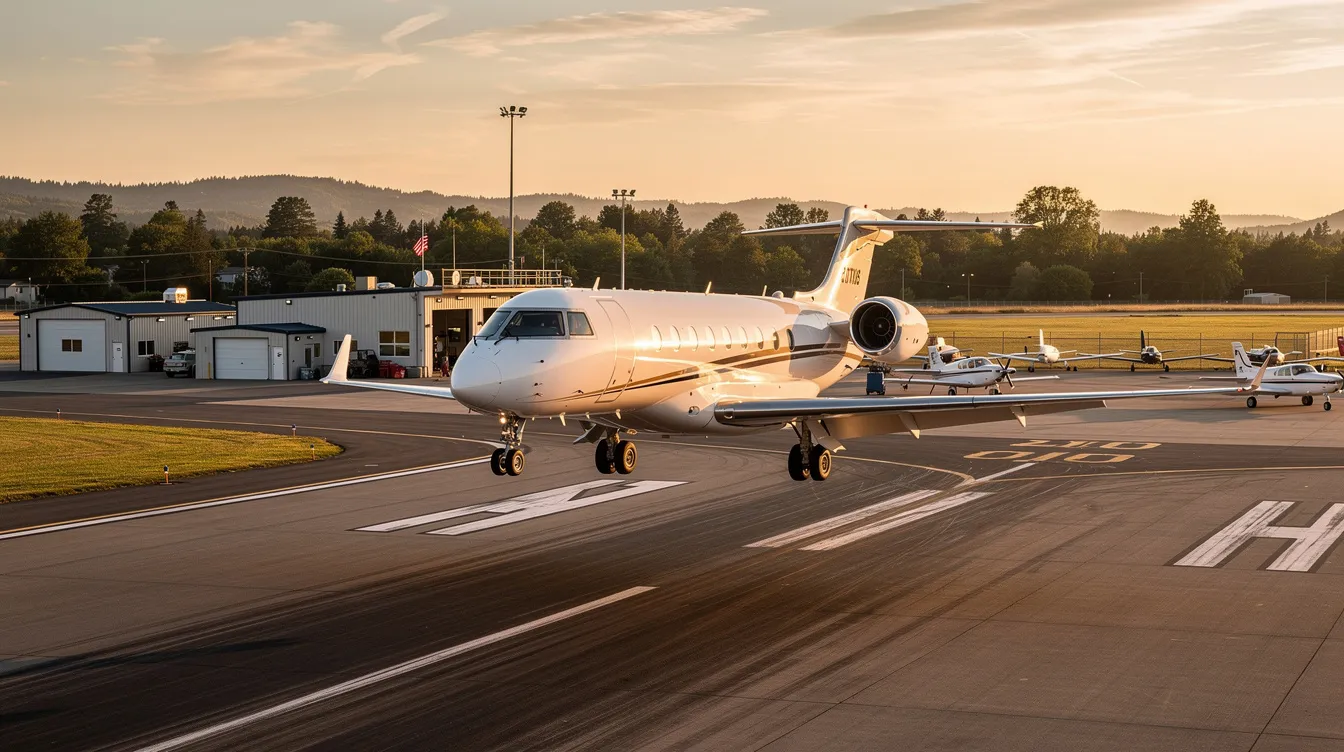
The private aviation market is entering a new era of capability and refinement. With the global private jet charter services market expected to reach over $27 billion in 2026, driven by smarter, more sustainable technology, this year marks a pivotal moment for anyone interested in business aviation. Boeing plays a significant role in the luxury private jet market, with its Boeing Business Jet (BBJ) series and the transformation of commercial Boeing aircraft like the 767 into bespoke private airliners.
The landscape of new private jets 2026 features standout entries that will reshape how we think about air travel. The Bombardier Global 8000 delivered its first aircraft to NetJets in March 2026. The Dassault Falcon 10X completed its maiden flight earlier this year. The Gulfstream G400 achieved certification. The HondaJet Echelon initiated flight testing. And the Cessna Citation CJ4 Gen3 entered service with groundbreaking safety features. The private aviation market is also seeing major operational milestones, including next-generation flagship ultra-long-range models and highly automated light aircraft.
This article focuses on the latest business jet technology that genuinely matters to passengers—cabin altitude innovations that reduce jet lag, emergency autoland systems that provide peace of mind, and connectivity that transforms aircraft into mobile offices. As an independent travel-tech aviation observer, SkyGuru examines how these changes affect your in-flight comfort and sense of safety, particularly for those who experience flight anxiety.

New Aircraft Models
The year 2026 is pivotal for new aircraft entering or nearing market availability. Popular private jets like the Gulfstream G650, Bombardier Global 7500, and Cessna Citation XLS+ have established benchmarks for luxury and long-range capabilities. Now, the next generation is raising those standards further.
These business jets expand mission profiles across distinct categories. Ultra-long range models enable global nonstop travel beyond 7,500 nautical miles. Super midsize jets like the Challenger 350 and Gulfstream G280 remain ideal for coast-to-coast travel, balancing range and passenger capacity effectively while offering a strong balance of cost and performance for executive travel. Light jets serve regional missions efficiently. The Embraer Phenom 300 remains the most requested jet of 2025, highlighting continued demand across all segments. Certain jets, such as the Pilatus PC-12, are known for balancing passenger capacity, comfort, and operational features.
What matters: actual range in nautical miles, cruise Mach numbers, and how many passengers each model seats—not vague marketing claims. Cabin comfort is also a key differentiator for passengers, especially on long-range flights.
Bombardier Global 8000: Pushing the Ultra-Long-Range Limit
The Bombardier Global 8000 is set to be the world’s fastest civilian aircraft since Concorde, with a top speed of Mach 0.95 and a range of 8,000 nautical miles. This makes it a leader in ultra-long range travel, building on the proven Bombardier Global 7500 platform, which already offers a maximum range of 7,700 nautical miles.
Key specifications:
-
Top speed: Mach 0.95
-
Range: 8,000 nautical miles (enabling routes like New York–Hong Kong nonstop)
-
Passenger capacity: 13–19 passengers in corporate layouts
-
Living spaces: Four distinct cabin zones
The aircraft features what Bombardier calls “true living spaces”—a principal suite, conference and dining area, lounge, and galley. The spacious cabin includes the signature Nuage seat that reclines fully flat. Cabin altitude reaches just 2,900 feet at 41,000-foot cruise, significantly reducing jet lag on intercontinental flights.
The Global 8000 is designed to master 30% more airports than its closest competitors, thanks to its advanced wing design. The baggage compartment offers 195 cubic feet total volume with 110 cubic feet accessible in flight—critical when passengers need personal items during 15-hour missions.
For passengers, the Smooth Flĕx Wing technology provides active turbulence damping, reducing perceived bumps through real-time wing adjustments. Media coverage of tools like the SkyGuru mobile app for nervous flyers highlights how real-time explanations of turbulence can further enhance that sense of calm on long segments.
Dassault Falcon 10X: The Wide-Body Business Jet
The Dassault Falcon 10X, expected to make its maiden flight in 2026, features carbon fiber wings and advanced fly-by-wire technology, allowing it to access steep approaches and offering a spacious cabin. Customer deliveries are targeted for 2027.
This aircraft offers the widest cabin in business aviation:
-
Cabin dimensions: 9 feet 1 inch wide by 6 feet 8 inches tall (with a flat floor cabin design)
-
Range: 7,500 nautical miles at Mach 0.85 (New York–Tokyo nonstop)
-
Maximum speed: Mach 0.925
-
Passenger capacity: 12–18 passengers
Dassault’s heritage from Rafale and Mirage fighter programs shows in the fly-by-wire system, which enables automated recovery from stalls and emergency descents. The carbon-fiber wings enable access to 30% more airports via steep approaches, including challenging fields like London City with takeoff distances under 5,000 feet.
The cabin experience prioritizes fatigue reduction with a 2,800-foot cabin altitude at cruise, an optional en-suite shower in the principal suite, and 10% larger windows providing 20% more natural light. Multiple living areas include a 102-inch conference table for productive work.
The Dassault Falcon 8X is noted for its exceptional fuel efficiency and lower carbon emissions. The 10X continues this trend with 15–20% better fuel efficiency per seat-mile and certification for 100% SAF compatibility.
Gulfstream G400: The New Corporate Workhorse
The Gulfstream G400 succeeds the G450 as a large-cabin jet optimized for corporate flight departments. With first flight in August 2024 and certification in late 2025 or early 2026, it completes Gulfstream’s next-generation lineup alongside the G500, G600, G700, and G800.
Core specifications:
-
Range: 4,200 nautical miles at Mach 0.85 (New York–London or LA–Honolulu nonstop)
-
Cruise speed: Mach 0.89
-
Passenger capacity: 9–12 passengers
-
Takeoff distance: 6,500 feet
The G400 bridges mid- to long-range regional missions while retaining access to smaller airports that ultra-long-range jets cannot reach. Its Symmetry flight deck features active control sidesticks and PlaneView 850 avionics for predictive weather and reduced pilot workload.
The Gulfstream G800 is designed to enhance fuel efficiency by offering 8–12% fuel savings over its predecessor, the G450. The G400 follows this trend with 10–15% improved fuel burn via aerodynamic refinements. Passengers benefit from a 4,100-foot cabin altitude, reducing dehydration by approximately 25% on eight-hour flights.
HondaJet Echelon: A New Kind of Transcontinental Light Jet
The HondaJet Echelon, which begins flight testing in 2026, is notable for being the first single-pilot-certified light jet capable of true transcontinental range. Type certification is targeted for 2028.
This aircraft redefines light jets:
-
Range: 2,625 nautical miles (New York–Los Angeles nonstop without fuel stops)
-
Passenger capacity: Up to eight passengers (typically 6–8)
-
Ceiling: 47,000 feet (highest in class)
-
Maximum cruise: 450 knots
-
Price: $10–12 million
Light jets typically have a range of 1,200 to 2,500 nautical miles, making them ideal for regional missions under four hours. Light jets like the Phenom 300E are especially well-suited for shorter trips, offering quick and efficient private travel over shorter distances for business or leisure. The Echelon breaks this barrier with intercontinental capability for coast-to-coast operations.
The over-the-wing engine mounting creates a 62-inch cabin height and 120 cubic feet of cargo space—nearly double competitors like the Phenom 300E’s 85 cubic feet. This design also produces a cabin 15 dB quieter than conventional configurations.
The Garmin G3000 avionics include autothrottle, autobrake, and potential emergency autoland integration, cutting pilot workload by 30% while enhancing operational reliability.
Citation CJ4 Gen3: Emergency Autoland Reaches Business Aviation
The Cessna Citation CJ4 Gen3, entering service in 2026, will be the first Citation to feature Emergency Autoland technology through its Garmin G3000 PRIME avionics suite.
What emergency autoland does: if pilots become incapacitated, the system automatically scans over 1,000 airports, selects the nearest suitable airport, descends, lands, and brakes to a stop while alerting ATC. This addresses a primary concern for anxious flyers—studies indicate 70% cite pilot incapacitation as their top worry.
Aircraft specifications:
-
Range: 2,165 nautical miles with 11 occupants
-
Cruise speed: Mach 0.74
-
Passenger capacity: 6–10 passengers (typically eight passengers)
-
Display size: 40% larger than the previous generation
The Gen3 is optimized for regional missions like Chicago–Dallas, with weather radar including GWX8000 StormOptix for enhanced storm detection. The 3D SafeTaxi system improves ground operations at unfamiliar airports.
Cabin Technology
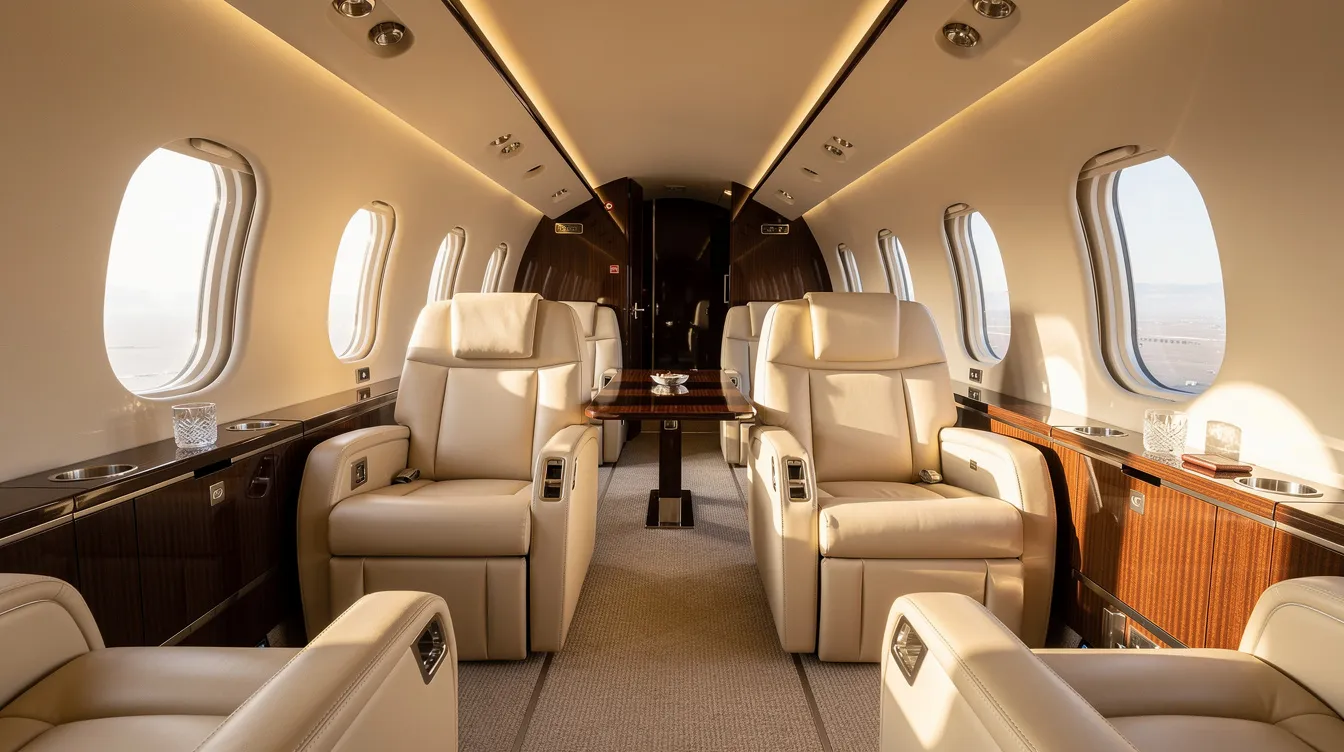
Latest business jet technology in 2026 focuses on cabin experience: wellness, quiet environments, connectivity, and real-time awareness. This represents a shift from pure décor to measurable comfort factors.
Jet Cards and Access Models
Jet cards provide a convenient way for travelers to access private jets with advanced cabin technology, offering benefits such as fixed pricing, guaranteed availability, and amenities like Wi-Fi and catering.
Bombardier Global, Dassault Falcon, Gulfstream, Honda, and Cessna all converge on similar priorities—HEPA filtration, low cabin altitude, and high-speed connectivity. Research shows 60% of buyers now rank cabin altitude over range when selecting aircraft.
Wellness and Cabin Altitude: Arriving Less Tired
Cabin altitude determines how tired you feel after landing. At lower effective altitudes, your body receives more oxygen, reducing headaches, fatigue, and jet lag on long flights.
2026 cabin altitude comparison:
|
Aircraft |
Cabin Altitude at Cruise |
|---|---|
|
Dassault Falcon 10X |
2,800 feet |
|
Bombardier Global 8000 |
2,900 feet |
|
Gulfstream G800 |
2,840 feet |
|
Gulfstream G400 |
4,100 feet |
|
Older business jets |
6,000+ feet |
New jets are increasingly equipped with HEPA filtration and systems designed to reduce cabin altitude effects, improving hydration and reducing jet lag. NASA studies indicate lower cabin altitudes reduce fatigue by up to 40%.
Key wellness features include:
-
Circadian lighting systems: Adjust color temperature from 6,500K to 2,700K, mimicking sunset and supporting natural sleep cycles.
-
Humidity control: Humidity levels around 20%—double that of older aircraft—helping to reduce dehydration.
-
HEPA filtration: Captures 99.99% of airborne particles, ensuring cleaner air.
-
Low cabin altitude: Reduces headaches, fatigue, and jet lag, especially on long flights.
-
Pressure management: For anxious flyers sensitive to pressure changes and ear discomfort, these systems provide genuine passenger comfort improvements.
Connectivity and Digital Cabin Experience
High-speed, secure satellite connectivity is becoming standard in cabin designs, turning them into functional mobile offices capable of secure video conferencing and cloud access. Satellite connectivity, including systems like Starlink, is becoming standard, offering high-speed, reliable connectivity at cruising altitudes.
Major connectivity options on 2026 aircraft:
-
JetWave (Ka-band): 50–100 Mbps
-
Starlink: 220–500 Mbps via low-Earth orbit
-
Gogo Galileo: Redundant backup systems
Bombardier Global aircraft promote configurable connectivity with zone-specific setups—work wi fi versus entertainment. Apps control 20+ cabin parameters,s including electrochromic window shades that tint in five seconds.
Cybersecurity employs AES-256 encryption and air-gapped networks, essential when 40% of flights involve sensitive business decisions.
Baggage Compartment, Layout, and “True Living Spaces”
On 10–15-hour flights, in-flight baggage access prevents 30-minute disruptions. The best private jets offer spacious cabins with multiple living zones, allowing for work, dining, entertainment, and relaxation during flights.
Baggage comparison:
|
Aircraft |
Baggage Volume (cubic feet) |
In-Flight Access |
|---|---|---|
|
Global 8000/7500 |
195/150 |
Yes |
|
Falcon 10X |
200 (forward and aft) |
Yes |
|
Light jets |
80–120 |
Varies |
The largest cabin configurations in ultra-long-range jets feature four-zone layouts: bedroom, conference room, lounge, and crew rest. High-end jets like the Bombardier Global 7500 and Gulfstream G700 are designed with advanced onboard entertainment systems and luxury amenities, including en suite showers and full-service galleys.
Practical trade-offs exist: a higher passenger count (19 passengers maximum) reduces per-person space. Low-density layouts optimize for 10 passengers with greater privacy.
Air Quality, Noise, and Sensory Experience
Air purification advances include HEPA filtration, capturing 99.99% of particles with 20–30 air exchanges per hour. Luxury private jets often feature lie-flat sleeping configurations and quiet cabin environments, enhancing passenger comfort on long-haul flights.
Noise targets have dropped to 47 dB at cruise for the Global 8000—down 5 dB from previous generations. HondaJet’s over-the-wing engine mount cuts cabin noise by 10 dB compared to conventional placements.
For fearful flyers, fewer unexpected noises and smoother ride characteristics reduce the startling sensations that trigger 80% of in-flight anxiety,y according to surveys. Predictable environments with transparent information about what’s happening create calmer experiences, especially when paired with SkyGuru’s real-time flight and weather explanations.

Performance Improvements
Performance gains in 2026 focus on three axes: exceptional range, fuel efficiency, and smarter automation. For business jets, eliminating fuel stops and accessing more airports often matters more than raw speed.
New aircraft models are utilizing lighter, stronger materials and more fuel-efficient engines to reduce fuel consumption significantly.
Range, Speed, and Global Reach
Ultra-long-range jets like the Global 8000 and Falcon 10X enable nonstop routes connecting city pairs like New York–Hong Kong or London–Perth without fuel stops. The Gulfstream G650ER can cover a distance of 7,500 nautical miles at a cruise speed of Mach 0.925, allowing for nonstop international travel.
Typical ranges by category (2026 benchmarks):
|
Category |
Range |
Example Aircraft |
|---|---|---|
|
Light jets |
1,200–2,500 nm |
CJ4 Gen3, Echelon |
|
Mid-size jets |
3,000–3,500 nm |
Citation Latitude |
|
Super midsize jets |
3,500–4,500 nm |
Challenger 350 |
|
Heavy/Ultra long range |
6,000–8,000 nm |
Global 8000, Falcon 10X |
The Citation X is recognized as one of the fastest private jets, cruising close to Mach 0.92, which significantly reduces travel time. Real-world considerations: headwinds can reduce usable range by 500–1,000 nautical miles; passenger count and baggage affect actual performance.
Heavy jets like the Bombardier Global 7500 and Gulfstream G650ER dominate the market due to their intercontinental range and refined cabin experience.
Runway Performance and Airport Access
Aircraft designed with improved short-field performance can access shorter or more challenging runways. Dassault Falcon jets can land at steep-approach airports like London City, putting passengers closer to city centers.
Some manufacturers quote access to “30% more airports” due to takeoff and landing performance. Practically, this means flying directly into Teterboro for Manhattan meetings rather than routing through larger hubs—reducing door-to-door time more than cruise speed increases alone.
Fuel Efficiency, SAF, and Sustainability Trends
Increased use of ultra-lightweight composite materials is helping manufacturers offset costs and lower emissions. Innovations like the CFM RISE program are testing “open rotor” designs that could improve fuel efficiency by over 20%.
As of 2025, major hubs in the EU and UK require a 2% Sustainable Aviation Fuel blend at airports, with Singapore implementing a similar 1% mandate in early 2026. Demand for SAF-compatible charters is rising as operators aim for carbon reduction.
All major 2026 models certify for 50–100% SAF blends. This represents a transitional step toward lower-carbon operations, acknowledging the tension between growing business jet demand and climate concerns.
Advanced Avionics, Automation, and Safety
AI is used for real-time flight planning to optimize routes based on weather and fuel, as well as for predictive maintenance to reduce ground delays. AI is being used for smarter flight planning, allowing for faster, more flexible, and personalized itineraries.
The CJ4 Gen3’s emergency autoland system and HondaJet Echelon’s Garmin G3000 capabilities demonstrate how automation backs up human pilots. Enhanced situational awareness tools include:
-
Head-up displays
-
Enhanced flight vision systems (EFVS) enabling Cat IIIB approaches in fog
-
Predictive turbulence detection alerting 60 seconds ahead
These systems create smoother, more predictable flights with fewer surprises—especially valuable for passengers nervous about turbulence or night operations. Future integration may connect real-time flight data directly to passenger-facing apps like the SkyGuru turbulence and anxiety-reduction app, providing transparency about weather and flight conditions.
What Buyers Should Know
Prospective owners, charter customers, and corporate travel decision-makers evaluating new private jets in 2026 need clarity beyond specifications. The right aircraft matches your mission, cabin experience requirements, and long-term ownership considerations.
The resale value of high-demand models from Cessna, Gulfstream, and Bombardier tends to be more stable, supported by extensive global service networks.
Matching Aircraft to Mission and Passenger Profile
Map your typical missions before selecting the right aircraft:
-
2,000–3,000 nm with 4–6 passengers: Light jets like CJ4 Gen3 or Echelon offer lower operating costs
-
4,000–5,000 nm with 8–10 passengers: G400 or super-midsize options balance access and capability
-
7,000+ nm with 12+ passengers: Global 8000 or Falcon 10X for international travel without fuel stops
The trade-off: ultra-long-range jets cost $10,000+ per flight hour versus $4,000 for light jets, but range saves overnight stays and complex multi-leg itineraries. Buying the largest aircraft isn’t always optimal—operating costs and airport access may favor midsize jets for 70% of missions.
Evaluating Cabin Experience Beyond Luxury
Look beyond headline features to measurable comfort factors:
-
Cabin altitude at cruise altitude
-
Noise levels in specific decibel ranges
-
Air quality metrics and exchange rates
-
Seat ergonomics for flights over eight hours
Wellness-oriented design—circadian lighting, humidity control, real beds with a belted lavatory adjacent—materially changes productivity and health on repeated long-haul operations. Ask about connectivity bandwidth guarantees and subscription costs ($50,000+ annually for Ka-band).
Include cabin mock-up visits and test flights in due diligence. Pay attention to how the aircraft feels during taxi, takeoff, turbulence, and descent—not just at cruise.
Safety, Anxiety, and the Human Factor
New safety technologies like emergency autoland, advanced fly-by-wire, and predictive turbulence tools boost passenger confidence as much as raw safety statistics. Operators should consider training both crew and frequent flyers on what these systems accomplish.
Real-time, passenger-facing information—moving maps, weather displays, and commentary from tools like SkyGuru—reduces anxiety by explaining unfamiliar sensations and sounds during flight. Integrating mental-wellness support benefits high-stress executives and first-time flyers on corporate jets.
These “soft factors” deserve weight in aircraft selection: quiet, predictable environments with good information flow matter as much as speed for many modern travelers, particularly those using apps that help overcome fear of flying.
Looking Ahead: How 2026 Jets Point to the Future
The technologies in Global 8000, Falcon 10X, G400, Echelon, and CJ4 Gen3 preview the next decade. Commercial air taxi operations are expected to start in cities like Dubai, Los Angeles, and New York in 2026, hinting at a broader aviation transformation, with digital companions such as the SkyGuru app for nervous travelers increasingly integrated into the passenger experience.
Emerging areas to watch include greater AI integration for route planning and turbulence avoidance, higher SAF adoption, and cabin layouts designed around hybrid work and rest patterns. Think of a 2026 aircraft not as a static asset but as a platform receiving continuous avionics and connectivity upgrades over its lifetime.
The “best” new private jets of 2026 combine high performance, sustainability progress, and a calm, transparent cabin experience that helps every traveler—especially anxious flyers—fly with confidence. For those interested in the human side of aviation, tools like SkyGuru’s in-flight guidance app and other apps that help with fear of flying complement the advanced technology built into these latest business jets, providing real-time explanations that transform uncertainty into understanding.
Frequently Asked Questions (FAQs)
Q1: What defines ultra long range travel in private jets?\
Ultra long range travel refers to private jets capable of nonstop flights exceeding 7,500 nautical miles. Jets like the Bombardier Global 8000 and Dassault Falcon 10X exemplify this category, enabling nonstop intercontinental routes such as New York to Hong Kong or London to Perth.
Q2: How does cabin altitude impact passenger comfort?\
Cabin altitude is the effective atmospheric pressure inside the aircraft cabin. Lower cabin altitudes, around 2,800 to 2,900 feet as found in new jets like the Falcon 10X and Global 8000, improve oxygen levels, reducing fatigue, headaches, and jet lag, thus enhancing overall passenger wellness.
Q3: What is Emergency Autoland technology, and which jets feature it?\
Emergency Autoland is an automated system that can land the aircraft safely if the pilot becomes incapacitated. The Cessna Citation CJ4 Gen3 is the first Citation model equipped with this technology, enhancing passenger safety and peace of mind.
Q4: How do ISA conditions affect private jet performance?\
ISA (International Standard Atmosphere) conditions provide a baseline for aircraft performance metrics such as range and speed. Real-world factors like temperature and atmospheric pressure deviations from ISA can affect fuel efficiency and flight range, so manufacturers specify range under ISA conditions for consistent comparison.
Q5: What role does Sustainable Aviation Fuel (SAF) play in new private jets?\
New private jets in 2026 are increasingly certified to operate with blends of SAF, which reduces carbon emissions. Mandates in key regions require minimum SAF blends, supporting the industry’s move toward greener, more sustainable business aviation.
Conclusion: The Future of Private Jet Travel in 2026 and Beyond
The new private jets of 2026 embody a transformative moment in the aviation industry, blending cutting-edge technology, enhanced passenger wellness, and sustainable innovation. Models like the Bombardier Global 8000 and Dassault Falcon 10X set new benchmarks for speed, range, and cabin comfort, while advancements in the latest business jet technology—such as low cabin altitude, HEPA filtration, and emergency autoland—directly address passenger well-being and safety concerns. Performance improvements, including smarter AI-driven flight planning and increased fuel efficiency supported by Sustainable Aviation Fuel (SAF) mandates, signal a forward-looking approach balancing capability with environmental responsibility.
For buyers and travelers alike, understanding these innovations is crucial. The right aircraft choice depends on mission profiles, passenger needs, and operational considerations, with growing emphasis on cabin experience and access to more airports under ISA conditions. As the private aviation market evolves, integrating real-time flight insights and mental wellness tools will become essential to enhancing passenger confidence and reducing travel anxiety.
Looking ahead, 2026’s new private jets not only redefine luxury and performance but also pave the way for a more connected, sustainable, and passenger-centric future in business aviation.
FLEET SELECTION
JET CARDS
COST ANALYSIS


How to Auditing Your Operator's Maintenance Logs
Oct 05, 2025

How to Auditing Your Operator's Maintenance Logs
Oct 05, 2025

How to Auditing Your Operator's Maintenance Logs
Oct 05, 2025
Sky Guru Weekly
The smartest private aviation intelligence in your inbox.
.svg)

