



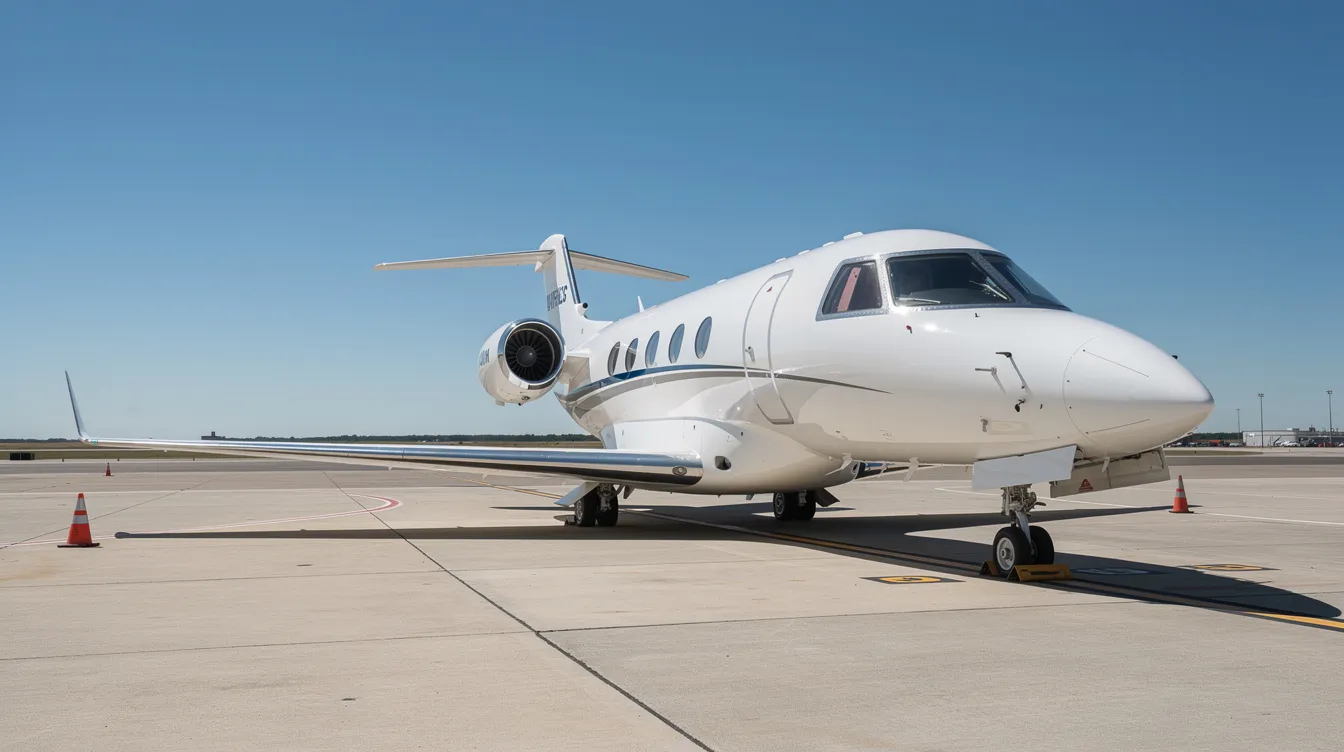
Typical private jets carry between 4 and 19 passengers, with capacity varying significantly by aircraft size. Very light jets and light jets seat 4 to 8 passengers. Mid-size jets handle 6 to 9 travelers. Super mid-size jets accommodate 8 to 12 people. Large and ultra-long-range jets carry 10 to 19 passengers. For larger groups, converted commercial airliners can accommodate 20 to over 75 passengers.
Factors influencing passenger capacity include aircraft type, seating configurations, and whether you prioritize maximum headcount or genuine comfort. Most private jets cap passenger capacity at 19 to avoid stricter commercial regulations that apply to larger aircraft. Under standard charter rules (Part 135), private jets are often restricted to 19 passengers.
Here’s something that might surprise you: the average party size for private jet flights is approximately 4.1 passengers. Most people flying privately travel in small groups well below their aircraft’s maximum capacity. Private jets provide a level of privacy that is not available on commercial flights, allowing groups to discuss sensitive matters without concern for eavesdropping. Traveling by private jet also allows for greater flexibility in scheduling, enabling groups to depart according to their own timelines rather than adhering to commercial flight schedules.
Whether you’re flying on a light jet or chartering a large private jet, understanding what’s happening during your flight can make the experience more comfortable. SkyGuru is a travel-tech app designed to help anxious travelers by providing real-time turbulence forecasts and flight-stage explanations. It works on both commercial flights and private aircraft, giving you context about bumps, noises, and phases of flight that might otherwise feel unsettling.
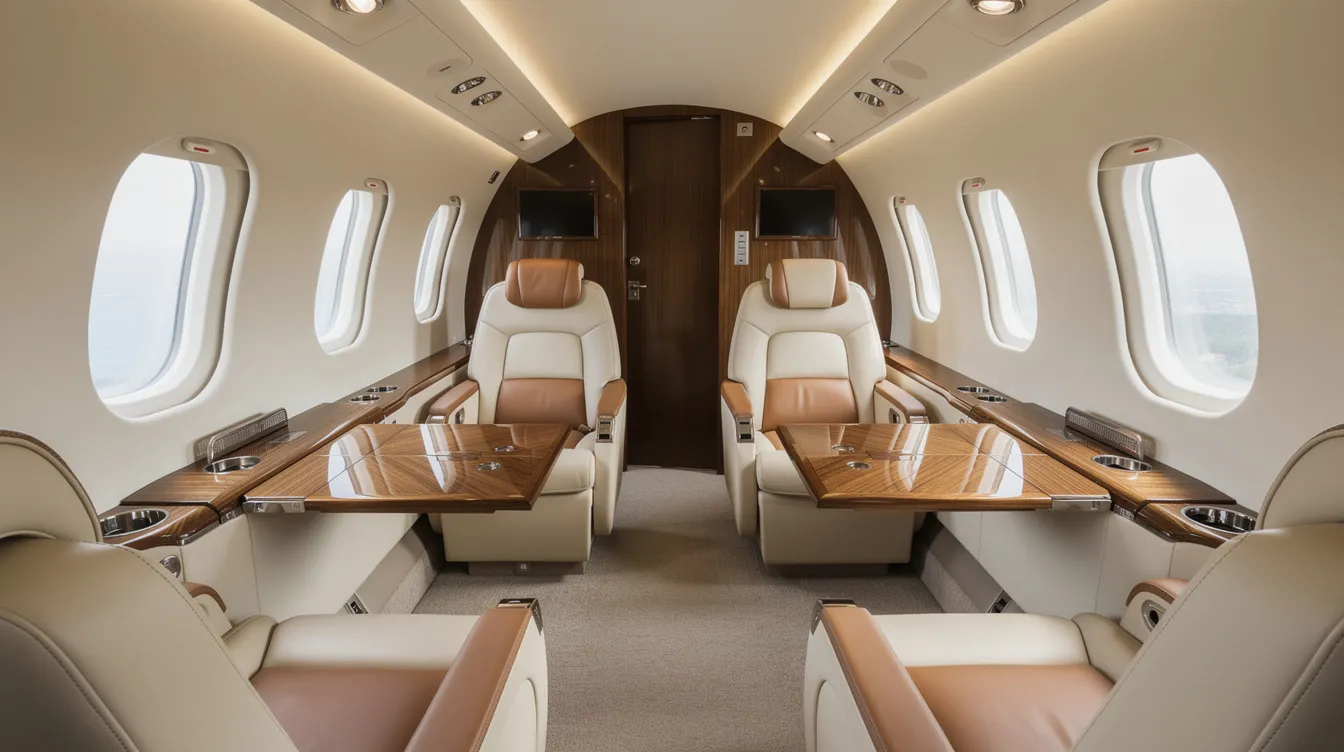
By Aircraft Type
Private jets are grouped by size, range, and cabin volume. Each category has a typical passenger capacity band that helps you match your group size to the right private jet. Understanding these categories is the first step toward finding the ideal aircraft for your trip. The best private jets are those that balance comfort, range, and passenger capacity to suit your specific travel requirements.
The breakdown works like this: very light jets typically seat 4 to 6 passengers and are designed for short regional flights. Light jets typically seat between 4 and 8 passengers, depending on the model and configuration. Mid-size jets usually have a seating capacity of 7 to 9 passengers, providing more cabin space and comfort compared to light jets. Super mid-size jets can comfortably seat 8 to 10 passengers. Large jets accommodate 10 to 19 passengers, providing generous space for seating and luxurious amenities. For the biggest groups, business jets and converted regional aircraft can accommodate 20 to over 75 passengers, depending on the model and configuration.
These numbers reflect usual charter seating capacity rather than absolute certification maximums. Comfort and baggage needs often reduce the practical passenger count. A jet certified for 8 passengers might feel best with 5 or 6 when everyone has bags and wants room to work.
Range tends to correlate with passenger capacity and cabin size. Regional jets with shorter nautical miles capability are typically smaller. Transcontinental and ultra-long-range jets need larger fuel capacity, which means bigger airframes and more spacious cabins. The aircraft that flies the farthest usually carries the most passengers comfortably.
Typical Passenger Capacity by Jet Type
|
Jet Category |
Typical Seating Capacity |
Ideal Use |
Examples |
|---|---|---|---|
|
Very Light Jets (VLJs) |
4–6 |
Short regional flights |
Embraer Phenom 100, HondaJet |
|
Light Jets |
4–8 |
Regional and short-haul flights |
Cessna Citation CJ3, Learjet 45 |
|
Mid-Size Jets |
7–9 |
Domestic and coast-to-coast trips |
Cessna Citation XLS+, Learjet 60 |
|
Super Mid-Size Jets |
8–12 |
Transcontinental flights |
Gulfstream G200, Challenger 350 |
|
Large Jets |
10–19 |
Long-haul, intercontinental |
Gulfstream G550, Bombardier Global 6000 |
|
Business Jets / VIP Airliners |
20–75+ |
Large groups, VIP travel |
Airbus ACJ350, Boeing BBJ |
Very Light & Light Jets (4–8 passengers)
Very light jets and light jets are the smallest cabin categories commonly used for private aircraft trips. They’re ideal for flights lasting 1 to 5 hours, covering regional routes and short-haul flights between nearby cities. Private jets can access smaller airports, reducing travel time and eliminating the need for lengthy ground transportation, which is often required when flying commercially.
Very light jets typically seat 4 to 5 passengers in most configurations. Light jets expand that to 5 to 8 passengers, though some models advertised at 7 or 8 seats are more comfortable with 4 to 6 travelers. Light jets typically seat between 4 and 8 passengers, making them ideal for small groups or families on short-haul flights.
Concrete examples help illustrate the range. The Embraer Phenom 100 accommodates 4 to 5 passengers comfortably. The Cessna Citation M2 seats 5 to 7 passengers. The Cessna Citation CJ3 and CJ3+ handle 6 to 8 travelers. The Learjet 45 and 75 models carry 7 to 8 passengers at maximum capacity. These jets work well for small groups, couples, business travelers on quick trips, or small teams with modest baggage requirements. They can use shorter runways and access smaller airports that larger aircraft cannot reach.
Anxious flyers often prefer light jets for shorter regional hops where flight time is minimal. The cabins are compact but can feel cozy rather than cramped. If turbulence or unfamiliar noises concern you, SkyGuru can explain what’s happening in real time, making smaller jets feel less intimidating, and its in-flight weather and route explanations are available even without onboard Wi‑Fi.
Mid-Size Jets (6–9 passengers)
Mid-size jets represent a step up in cabin height, width, and range. These private jets operate best on flights lasting 4 to 6 hours and can handle coast-to-coast routes across the US or regional European travel. They offer more cabin space without jumping to large jet pricing.
Mid-size jets usually have a seating capacity of 7 to 9 passengers, providing more cabin space and comfort compared to light jets. Specific examples include the Cessna Citation XLS+ with 7 to 8 seats, the Learjet 60 with 7 to 8 seats, and the Hawker 800XP with 7 to 9 seats.
What sets midsize jets apart is the stand-up cabin that most travelers can use without stooping. They typically feature club seating arranged around small work tables, a proper enclosed lavatory, and significantly more baggage space than light jets. Many include a mini galley for meal service and refreshments.
Mid-size jets are popular for business teams and families who want extra room without paying large-jet hourly rates. They balance seating capacity with genuine comfort, making them ideal for groups that will spend several hours in the air. Passengers prone to anxiety may appreciate the quieter cabin and greater sense of space. SkyGuru can help anticipate turbulence and route turbulence indices and flight stages that might otherwise cause worry during longer flights.
Super Mid-Size Jets (8–12 passengers)
Super mid-size jets bridge the gap between mid-size and large jets. They offer longer range capabilities suited to 6 to 7-hour flights and many transcontinental missions. These aircraft provide near-large-jet comfort without the highest hourly costs.
Super mid-size jets can comfortably seat 8 to 10 passengers, bridging the gap between mid-size and large jets with increased range and cabin space. Depending on divans and seating configurations, some models stretch to 12 passengers. Examples include the Gulfstream G200 with 8 to 10 seats, the Gulfstream G280 with 9 to 10 seats, the Bombardier Challenger 350 with 8 to 10 seats, and the Cessna Citation Longitude with 8 to 9 seats.
A super mid-size jet can be ideal for medium to larger groups who want spacious cabins with zones for work and relaxation. The Challenger 350 and similar models often feature separate areas where passengers can hold meetings, rest, or work independently. Enhanced amenities compared to smaller jets make these popular for business travelers on important trips.
Some super mid-size jets offer limited lie-flat sleeping setups at night. Converting seats and divans for sleep typically reduces how many passengers the cabin can handle comfortably compared to daytime configurations. If your group needs rest during an overnight crossing, plan for fewer passengers than the maximum seating capacity suggests.
Large & Ultra Long Range Jets (10–19 passengers)
Large and ultra-long-range jets represent the biggest traditional business jets. They handle intercontinental routes like New York to Dubai or London to Los Angeles without fuel stops. Heavy jets can typically accommodate 10 to 16+ passengers and are often designed for long-haul travel. These jets are particularly well-suited for international travel due to their extended range and ability to operate nonstop on transcontinental routes. Ultra-long-range jets usually seat 12 to 19 passengers and are capable of intercontinental flights.
Large jets can accommodate 10 to 19 passengers, offering spacious cabins with luxury amenities for longer flights. Many owners and operators cap seating at 12 to 14 for higher comfort on extended range missions. Specific aircraft include the Gulfstream G450 and G550 with 12 to 16 seats, the Gulfstream G650 and G700 with up to 18 to 19 seats, the Bombardier Global 6000 and 7500 with 13 to 19 seats, the Dassault Falcon 900 and 2000 with 10 to 14 seats, and the Embraer Legacy 600 with around 13 seats.
These spacious cabin environments usually include multiple zones. You might find a conference area for meetings, a lounge for relaxation, and sometimes a private stateroom. Full galleys with meal service capabilities, advanced entertainment systems, and multiple lavatories are standard. Flight attendants often accompany passengers on these aircraft to provide hospitality.
Sleeping capacity on large private jets is often lower than daytime seating. A Global 7500 might seat 17 to 19 during the day but offer comfortable sleeping for only 5 to 7 passengers at night. Because these jets cover many time zones and encounter diverse weather, nervous flyers may benefit from SkyGuru’s turbulence forecasts and explanations of climb, cruise, and descent phases during long flights, which have been widely recognized in media coverage of the SkyGuru app.
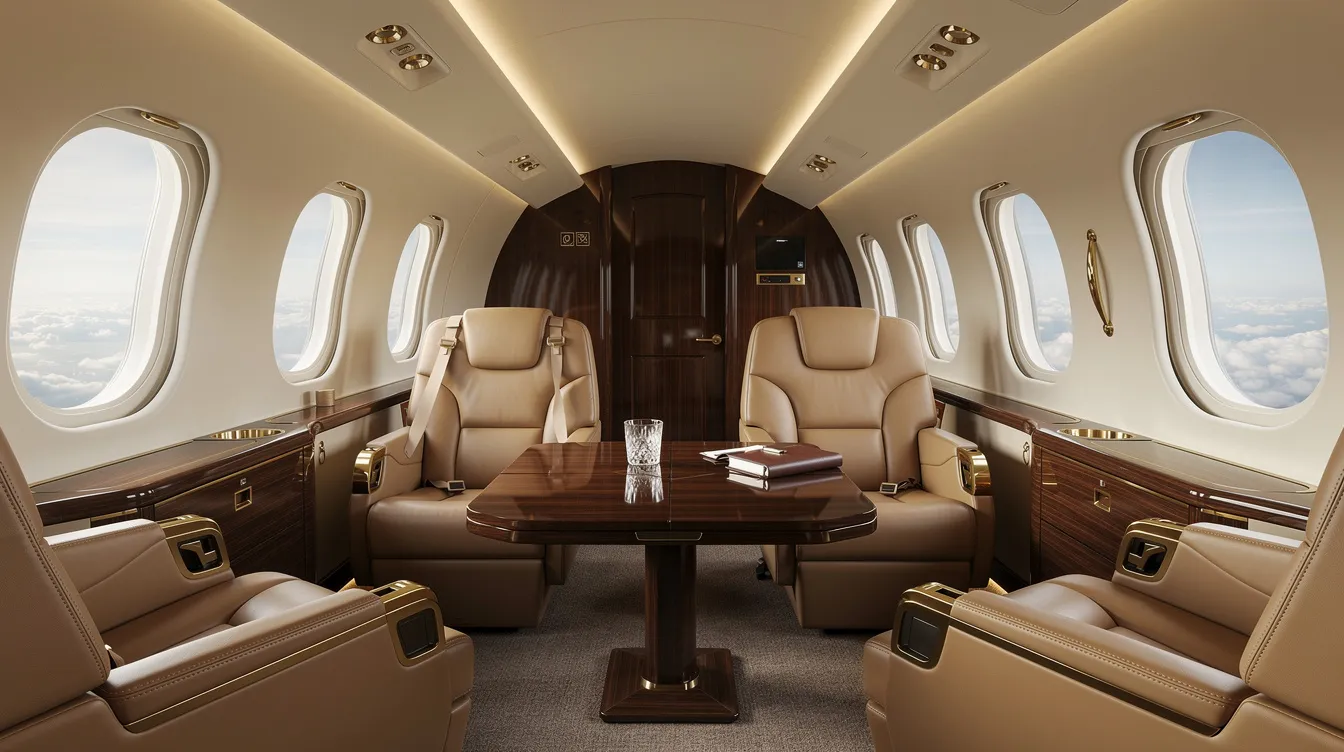
Jets for Large Groups (20+ passengers)
Standard business jets used under typical charter rules are usually limited to 19 passengers due to Federal Aviation Administration regulations. For larger groups, specially configured regional jets and VIP airliners carry 20 to 70+ passengers privately.
Concrete examples include the Embraer ERJ-135 with around 30 passengers, the ERJ-145 with 30 to 50 seats depending on configuration, the Bombardier CRJ-200 with up to around 50 seats, and VIP airliners like the Airbus ACJ319 or Boeing Business Jet versions often configured for 19 to 50+ seats. Business jets, which are the largest private aircraft, can accommodate 20 to over 75 passengers, providing extensive customization and luxury features. Using a private plane for large groups offers significant advantages in terms of efficiency, privacy, and tailored amenities compared to commercial airlines.
While these aircraft have higher maximum seating capacities, VIP or corporate configurations often reduce passenger count to 25 to 30 seats. This provides more space, meeting tables, conference rooms, and lie-flat seating for everyone. Luxury amenities and comfort features in private jets can reduce the number of available seats, as features like full-sized bathrooms and dedicated bedrooms prioritize passenger comfort over maximizing capacity.
These large-group aircraft are typically used for sports teams, music tours, corporate shuttles, or big family events rather than regular leisure trips. For most travelers searching for “how many passengers on a private jet,” these large jet models are the exception rather than the norm.
Layout Variations
Two private jets with identical certified seating capacity can feel completely different because of interior layout choices. Cabin layouts of private jets are highly customizable, allowing for varying numbers of seats and features. The configuration you encounter depends on how the owner or operator prioritized their space.
Owners and charter operators often trade maximum seat count for features like conference tables, divans, beds, and larger galleys. These choices directly affect how many passengers a private jet can carry comfortably. A jet certified for 10 might be configured for 7 passengers with a full work zone and sleeping area.
Layout choices can also help reduce anxiety for nervous travelers, especially those exploring apps that help with the fear of flying. More personal space, quieter zones away from galleys and lavatories, and the ability to move around the cabin all contribute to a calmer flying experience. Cabin size and configuration directly affect the passenger capacity of a private jet, with larger cabins allowing for more seating and amenities, while smaller cabins may require trade-offs between comfort and capacity.
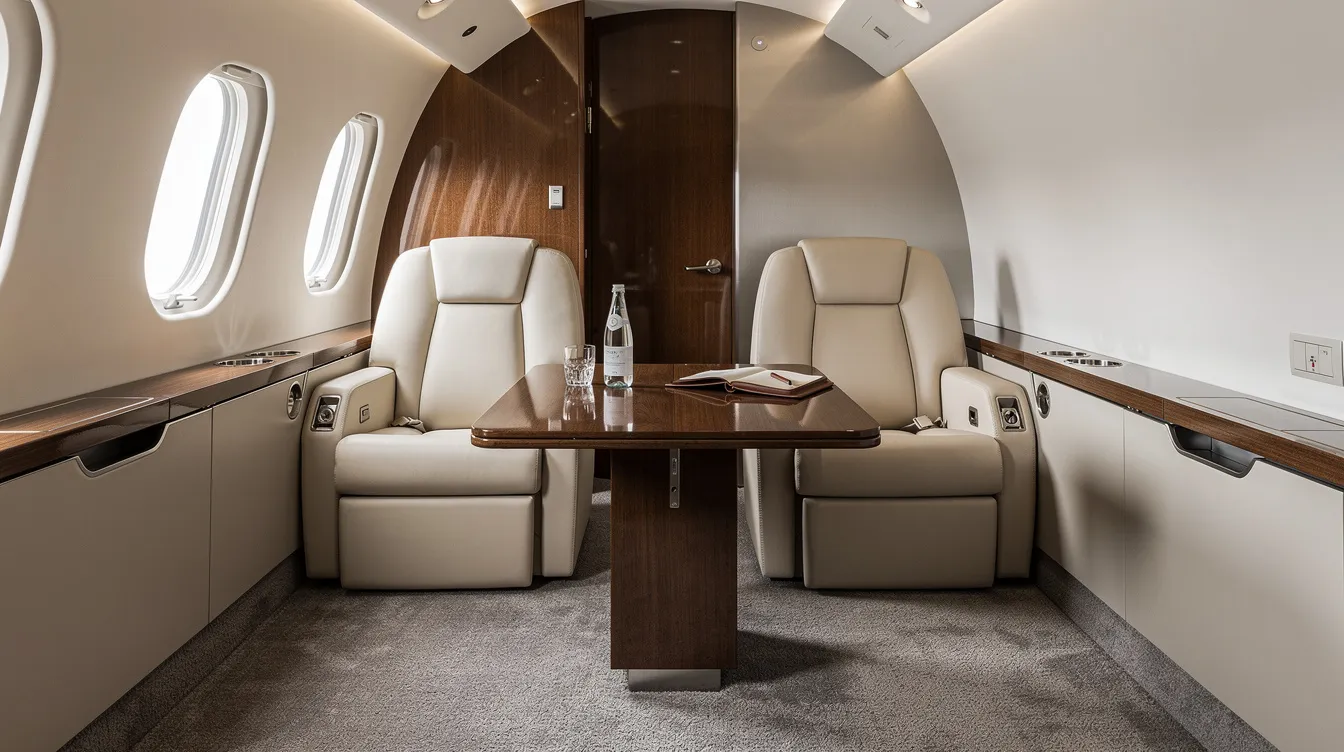
Typical Seating Configurations
Common seating configurations vary across categories. Club-four seating arranges passengers facing each other around small work tables. Forward-facing rows mirror commercial airlines, but with far more legroom. Side-facing divans and sofas work well for lounging. Large jets often include separate lounge or stateroom areas with comfortable seating for leisure travel.
A mid-size jet might list 8 seats through two club-four groupings, but feel most comfortable with 6 passengers when everyone has ample legroom and workspace. The Cessna Citation XLS+ typically offers 7 passenger seats plus a belted lavatory seat that provides additional space for one more. A Gulfstream G650 with 14 to 18 seats might arrange them across three cabin zones, each with distinct purposes.
Lap children typically count as passengers and must have seats under most charter rules. Families should confirm the usable seating capacity before booking to avoid surprises. A couple with two young children booking a 7-seat light jet is effectively planning for 4 adult-equivalent spots.
When planning a trip, ask brokers or operators for the actual interior layout and photos rather than just the maximum certified passenger count. Seating arrangements vary significantly between specific aircraft models,s even within the same category.
Daytime vs Nighttime Capacity
Many super-sized jets and large jets have different daytime and nighttime capacities. More passengers fit comfortably during the day than can sleep well at night. This distinction matters significantly for longer flights crossing multiple time zones.
Consider a Challenger 605, which might seat 10 to 12 passengers during the day but offer comfortable sleeping for only 5 to 6 at night once divans and fully reclined seats are prepared. Converting seats into beds changes the cabin dynamic entirely. Fewer seats mean more room per person, but the overnight passenger count drops substantially.
For overnight or ultra-long-range flights, base your decision on nighttime sleeping capacity rather than seated capacity. This is especially important for nervous or easily fatigued travelers who need genuine rest. SkyGuru can help passengers anticipate key phases of a long overnight flight, including takeoff, cruise changes, turbulence encounters, and descent, so they can plan sleep around these events, and its detailed FAQ explains how the app works in flight mode.
Baggage Space, Pets, and Special Equipment
Luggage volume, weight, and special items like golf clubs, skis, musical instruments, or medical devices can effectively reduce the number of passengers a jet can take. Cargo capacity matters even when seats are available.
A light jet that technically seats 7 may only be practical for 4 to 5 passengers traveling with ski bags. Larger aircraft can better absorb bulky baggage without sacrificing passenger comfort. Pets also need space, and carriers can occupy seating or floor zones, especially on smaller jets.
Share realistic baggage and pet information with your operator so the suggested jet type matches both passenger count and cargo needs. Safety regulations and weight restrictions imposed by aviation authorities play a significant role in determining the passenger capacity of private jets, as each aircraft has a maximum takeoff weight limit that includes passengers, cargo, and fuel. Heavier loads may require different fuel plans and altitudes, sometimes influencing turbulence exposure during flight, which can be evaluated in advance using detailed route and turbulence data APIs. On longer flights, the need to accommodate additional fuel within the aircraft's weight limits can further restrict the number of passengers or amount of baggage allowed.
Comfort vs Max Capacity
Private jet seating capacity is usually given as a maximum number. But most travelers prioritize comfort, privacy, and calm over maximizing space per person. This is especially true when anyone in the group is nervous about flying privately.
Many charter flights operate below maximum passenger capacity to provide more personal space, easier cabin movement, and better access to baggage and lavatories. Chartering a private jet for group travel can be more cost-effective than booking multiple commercial flights, especially for larger groups, as it consolidates travel into a single aircraft. Jet charter services offer flexibility, tailored experiences, and a range of aircraft options to suit different group sizes and travel needs.
For those with flight anxiety, a less-crowded cabin often feels safer and more controllable, and understanding how an app can help your fear of flying adds another layer of reassurance. Tools like SkyGuru can further reduce stress by explaining unfamiliar sensations during flight, whether you’re aboard a cozy light jet or a spacious large jet crossing oceans.
Realistic Comfortable Capacity by Jet Size
Rule-of-thumb comfort numbers for each category run lower than certified maximums. Very light and light jets feel comfortable for 2 to 5 passengers. Mid-size jets work best with 4 to 7 travelers. Super mid-size jets accommodate 6 to 10 people well. Large and ultra-long range jets carry 8 to 14 passengers comfortably, even if certified for 19.
These comfortable ranges account for legroom, ability to recline, access to work tables, and space to rest or sleep on longer flights. A Citation CJ3 might be certified for 7 to 8 passengers, but feels best with 4 to 5. A Global 6000 might be certified for 17 to 1,9 but most groups fly with 10 to 12.
When planning important business trips or family holidays, choose aircraft based on these realistic comfort bands rather than published maximum seating capacity. The experience improves dramatically when everyone has room to work, rest, or simply enjoy the journey without feeling crowded.
Cost vs Comfort Trade-Off
Larger jets cost more per hour, but whether the passenger count is higher, the cost per person can remain reasonable compared with multiple smaller jets or full-fare commercial airline tickets. Chartering a 30-seat aircraft typically costs between $5,000 and $8,000 per hour, which can significantly reduce per-passenger costs compared to booking multiple smaller jets.
Consider a group of 8 travelers. They might squeeze into an upper-end light jet at maximum capacity. But a mid-size or super mid-size jet offers much better comfort with only a modest cost increase per head. The additional space often proves worth the investment, especially for longer flights.
Large groups of 20 to 30 passengers often achieve better per-passenger economics using a regional jet like an Embraer ERJ-135 rather than splitting into several smaller private jets. Charter flight costs can vary based on factors such as flight distance, aircraft type, and landing fees, which all play a significant role in determining the final price, and for anxious travelers, these costs can be weighed against the benefits of app-based support for fear of flying. Fuel efficiency and current fuel prices are also major factors influencing the overall cost of private jet operations, as more efficient jets can reduce expenses, especially on longer routes.
Consider not only hourly rates but also the value of reduced stress, better sleep, and productive time on board. For anxious flyers, well-being may be worth the additional cabin space. Cost efficiency improves when everyone arrives rested and ready to work or enjoy their destination.
Mental Comfort and Flight Anxiety
Capacity planning isn’t just about how many people fit physically. It’s about how comfortable and relaxed those people feel in the cabin environment. Flying privately already reduces many stressors compared to commercial flights, but choosing the right jet size adds another layer of comfort.
Smaller jets can feel more intimate but also more intense during turbulence. Engine noise is closer. Movement feels more pronounced. Larger cabins can feel more stable but introduce the dynamics of a bigger group. Neither is inherently better; it depends on what helps your specific travelers feel calm.
Highly anxious travelers may prefer a slightly larger jet than strictly necessary. Additional space, quieter engines at the back of larger aircraft, and more freedom to move around all contribute to reduced stress. Fewer seats mean more personal territory for each passenger.
SkyGuru works as a support tool throughout any flight and is highlighted in media reports as a groundbreaking tool for nervous flyers. The app predicts turbulence, explains normal flight noises like gear cycling and flap movements, and sends calming, context-based tips during each flight phase. Whether you’re on a light jet for a quick hop or an ultra-long-range aircraft crossing continents, understanding what’s happening reduces anxiety significantly.
Think of mental comfort as part of your capacity planning. The right private jet is the one that fits your passengers physically and keeps everyone calm throughout the journey.
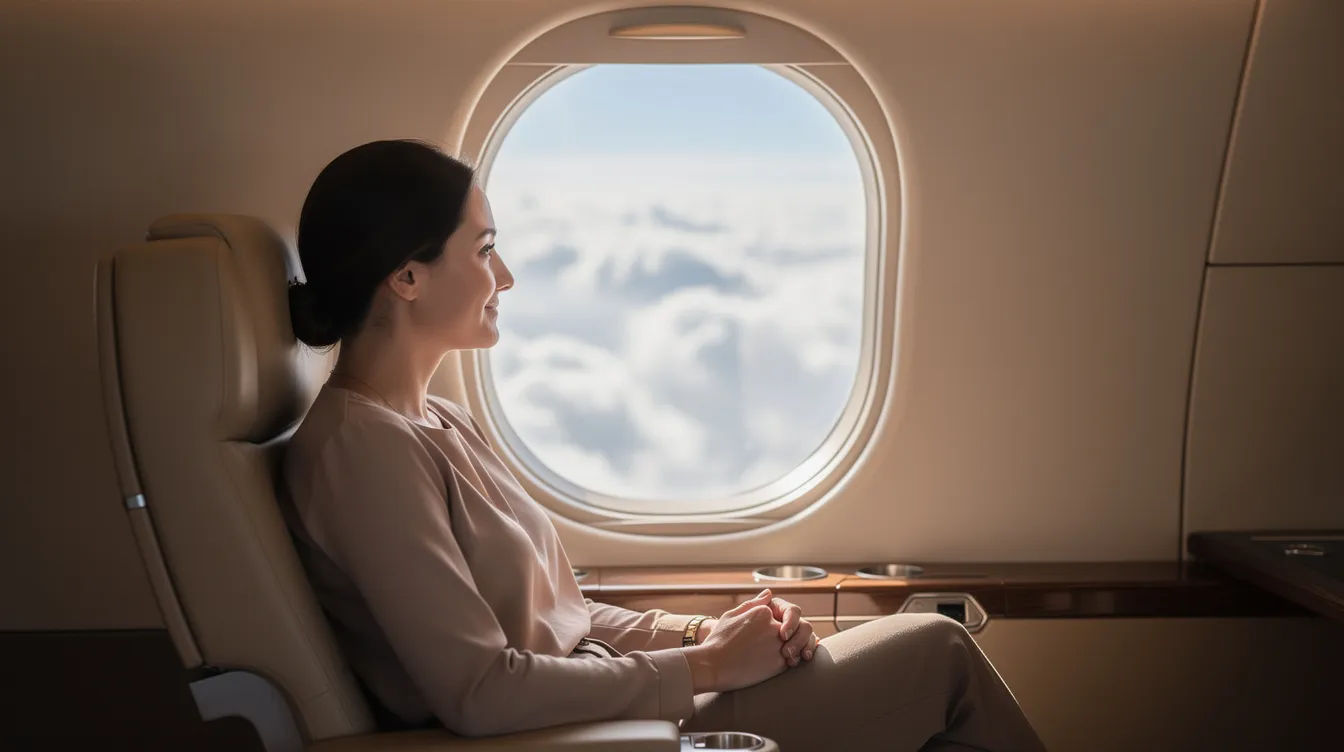
How to Choose the Right Jet for Your Group Size
A simple framework helps match your group to the ideal aircraft. First, count all passengers, including infants and pets. Second, map your route and determine nonstop range needs. Third, decide on a minimum comfort level for space, sleeping, and baggage. Fourth, match these requirements to a jet category. Fifth, adjust up or down one category for comfort or budget as needed.
Practical matching examples: 2 to 4 passengers on a 1 to 2-hour route often fit well in a light jet. Groups of 5 to 7 passengers traveling coast-to-coast suit a mid-size or super mid-size jet. Parties of 8 to 12 travelers on overnight or intercontinental routes are better served by large or ultra-long-range jets.
Booking a charter flight 60-90 days in advance can ensure aircraft availability and better pricing, especially during peak travel seasons. Private jet charter services provide flexibility, luxury, and cost-efficiency, making them an attractive alternative to commercial flights for group travel. Crew members play a crucial role in coordinating and ensuring the smooth operation of private jet flights, especially for international or complex itineraries. Ask brokers for both “minimum size that fits” and “one-size-up for comfort” quotes. Comparing these options helps you weigh price against comfort for your exact passenger count and specific aircraft model preferences. All private jets must comply with stringent safety regulations, which ensure the highest standards of safety and performance for passengers.
Once you choose your aircraft, download SkyGuru and enter your flight details. You’ll receive real-time explanations and turbulence forecasts throughout your journey, making everyone on board feel safer and more in control. Whether your next flight is on a cozy light jet or a spacious private jet, understanding what’s happening transforms the experience from uncertain to enjoyable.
Frequently Asked Questions
How many passengers can a typical private jet carry?
Most private jets carry between 4 and 19 passengers, depending on the aircraft type and configuration. Very light jets seat 4 to 6 passengers, while large jets and ultra-long-range models can accommodate up to 19 passengers comfortably.
Are flight attendants required on private jets?
Flight attendants are generally required on larger private jets, especially those carrying more than 10 passengers or on long-haul flights, to ensure passenger safety and provide in-flight service.
Can private jets accommodate sports teams?
Yes, larger private jets and converted regional jets can accommodate sports teams, including players, coaches, and support staff, along with their equipment. These jets often have customized interiors and ample baggage space.
Why do private jets often have a maximum capacity of 19 passengers?
Private jets typically cap passenger capacity at 19 to avoid more stringent commercial aviation regulations. Staying under this limit allows for more flexible operations and simpler certification requirements.
How does baggage affect private jet seating capacity?
Baggage volume and weight can reduce the number of passengers a private jet can carry comfortably. Larger aircraft have more cargo space, but bulky items like sports equipment or musical instruments may require adjustments to seating arrangements.
Is it more cost-effective to charter a larger jet for a group?
Chartering a larger jet for a group can be more cost-effective than booking multiple smaller jets. For example, a 30-seat regional jet can reduce per-passenger costs and simplify logistics for large groups.
How far in advance should I book a private jet?
Booking 60 to 90 days in advance is recommended to ensure aircraft availability and secure better pricing, especially during peak travel seasons or for large group charters.
Conclusion
Choosing the right private jet depends largely on how many passengers you need to accommodate and the level of comfort you desire. From very light jets seating just 4 to 6 passengers to large business jets and converted airliners carrying over 75, there is a private jet to suit every group size and travel need. Remember that seating capacity is often balanced against luxury features, baggage space, and flight range.
For most travelers, prioritizing comfort over maximum capacity leads to a more enjoyable and relaxing flight experience. Smaller groups typically benefit from light to mid-size jets, while larger parties may find regional jets or business airliners more practical and cost-effective. Planning and choosing the right aircraft category ensures your journey will be smooth, efficient, and tailored to your preferences.
Finally, tools like SkyGuru can enhance your private jet experience by providing real-time insights into flight conditions, helping reduce anxiety, and making every trip more comfortable. Whether you fly short regional hops or long intercontinental flights, understanding how many passengers a private jet can carry and what affects that number is key to making informed travel decisions.
FLEET SELECTION
JET CARDS
COST ANALYSIS


How to Auditing Your Operator's Maintenance Logs
Oct 05, 2025

How to Auditing Your Operator's Maintenance Logs
Oct 05, 2025

How to Auditing Your Operator's Maintenance Logs
Oct 05, 2025
Sky Guru Weekly
The smartest private aviation intelligence in your inbox.
.svg)

