



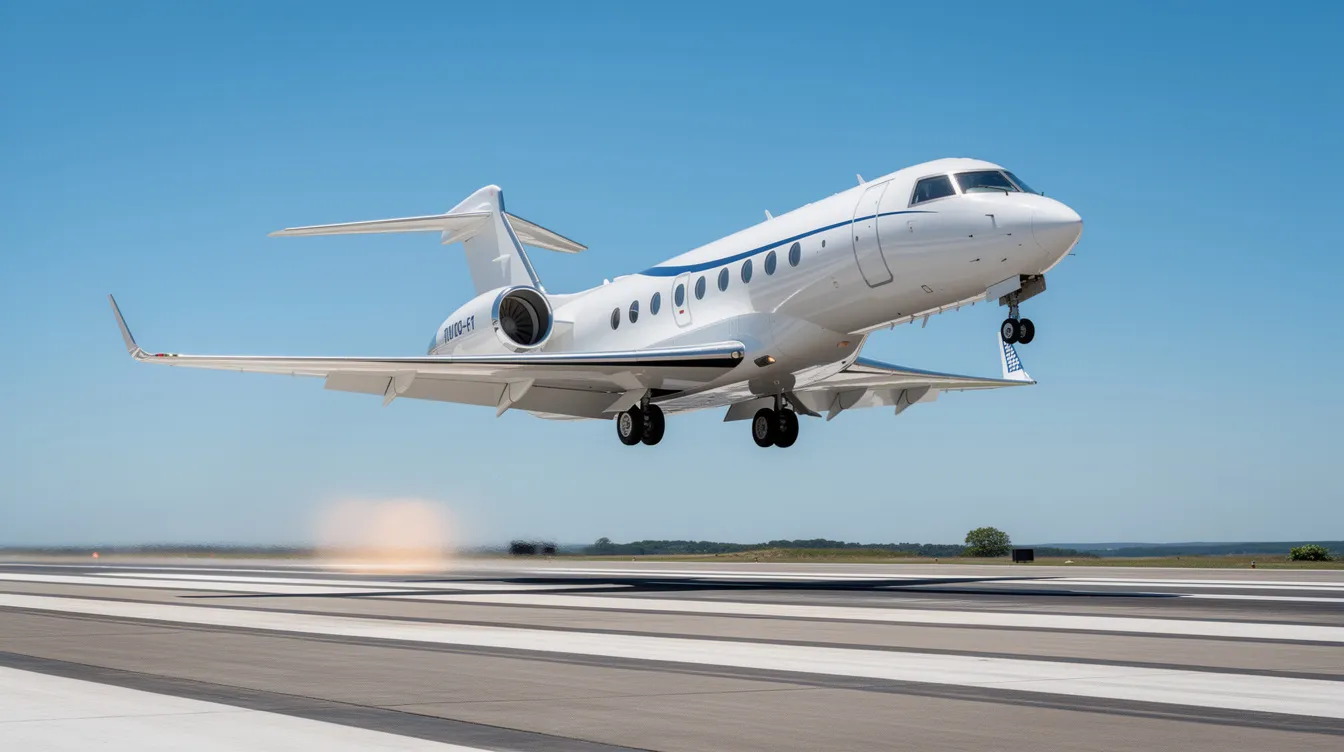
Private aviation has undergone a profound transformation since 2020. Once exclusive to celebrities and billionaires, it has become a strategic tool for executives, entrepreneurs, and affluent individuals aiming to regain control over their time. The future of private aviation is being defined by these evolving trends. The industry is forecasted to reach a market value exceeding $41 billion by 2030, growing from $31.9 billion in 2026 to $41.38 billion by 2030—signaling broader accessibility beyond just the ultra-wealthy.
This shift goes beyond luxury. Private aviation has surpassed luxury yachts and high-end real estate as the leading status symbol of modern wealth, thanks to its unique blend of practicality and exclusivity. In 2025, corporate requests for private charters tripled compared to 2024, reflecting how business leaders increasingly view private jets as essential productivity tools rather than mere indulgences.
For clarity, private aviation includes charter flights, business jets, fractional ownership programs, jet cards, and emerging subscription models. This article explores four foundational trends shaping the future of private aviation: rising demand, technological innovations, evolving customer expectations, and the outlook for the coming decade. At SkyGuru, our daily work assisting nervous and first-time flyers provides unique insights into these shifts and where the industry is headed, which has been highlighted in media features on the SkyGuru fear-of-flying app.
This article is aimed at business leaders, frequent travelers, and anyone interested in the future landscape of private aviation.
Private aviation underwent a fundamental shift after 2020. What was once reserved for celebrities and billionaires has evolved into a strategic asset for executives, entrepreneurs, and high-net-worth individuals seeking to reclaim control over their time. The future of private aviation is being shaped by these trends. The private aviation industry is projected to reach a market value of over $41 billion by 2030, growing from $31.9 billion in 2026 to $41.38 billion by 2030—a trajectory that signals increasing accessibility for travelers beyond the ultra-wealthy.
This transformation isn’t merely about luxury. Private aviation has overtaken luxury yachts and high-end real estate as the foremost status symbol of contemporary wealth, largely because of its blend of practicality and exclusivity. In 2025, corporate requests for private charters have tripled compared to 2024, reflecting how business leaders now view private jets as productivity tools rather than indulgences.
For clarity, private aviation encompasses charter flights, business jets, fractional ownership programs, jet cards, and emerging subscription models. This article examines four pillars—key trends shaping the future of private aviation: the growth of demand, technology transformations, changing customer expectations, and what the next decade holds. At SkyGuru, we observe these shifts daily through our work helping nervous and first-time flyers understand what happens during flights—a perspective that informs our view on where this industry is heading, as reflected in media coverage of the SkyGuru app for nervous flyers.
This article is intended for business leaders, frequent travelers, and anyone interested in the evolving landscape of private aviation.
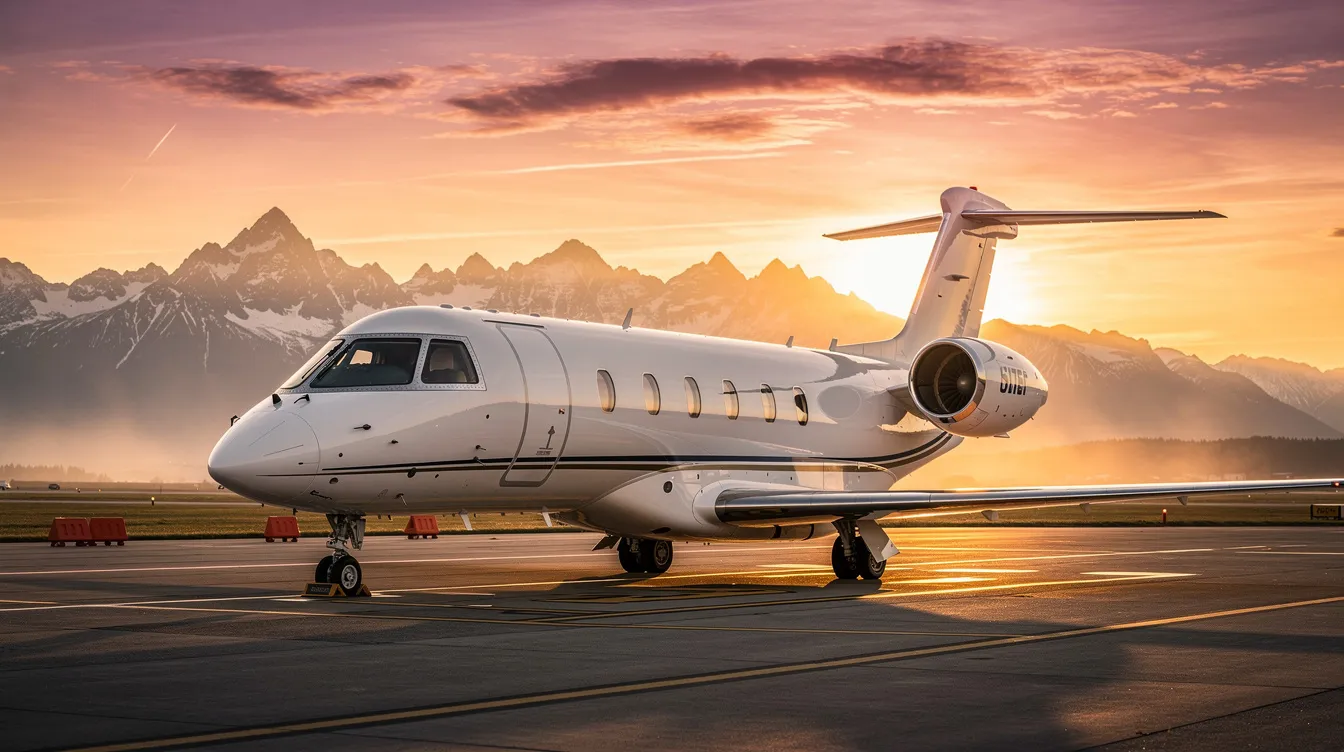
Tradition Table: Historical Data on Private Aviation Market Growth and Key Milestones
|
Year |
Market Value (Billion USD) |
Key Industry Milestones & Trends |
|---|---|---|
|
2000 |
~10 |
Private jets primarily a luxury for billionaires and celebrities |
|
2010 |
~18 |
Growth in fractional ownership programs begins |
|
2015 |
~22 |
Expansion of jet card programs and early digital booking tools |
|
2020 |
24.21The |
COVID-19 pandemic has accelerated demand due to health concerns |
|
2024 |
~30 |
Rising interest in subscription models and access-based flying |
|
2025 |
~31.9 |
Corporate requests for private charters triple vs. 2024 |
|
2026 |
31.9 |
Market stabilizes with increased tech adoption and SAF use |
|
2028 |
36.94 |
Projected market size with growth in electric and hybrid jets |
|
2030 |
41.38 |
Forecasted market value, sustainability, and experience focus |
This table highlights how private aviation has evolved from a niche luxury market into a dynamic, technology-driven industry with broader accessibility and strategic importance.
Growth of Private Travel Demand
Between 2020 and 2026, demand patterns for private aviation shifted dramatically. Health concerns, commercial airline disruptions, and network constraints pushed more travelers toward private options. North American private jet activity remains 15-20% above 2019 baselines, while Europe hovers at 10% above pre-pandemic figures despite economic headwinds.
The global business jets market size is expected to increase from $24.21 billion in 2020 to $36.94 billion by 2028, demonstrating ongoing demand and investment in the business aviation sector. First-time charter users have spiked 40% since 2020, as corporations normalized private jets for C-suite travel—60% of Fortune 500 firms now include private options in their travel policies. In 2025, demand and new market entrants have reached record levels, highlighting unprecedented growth and activity across the private aviation industry.
Private jets deliver 4-6x time savings on complex itineraries, enabling direct access to over 14,000 U.S. airports versus roughly 500 served by commercial airlines. This allows jet owners and charter clients to fly point to point, transforming air travel from a logistical burden into a competitive advantage for family offices and executives managing billion-dollar portfolios.
Regional shifts tell a compelling story. India’s private fleet doubled to 220 aircraft since 2019. Australia’s domestic charters rose 35%. The Middle East continues growing at 8% annually. The ongoing “Great Wealth Transfer” is reshaping the private aviation landscape as wealth moves from older generations to Gen X and Millennials. By 2040, Gen Z and Millennials will comprise nearly 35% of the global ultra-high net worth population, a significant increase from just 8% today.
Key demand drivers include commercial airline disruption, remote work enabling “work from 40,000 feet,” growing high-net-worth populations globally, and the need for secure travel for sensitive business dealings across multiple regions.
From Full Ownership to Access-Based Models
Full ownership burdens many potential buyers: $5-75 million acquisition costs, $2-4 million in annual fixed costs for crew, hangar, and maintenance, plus $3,000-10,000 per hour in variable operating costs. When compared to commercial airline fares, the overall cost of private aviation remains a significant factor, making cost efficiency a key consideration for those seeking premium travel experiences. Average utilization sits at 300-400 hours annually—far below the 800 hours needed for favorable economics.
This reality drives the significant shift from traditional ownership models to fractional ownership and subscription services. Fractional ownership allows multiple individuals or entities to share ownership of an aircraft, dividing costs and usage time. Subscription services and hourly programs enable customers to pay only for the time they fly, without the burdens of ownership. The asset-light model provides flexibility and access to premium aircraft without the commitment of full ownership. Subscription-based services and hourly programs are becoming increasingly popular, allowing customers to pay only for the time they fly without the burdens of ownership. The asset-light model is gaining traction, providing flexibility and access to premium aircraft without the commitment of full ownership. As an example, Flexjet has expanded its infrastructure and services, making business aviation more accessible to a wider audience through fractional ownership and jet card programs.
By 2026, access programs are projected to account for 60% of private hours flown, up from 45% in 2020. This fractional model democratizes access for 25-100-hour flyers—those with $5-20 million net worth who fly regularly but don’t need a dedicated aircraft. NetJets operates 700+ jets with 10% membership growth in 2024, while Volato’s $450M SPAC in 2024 funded significant fleet expansion.
New Geographies and City Pairs
Legacy transatlantic routes are ceding ground to regional surges that airlines underserve. India’s Ahmedabad-Hyderabad charters rose 50% for pharma supply chains. Australia’s Brisbane-Newcastle route serves mining executives with 30% growth. Europe sees Lyon-Gdańsk traffic increase 15% for auto manufacturing needs.
Private aviation fills gaps created by airline network cuts, crew shortages, and slot constraints—particularly for multi-stop itineraries that commercial carriers cannot efficiently serve. Asia Pacific business aviation grows at 6.5% CAGR to 2030, with the Middle East following at 5.8%.
These emerging markets influence aircraft types selected by operators. More light and super-mid business jets like the Embraer Phenom 300E optimize for short runways at secondary airports, while Southeast Asia and broader emerging markets see infrastructure follow demand with 200+ new FBOs planned through 2026.

Technology Transformations
The period from 2026-2036 positions the private aviation industry as a testbed for cutting-edge aviation technology. Private jets, due to lower fleet sizes and higher margins, often adopt innovations 3-5 years ahead of commercial airlines. This includes advanced avionics, satellite connectivity upgrades, and predictive maintenance systems.
Three technology vectors define this transformation: new aircraft and propulsion, digital and data platforms, and passenger-centric tools, including wellness technology. These intersect with regulatory changes and the broader aviation industry’s push for net-zero carbon emissions by 2050.
New Aircraft, Propulsion, and Sustainability
The focus on sustainability in private aviation is driven by the adoption of Sustainable Aviation Fuel, which is made from renewable biomass. The U.S. aims for 3 billion gallons of SAF annual production by 2030. Operators like PrivateFly are signing 10-year SAF deals targeting 30% blends by 2030.
Hybrid-electric aircraft development accelerates. Small electric private jets are predicted to be available for charter and ownership by 2030, offering quieter, cleaner options for short-haul routes. ZeroAvia’s hydrogen-electric Dornier 228 targets 2026 entry with 300nm range, while magniX electric motors on Cessna Caravans await 2025 certification.
OEM roadmaps show new technologies arriving steadily: Gulfstream G800 deliveries in 2025 with 10% fuel savings, Bombardier Global 8000 SAF-ready in 2025. Cabin and airframe efficiency improvements—carbon fiber construction reducing weight by 20%, winglets delivering 5-7% fuel savings—provide immediate benefits before radical propulsion becomes mainstream.
Digital Platforms, AI, and “Invisible” Operations
Technology is reshaping how companies operate behind the scenes. AI-enhanced platforms match demand to available business jets in near-real time, optimize repositioning flights to reduce empty legs by 30%, and forecast demand by route, date, and client profile.
Predictive maintenance and digital twins reduce unplanned downtime by 25% by 2030, improving safety margins while cutting costs. Weather and turbulence forecasting tools integrate into operator dashboards and cockpit electronic flight bags, reducing diversions by 15% and creating smoother flights.
Digital booking tools are making private travel more accessible and on-demand. End-to-end apps handle quoting, contracts, payment, and real-time flight tracking—mirroring consumer expectations shaped by ride-hailing platforms. Safety and regulatory changes are evolving to facilitate AI-driven operations and to set global carbon standards.
Passenger Experience, Wellness, and Fear-of-Flying Tech
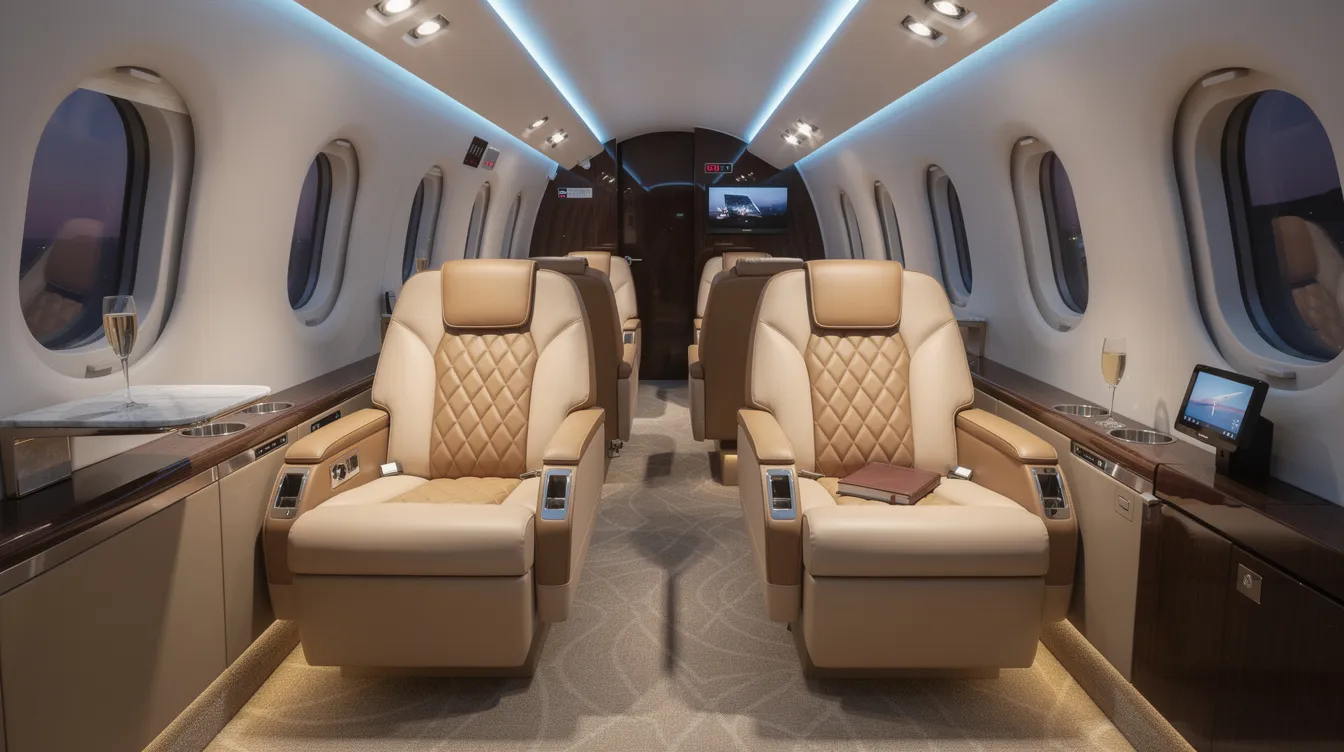
In-cabin experience evolves from pure luxury toward performance, wellness, and emotional comfort. New generation business jets feature improved pressurization (4,000ft cabin altitude versus 8,000ft on commercial aircraft), circadian lighting systems, and ultra-fast connectivity reaching 1Gbps through Starlink Ka-band.
Personalized, AI-driven experiences are becoming standard in private aviation, managing aspects like cabin temperature and lighting automatically. Aircraft are increasingly designed for productivity, featuring enhanced technology for a connected work environment.
Mental wellness and fear-of-flying solutions are entering the private aviation space. Apps like SkyGuru provide real-time explanations of turbulence, flight stages, and weather events—using sensor-based detection to help anxious travelers and first-time private flyers feel informed and in control. By 2030, biometric and personalization technologies will turn private jets into tailored “calm zones” where lighting, mindfulness content, and turbulence forecasts combine to support how travelers feel upon landing.
Changing Customer Expectations
The new generation of private aviation clients expects more than speed and status. High net worth travelers benchmark private jet experiences against best-in-class digital services—streaming platforms, ride-hailing apps, concierge services—creating pressure for frictionless, app-driven journeys.
Private aviation is becoming more accessible to a broader demographic, including younger tech-savvy travelers. Younger clients place high value on experiences, time, and convenience, indicating a shift from traditional luxury goods to unique travel experiences. These rising expectations force operators to compete on service design, not just aircraft quality.
Frictionless, End-to-End Experiences
In 2026, the most successful private aviation providers will be those that create seamless, intuitive, and personalized journeys for clients, moving away from complicated booking processes. Travelers expect instant pricing, transparent aircraft details, secure payment, and automated document handling.
Private jet travelers can arrive just 15-20 minutes before takeoff, board directly, and land at smaller airports situated closer to their final destinations. Private terminals offer spa-like lounges, direct tarmac access, and dedicated security facilities. The FBO market is projected to reach $20 billion by 2031, growing at 4.5% CAGR.
Clients value the balance between technology and the human touch, appreciating self-service options for simple tasks while still requiring access to experts for complex needs. AI handles 70% of routine operations while experienced advisors manage complex multi-leg or regulatory-heavy trips.
Hyper-Personalization and Experience-Led Luxury
Personalization is becoming the ultimate differentiator in private aviation, with 83% of ultra-high-net-worth clients planning to increase their travel spending, emphasizing unique experiences over material goods. Private flying increasingly means curated menus, tailored onboard wellness programs, and cabin environments adjusted to individual preferences.
Providers use data from past trips to anticipate needs—stocking specific vintages, arranging spontaneous side trips, and matching preferred crew. Personalization is also functional: aligning schedules around key meetings, integrating video calls seamlessly on board, and ensuring quiet spaces for confidential negotiations.
Safety, Transparency, and Emotional Comfort
Safety extends beyond certification. Clients demand ongoing transparency about operations, maintenance, and crew training. Third-party ratings, digital safety dashboards, and pre-flight briefings reassure newer entrants to private jet travel post-2020.
Psychological comfort matters increasingly. Apps like SkyGuru, as explored in resources on how an app can help your fear of flying, complement operator communications by providing sensor-based updates on flight stages, turbulence forecasts, and evidence-based coping techniques for those who land with anxiety about flying privately. By 2030, holistic safety will include physical, cyber, and emotional dimensions—all proactively managed for discerning clients.
What the Next Decade Looks Like
Macro forces shape private aviation’s trajectory through 2036: climate policy intensifies, infrastructure struggles to keep pace, geopolitical risks persist, and demographic shifts continue among high-net-worth individuals. The industry faces both opportunities in emerging markets and risks from regulation and public perception. Private jet travel increasingly enables executives to arrive closer to their destination and conduct business directly on site, reducing transit time and allowing for a more immediate presence at client locations.
Demand and Market Structure in 2030–2036
Flight hours will reach 10+ million by 2030, according to JetNet projections. Charter and fractional ownership continue gaining share—potentially 70% of total hours—while corporate travel policies normalize private jet travel for mission-critical use cases.
Sustainability is a top priority for 81% of operators in the private aviation industry for 2026-2030. By 2028, the global business jets market is projected to reach $36.94 billion, reflecting sustained demand for flexible travel solutions. Growth concentrates in Asia Pacific, India, the Middle East, and selected African markets.
A “barbell” market emerges: ultra-long-range business jets for intercontinental executives alongside smaller, more efficient aircraft types for regional missions.
Sustainability and Public Perception
Decarbonization pathways include near-term SAF adoption, efficiency gains, and medium-term introduction of hybrid-electric aircraft on shorter routes. Transparent emissions reporting and voluntary offsetting influence reputation among younger, climate-conscious clients.
Potential policy moves—taxation, airport access rules, minimum occupancy expectations—could incentivize more efficient usage without halting growth entirely. By 2035, competitive operators will demonstrate measurable emissions reductions per passenger-kilometer while maintaining premium service.
From Aircraft-Centric to Experience-Centric Ecosystems
The industry evolves from selling access to aircraft toward orchestrating end-to-end mobility ecosystems. Providers bundle ground transport, private terminals, digital concierge, wellness content, and productivity tools into unified offerings.
Mental wellness and fear-of-flying solutions—including apps like SkyGuru, discussed in our blog on how apps support fearful flyers—become standard components of premium private jet travel, offered proactively to nervous or first-time passengers. The private jet transforms into a controllable time machine: optimized not just for arrival time, but for how travelers feel and perform upon landing.
How Private Flyers Can Prepare for the Future
For business leaders and frequent travelers, practical steps ahead include:
-
Evaluate access models carefully—charter versus fractional ownership versus jet cards—based on annual flight hours and route patterns
-
Demand SAF and sustainability roadmaps from operators before committing
-
Require clear safety and maintenance transparency, including third-party audits
-
Incorporate data-driven tools and mental wellness practices into pre-flight routines
Corporate travel managers should integrate private jet options into overall mobility strategies, using them selectively for missions where time, security, and productivity justify the investment.
By the mid-2030s, technology, changing expectations, and a new generation of clients will make private aviation more accessible, intelligent, and emotionally supportive—a perfect balance of efficiency and wellbeing that transforms how the world’s most demanding travelers move ahead.
Frequently Asked Questions (FAQs)
What is driving the growth of private aviation demand?
The growth is fueled by factors such as commercial airline disruptions, health concerns, remote work enabling travel flexibility, and the expanding global high-net-worth population. Corporate requests for private charters tripled in 2025 compared to the previous year, underscoring rising demand.
How are ownership models evolving in private aviation?
There is a significant shift from full ownership to fractional shares, subscription services, and jet card programs. These access-based models reduce the financial and operational burdens of owning an aircraft while providing flexibility and premium service.
What technological advancements are shaping private aviation?
Key innovations include sustainable aviation fuels, hybrid-electric and electric aircraft, AI-enhanced operations, predictive maintenance, and personalized in-cabin experiences. These technologies improve efficiency, reduce environmental impact, and enhance passenger comfort.
How are customer expectations changing in private aviation?
Modern clients expect frictionless, app-driven booking experiences, hyper-personalization, seamless integration of wellness and productivity features, and transparency in safety and sustainability practices. Younger, tech-savvy travelers especially prioritize unique experiences over traditional luxury.
What role does sustainability play in the future of private aviation?
Sustainability is a top priority, with widespread adoption of Sustainable Aviation Fuel and emerging electric propulsion technologies. Operators aim to balance growth with carbon reduction commitments, responding to both regulatory pressures and client preferences.
How can travelers prepare for the future of private aviation?
Travelers should evaluate access models based on their flying patterns, demand transparency on sustainability and safety, and embrace digital tools and mental wellness resources to optimize their private travel experience.
Conclusion: Navigating the Future of Private Aviation
The future of private aviation is poised for remarkable growth, driven by evolving customer expectations, technological innovation, and shifting market dynamics. As the primary driver of demand shifts toward a broader demographic—including younger, tech-savvy travelers—the industry is adapting with more flexible access models like fractional shares and subscription services, reducing the barriers of full ownership of an aircraft. This democratization, coupled with advancements in sustainable aviation fuels and emerging electric propulsion technologies, positions private aviation as both an exclusive and responsible choice.
Most people seeking private travel today value not only speed and privacy but also seamless, personalized experiences supported by cutting-edge digital platforms and AI-enhanced operations. Pilots and operators are leveraging these tools to deliver unparalleled flexibility, safety, and emotional comfort, transforming private jets into mobile sanctuaries of productivity and wellness.
Looking ahead to 2026 and beyond, private aviation will continue to redefine luxury and efficiency, balancing innovation with tradition to meet the complex needs of a changing clientele. For business leaders and frequent travelers, understanding these trends and embracing new access models will be essential to harnessing the full potential of private aviation in the coming decade.
FLEET SELECTION
JET CARDS
COST ANALYSIS


How to Auditing Your Operator's Maintenance Logs
Oct 05, 2025

How to Auditing Your Operator's Maintenance Logs
Oct 05, 2025

How to Auditing Your Operator's Maintenance Logs
Oct 05, 2025
Sky Guru Weekly
The smartest private aviation intelligence in your inbox.
.svg)

