




An empty leg flight is a private jet repositioning leg flown without passengers, sold at a steep discount. These flights exist due to aircraft repositioning—a logistical necessity in private aviation—when an aircraft needs to return to base or move to a pickup location after dropping off charter clients. Operators would rather sell seats cheaply than fly empty.
Also known as a deadhead flight or empty aircraft, these trips occur when a plane flies without paying passengers, often to reposition for upcoming charters. In private aviation, empty leg flights are a common and strategic part of operations, allowing buyers to access private charter jets at substantially reduced prices since the aircraft would otherwise produce no revenue during these empty trips.
This guide covers everything you need to know about empty leg flights if you’re actively searching for cheap private jet flights and wondering whether these deals are worth pursuing. Whether you’re interested in booking a private charter jet or simply want to experience travel on a private plane, understanding these options can help you make informed decisions.
Typical savings range from 50% to 75% off standard charter prices, as leg flights offer significant cost advantages. However, empty leg flights come with trade-offs: they’re usually one-way, fixed-route, and appear last-minute. There are logistical constraints such as fixed routes and times, high cancellation risk, and limited flexibility. Additionally, the routes for empty leg flights are often unpredictable and limited, making it difficult for travelers to plan their trips. Think of them as an opportunistic entry point to experience private aviation rather than a guaranteed bargain every time.
Below, you’ll learn how empty leg flights work, their pros and cons, when they make sense for your travel plans, and how SkyGuru can help anxious flyers stay calm aboard a private jet.

How They Work
Empty leg flights exist because charter companies must reposition aircraft constantly. When a client books a one-way charter, the jet needs to fly somewhere else afterward—either back to its home base or onward to pick up the next paying passengers. These repositioning legs are also called ferry flights, dead heads, or an empty sector, which refers to the specific leg of the flight when the aircraft is repositioning without passengers.
Empty leg flights are flights that operate without any passengers, often occurring when an aircraft needs to reposition or return after a charter. Approximately 30% to 50% of private jet charter flights operate as empty legs, highlighting a significant operational reality in the private aviation industry.
Here’s how an empty leg is created:
-
A client books a one-way charter (e.g., London to Nice on 18 July 2026)
-
The jet drops them off and must fly back or onward empty
-
The operator lists this return flight as an available empty leg at a discount
-
A new passenger books that leg, and the operator recovers partial costs
Empty leg charter flights are almost always:
-
One-way only (passengers must arrange their own return travel)
-
On fixed dates and times set by the original charter
-
Between fixed airports chosen by the operator, not by you
Operators discount these flights because the aircraft will fly anyway. Prices typically run 25% to 75% lower than standard charter, and they’re sometimes negotiable close to departure when operators face flying the entire jet empty. This makes empty leg flights the cheapest option for private jet travel, especially if you are flexible and can negotiate further discounts as departure approaches.
For example, a typical charter flight from New York to South Florida can cost over $20,000, while an empty leg flight on the same route may only cost between $9,000 and $12,000. A London to Ibiza light jet empty leg might work out to roughly £500–£800 per person for a group of 4–6.
Most empty legs appear on busy private jet corridors:
-
US East Coast (New York–Miami, New York–Boston)
-
Southern California (Los Angeles–Las Vegas, San Diego–Santa Barbara)
-
Europe (London–Paris, London–Nice, London–Ibiza)
-
Seasonal routes to Aspen in winter or the Hamptons in summer
You typically book the entire aircraft on an empty leg, though some platforms experiment with book-by-the-seat options on popular routes.
Finding and Booking Empty Leg Flights
You cannot search for empty leg flights like airline tickets. They only appear after primary charters are booked, often just 24–72 hours before departure. Empty leg flights are often not advertised until the last minute, making it essential for travelers to check frequently for available options and act fast when a suitable flight appears.
To find empty leg flights, try these approaches:
-
Check operator and charter company websites with dedicated “empty leg” or “deals” pages, including providers like Silverhawk Aviation
-
Use broker platforms and apps with real-time listings—operators list available empty leg inventory on their websites or through dedicated applications, with popular platforms for monitoring these last-minute deals, including XO, Jettly, and Blad.e
-
Set up email alerts and push notifications for your favorite routes
Many charter companies and brokers offer platforms where travelers can search for and book an empty leg flight, but booking directly with a charter company is often recommended for better deals.
To practically find empty leg flights for a chosen week:
-
Stay flexible on dates (at least ±1 day)
-
Check multiple apps daily
-
Consider nearby airports (Teterboro instead of JFK, for example)
Booking empty legs typically requires flexibility in travel plans, as the routes and schedules are unpredictable and can change at short notice, so you need to act fast.
The booking process works like this:
-
Choose a routing that fits your plans
-
Confirm the aircraft type and total price
-
Sign the charter agreement
-
Pay in full (often non-refundable)
-
Receive your final schedule and FBO details
Empty legs are flown by the same certified operators and crews as full-price charter flights, with identical maintenance and safety standards. Leg flights safe? Absolutely—same aircraft, same regulations.
For nervous flyers, download the SkyGuru app before departure. Enter your empty leg flight details to get real-time explanations and turbulence forecasts during the journey.
Pros and Cons
Empty leg flights trade flexibility and certainty for price. Understanding both sides helps you decide if an empty leg makes sense for your specific trip.
Pros
Cost savings: Empty leg flights can offer discounts of 25% to 75% off standard charter prices, making them a cost-effective option for travelers willing to be flexible with their travel plans. A €2,500–€3,500 empty leg in Europe for up to 6 people can work out close to—or below—per-person business class fares.
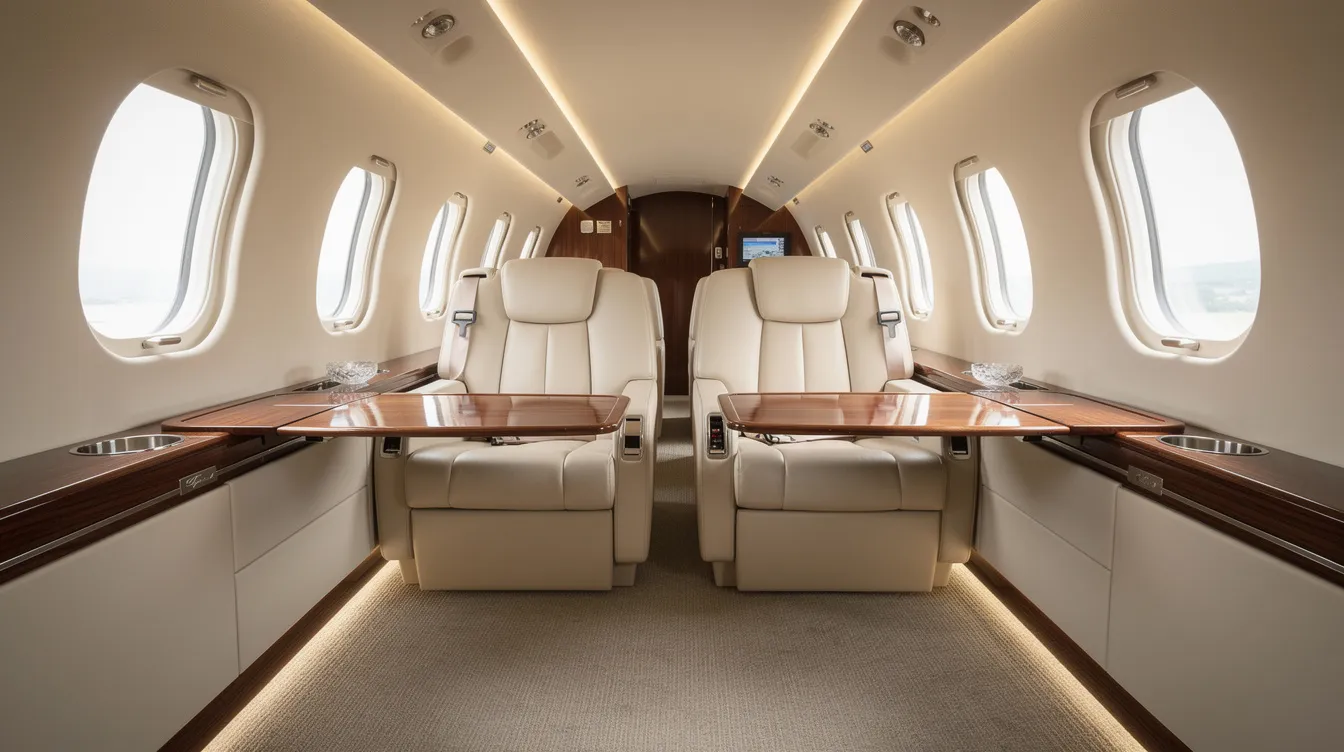
Luxury for less: Passengers still enjoy the same private terminal access, crew, and aircraft comfort as a full-price flight on empty leg flights. You get the spacious cabin, privacy, and quiet environment of private air travel without the full premium.
Skip the crowds: Access smaller airports and private FBOs, avoiding cramped conditions, long security lines, and commercial airline chaos.
Group value: The more seats you fill, the cheaper the per-person cost. Split a $10,000 empty leg among 8 friends, ds and you’re paying $1,250 each.
Environmental upside: Booking empty legs is seen as more environmentally considerate because it utilizes a flight that was already scheduled to fly regardless of passenger presence. It’s a guilt-free way to fly private.
Cons
Total rigidity: Fixed date, time, and routing. You cannot adjust departure times or airports without forfeiting the deal and paying full price.
One-way only: Due to the nature of empty leg flights, passengers typically only book one-way trips, meaning they must arrange their own return travel—often via commercial airlines.
High cancellation risk: Empty leg flights can be canceled at any time, often without prior notice, which can leave passengers stranded without alternative travel arrangements. Industry data suggests 20–25% face modifications.
Last-minute availability: Many empty legs appear only days or hours before departure, making planning difficult.
Basic catering: Catering on empty leg flights is often limited to basic options such as prepackaged snacks and soft drinks, unless specifically arranged in advance.
Refund policies are often restrictive—confirm terms (non-refundable deposits, rebooking options) before paying.
For anxious travelers, last-minute schedule shifts and turbulence can spike stress. SkyGuru’s real-time flight explanations and in‑flight weather insights help reduce that anxiety.
How Empty Legs Feel Different from Standard Charters
The passenger experience on an empty leg flight mirrors a standard charter—same jet—but with a more “take it as it comes” setup.
Passengers on empty leg flights typically arrive just minutes before departure, but these flights have stricter schedules, meaning delays are less likely to be accommodated. Crews may hold 15–30 minutes max, not hours.
Onboard, you’ll enjoy spacious seating, a quiet cabin, and the ability to work or relax privately. Empty leg flights provide a more private and luxurious experience compared to commercial flights, allowing passengers to avoid crowded conditions and enjoy a more personalized service.
Private jets feel different than large airliners—more responsive to bumps, faster climbs. The SkyGuru fear‑of‑flying app, widely covered in the media, helps by predicting turbulence along your route and explaining each phase of the flight in real time.
For many first-time private flyers, an empty leg is a low-cost way to experience private aviation before committing to a scheduled flight on a membership program.
When to Use Them
Empty leg flights aren’t ideal for every trip. They work best when flexibility is high, and timing risk is manageable.
When empty legs make sense:
-
Leisure trips with flexible dates (weekend getaways where arriving a few hours earlier or later is fine)
-
One-way flights for relocations, extended stays, or study abroad
-
Event travel (festivals, sports events), where you can arrive a day early
-
Trying private aviation for the first time to see if flying privately suits you
Example: A flexible traveler in May 2026 finds a London–Palma empty leg departing a day earlier than planned. Adjusting hotel check-in saves several thousand pounds versus a full charter.
When to avoid empty legs:
-
Critical business meetings where delays are unacceptable
-
Tight connections with onward airline flights
-
Rigid schedules, children on specific school dates, or complex multi-stop itineraries
The routes for empty leg flights are often unpredictable and limited, making it difficult for travelers to plan their trip.
Frequent private jet routes see more empty leg availability—US East Coast, Southern California, London–Mediterranean corridors. Travelers in these regions benefit most.
Nervous flyers should build buffer time around an empty leg for possible timing changes. Use the SkyGuru in‑flight guidance app for reassurance about turbulence, sounds, and flight stages.
Rule of thumb: Use empty leg flights when you can treat them as a bonus upgrade, not as the single point of failure in an immovable schedule.
How to Decide If an Empty Leg Is Right for Your Next Trip
Ask yourself these questions before booking:
-
Can you shift departure by at least half a day either direction?
-
Is a separate airline return flight acceptable?
-
Do you have a backup plan if the empty leg cancels?
-
Are you comfortable paying in full with limited refund options?
-
Will filling seats with friends or family make the per-person cost attractive?
If most answers are “yes,” an empty leg may be a smart, cost-effective way to fly private. If not, a standard charter or commercial flight is safer.
Readers who feel uneasy about unpredictability or turbulence should download SkyGuru before booking—its in-flight guidance, as described in our fear-of-flying app blog resources, reduces anxiety during the journey.
Empty Leg Pricing and Expectations
Prices vary widely by route, aircraft type, distance, and season. Operators aim to recover partial costs, not full charter revenue.
Typical pricing:
|
Route |
Empty Leg Price |
Standard Charter |
|---|---|---|
|
New York–Miami (midsize jet) |
$9,000–$12,000 |
$20,000+ |
|
Los Ángeles–Las Vegas (light jet) |
$3,000–$6,000 |
$8,000–$12,000 |
|
London–Nice (light jet) |
£4,000–£6,000 |
£10,000–£12,000 |
The pricing for empty leg flights is often negotiable, allowing travelers to potentially secure even lower rates than the already discounted prices—especially close to departure.
Key contract expectations:
-
Non-refundable or high-change-fee terms are common
-
Operators can change schedules if the primary charter shifts
-
Taxes, landing fees, and extras (catering upgrades, Wi-Fi) cost additional
Some travelers “chase” empty legs—planning trips around available deals rather than fitting deals into fixed plans. This maximizes savings but demands high flexibility, and operators increasingly rely on advanced turbulence and route data APIs to plan and price these repositioning flights efficiently.
View an empty leg as a discounted repositioning flight, not a personalized private charter experience.

Using SkyGuru to Stay Calm on Empty Leg Flights
Empty legs offer genuine value for flying private, but their last-minute nature and the feel of a smaller aircraft can unsettle anxious travelers.
SkyGuru is a mobile app that acts as a real-time in-flight guide. It predicts turbulence, explains sounds and sensations, and helps people with a fear of flying on both commercial and private flights, offering the kind of support outlined in our guide on how an app can help your fear of flying.
How to use SkyGuru with your empty leg:
-
Enter flight details (route, time, aircraft type if known) before departure
-
Review turbulence forecasts and weather insights
-
During flight, receive real-time explanations of takeoff, climb, cruise, descent, and landing
Benefits for empty leg passengers:
-
Smaller jets feel more responsive to bumps—SkyGuru explains why this is normal and safe
-
Last-minute schedule changes can spike anxiety; the app provides grounding information
-
Nervous travel companions can follow along and understand what’s happening, similar to the tools discussed in our blog on using apps to overcome the fear of flying.
If you’re considering an empty leg flight and feel uneasy about turbulence or private jet travel, download the SkyGuru fear-of-flying app, as featured in international media before departure.
Empty leg flights can be a smart way to fly private for less when used in the right situations. Pair them with SkyGuru to enjoy the experience with more confidence and less anxiety.
Frequently Asked Questions About Empty Leg Flights
What is an empty leg flight?
An empty leg flight is a private jet flight that operates without passengers, usually when the aircraft is repositioning or returning after a charter. These flights are offered at a discount because the plane would fly empty otherwise.
Can I book an empty leg flight for a round trip?
Empty leg flights are typically one-way only. Passengers must arrange their own return travel, often via commercial airlines or by booking a separate charter.
How much can I save on an empty leg flight?
Savings typically range from 25% to 75% off the standard charter price, depending on the route, aircraft, and timing of the booking.
Are empty leg flights safe?
Yes, empty leg flights use the same FAA-certified operators, aircraft, and crews as full-price charters, maintaining identical safety and maintenance standards.
How far in advance can I book an empty leg flight?
Empty legs usually become available at the last minute, often within 24 to 72 hours before departure, so booking requires flexibility and frequent monitoring.
What happens if my empty leg flight is canceled?
Empty leg flights can be canceled at any time, sometimes without prior notice. It’s important to have backup travel plans as operators may not rebook or compensate.
Do empty leg flights offer catering?
Catering on empty leg flights is often limited to basic options like prepackaged snacks and drinks unless arranged in advance.
Can I choose my departure time and airport for an empty leg flight?
No, empty leg flights have fixed dates, times, and routes set by the original charter and aircraft repositioning needs.
Where can I find empty leg flight deals?
Empty leg inventory is listed on operator websites and apps such as XO, Jettly, Blade, and Silverhawk Aviation. Setting up alerts and checking frequently improves chances of booking.
Is it environmentally better to book an empty leg flight?
Yes, booking an empty leg flight utilizes a flight that would fly regardless, reducing waste and improving overall efficiency in private aviation.
Conclusion
Empty leg flights provide a unique opportunity to experience private jet travel at a fraction of the usual cost. By taking advantage of available empty leg flights, travelers can enjoy the luxury, privacy, and convenience of flying on a whole aircraft without paying full charter prices. However, these savings come with trade-offs such as fixed schedules, one-way routes, and the possibility of last-minute cancellations. Empty legs work best for travelers with flexible schedules who can adapt to changing plans and are comfortable arranging their own return trips. For those nervous about flying or facing unpredictable conditions, tools like SkyGuru offer real-time guidance to reduce anxiety and improve the experience. When used thoughtfully, empty leg flights can be a smart, cost-effective way to fly private and gain a complete picture of private aviation’s benefits.
FLEET SELECTION
JET CARDS
COST ANALYSIS


How to Auditing Your Operator's Maintenance Logs
Oct 05, 2025

How to Auditing Your Operator's Maintenance Logs
Oct 05, 2025

How to Auditing Your Operator's Maintenance Logs
Oct 05, 2025
Sky Guru Weekly
The smartest private aviation intelligence in your inbox.
.svg)

