




Selecting the right aircraft for fractional ownership can feel overwhelming. With multiple jet categories, varying price points, and dozens of aircraft models to consider, prospective owners often struggle to determine which option truly fits their needs. The fractional ownership industry features a wide variety of providers and programs, each offering different fleet sizes, aircraft types, and specialized services to meet diverse traveler needs.
This guide breaks down everything you need to know about choosing between light jets, midsize jets, and heavy jets for your fractional program.
Quick Answer: Light Jet vs Midsize vs Heavy Jet for Fractional Ownership
There is no single “best aircraft for fractional ownership.” The right choice depends entirely on your typical trip length, passenger count, budget, and comfort expectations. Fractional jet ownership is a form of shared ownership that allows individuals or companies to purchase a portion of a private jet, granting access to a set number of flight hours annually, typically ranging from 50 to 400 hours, depending on the size of the share and the aircraft type. This shared ownership model differs from whole aircraft ownership or whole ownership aircraft, where one party assumes all costs and responsibilities. Fractional programs offer many of the same benefits as private jet ownership—such as guaranteed access, personalized service, and flexibility—without the full financial and operational commitment.
Here’s a straightforward breakdown:
-
Light jets: Best for 1–4 passengers on trips under 2–2.5 hours (e.g., New York–Chicago, London–Geneva). Lowest fractional ownership costs.
-
Midsize jets: Best for 4–8 passengers on coast-to-coast US or mid-range European routes (e.g., Los Angeles–Miami, Paris–Dubai). Balanced comfort and price.
-
Heavy jets: Best for 8–14 passengers on long-range and international flights (e.g., New York–London nonstop). Highest comfort and cost.
Many fractional owners end up choosing midsize jets because they cover most missions without heavy-jet pricing. However, those who mainly fly short regional hops often find better financial value with light jets. Fractional ownership allows owners to fly on their own schedule with minimal notice, providing flexibility, guaranteed availability, and strong aircraft availability that traditional whole aircraft ownership rarely offers. Owners gain access to a diverse fleet, selecting different jets for different needs. For those seeking pay-as-you-go options, jet cards offer another alternative to fractional ownership. Fractional ownership programs typically handle all aspects of aircraft management, including scheduling and maintenance, which alleviates the logistical burdens associated with full ownership. Additionally, there may be potential tax benefits to fractional ownership; consult a tax advisor to maximize any available advantages.
Turboprop aircraft like the Beechcraft King Air 350i deserve mention here. The King Air 350i is known for its reliability, safety, and versatility, making it a popular choice for fractional ownership due to its ability to operate from short runways and its impressive range of over 1,500 nautical miles.
Regardless of which aircraft category you choose, nervous or first-time fractional users can rely on the SkyGuru app to explain in real time what’s happening during flights—from takeoff sensations to turbulence explanations to landing procedures—reducing anxiety and making private flying more comfortable.
Keep your typical trip profile in mind as you read through this guide.

Aircraft Categories Explained: Light, Midsize, and Heavy Jets
When considering the best aircraft for fractional ownership, fleet diversity is a key advantage. Fractional jet aircraft types are grouped into three main categories of fixed-wing aircraft: light jets, midsize jets, and heavy jets. Think of these like different classes of vehicles—each serves a purpose, and the “best” choice depends on how you’ll use it.
Owners in fractional programs can access a diverse fleet of aircraft models, allowing them to choose or exchange their share for the most suitable jet for each trip based on their specific needs. Fractional ownership providers typically offer a range of aircraft types, including light jets, mid-size jets, and ultra-long-range jets—a subset of heavy jets—catering to various travel needs and preferences.
Light Jets
Light jets seat 4–7 passengers but are most comfortable for 2–4 on business trips. Typical range runs 1,000–1,800 nautical miles under real-world conditions. Light jets, such as the Phenom 300, are best for short-to-mid-range trips and quick turnarounds. When it comes to baggage, light jets offer moderate space, but if you compare their large cargo capacities to those of similar aircraft like turboprops, they fall short. Clients with very large cargo capacities—such as those needing to transport multiple golf bags or bulky samples—may find light jets limiting and should consider aircraft with more generous cargo holds.
Examples: Embraer Phenom 300, Cessna Citation CJ3+/CJ4, HondaJet Elite S
Analogy: Similar to a well-equipped compact sedan—efficient, agile, and cost-conscious compared to similar aircraft in its class.
Midsize Jets
Midsize jets seat 6–9 passengers with stand-up or near-stand-up cabins. Range typically spans 2,000–3,200 nautical miles—good for US coast-to-coast or longer European legs. Midsize jets, like the Challenger 350, are suited for coast-to-coast travel with more comfort and luggage space, and often feature state-of-the-art avionics and cutting-edge technology that enhance both passenger comfort and aircraft performance.
Examples: Cessna Citation XLS+, Citation Latitude, Embraer Praetor 500, Hawker 800XP
Analogy: Like a comfortable SUV or business-class rail compartment—more room, comfort, and baggage capacity.
Heavy Jets
Heavy jets seat 10–14 passengers with true stand-up cabins, multiple zones, and full galley facilities. Range commonly reaches 3,500–7,000+ nautical miles for nonstop intercontinental flights. Large/long-range jets, such as the Gulfstream G650, are best for international travel and maximum luxury, making them ideal for those seeking the highest comfort and performance. Leading fractional ownership providers offer comprehensive global services, ensuring seamless worldwide aircraft management, support, and concierge offerings for international travelers.
Examples: Gulfstream G450/G550, Bombardier Challenger 650, Dassault Falcon 2000LXS, Global 6000
Analogy: Like a luxury limousine or first-class cabin—maximum space at premium pricing.
Ultra-long-range jets like the Gulfstream G650ER and Bombardier Global 7500 represent a subset of heavy jets, offering even greater range at correspondingly higher costs.
|
Category |
Passengers |
Range (nm) |
Best For |
|---|---|---|---|
|
Light |
4–7 |
1,000–1,800 |
Regional, short trips |
|
Midsize |
6–9 |
2,000–3,200 |
Coast-to-coast, medium-haul |
|
Heavy |
10–14 |
3,500–7,000+ |
International, overnight |
Top fractional ownership providers include NetJets, Flexjet, PlaneSense, and Airshare. The five largest fractional aircraft operators, in order of flight hours, are NetJets, FlexJet, PlaneSense, AirSprint, and Airshare, with smaller operators like flyExclusive and Volato also gaining traction.
Matching Aircraft Type to Your Travel Needs
The best aircraft for fractional ownership is the one that fits 80–90% of your real trips—not the rare once-a-year special journey. Choosing the right aircraft requires careful consideration of your typical travel patterns, including passenger count and distance. The 90% Rule suggests aiming for the aircraft that fits 90% of typical missions regarding passengers and distance. Making an informed choice offers myriad advantages, such as access to a diverse fleet, tailored customer experiences, and comprehensive service options.
Scenario 1: Short Regional Business Trips
Profile: Executive flying 2–3 times monthly on routes like Los Angeles–San Francisco, Dallas–Houston, or Frankfurt–Zurich with 2–3 colleagues.
Best fit: Light jets or turboprops. The Pilatus PC-12, offered by some fractional providers, is recognized for its short field performance and very large cargo capacities, allowing it to access airports that other jets cannot reach. With large cargo capacities compared to similar aircraft, the PC-12 is ideal for owners with significant luggage needs, such as transporting golf bags or samples.
Benefits include quick turnarounds, accessing airports closer to city centers, and lower hourly rates.
Scenario 2: Frequent Coast-to-Coast Travel
Profile: Tech founder in San Francisco visiting New York, Boston, and Seattle monthly with teams of 4–5 people.
Best fit: Midsize or super-midsize jets (e.g., Citation Latitude, Gulfstream G280). These provide longer range for transcontinental flights and more comfortable cabins than light jets while avoiding heavy-jet pricing. Midsize jets, like the Challenger 350, are particularly well-suited for coast-to-coast travel, offering greater comfort and luggage space for passengers. Additionally, fractional ownership of these jets allows for shared maintenance costs and predictable ongoing expenses, making financial planning easier compared to full ownership or chartering.
Scenario 3: Regular International and Overnight Trips
Profile: Private equity partner flying frequently to New York, Dubai, and European capitals with 6–8 passengers, including overnight flights.
Best fit: Heavy jets shine here—Challenger 650 or Gulfstream G550. The range, sleeping arrangements, and onboard meeting space justify higher costs. Large/long-range jets, such as the Gulfstream G650, are best for international travel and maximum luxury. For frequent international travelers, having a dedicated crew ensures consistency and familiarity, while personalized service delivers tailored amenities and support, enhancing the overall experience.
Scenario 4: Mixed Profile
Many owners have a mix of short regional flights and occasional long trips. Choose based on what you do most, and plan to use charter aircraft or your provider’s fleet interchange options for outlier missions. Fractional ownership programs often provide access to a diverse fleet, allowing owners to select the most suitable jet for each trip based on their specific needs, which greatly enhances convenience. With strong aircraft availability and inventory immediately ready for use, these programs ensure scheduling flexibility and minimal waiting periods, so you can access additional aircraft or hours seamlessly.
Questions to answer:
-
How many flight hours annually do I expect?
-
How many passengers usually travel with me?
-
Are most flights under 2 hours, 2–4 hours, or 5+ hours?
-
Do I routinely need nonstop international capability?
-
Is cabin space more important than pure cost?
Comfort isn’t only about cabin size—anxiety matters too. Tools like apps that directly address the fear of flying can make even smaller cabins feel more manageable by explaining sensations and turbulence during the flight.
Performance Considerations That Actually Matter
Fractional jet brochures list many technical specs, but you mainly need to focus on range, speed, airport access, and cabin comfort. Crew duty times are an important operational consideration, as they can affect flight scheduling and overall availability—fractional programs must comply with these regulations to ensure safe and efficient operations. While there may be some limitations, often the only restriction relates to factors like the number of consecutive days you can operate the aircraft or crew duty times, which are designed to streamline operations and maintain safety standards. One of the key advantages is that fractional ownership programs typically handle all aspects of aircraft management, including scheduling and maintenance, which alleviates the logistical burdens associated with full ownership.
Range
Range means how far you can fly without stopping to refuel under real-world conditions. Advertised maximum range often assumes light passenger loads and ideal weather—fractional owners should assume 10–20% less for planning.
What typical ranges allow:
-
~1,200–1,500 nm (light jets): New York–Miami, London–Málaga
-
~2,400–3,000 nm (midsize): Los Angeles–Chicago nonstop, London–Dubai
-
3,500+ nm (heavy/long range): New York–London, Hong Kong–Sydney nonstop
Speed
Differences in cruise speed between modern jets are usually modest (30–60 knots). For sub-2-hour hops, time saved comes more from skipping commercial airport lines than raw speed. For oceanic crossings, a faster heavy jet can save 30–60 minutes each way.
Airport Access
Smaller light jets can often use shorter runways and regional airports closer to final destinations. Providers with strong regional expertise can help select the most convenient airports and optimize routes based on local conditions and regulations. Using Teterboro instead of JFK in New York, or London City instead of Heathrow, can offset some range disadvantages. Some heavy jets require longer runways and may be restricted from very small airfields.
Cabin Comfort
Comfort is influenced by cabin height, width, seat layout, and noise level:
-
Light jets: Limited stand-up height, best for < 2.5-hour flights
-
Midsize jets: More legroom, partial or full stand-up capability
-
Heavy jets: True stand-up cabins, separate zones, lie-flat seating
Larger aircraft can feel more stable in turbulence due to mass and wing design—though all categories handle turbulence safely. SkyGuru’s turbulence forecasts and real-time explanations help reduce stress regardless of aircraft size.
Cost vs Experience: Tradeoffs Between Light, Midsize, and Heavy Jets
In fractional ownership, aircraft size directly influences both the initial investment (share price) and hourly operating rates. Fractional jet ownership is a cost-effective alternative to full aircraft ownership, allowing owners to share operating costs and maintenance expenses among multiple owners, making private aviation more accessible. When comparing providers, it's important to look for cost efficiencies—smaller fractional aircraft operators may offer more cost-effective solutions and greater flexibility than larger providers. Transparency is also key; be sure to review all costs and confirm there are no hidden fees that could impact your budget. Additionally, consider the resale value of your fractional share, as understanding resale markets, ownership restrictions, and depreciation will help you evaluate the long-term financial viability of your investment.
Acquisition and Hourly Costs
A fractional share in a light jet typically costs significantly less upfront than midsize, and far less than heavy. Hourly rates and monthly management fees scale similarly. Owners in fractional jet programs typically pay monthly management fees that cover ongoing expenses such as aircraft maintenance, hangaring, and scheduling, though these fees can vary among providers. Maintenance costs are shared among owners, making them more predictable and manageable compared to full ownership.
One of the key benefits of fractional ownership is that the provider handles all aspects of aircraft management and maintenance, including scheduling, crew management, and insurance, alleviating the burdens of full ownership. Fractional ownership allows multiple parties to share the costs of maintenance, crew, and other ongoing expenses.
Value vs Experience by Category
Light jets: Best value per hour for short trips. Tradeoff: less space, smaller baggage holds, limited galley.
Midsize jets: Higher costs than light jets but significantly more comfort. Often,n the best “value vs experience” for frequent business travelers doing 2–4 hour flights.
Heavy jets: Highest costs with most luxurious cabins. Best sleep quality and nonstops on long-haul routes.
|
Category |
Analogy |
Best Value For |
|---|---|---|
|
Light |
Premium economy |
Cost-conscious regional travel |
|
Midsize |
Business class |
Working travelers, 3–5 hour flights |
|
Heavy |
First-class suite |
International, overnight flights |
Most fractional shares are five-year agreements, and selling back the share usually incurs a commission. Larger fractional programs like NetJets and Flexjet often include premium offerings and lifestyle benefits, such as tickets to exclusive shows, sporting events, and unique hospitality experiences, enhancing the overall ownership experience. In contrast, smaller operators may differentiate themselves with boutique customer service, providing a more personalized and attentive approach. Fractional jet ownership significantly reduces upfront costs compared to full ownership, making private aviation more accessible.
Using a heavy jet for 45-minute hops is like driving a limousine to the corner store—overkill relative to benefit. Some anxious flyers lean toward heavy jets because they “feel bigger and safer,” but all certified aircraft meet strict safety standards. It may be more rational to choose the aircraft that fits travel patterns and use tools like SkyGuru, which is widely recognized in the media for helping nervous flyers manage fear of flying.
Real-World Examples of “Best Aircraft” Choices
Example 1: Regional CEO
Profile: Dallas-based CEO, 60–80 hours annually to Houston, Austin, Oklahoma City, occasional Chicago trips with 2–3 colleagues.
Recommended: Light jet (Citation CJ3+, Phenom 300) or King Air 350/360. The Beechcraft King Air 350i, in particular, is known for its reliability, safety, and versatility, making it a popular choice for fractional ownership due to its ability to operate from short runways and its impressive range of over 1,500 nautical miles. Regional providers, including Canada's largest fractional provider, often feature the King Air 350i in their fleets, highlighting its suitability for business travelers who value access to smaller airports near offices, even if it means limited cabin space on 1–2 hour legs.
Example 2: Tech Founder
Profile: San Francisco founder visiting New York, Boston, Seattle monthlywith ah team of 4–5.
Recommended: Midsize jet (Citation Latitude, Gulfstream G280). True coast-to-coast capability without fuel stops and productive working space.
Example 3: International PE Partner
Profile: London-based, flying frequently to New York, Dubai, and European capitals with 6–8 passengers.
Recommended: Heavy jet (Challenger 650, Gulfstream G550). Nonstop legs, privacy, and arriving rested justify the cost.
Example 4: Family-Focused Owner
Profile: Chicago family of five, 40–60 hours annually for holidays with ski gear and golf clubs.
Recommended: Midsize jet for baggage capacity and comfortable family seating. Many parents value anxiety-reducing flight apps like SkyGuru to help children understand turbulence and nighttime landings.
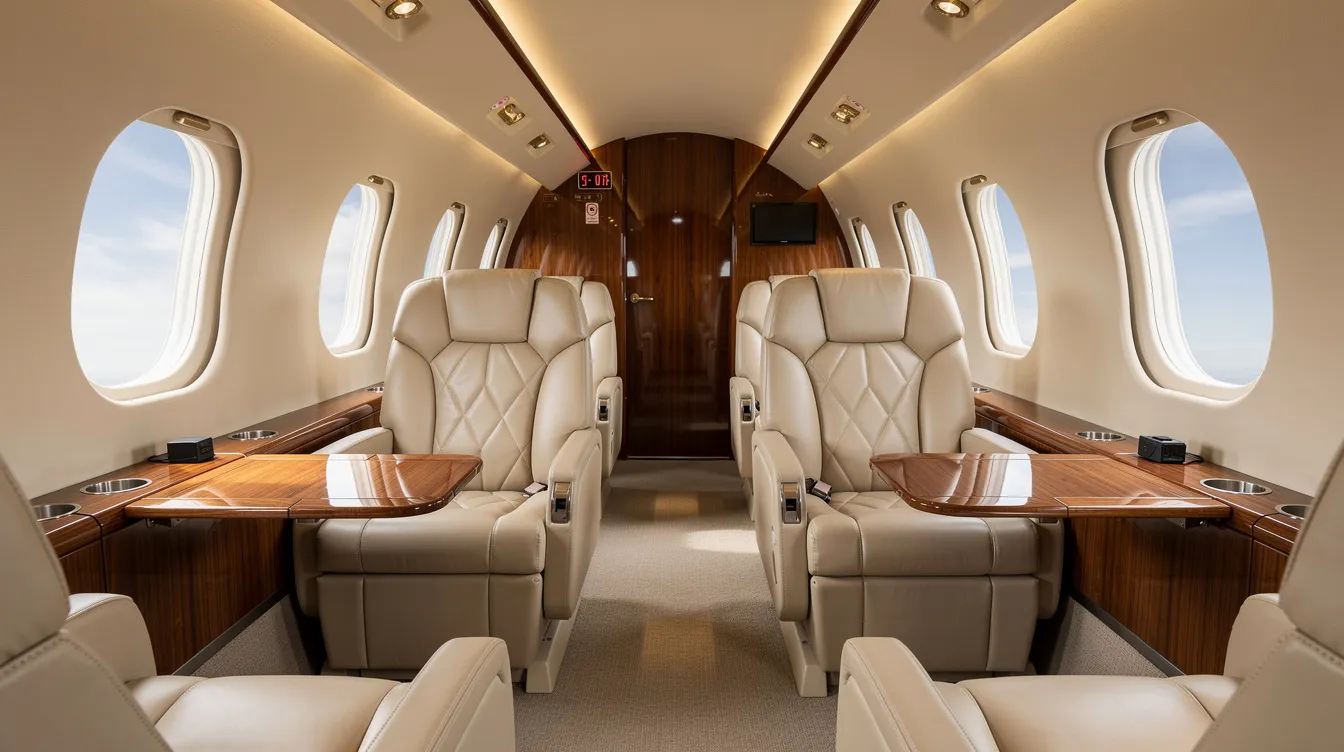
Practical Checklist Before You Choose Your Fractional Aircraft
Before committing to a fractional agreement, review these considerations:
Shared Ownership & Fractional Agreement:
-
Understand that fractional ownership is a form of shared ownership, where multiple parties jointly own an aircraft and share costs, responsibilities, and usage.
-
Review what your fractional agreement covers, including scheduling, maintenance, and resale terms.
Travel Profile:
-
Expected flight hours annually for the next 3–5 years?
-
Your 10 most common city pairs?
-
Typical passenger count and baggage requirements?
Performance and Comfort:
-
Need nonstop capability for specific long routes?
-
Comfortable with occasional fuel stops if it lowers annual cost?
-
How important are cabin height, walking space, and sleep options?
Budget and Value:
-
Realistic annual budget for acquisition, monthly fees, and hourly charges?
-
Does a light jet provide more total hours within the same budget?
-
Are you oversizing for the image when a smaller size fits actual needs?
Well-being:
-
Do you or your passengers experience fear of flying or turbulence anxiety?
-
Would structured support like SkyGuru’s real-time explanations and in-flight guidance address stress at a lower cost than upsizing aircraft?
Program Flexibility:
-
Does the right fractional aircraft operator allow upgrades between categories?
-
What are the penalties for switching between light, midsize, and heavy jets?
-
How many allocated flight hours does your share actually provide, including peak-day restrictions?
-
Note that most fractional ownership programs guarantee an aircraft within 4–10 hours, but this can vary during peak days.
-
Many programs offer unique features, such as day-based usage models, allowing owners to use an aircraft for an entire day rather than by the hour—ideal for flexible business travel.
There is no universal “best aircraft for fractional ownership”—the goal is mapping your travel lifestyle to the right category. Light jets favor cost efficiency, midsize jets balance range and comfort, and heavy jets maximize long-range capability. Pair rational aircraft selection with tools that protect your well-being—like SkyGuru’s real-time explanations and turbulence prediction, highlighted by media as an effective aid for anxious travelers—so every fractional flight feels as safe and predictable as possible.
Conclusion: Making the Best Choice for Your Fractional Ownership Journey
Choosing the best aircraft for fractional ownership ultimately comes down to understanding your unique travel needs, budget, and comfort preferences. Light jets offer economical and agile solutions for short regional trips, while midsize jets provide a balanced mix of range, cabin comfort, and cost-effectiveness ideal for coast-to-coast travel. Heavy jets deliver unmatched luxury, space, and nonstop international capabilities for those with extensive long-haul requirements.
Remember that fractional ownership is not just about the aircraft itself—it’s also about the provider. Selecting a reputable fractional operator who offers a diverse fleet, transparent pricing, flexible scheduling, and attentive customer service will greatly enhance your ownership experience. Smaller fractional operators with a few hundred customers may offer boutique customer service, while larger providers often bring extensive networks and significant growth in fleet and services.
Consider how often and far you fly, how many passengers you typically travel with, and your tolerance for cabin size and onboard amenities. Tools like apps that help ease the fear of flying, such as SkyGuru, can help ease flight anxiety by providing real-time insights during your journeys, regardless of the aircraft size.
By carefully evaluating these factors and aligning them with your lifestyle, you can confidently select the best aircraft for fractional ownership that fits your travel patterns, budget, and expectations—enabling you to enjoy the convenience, flexibility, and luxury of private aviation without the full burden of ownership.
FLEET SELECTION
JET CARDS
COST ANALYSIS


How to Auditing Your Operator's Maintenance Logs
Oct 05, 2025

How to Auditing Your Operator's Maintenance Logs
Oct 05, 2025

How to Auditing Your Operator's Maintenance Logs
Oct 05, 2025
Sky Guru Weekly
The smartest private aviation intelligence in your inbox.
.svg)

